
Histoire de réussite d'Africa RISING
28 septembre 2017
Un agriculteur trouve le filon en produisant des lianes et des racines de patate douce à chair orange pendant la saison sèche en Zambie
Dans la vallée, dans le village de Kasuza, dans la province orientale de Zambie, le long de la frontière avec le Mozambique, Aaron et Mervis Mumba sont des légendes. Le couple, qui a deux enfants, prend littéralement à contre-pied la connotation négative associée à l'expression ‘ récolter là où l'on n'a pas semé ’.
Grâce à une analyse minutieuse de la saison agricole, à une comparaison attentive des coûts de production du maïs et de la patate douce à chair orange (PDCO), à une compréhension avérée des forces du marché de l'offre et de la demande à l'œuvre dans leur village, et à un système de troc fiable entre les agriculteurs de leur localité, cette famille a décroché le pactole en se tournant vers la culture de la PDCO en saison sèche.
 Les Mumba avaient toujours été des agriculteurs de subsistance, cultivant diverses cultures telles que le maïs, le soja, le manioc et la patate douce (non biofortifiée). Les choses ont changé en septembre 2014, après qu'Aaron s'est joint à plusieurs autres agriculteurs lors d'une réunion de partenaires organisée par le Centre international de la pomme de terre (CIP) et l'Institut de recherche agricole de Zambie (ZARI). Cela marquerait un tournant dans sa pratique agricole, passant de la subsistance à une entreprise commerciale. Lors de la réunion, le CIP recrutait des multiplicateur·rice·s de litières de patates douces à chair orange (PDCO) et Aaron s'est porté volontaire. Le reste appartient à l'histoire et Aaron et Mervis n'ont jamais regardé en arrière. Ils cultivent toujours d'autres cultures pour leurs besoins de subsistance, mais la production de PDCO (pour les racines et les lianes) est désormais leur principale activité agricole commerciale, grâce à la demande de la communauté pour le goût délicieux et la valeur nutritive de la PDCO.
Sur les 1,5 ha de terres de la famille, ils cultivent la variété de PDCO Olympia sur seulement 0,25 ha. Cette petite surface cultivée en PDCO offre cependant les meilleurs rendements ! À la fin de la saison 2014/2015, les Mumba ont troqué 200 sacs de lianes et de racines de PDCO contre 10 000 kg de maïs. Les conditions d'échange en vigueur au cours de cette saison étaient d'un sac de lianes ou de racines de PDCO pour un sac de maïs de 50 kg.
’ Cette saison 2014/2015 a été une révélation pour nous “, déclare Aaron. ” Nous n'aurions pas pu cultiver et récolter une quantité de maïs proche de celle que j'ai obtenue grâce à cet échange avec différents agriculteurs de mon village. Comme les lianes et les racines étaient très demandées et que j'étais le seul fournisseur, nous avons obtenu de très bons rendements ! “
Les Mumba avaient toujours été des agriculteurs de subsistance, cultivant diverses cultures telles que le maïs, le soja, le manioc et la patate douce (non biofortifiée). Les choses ont changé en septembre 2014, après qu'Aaron s'est joint à plusieurs autres agriculteurs lors d'une réunion de partenaires organisée par le Centre international de la pomme de terre (CIP) et l'Institut de recherche agricole de Zambie (ZARI). Cela marquerait un tournant dans sa pratique agricole, passant de la subsistance à une entreprise commerciale. Lors de la réunion, le CIP recrutait des multiplicateur·rice·s de litières de patates douces à chair orange (PDCO) et Aaron s'est porté volontaire. Le reste appartient à l'histoire et Aaron et Mervis n'ont jamais regardé en arrière. Ils cultivent toujours d'autres cultures pour leurs besoins de subsistance, mais la production de PDCO (pour les racines et les lianes) est désormais leur principale activité agricole commerciale, grâce à la demande de la communauté pour le goût délicieux et la valeur nutritive de la PDCO.
Sur les 1,5 ha de terres de la famille, ils cultivent la variété de PDCO Olympia sur seulement 0,25 ha. Cette petite surface cultivée en PDCO offre cependant les meilleurs rendements ! À la fin de la saison 2014/2015, les Mumba ont troqué 200 sacs de lianes et de racines de PDCO contre 10 000 kg de maïs. Les conditions d'échange en vigueur au cours de cette saison étaient d'un sac de lianes ou de racines de PDCO pour un sac de maïs de 50 kg.
’ Cette saison 2014/2015 a été une révélation pour nous “, déclare Aaron. ” Nous n'aurions pas pu cultiver et récolter une quantité de maïs proche de celle que j'ai obtenue grâce à cet échange avec différents agriculteurs de mon village. Comme les lianes et les racines étaient très demandées et que j'étais le seul fournisseur, nous avons obtenu de très bons rendements ! “
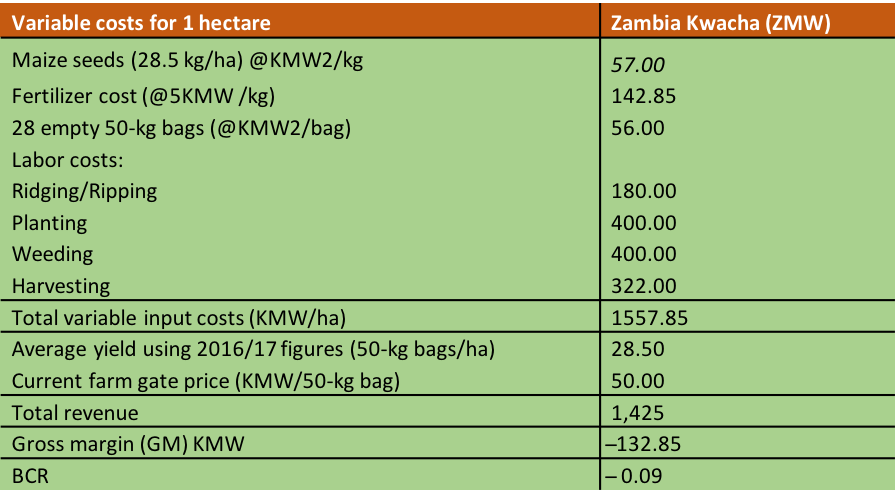
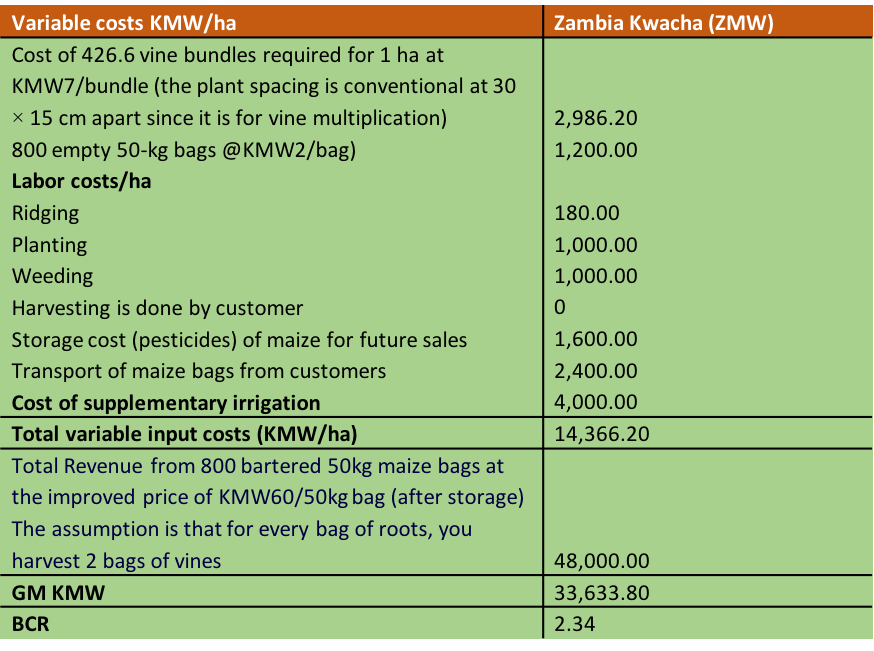 En comparant les entreprises de maïs et de patate douce à chair orange (OFSP), une analyse de rentabilité a révélé une marge brute plus élevée pour la patate douce (33 633,80 ZMW) que pour le maïs (–132,85 ZMW) par hectare. Cela indique un ratio avantages-coûts de 2,34 pour l'OFSP et de –0,09 pour le maïs. Par conséquent, pour chaque ZMW 1 investi Mumbas dépenser pour la culture de la patate douce à chair orange (OFSP) leur procure un avantage supplémentaire de 2,34 ZMW, contrairement à leur perte comparative de –0,09 ZMW réalisée en cultivant du maïs.
 Cependant, les effets de l'évolution des conditions climatiques n'ont pas épargné les Mumba. De faibles précipitations au cours des saisons 2015/2016 ont eu un impact négatif sur leur production de racines et de sarments en saison sèche, leurs puits peu profonds s'étant asséchés. En raison de la faible productivité, ils ont gagné 2 550 ZMW en troquant seulement trente sacs de 50 kg en 2016 grâce à la production de saison sèche de la saison précédente. Néanmoins, ce revenu était suffisant pour permettre à la famille d'acheter d'autres denrées alimentaires qu'elle n'avait pas cultivées cette année-là. Pour 2017, grâce aux sarments de patate douce à Chair Orange (OFSP) produits pendant la saison sèche 2016, ils ont troqué 130 sacs de 50 kg de maïs.
“ Je suis reconnaissante que nous nous soyons lancés dans cette entreprise de production de sarments et de racines d'OFSP ”, déclare Mervis. “ Cela change notre vie pour le mieux. Nous avons pu construire une maison et prévoyons maintenant d'économiser pour acheter une voiture qui nous permettra d'étendre notre approvisionnement en sarments jusqu'aux villages voisins. Nous continuons d'apprendre de nouvelles choses au fur et à mesure. ”
L'histoire à succès des Mumba met en évidence la manière dont des technologies agricoles améliorées confiées à des agriculteurs ’ pionniers “ innovants peuvent entraîner une amélioration significative des moyens de subsistance, garantir une vulgarisation à grande échelle de ces technologies et assurer des chaînes de valeur adaptées aux agriculteurs qui répondent aux besoins de développement des communautés locales.
Le projet ” Africa RISING going to scale in Eastern Province of Zambia ’ (Déploiement à grande échelle d'Africa RISING dans la province orientale de Zambie) s'efforce de diffuser l'OFSP et d'autres technologies agricoles améliorées par le biais de diverses approches et canaux. Dans la stratégie de vulgarisation de l'OFSP, les agriculteurs pionniers tels que Mervis et Aaron sont appelés multiplicateurs de sarments décentralisés (DVM) qui fournissent des sarments d'OFSP à leurs communautés “ locales ”. Actuellement, le projet collabore avec 214 DVM par le biais d'un réseau complexe et stratégique qui garantit que le matériel de plantation de patates douces passe des stations de recherche aux agriculteurs.
Cependant, les effets de l'évolution des conditions climatiques n'ont pas épargné les Mumba. De faibles précipitations au cours des saisons 2015/2016 ont eu un impact négatif sur leur production de racines et de sarments en saison sèche, leurs puits peu profonds s'étant asséchés. En raison de la faible productivité, ils ont gagné 2 550 ZMW en troquant seulement trente sacs de 50 kg en 2016 grâce à la production de saison sèche de la saison précédente. Néanmoins, ce revenu était suffisant pour permettre à la famille d'acheter d'autres denrées alimentaires qu'elle n'avait pas cultivées cette année-là. Pour 2017, grâce aux sarments de patate douce à Chair Orange (OFSP) produits pendant la saison sèche 2016, ils ont troqué 130 sacs de 50 kg de maïs.
“ Je suis reconnaissante que nous nous soyons lancés dans cette entreprise de production de sarments et de racines d'OFSP ”, déclare Mervis. “ Cela change notre vie pour le mieux. Nous avons pu construire une maison et prévoyons maintenant d'économiser pour acheter une voiture qui nous permettra d'étendre notre approvisionnement en sarments jusqu'aux villages voisins. Nous continuons d'apprendre de nouvelles choses au fur et à mesure. ”
L'histoire à succès des Mumba met en évidence la manière dont des technologies agricoles améliorées confiées à des agriculteurs ’ pionniers “ innovants peuvent entraîner une amélioration significative des moyens de subsistance, garantir une vulgarisation à grande échelle de ces technologies et assurer des chaînes de valeur adaptées aux agriculteurs qui répondent aux besoins de développement des communautés locales.
Le projet ” Africa RISING going to scale in Eastern Province of Zambia ’ (Déploiement à grande échelle d'Africa RISING dans la province orientale de Zambie) s'efforce de diffuser l'OFSP et d'autres technologies agricoles améliorées par le biais de diverses approches et canaux. Dans la stratégie de vulgarisation de l'OFSP, les agriculteurs pionniers tels que Mervis et Aaron sont appelés multiplicateurs de sarments décentralisés (DVM) qui fournissent des sarments d'OFSP à leurs communautés “ locales ”. Actuellement, le projet collabore avec 214 DVM par le biais d'un réseau complexe et stratégique qui garantit que le matériel de plantation de patates douces passe des stations de recherche aux agriculteurs.
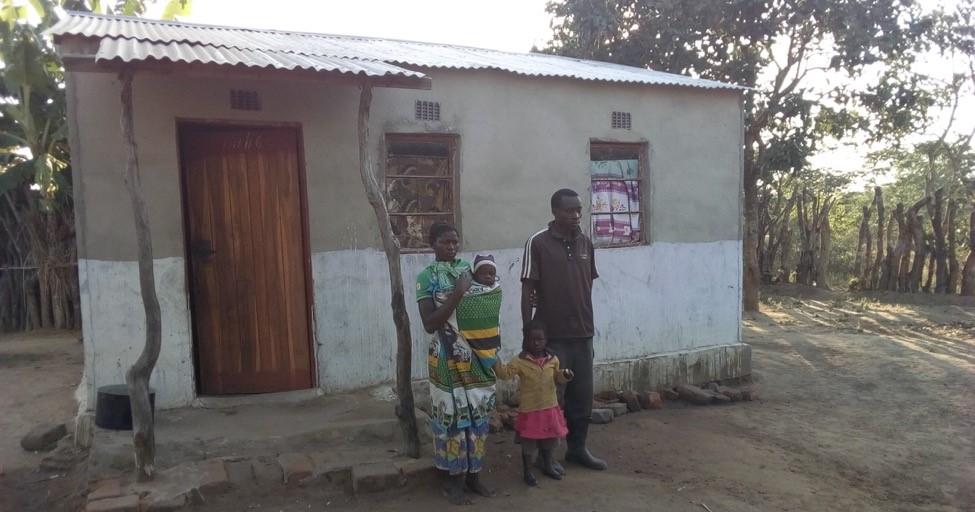
Aaron et Mavis Mumba avec leurs deux enfants devant leur maison. Photo : Simon Mudenda, CIP.
Révélation du premier coup
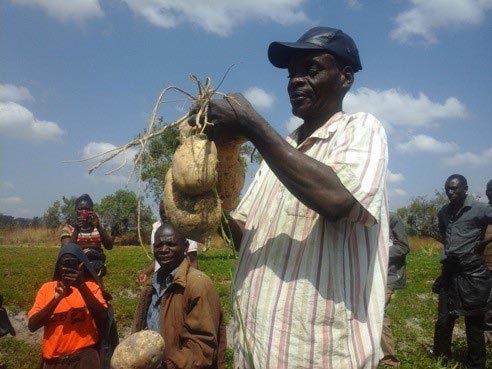
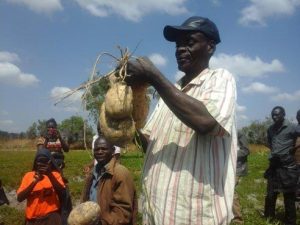
Un agent de vulgarisation gouvernemental présente de grosses racines de patate douce à chair orange (OFSP) récoltées dans la ferme des Mumba lors d'une visite de terrain organisée par l'équipe du projet Africa RISING. Crédit photo : Simon Mudenda/CIP.
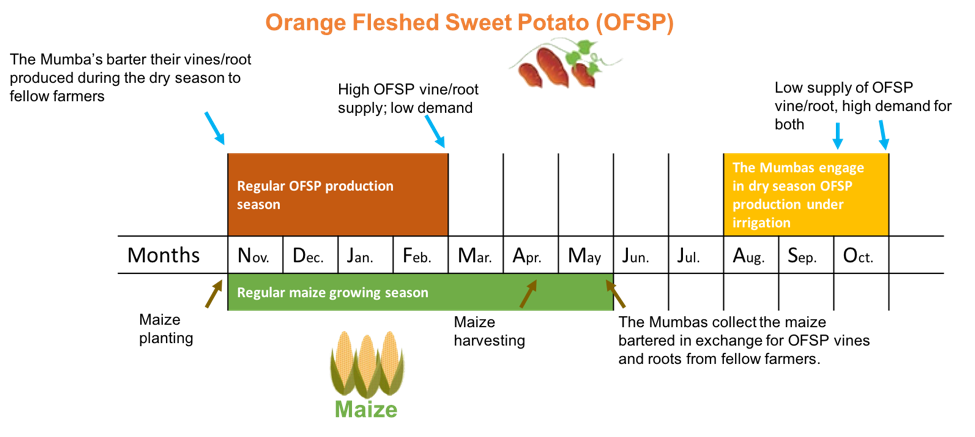
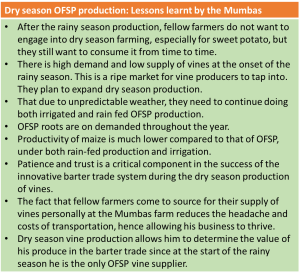
Une illustration graphique montrant comment les Mumba y arrivent. Crédit : Jonathan Odhong’, IITA
Apprendre vite, faire des choix judicieux
Apprenant très vite et bénéficiant des conseils offerts par l'Agence des États-Unis pour le développement international (USAID) AFRIQUE GRANDISSANT Dans le cadre du projet Going to Scale dans la Province orientale de Zambie, Aaron et Mervis ont eu une idée. S'ils parvenaient à exploiter l'eau souterraine facilement accessible sur leur ferme, grâce à une nappe phréatique élevée, ils pourraient démarrer la production de lanières de vigne en saison sèche. Cette initiative, espéraient-ils, leur garantirait d'avoir des lanières (très demandées) prêtes à être troquées avec d'autres agriculteurs au début de la saison des pluies, moment où la majorité d'entre eux chercheraient à nouveau des lanières de patate douce à chair orange (OFSP) à planter. Au coût de 400 bottes de lanières d'OFSP, Aaron a acheté une pompe à pédale à l'équipe du projet et a commencé la production de lanières et de racines d'OFSP grâce à l'humidité résiduelle et à l'irrigation. Lorsque la saison des pluies 2015/2016 est arrivée, les Mumba étaient prêts avec leurs lanières adultes pour troquer avec leurs collègues agriculteurs. Cependant, cette fois-ci, il ne s'agissait pas d'un échange direct de biens, car la saison des plantations venait de commencer et aucun agriculteur n'avait de maïs à offrir en échange immédiat. Après s'être mis d'accord sur les conditions avec chaque agriculteur intéressé du village, Aaron et Mervis ont fourni les lanières prêtes à être plantées. Pendant la saison des récoltes 2015/2016, chaque agriculteur est revenu et a réglé ses comptes avec eux.Meilleurs rendements par hectare de chair orange (ou: de patate douce à chair orange / de BPCO)
Ils ont réalisé qu'ils ont tout intérêt à cultiver une petite partie de patate douce à chair orange (0,25 ha) qui leur rapporte autant que 10 000 kg de maïs en troc (comme cela s'est produit lors de la saison 2015/2016). Selon l'Agence zambienne de réserve alimentaire, au cours de cette même saison (2015/2016), les prix variaient entre 85 et 100 ZMW (0,30 USD) le sac de 50 kg de maïs.
Tableau 1. Analyse de la rentabilité de la production de maïs par la famille Mumba
Tableau 2. Analyse de rentabilité de la production de patates douces par les Mumbas
Perspectives d'avenir face à l'évolution des conditions météorologiques
 Cependant, les effets de l'évolution des conditions climatiques n'ont pas épargné les Mumba. De faibles précipitations au cours des saisons 2015/2016 ont eu un impact négatif sur leur production de racines et de sarments en saison sèche, leurs puits peu profonds s'étant asséchés. En raison de la faible productivité, ils ont gagné 2 550 ZMW en troquant seulement trente sacs de 50 kg en 2016 grâce à la production de saison sèche de la saison précédente. Néanmoins, ce revenu était suffisant pour permettre à la famille d'acheter d'autres denrées alimentaires qu'elle n'avait pas cultivées cette année-là. Pour 2017, grâce aux sarments de patate douce à Chair Orange (OFSP) produits pendant la saison sèche 2016, ils ont troqué 130 sacs de 50 kg de maïs.
“ Je suis reconnaissante que nous nous soyons lancés dans cette entreprise de production de sarments et de racines d'OFSP ”, déclare Mervis. “ Cela change notre vie pour le mieux. Nous avons pu construire une maison et prévoyons maintenant d'économiser pour acheter une voiture qui nous permettra d'étendre notre approvisionnement en sarments jusqu'aux villages voisins. Nous continuons d'apprendre de nouvelles choses au fur et à mesure. ”
L'histoire à succès des Mumba met en évidence la manière dont des technologies agricoles améliorées confiées à des agriculteurs ’ pionniers “ innovants peuvent entraîner une amélioration significative des moyens de subsistance, garantir une vulgarisation à grande échelle de ces technologies et assurer des chaînes de valeur adaptées aux agriculteurs qui répondent aux besoins de développement des communautés locales.
Le projet ” Africa RISING going to scale in Eastern Province of Zambia ’ (Déploiement à grande échelle d'Africa RISING dans la province orientale de Zambie) s'efforce de diffuser l'OFSP et d'autres technologies agricoles améliorées par le biais de diverses approches et canaux. Dans la stratégie de vulgarisation de l'OFSP, les agriculteurs pionniers tels que Mervis et Aaron sont appelés multiplicateurs de sarments décentralisés (DVM) qui fournissent des sarments d'OFSP à leurs communautés “ locales ”. Actuellement, le projet collabore avec 214 DVM par le biais d'un réseau complexe et stratégique qui garantit que le matériel de plantation de patates douces passe des stations de recherche aux agriculteurs.
Cependant, les effets de l'évolution des conditions climatiques n'ont pas épargné les Mumba. De faibles précipitations au cours des saisons 2015/2016 ont eu un impact négatif sur leur production de racines et de sarments en saison sèche, leurs puits peu profonds s'étant asséchés. En raison de la faible productivité, ils ont gagné 2 550 ZMW en troquant seulement trente sacs de 50 kg en 2016 grâce à la production de saison sèche de la saison précédente. Néanmoins, ce revenu était suffisant pour permettre à la famille d'acheter d'autres denrées alimentaires qu'elle n'avait pas cultivées cette année-là. Pour 2017, grâce aux sarments de patate douce à Chair Orange (OFSP) produits pendant la saison sèche 2016, ils ont troqué 130 sacs de 50 kg de maïs.
“ Je suis reconnaissante que nous nous soyons lancés dans cette entreprise de production de sarments et de racines d'OFSP ”, déclare Mervis. “ Cela change notre vie pour le mieux. Nous avons pu construire une maison et prévoyons maintenant d'économiser pour acheter une voiture qui nous permettra d'étendre notre approvisionnement en sarments jusqu'aux villages voisins. Nous continuons d'apprendre de nouvelles choses au fur et à mesure. ”
L'histoire à succès des Mumba met en évidence la manière dont des technologies agricoles améliorées confiées à des agriculteurs ’ pionniers “ innovants peuvent entraîner une amélioration significative des moyens de subsistance, garantir une vulgarisation à grande échelle de ces technologies et assurer des chaînes de valeur adaptées aux agriculteurs qui répondent aux besoins de développement des communautés locales.
Le projet ” Africa RISING going to scale in Eastern Province of Zambia ’ (Déploiement à grande échelle d'Africa RISING dans la province orientale de Zambie) s'efforce de diffuser l'OFSP et d'autres technologies agricoles améliorées par le biais de diverses approches et canaux. Dans la stratégie de vulgarisation de l'OFSP, les agriculteurs pionniers tels que Mervis et Aaron sont appelés multiplicateurs de sarments décentralisés (DVM) qui fournissent des sarments d'OFSP à leurs communautés “ locales ”. Actuellement, le projet collabore avec 214 DVM par le biais d'un réseau complexe et stratégique qui garantit que le matériel de plantation de patates douces passe des stations de recherche aux agriculteurs.
Contribué par
Histoires récentes
Aucun article trouvé