
Assessing impact of AR4D technologies on poverty reduction in farm households in Central Africa
18 mai 2018
Over the years, both researchers and nonresearchers have often wondered whether agricultural research-for-development (AR4D) interventions by research institutes have contributed significantly to reducing poverty in smallholder farmer households in Africa. To resolve this challenge, a team of researchers led by IITA socioeconomists carried out a study titled “Who benefits from which agricultural research-for-development technologies? Evidence from farm household poverty analysis in Central Africa, published in the World Development, ScienceDirect journal. The study was carried out to demonstrate to AR4D institutions, donors, policy makers, and other stakeholders which technologies actually contribute to poverty reduction in many smallholder households in Burundi, DR Congo, and Rwanda.
 The researchers observed that AR4D technologies were often evaluated without reference to the different groups of people in the country, therefore, they said there has not been much evidence on the distributional impacts of the technologies. To fill in this knowledge gap, they evaluated the degree to which different AR4D technologies—improved crop varieties, crop and natural resource management technologies, and postharvest technologies—contributed to poverty reduction among adopting farm households in Burundi, Eastern DR Congo, and Rwanda.
Using the poverty index in each of the country, the researchers identified the households that benefit most or least from adopting certain components of AR4D technologies. Finally, they investigated the impacts of the intensity of adoption of AR4D technology components on farm household poverty distribution. Their findings provide useful information for prioritizing research investment decisions for effective poverty reduction and contribute to literature on agricultural evaluation..
For practical purposes, the team used the Consortium for Improving Agriculture-based Livelihoods in Central Africa (CIALCA) project to demonstrate how different AR4D technologies contributed to poverty reduction. The CIALCA project which comprised three CGIAR centers—IITA, Biodiversity International, et le Centre international d'agriculture tropicale (CIAT)—was established towards the end of 2005 in Burundi, Eastern DR Congo, and Rwanda. Its main goal was to overcome the effects of the conflicts that had disrupted food production and exacerbated rural poverty in selected communities through improving agricultural productivity.
The selection of intervention communities was based on having similar characteristics, namely, reasonably high poverty levels with low food and nutrition security, highly degradable soils but with high agricultural productivity potential, relatively good access to local markets, and the presence of development organizations. CIALCA developed and disseminated 30 AR4D technologies in selected communities in the three Central African countries including:
improved crop varieties (IV); crop and natural resource management (CNRM) technologies; and postharvest (PH) technologies including processing, storage, and marketing.
The researchers collected data from 2,665 randomly sampled smallholder farm households in Burundi, Eastern DRC, and Rwanda using a standardized questionnaire. The adoption of AR4D technologies was measured based on self-reported adoption of CIALCA improved varieties, CNRM, and postharvest technologies. At baseline, all farmers had not been exposed to CIALCA technologies and hence there was no adoption. Then farmers were exposed to CIALCA technologies through local development partners such as agriculture-based organizations having activities in the study areas. CIALCA trained local partners and transferred CIALCA technologies to them through farmer groups. In some areas CIALCA trained farmers directly and at the same time disseminated technologies to them.
The researchers observed that AR4D technologies were often evaluated without reference to the different groups of people in the country, therefore, they said there has not been much evidence on the distributional impacts of the technologies. To fill in this knowledge gap, they evaluated the degree to which different AR4D technologies—improved crop varieties, crop and natural resource management technologies, and postharvest technologies—contributed to poverty reduction among adopting farm households in Burundi, Eastern DR Congo, and Rwanda.
Using the poverty index in each of the country, the researchers identified the households that benefit most or least from adopting certain components of AR4D technologies. Finally, they investigated the impacts of the intensity of adoption of AR4D technology components on farm household poverty distribution. Their findings provide useful information for prioritizing research investment decisions for effective poverty reduction and contribute to literature on agricultural evaluation..
For practical purposes, the team used the Consortium for Improving Agriculture-based Livelihoods in Central Africa (CIALCA) project to demonstrate how different AR4D technologies contributed to poverty reduction. The CIALCA project which comprised three CGIAR centers—IITA, Biodiversity International, et le Centre international d'agriculture tropicale (CIAT)—was established towards the end of 2005 in Burundi, Eastern DR Congo, and Rwanda. Its main goal was to overcome the effects of the conflicts that had disrupted food production and exacerbated rural poverty in selected communities through improving agricultural productivity.
The selection of intervention communities was based on having similar characteristics, namely, reasonably high poverty levels with low food and nutrition security, highly degradable soils but with high agricultural productivity potential, relatively good access to local markets, and the presence of development organizations. CIALCA developed and disseminated 30 AR4D technologies in selected communities in the three Central African countries including:
improved crop varieties (IV); crop and natural resource management (CNRM) technologies; and postharvest (PH) technologies including processing, storage, and marketing.
The researchers collected data from 2,665 randomly sampled smallholder farm households in Burundi, Eastern DRC, and Rwanda using a standardized questionnaire. The adoption of AR4D technologies was measured based on self-reported adoption of CIALCA improved varieties, CNRM, and postharvest technologies. At baseline, all farmers had not been exposed to CIALCA technologies and hence there was no adoption. Then farmers were exposed to CIALCA technologies through local development partners such as agriculture-based organizations having activities in the study areas. CIALCA trained local partners and transferred CIALCA technologies to them through farmer groups. In some areas CIALCA trained farmers directly and at the same time disseminated technologies to them.
 The team’s findings from the impact assessment of agricultural interventions at both the micro and macro levels have demonstrated that adoption of AR4D technologies reduced rural poverty by about 13% from about 60% of poor adopters. A large share of the poverty reduction was attributable to adoption of improved crop varieties (32%) followed by postharvest technologies (28%), while adoption of CNRM technologies contributed 26% with the rest (14%) being attributed to unmeasured factors.
These findings, the researchers said, “reflect two interesting policy propositions: first designing program interventions that can support easy access to postharvest technologies along with affordable, improved seeds can accelerate the rate at which rural households can move out of poverty, suggesting that efforts to outscale AR4D technologies are essential for sustained poverty reduction.”
Furthermore, their findings showed that the impact on poverty reduction attributable to adoption of postharvest technologies is nearly equal to the impact attributable to adoption of improved crop varieties. However, they contended that without improved crop varieties and CNRM technologies, the impacts attributable to postharvest technologies are limited, and/or not sustainable.
The team’s findings from their sample of households in Central Africa further showed that adoption of different components of AR4D technologies have varying impacts on poverty reduction. On the one hand, the relatively poor farm households make high productivity gains from adopting improved seed that are more likely to enable them to improve their expenditure power towards the poverty line. On the other hand, adoption of postharvest technologies that induce agricultural commercialization enable the relatively better off farm households to move out of poverty much faster than adoption of other AR4D technologies. Their findings further indicate that adoption of crop and natural resource management technologies tend to benefit both the relatively poor and better households in pursuit of improving household incomes the same way.
The team of researchers comprised John Herbert Ainembabazi, Tahirou Abdoulaye, Shiferaw Feleke, Arèga Alènè, Paul M Dontsop-Nguezet, Pierre Celestin Ndayisaba, Cyrille Hicintuka, Sylvain Mapatano, and Victor Manyong.
The team’s findings from the impact assessment of agricultural interventions at both the micro and macro levels have demonstrated that adoption of AR4D technologies reduced rural poverty by about 13% from about 60% of poor adopters. A large share of the poverty reduction was attributable to adoption of improved crop varieties (32%) followed by postharvest technologies (28%), while adoption of CNRM technologies contributed 26% with the rest (14%) being attributed to unmeasured factors.
These findings, the researchers said, “reflect two interesting policy propositions: first designing program interventions that can support easy access to postharvest technologies along with affordable, improved seeds can accelerate the rate at which rural households can move out of poverty, suggesting that efforts to outscale AR4D technologies are essential for sustained poverty reduction.”
Furthermore, their findings showed that the impact on poverty reduction attributable to adoption of postharvest technologies is nearly equal to the impact attributable to adoption of improved crop varieties. However, they contended that without improved crop varieties and CNRM technologies, the impacts attributable to postharvest technologies are limited, and/or not sustainable.
The team’s findings from their sample of households in Central Africa further showed that adoption of different components of AR4D technologies have varying impacts on poverty reduction. On the one hand, the relatively poor farm households make high productivity gains from adopting improved seed that are more likely to enable them to improve their expenditure power towards the poverty line. On the other hand, adoption of postharvest technologies that induce agricultural commercialization enable the relatively better off farm households to move out of poverty much faster than adoption of other AR4D technologies. Their findings further indicate that adoption of crop and natural resource management technologies tend to benefit both the relatively poor and better households in pursuit of improving household incomes the same way.
The team of researchers comprised John Herbert Ainembabazi, Tahirou Abdoulaye, Shiferaw Feleke, Arèga Alènè, Paul M Dontsop-Nguezet, Pierre Celestin Ndayisaba, Cyrille Hicintuka, Sylvain Mapatano, and Victor Manyong.
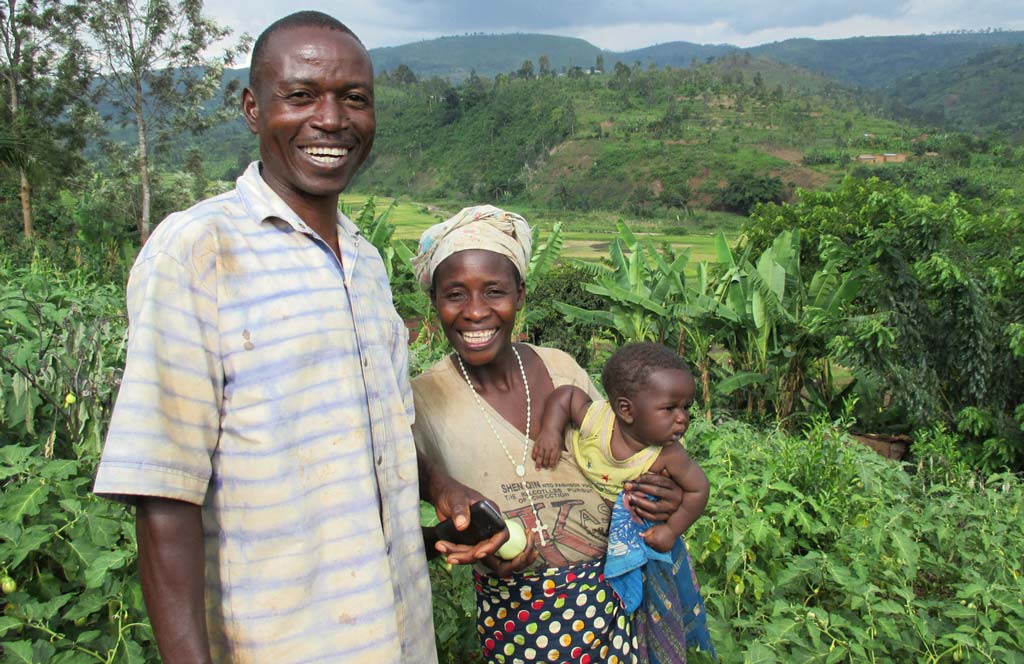
CIALCA introduced many AR4D technologies to farmers in Central Africa. Photo by P. Lepoint, Bioversity International.
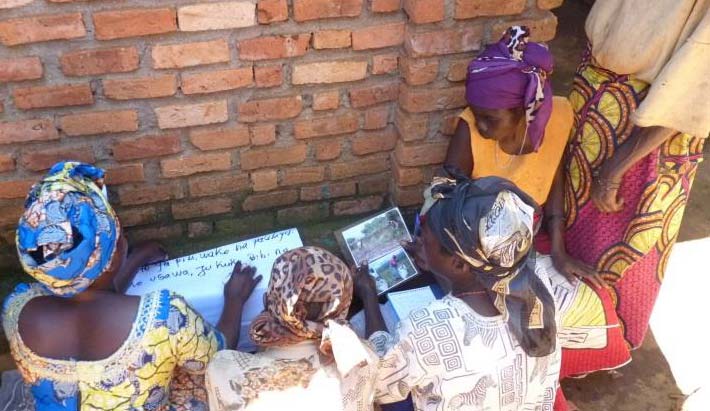
Training women farmers in DRC
Contribué par
Histoires récentes
Aucun article trouvé