
After only three months of implementing the Agenda for the Transformation of Agriculture in the Democratic Republic of Congo (ATA-DRC), the program has registered multiple successes, giving the government and people of the country much to celebrate. IITA Director General, Dr Nteranya Sanginga, highlighted these wins during his recent visit to multiple program sites in DRC.
One of the triumphs recorded was in the seed sector with the rapid multiplication of healthy cassava seedlings using Semi Autotrophic Hydroponics (SAH) technology.
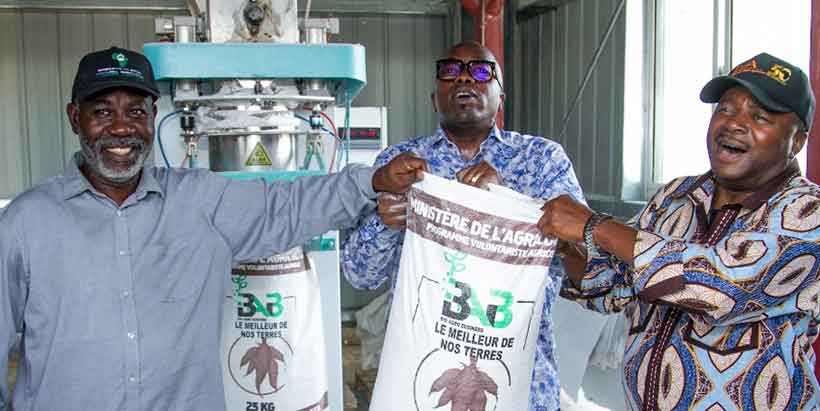
Five healthy, high-yielding varieties are now available from ATA-DRC’s rapid multiplication partner in Kinshasa, Centre de Recherche en Agrumiculture (CERAGRU). They have produced 600,000 cassava seedlings from 30 ha for transfer at the end of June to the Mongata agricultural base for transplanting to produce cuttings.
ATA-DRC has also registered success in maize seed supply, with IITA purchasing 60 tons of maize seed for the agricultural bases of Mongata and Nkuadi. IITA sourced these on behalf of the ATA-DRC program from SAGRICIM, a Congolese seed company located in Lubudi in Haut Katanga.
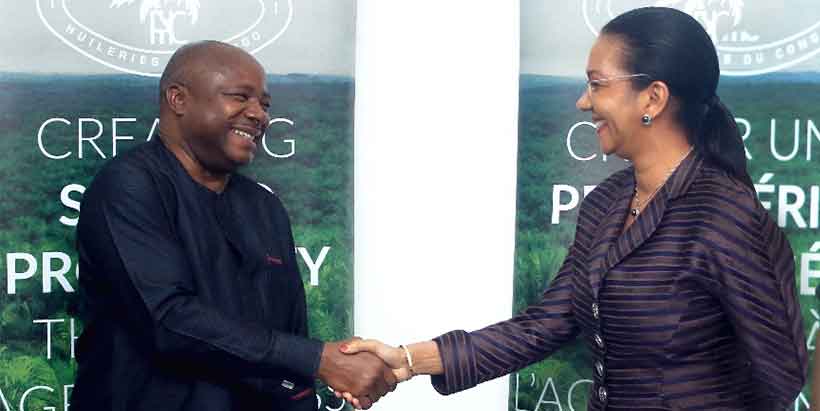
IITA signed an MoU with Les Plantations et Huileries du Congo (PHC) for intensive rice, maize, cassava, and soybean seed production. Private sector participation is critical to the successful implementation of ATA-DRC, particularly the scaling of agricultural technologies. Though specialized in oil palm exploitation, PHC has extensive expertise in managing large-scale agro-production activities with qualified technical staff to produce quality seed. As a result, IITA has chosen to access its seed-production proficiency to meet the needs of rural communities in areas of intervention.
The program activities in the Mongata site in Kinshasa have also progressed considerably, with 200 ha of cassava already cultivated. The harvested cassava is being processed at the factory. The Nkuadi site in Kasai-oriental will sow at least 50 ha of land for seed multiplication during the first phase of implementation 2022‒2023 (which starts in September 2022).
Preparations for the next growing season are underway. Consequently, various stakeholders met to finalize the subcontracting aspect. Postharvest activities primarily focus on the continued construction of the cassava processing plant and the manual processing of maize into flour. Also, IITA has identified ten young people involved in agricultural production in Nkuadi.
IITA experts carried out a mission in the Tshopo and Haut-Uélé sites to assess potential seed production sites and discuss with potential national and private partners. Plantain is the main crop for the Tshopo agricultural site, and cassava for Haut-Uélé.
The South Kivu Ruzizi site has cultivated 120 hectares of cassava, and construction continues on the cassava and maize factories, offices, stores, canteen, and rooms for staff.
IITA has also finalized an exploratory study in aquaculture and identified active aquaculturists, including young people.
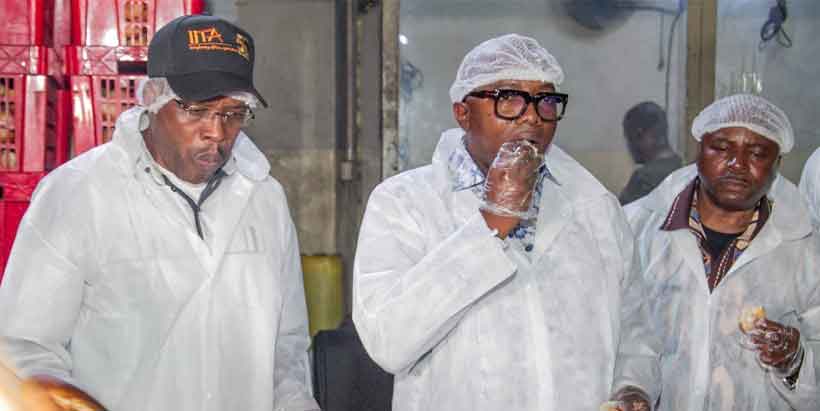 Progress in value addition has seen 20 large bakeries and three individual donut makers in Kinshasa already incorporating—on an experimental basis—high-quality cassava flour (HQCF) into bread-making and manufacturing their other products. To improve agribusiness development in the region, IITA contacted the University of Kinshasa (UNIKIN) to develop a market study on cassava flour and derivative products.
The ATA-DRC implementation has also been a vehicle for advocacy, leading to engagement with the Congolese government, through the ministries of Agriculture and Finance, to explore the ratification of programs funded by the World Bank, African Development Bank (AfDB), and other financial development partners. Additional advocacy with the Industry Promotion Fund (FPI) led to the construction of the road leading to the Mongata agricultural base, and the Governor of the Province of Kasaï-Oriental in favor of the agricultural base of Nkuadi.
Contributed by Michèle Kimpwene and Uzoma Agha
Contribué par
Histoires récentes