
Recently, Nigeria has ratified the Traité international sur les ressources phytogénétiques pour l'alimentation et l'agriculture (TIRPAA). This program is an offshoot of a work package tagged ‘Work support system’ under the Genebank Initative, and allows the CGIAR community work closely with national partners in conserving and sharing genetic resources. With about 146 member countries, ITPGRFA is designed to allow these member countries share and conserve plant genetic resources collectively.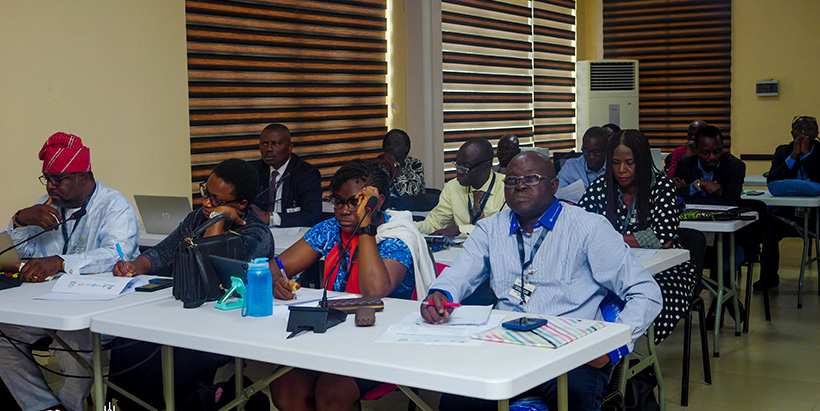
However, with this development arose the need to sensitize stakeholders of national organizations in the area of plant genetics across the country. The National Centre for Genetic Resources and Biotechnology (NACGRAB) organized a capacity building workshop themed, “Implementing the multilateral system of access and benefit-sharing of ITPGRFA recently, at IITA headquarters.
The workshop was designed to increase the stakeholder’s understanding of International Plant Treaty multilateral system (MLS) of access and benefit sharing. It also reviewed policy drafts and advances for the effective implementation of MLS in Nigeria.
During the 3-day workshop, the stakeholders were exposed to Plant Genetic Resources for Food and Agriculture (PGRFA), its existing collections, and its use for crop improvement in Nigeria, overview and planned activities of ITPGRFA. They were also enlightened on the implementation of the Nagoya Protocol in Nigeria.
The workshop featured presentation on standard material transfer agreement (SMTA) and delivery of the final report of the baseline survey conducted to assess the implementation of MLS in Nigeria. Principal Scientist, Biodiversity for Food & Agriculture (CIAT), Dr Michael Halewood, expounded on the pivotal guiding principles that should be adhered to by the provider and recipient of SMTA. Therefore, “there is need for both parties to have a clear grasp of the scope or coverage of respective measure outlined in the agreement” he stated.

In addition, Prof. Ajayi mentioned the need for proper documentation and efficient management of information about Nigeria’s biodiversity and plant genetic resources. He recommended that the government should take proactive steps in disseminating knowledge about access and benefit-sharing (ABS), while engaging in collaborative efforts with various stakeholders to design an effective ABS framework.
IITA-GRC Database Manager Marimagne Tchamba and Seedbank Manager Olaniyi Oyatomi gave a detailed explanation of the application of the Focus Identification for Germplasm Strategy (FIGS) approach to identify useful materials in ex situ collections, while demonstrating its significance in genetic re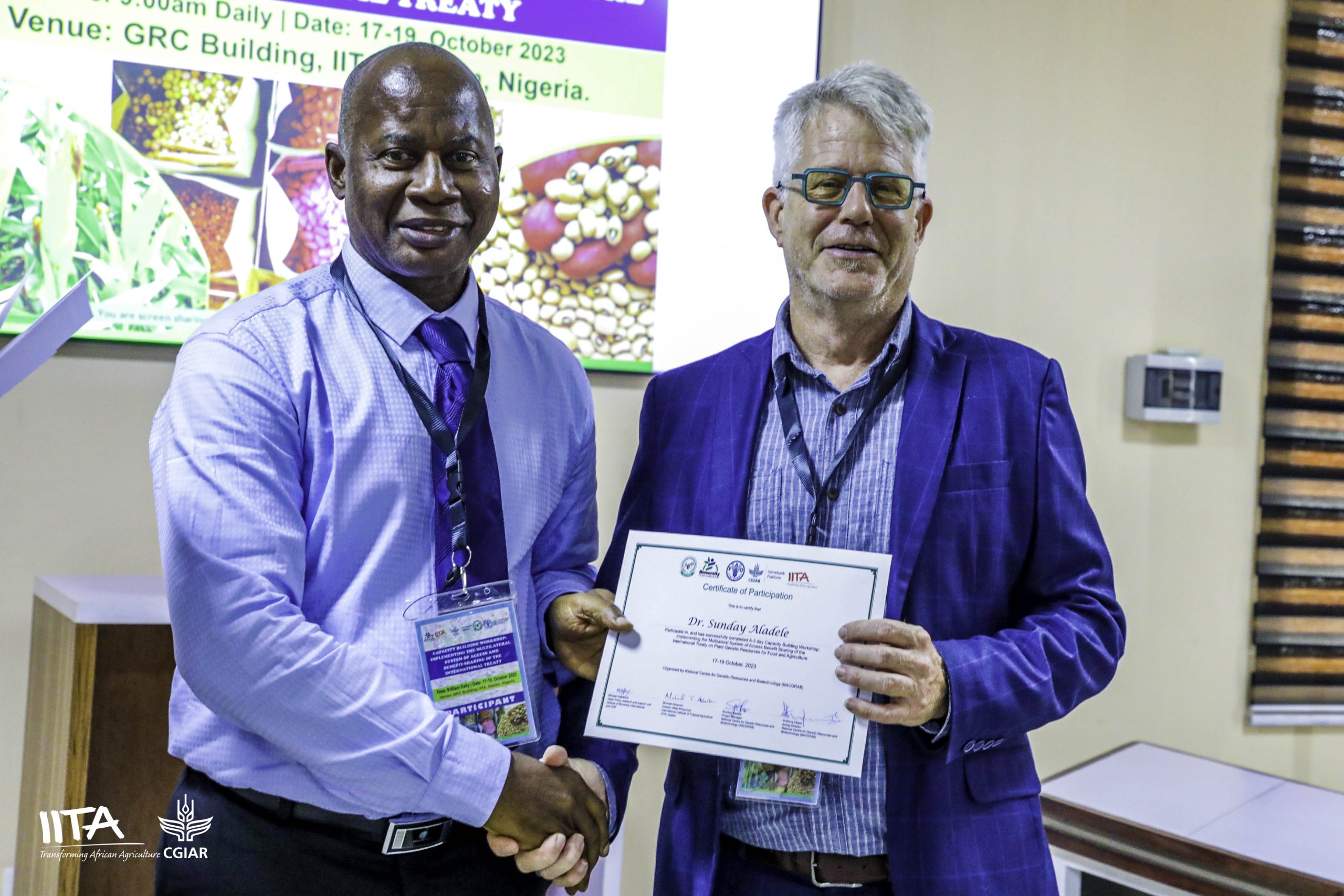
The workshop was concluded with a consensus on the roadmap for MLS in Nigeria, with focus on capacity building among key stakeholders. This would include undergraduate students to ensure the widespread updated plant treaty information. In addition, mechanisms would be established to strengthen the capacity required for the effective implementation of ITPGRFA, in line with Africa’s needs.
Furthermore, Prof. Ajayi emphasized the need for more collaborative efforts to ensure PGRFA’s potentials are utilized through MLS as facilitated by ITPGRFA. This collaboration is vital for the sustainability of genetic resources in Nigeria.
Contributed by Tolulope Akinola and Anita Akinyomade
Contribué par
Histoires récentes