
In the food security, nutrition, and sustainable agriculture space, the Joint Programme on Gender Transformative Approaches for Food Security and Nutrition (JP GTA) and the CGIAR GENDER Impact Platform achieved a significant milestone with the development of the “Guidelines for measuring gender transformative change.” The guidelines’ purpose is to enhance the capacity of research and development partners from the United Nations Rome-based Agencies—Food and Agriculture Organization of the United Nations (FAO), Fonds international de développement agricole (FIDA), et World Food Programme (WFP)—the European Union, CGIAR, and other organizations in designing, implementing, monitoring and evaluating gender-transformative interventions.
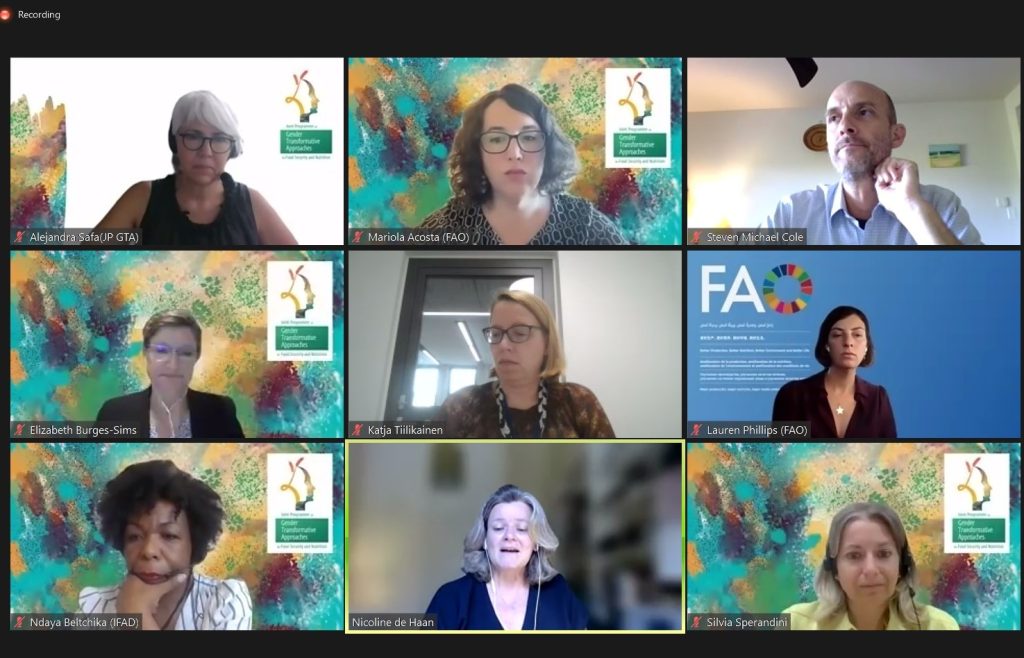
The official unveiling of the guidelines occurred during a virtual launch event held on 26 September. The authors and thematic experts emphasized the importance of incorporating indicators capable of measuring gender transformative change into the monitoring and evaluation frameworks of food security, nutrition, and sustainable agriculture initiatives. The Deputy Director of the WFP Gender Equality Office, Elizabeth Burges-Sims, moderated the event.
Deputy Director of the Inclusive Rural Transformation and Gender Equality Division at FAO, Lauren Phillips, highlighted the persistent gender-based disparities in agriculture, particularly regarding women’s empowerment. She noted that women faced more intense challenges than men and underlined the significance of gender equality in fulfilling sustainable development objectives. “We have ongoing programs doing their best to ensure women are being empowered in agriculture,” she said.
Deputy Head of the Social Sustainability Unit at the General Directorate for Agriculture and Rural Development of the European Commission, María Gafo Gómez-Zamalloa, echoed Philips’s view. She emphasized that gender equality was not merely a moral ideal but a substantial driving force behind economic development. She argued that without equality for women and girls, ensuring agricultural sustainability and eradicating hunger and poverty would be a mirage. She declared that the European Union is deeply committed to gender equality, with the primary goal of improving the livelihoods of rural female farmers. “Raising the awareness of women’s equality is key for gender equality. It is impossible to achieve food security without the contribution of women,” she said.
The Director of the CGIAR GENDER Impact Platform, Nicoline de Haan, delivered the welcome remarks, in which she shared the platform’s journey, revealing how they transitioned from merely focusing on empowering women to striving for transformative change. This ignited the spark of gender transformative research, ultimately leading to the creation of these ground-breaking guidelines.
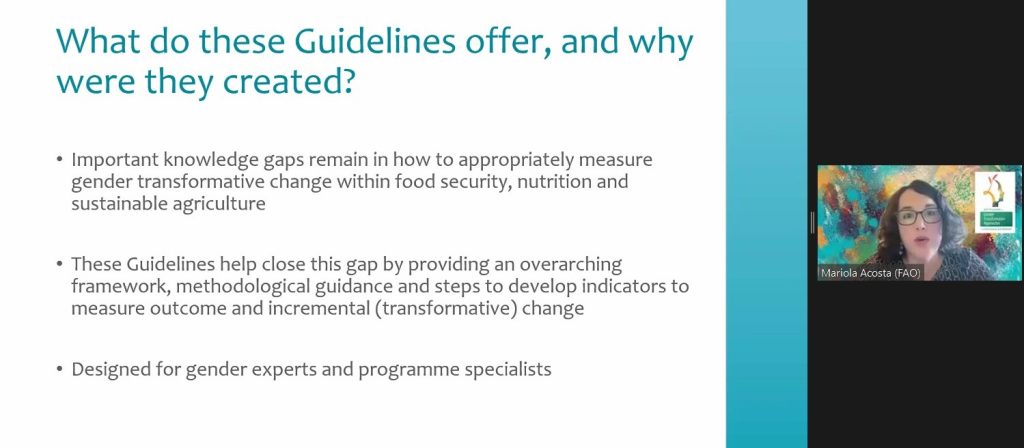
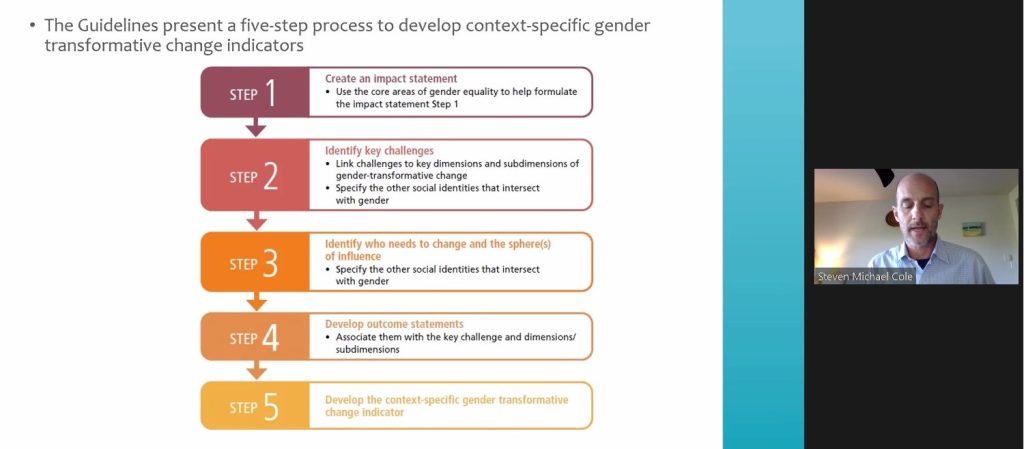
The core of the event was the presentation of the guidelines by two experts in the field: IITA Senior Scientist and Gender Specialist Steven Michael Cole and FAO Rural Women Empowerment Specialist Mariola Acosta. Acosta delved into the structural aspects of the guidelines, while Cole tackled the practical application of the framework for gender-specific transformation. Cole introduced a comprehensive five-step process for developing gender transformative change indicators and announced the forthcoming availability of a concise “at a glance” version of the guidelines.
A panel featuring CGIAR GENDER Impact Platform Science Officer and the HER+ Gender Equality Initiative Lead, Els Lecoutere, and IFAD Gender, Targeting, and Social Inclusion Specialist Silvia Sperandini discussed the opportunities and challenges associated with assessing normative constraints in agrifood systems. This was followed by a question-and-answer session moderated by FAO Senior Gender Officer and Team Leader Clara Park.
In her closing remarks, Senior Adviser for Gender Equality at the Ministry for Foreign Affairs of Finland and Lead of the EU Member States Working Group on the Gender Transformative Approach, Katja Tiilikainen, summarized the discussions, emphasizing that the guidelines had been developed to address the existing knowledge gaps in measuring gender transformative approaches, signaling a clear path forward in the journey towards gender equality in food security, nutrition, and sustainable agriculture. These guidelines were not just documents; they were inspirations guiding the way toward a more equitable and sustainable future for all.
Contribué par Ochuwa Favour DaramolaContribué par
Histoires récentes