
Some beneficiaries of the International Fund for Agricultural Development (IFAD)-funded Zero Hunger Project in Nigeria’s Ogun State have commended IITA for empowering them through training on wet hammer mill fabrication. This technology empowers cassava processors and feed millers to maximize the cassava processing value chain.
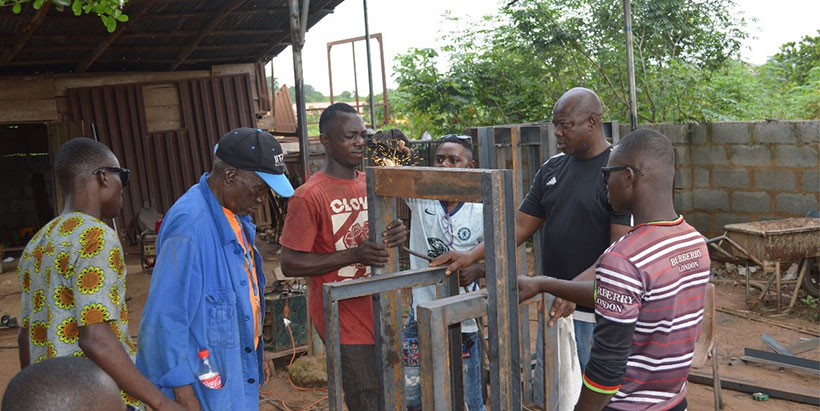
The training, held in Odeda Local Government Area at the Oye Steel Global Construction company, lasted five days, from 25 to 31 May. Fourteen fabricators from four Local Government Areas—Odeda, Yewa South, Obafemi Owode, and Abeokuta South—across the state participated in the training. Of these participants, 86% were youth who owned fabricating facilities. The trainees were intensively trained in sourcing materials and fabricating a wet hammer mill and cassava presser.
The innovation (wet hammer mill) developed to enhance cassava processing can process fresh cassava tubers and dry cassava chips for food and cassava peels for animal feed. The wet hammer mill was successfully and satisfactorily fabricated under the supervision of IITA Postharvest Specialist Peter Kolawole and Postharvest Engineer Thierno Diallo.
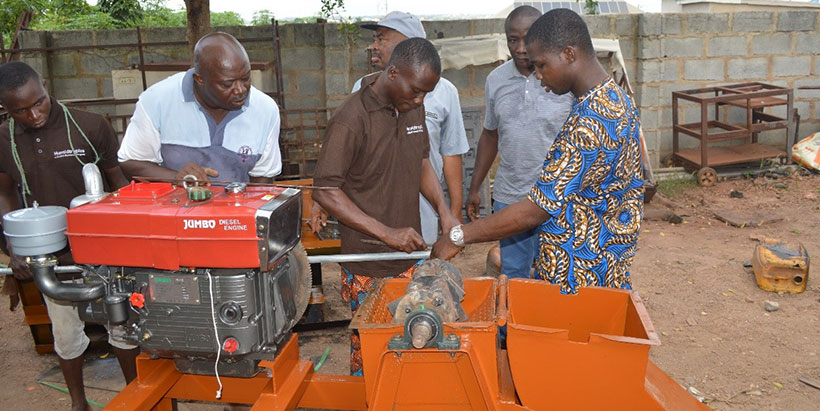
During his visit to the training venue, Ogun State Programme Coordinator of the Federal Government of Nigeria and IFAD-funded Value Chain Development Program (FGN/IFAD-VCDP), Mr Samuel Adeogun, thanked IITA for continually partnering with the FGN/IFAD-VCDP to lift the rural farmers out of poverty and for ensuring food security through the Zero Hunger Project. He noted that the training would help the VCDP to depend on fabricators in the state to produce equipment for farmers under the VCDP and the state at large. He added that before the training, the FGN/IFAD-VCDP relied on fabricators outside the state to produce agricultural equipment and repair them when needed. He further charged the trained fabricators to take the training seriously as the State Government will note their names as a go-to place for agriculture equipment fabrication in the state.
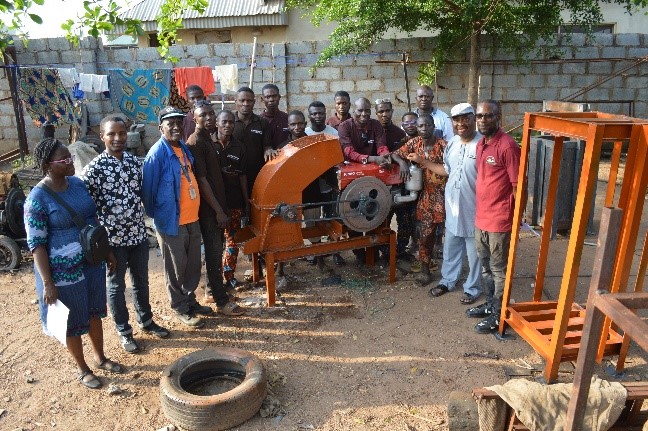
Kolawole noted that the training was borne out of the mechanization Needs Assessment Survey conducted by the Zero Hunger Project in the state and the need to create value for cassava peels by making it easier to convert to animal feed instead of indiscriminate disposal causing environmental pollution. He further disclosed that the machine was an IITA model, and it was important to train local fabricators in line with the “do it yourself” philosophy for continuity and sustainability.
At the end of the training, two of the trainees, Ogunseye Olubodun and Moruf Oyebowale, expressed their appreciation to IITA and VCDP for the opportunity to learn and promised to put the knowledge to use.
Contributed by Zero Hunger Project Team
Contribué par
Histoires récentes