
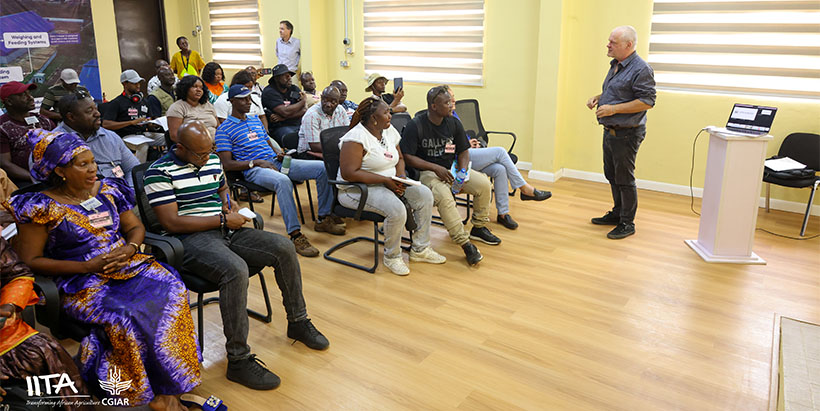
In alignment with IITA’s longstanding vision of transforming agriculture in sub-Saharan Africa, the institute recently hosted a delegation from the Food System Resilience Project (FSRP), based in Freetown, Sierra Leone. The delegation, comprising farmers’ representatives from various districts in Sierra Leone, officials from the Ministry of Agriculture, project leads, and FSRP technical staff, visited IITA on January 16 to explore potential areas of collaboration and learn about the institute’s climate-smart agricultural initiatives.
In his welcome remarks, IITA’s Director of Strategic Planning and Chief of Staff, Ibnou Dieng, introduced key experts from various research areas and provided an overview of the institute’s activities. This was complemented by a detailed documentary highlighting IITA’s research achievements and impact over the years. Kepifri Lakoh, the FSRP Project Lead, expressed gratitude to IITA and the AfricaRice team for accommodating the group on short notice.
During the visit, the delegation toured several key facilities, including the Virology Laboratory, the Regional Fertilizer Hub, AfricaRice’s research fields, the Aflasafe facility, the Semi-Autotrophic Hydroponics (SAH) Screen House, and the Cassava Processing Unit. These visits offered the delegates insights into the innovative technologies and practices driving agricultural transformation.
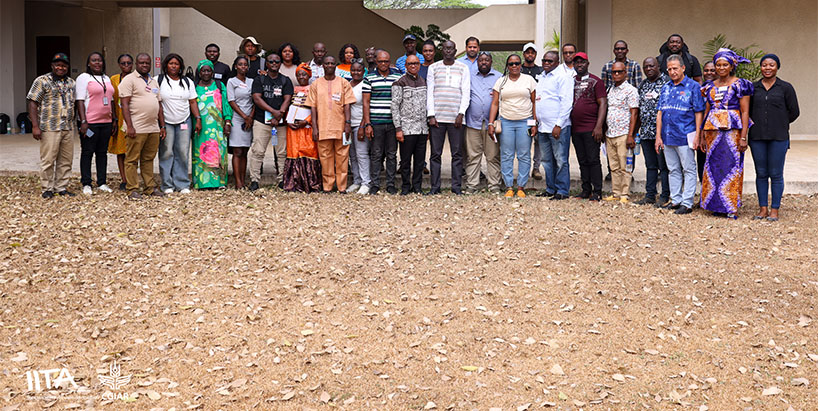
Given the importance of rice and cassava as staple crops in Sierra Leone, the delegation was particularly impressed by the SAH technology for cassava. This technology enables rapid multiplication and large-scale delivery of improved cassava varieties, which could significantly enhance yields and bolster pest and disease resistance in Sierra Leone. At the Cassava Processing Unit, the delegates observed state-of-the-art equipment designed to produce safe, high-value cassava products. The visit highlighted opportunities for technology transfer and capacity building to establish similar facilities in Sierra Leone. Samples of cassava-based products such as pastries, ice cream, and moin-moin were showcased and distributed for trials.
The delegation also expressed keen interest in various high-yield rice varieties, particularly one featuring large panicles and promising yield potential. These innovations underscore IITA’s role in supporting sustainable agricultural practices and productivity improvements.
In addition to the facility tours, the delegates engaged with representatives from IITA Youth in Agribusiness (IYA), who showcased the institute’s extensive experience in training young agripreneurs across Africa. Both parties emphasized the importance of changing youth perceptions of agriculture as a viable and profitable enterprise. The delegates stressed the need for robust screening processes to identify genuinely interested youth and women. They also highlighted the potential for technical assistance from IITA to develop and implement youth-focused agricultural programs in Sierra Leone, ensuring long-term sustainability and impact.
One delegate, a farmer, commended the FSRP project lead for involving farmers in the visit. She expressed enthusiasm for adopting small-scale irrigation systems to support year-round agricultural production in Sierra Leone. “As a farmer, the irrigation system was one of the highlights of the tour,” she said. “Adopting this would be of great help to us back in Sierra Leone.”
The visit concluded with an agreement to revise the existing partnership framework between IITA and FSRP – a World Bank funded project – to address additional needs. These include establishing a fertilizer laboratory, enhancing digital soil mapping in Sierra Leone, providing mentorship opportunities for current PhD students enrolled at FUNAAB, extending these opportunities to additional students and extension personnel, and accelerating technology transfer efforts. This collaborative approach aims to strengthen agricultural resilience and foster sustainable development in Sierra Leone.
Proposé par Tolulope Akinola
Contribué par
Histoires récentes