
Gombe State University students from the Department of Botany embarked on a field trip to the IITA Kano Station to learn about plant breeding, the crossing process, and the diseases that affect plants. The event took place on 29 August, with the Head of the Department, Prof. Halima Abba, present with some department staff members.
The students were placed in groups, going from one screen house to another, learning about good agronomic practices (GAP).
IITA-CGIAR Cowpea Host Plant Entomologist Abou Togola took the students on a tour of the screen houses, explaining that the Institute works collaboratively with national research organizations like the Institute for Agricultural Research (IAR), stating that he works with Breeders on host plant resistance to increase the performance of improved varieties and make them available for smallholder farmers across West Africa. Togola helps to tackle the issues of insects in plants.
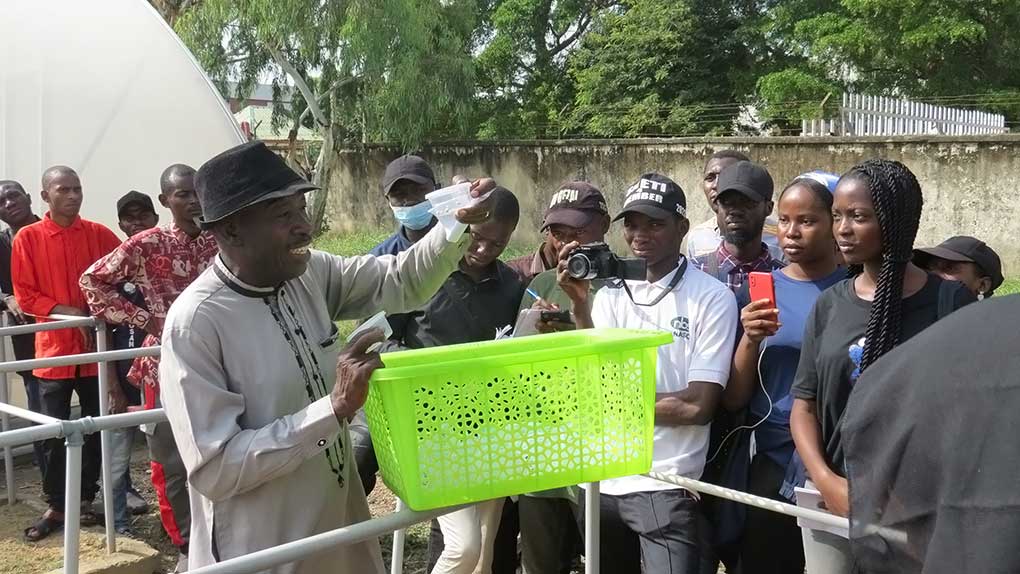
Prof. Abba mentioned that the purpose of the field visit is to expose the students to the practical aspect of the knowledge they have gained in the classroom. She said institutions such as IITA have all the resources needed to portray the practical aspect of theoretical knowledge. She said the visit has been very interesting, and they have gained more knowledge, particularly on crop pollination. She hoped Gombe State University would collaborate with IITA and send their MSc students for research and supervision in the future.
During an interview, Abduljaleel Bashir Ali, a student and president of the department, expressed great satisfaction with what he saw at the station. He mentioned that the visit was a very exciting one for him. Additionally, he gained a lot of knowledge of plant breeding.
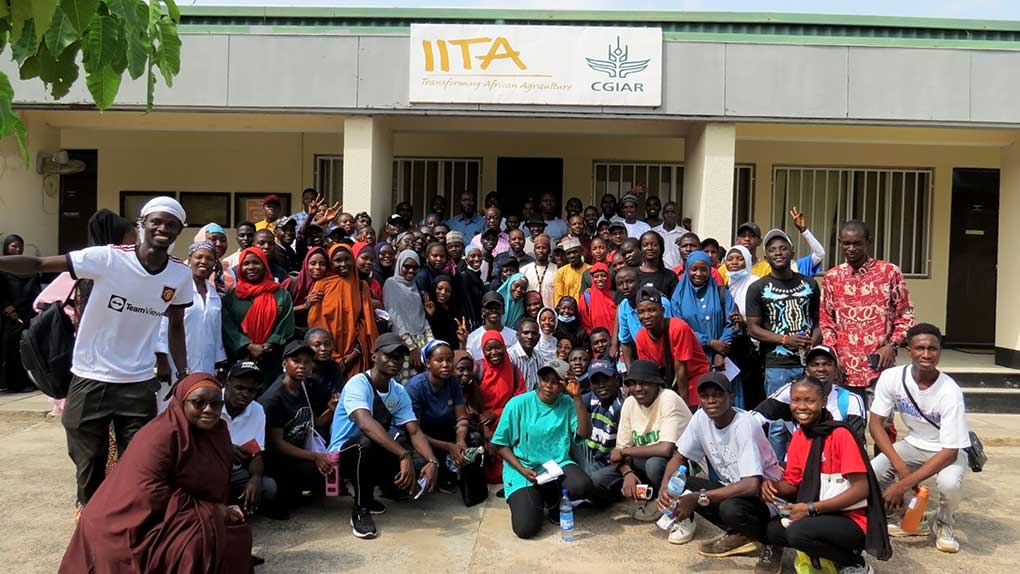
Another student, Fatima Mohammed Bello, was delighted to be part of the field trip, saying she has gained more knowledge. If possible, she would love to return as a National Youth Service Corps member.
At the end of the visit, IITA Kano Station Head Alpha Kamara was delighted to see the young students. He noted that with the interest shown by the students, the future of agriculture is in good hands. He encouraged them to take their studies seriously, wishing them the best in their academic pursuits.
Contribué par
Histoires récentes