
Yogurt, one of the dairy products from commercially domesticated mammals, is regarded as a nutritionally balanced food, containing all the nutrients in milk, and is readily available in its take-in form. Yogurt has therapeutic properties and is an excellent source of highly nutritious protein, energy, milk fat, unfermented lactose, and vitamins.
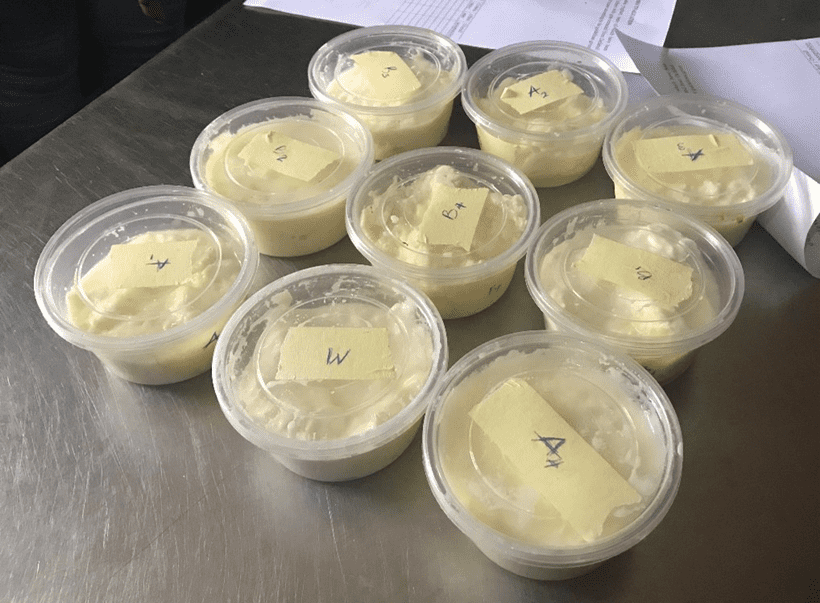
Yogurt is made with various ingredients, including milk, proteins, fats, sugars, emulsifiers, stabilizers, fruits, flavors, and bacterial cultures. The type and culture used for production are important factors in determining yogurt’s microstructure and textural properties. The product is made using a yogurt mix formulation, pasteurization and homogenization, fermentation, and packaging. Also, it is characterized by a firm jelly-like texture. Hence, it can be produced either as short-set or long-set yogurt.
Stabilizers and thickeners used to produce yogurt prevent the separation of ingredients, increase the viscosity, and inhibit the formation of large crystals, making it acceptable to consumers. Examples include corn starch, gelatin, gum acacia, agar, carboxyl methyl cellulose (CMC). Likewise, they are essential in manufacturing other dairy products such as milk drinks and ice-creams.
A study carried out in Enugu State, Nigeria, by a group of researchers, including IITA Food Science and Technology Associate Scientist Emmanuel Alamu, produced a short-set yogurt with different stabilizers at different concentrations. They determined the effects of these stabilizers and the length of fermentation on the nutritional, microbiological, and sensory properties of short-set yogurt.
According to the study, short-set yogurt’s physicochemical, microbial, and sensory properties yogurt increased due to the stabilizers at different fermentation times. Also, the increase in stabilizer concentration and fermentation time decreased the moisture content but increased the total solids, fat, ash, protein, total titratable acidity, pH level, and sugar. In addition, the viscosity of yogurt samples increases with the addition of stabilizers, with CMC having the highest increase and gum acacia the least. Therefore, short-set yogurt samples containing CMC have the highest protein proportion (0.5%), fat (1.0%), and ash content (1.0%).
Furthermore, it revealed that yogurt produced with corn starch produced the most desirable overall acceptability, viscosity, total solids at 1.0%, and TVC at 0.5% concentration.
The findings recommended that corn starch be used to produce short-set yogurts, while improvements can be made on the sensory attributes and the acidity in this yogurt type. Also, there is a need to improve gum acacia usage by combining it with other stabilizers to improve its flow rate since it generates good textural properties in dairy products.
Contribué par
Histoires récentes