L'IITA et Pairwise obtiennent un financement de $3,8 millions pour stimuler la production d'ignames grâce à l'édition génétique
8 octobre 2024
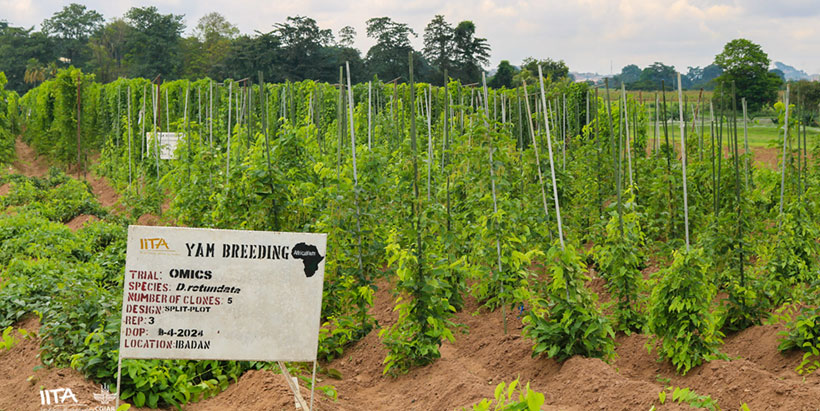
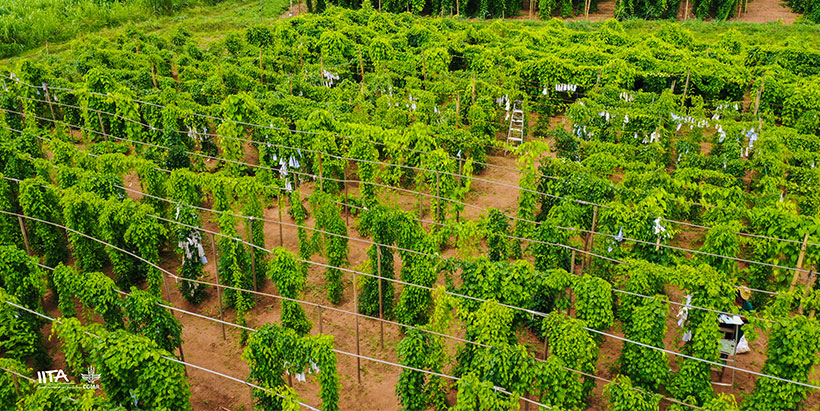
Culture de base importante dans de nombreux pays, l'optimisation de la production d'igname contribuera à combler le déficit nutritionnel généralisé en Afrique.Nairobi, Kenya : Le Institut international d'agriculture tropicale (IITA)), en partenariat avec Par paire, une entreprise technologique basée aux États-Unis, pionnière dans l’application de l’édition génétique à l’alimentation et à l’agriculture, a le plaisir d’annoncer l’octroi d’une subvention de 3 874 356 US$ par la Fondation Bill & Melinda Gates. Cette subvention soutiendra le projet “ Yam Optimized Architecture through Gene Editing (YOAGE) ”, un projet innovant visant à introduire de nouvelles variations génétiques dans l'igname (Dioscorea (et autres) qui améliore l'architecture des plantes. L'objectif du projet est de réduire la main-d'œuvre et l'impact environnemental liés au tuteurage traditionnel des plantes, tout en permettant la mécanisation de l'agriculture au Nigeria, où l'igname est une culture vivrière de base importante.
Le projet YOAGE, d’une durée de quatre ans, se concentrera sur le développement de variétés d’igname présentant des caractéristiques de croissance optimisées, l’amélioration des pratiques culturales et l’augmentation de la productivité et de la rentabilité, tout en collaborant avec diverses parties prenantes, notamment les agriculteurs locaux, les experts agricoles et les décideurs politiques. L’igname est la deuxième culture de racines et de tubercules la plus importante en Afrique subsaharienne après le manioc, avec une production d’environ 75 millions de tonnes (FAO, 2021) et fournit environ 200 kilocalories par jour à plus de 400 millions de personnes dans les pays tropicaux à faibles revenus et en situation de déficit alimentaire. L’Afrique produit plus de 97% de la production mondiale d’ignames, le Nigeria représentant à lui seul environ 66% du total mondial (FAO, 2021). En Afrique de l’Ouest, et plus particulièrement au Nigeria, l’igname n’est pas seulement une culture de base, mais joue également un rôle central en tant que culture phare traditionnelle profondément ancrée dans les normes sociétales, remplissant diverses fonctions sociales et religieuses.
L'IITA et Pairwise obtiennent un financement de $3,8 millions pour stimuler la production d'ignames grâce à l'édition génétique
Malgré cette importance, la culture de l'igname est confrontée à plusieurs défis, tels que le coût élevé des matériels de plantation et de la main-d'œuvre, la baisse de la fertilité des sols, des variétés à faible rendement nécessitant un tuteurage, ainsi qu'une pression accrue des ravageurs et des maladies due à l'intensification de l'agriculture. Si la sélection conventionnelle a permis d’améliorer les variétés d’igname en termes de résistance aux ravageurs, d’adaptabilité et de qualité, elle n’a toutefois réalisé que des progrès limités dans l’optimisation de l’architecture des plantes pour l’agriculture mécanisée. Le projet YOAGE s’appuiera sur des outils avancés d’édition génétique pour surmonter ces défis et contribuer à la sécurité alimentaire mondiale, en particulier face au changement climatique, aux ressources limitées et à l’évolution des demandes des consommateurs.
Leena Tripathi, directrice du pôle Afrique de l’Est de l’IITA, responsable du programme de biotechnologie et chercheuse principale du projet YOAGE, a déclaré : “ L’obtention de cette subvention de la Fondation Gates marque une avancée décisive dans la transformation de la production d’ignames grâce à des technologies innovantes d’édition génétique. En développant des variétés améliorées d’ignames à port buissonnant, nous visons à réduire les besoins en main-d’œuvre, à améliorer l’efficacité agricole et à renforcer la durabilité. À terme, notre objectif est d’améliorer les moyens de subsistance des agriculteurs et de renforcer la sécurité alimentaire. ’
Le projet YOAGE vise à développer ces variétés en identifiant les gènes contrôlant la croissance des plantes, en optimisant l’édition génétique pour mettre au point des variétés semi-naines et en analysant les impacts de ces changements sur la main-d’œuvre et les dynamiques de genre. En s’attaquant aux défis techniques et environnementaux liés à la production d’ignames, le projet devrait améliorer considérablement la productivité et les revenus des agriculteurs, contribuant ainsi à l’objectif mondial d’une agriculture durable et de la sécurité alimentaire.
La Fondation Gates a sélectionné l’IITA et Pairwise pour cette subvention en raison de leurs antécédents avérés en matière d’innovations agricoles et d’engagement communautaire dans la région. L’IITA est un centre mondial d’excellence pour la sélection des ignames et une source d’amélioration génétique fournissant des génotypes d’ignames nouveaux et améliorés aux principaux producteurs d’ignames en Afrique. Il dispose également d’une longue tradition et d’une grande expérience en matière de sélection et de génétique de l’igname, ainsi que d’un réseau de sélection bien établi qui relie plusieurs programmes nationaux issus des principales zones de culture de l’igname en Afrique.
Pairwise est un pionnier de l’application des technologies d’édition génétique dans l’alimentation et l’agriculture grâce à son Plateforme Fulcrum™, la boîte à outils la plus largement développée et validée pour l'application de CRISPR chez les plantes. En tant que l'une des premières entreprises au monde à commercialiser des aliments et des produits agricoles issus de l'édition génétique, Pairwise rassemble des leaders de l'agriculture, de la technologie et de l'agroalimentaire pour exploiter le potentiel transformateur des nouvelles technologies génomiques afin de créer de nouveaux produits innovants.
“ La Fondation Gates considère l'édition génétique comme une opportunité de faire progresser plus rapidement des cultures importantes comme l'igname, en suivant une voie tracée par une longue histoire de sélection végétale. Grâce à l'édition génétique, nous pouvons conserver toutes les caractéristiques favorables des cultures adaptées, telles que la valeur nutritive et la résistance au climat, tout en éliminant des caractéristiques telles que le port sarmenteux des ignames qui limitent le potentiel d'une culture. En associant l'IITA à Pairwise, nous avons réuni des scientifiques de premier plan pour relever ce défi important et encourager l'adoption de variétés améliorées pour les petits agriculteurs ”, a expliqué le Dr Nicolas Bate, responsable principal de programme à la Fondation Bill & Melinda Gates.
Dr Shai Lawit, directeur de la stratégie et des tests des caractères chez Pairwise, ajouté : “ L'édition génomique offre une approche révolutionnaire pour relever les défis mondiaux de l'agriculture. Grâce à d'importantes initiatives public-privé telles que celle-ci avec l'IITA, la Fondation Bill & Melinda Gates et Pairwise, nous améliorons non seulement la production agricole ; nous autonomisons également les petits exploitants agricoles, réduisons les impacts environnementaux et faisons progresser la sécurité alimentaire pour combler le déficit nutritionnel mondial, qui est particulièrement marqué dans les pays en développement. ”
Grâce à ce travail combiné, le projet YOAGE démontrera l'importance des partenariats public-privé pour libérer les avantages de l'édition génomique au Nigéria et en Afrique en général.
À propos de l'IITA
L'Institut international d'agriculture tropicale (IITA) est une institution à but non lucratif qui génère des innovations agricoles pour relever les défis les plus pressants de l'Afrique en matière de faim, de malnutrition, de pauvreté et de dégradation des ressources naturelles. En collaboration avec divers partenaires à travers l'Afrique subsaharienne, l'IITA améliore les moyens de subsistance, renforce la sécurité alimentaire et nutritionnelle, augmente l'emploi et préserve l'intégrité des ressources naturelles. L'IITA est membre du CGIAR, un partenariat mondial de recherche agricole pour un avenir sûr sur le plan alimentaire et nutritionnel.
À propos de Pairwise
Pairwise est un pionnier dans l'application des technologies d'édition génétique à l'alimentation et à l'agriculture, et développe de nouvelles variétés de fruits, de légumes et de cultures à grande échelle. Soutenue par des investisseurs de premier plan tels que Deerfield, Aliment Capital, Leaps by Bayer, Temasek et Corteva Catalyst, Pairwise a levé $40 millions en septembre 2024, portant le montant total de ses financements à $155 millions. L'entreprise a été cofondée par le Dr Tom Adams et le Dr Haven Baker, et son équipe scientifique compte des experts de renom issus de Harvard et du MIT.
Contact médiasDocteur Leena Tripathi
Directeur du pôle Afrique de l'Est
Responsable du programme de biotechnologie
Institut international d'agriculture tropicale (IITA)
E-mail : L.Tripathi@cgiar.org
Site web www.iita.orgDiana Souder
Directeur ou Directrice du marketing et de la communication
Pairwise
Courriel : Communications@Pairwise.com
Site web www.Pairwise.com
Olamide Deborah Nwanze est une chercheuse principale spécialisée dans la recherche sur l'approche "genre" afin d'éclairer les politiques de sélection participative et inclusive, de développement de variétés et de systèmes semenciers concernant les cultures de racines, tubercules et bananes (RTB) au siège de l'Institut International d'Agriculture Tropicale, à Ibadan, au Nigeria. Elle est candidate au doctorat à l'Université d'Ibadan et titulaire d'un master et d'un diplôme d'ingénieur agronome en vulgarisation agricole et développement rural. Olamide est membre du programme African Women in Agricultural Research and Development – Gender Responsive Agricultural Systems Policy (SAISIE DE RÉCOMPENSEet les Chercheuses Sensibles au Genre Équipées pour la Transformation Agricole (SUPER. Elle cherche à appliquer ses apprentissages en matière d’approche genre, recherche sensible au genre, et expertise en développement et examen de politiques pour faciliter l’accès et l’adoption par les femmes, les jeunes, les enfants et les groupes sociaux vulnérables aux innovations agricoles qui garantissent la sécurité alimentaire, nutritionnelle, des revenus et des moyens de subsistance en Afrique. Ses rôles actuels comprennent le mentorat de chercheurs stagiaires, le développement de guides et manuels de formation, la mise en œuvre et l'adaptation de cadres et d'outils genre, l'engagement des acteurs de la chaîne de valeur en tant que partenaires de la science citoyenne, l'examen et la refonte des politiques, la gestion et l'analyse des données. Ses recherches actuelles portent sur les méthodes mixtes ainsi que sur les approches participatives et interdisciplinaires pour saisir et mettre en évidence les dynamiques de genre, les besoins, les préférences et les défis rencontrés par les parties prenantes au sein de la chaîne de valeur des moyens de subsistance agricoles afin de prioriser des stratégies axées sur le genre dans les programmes de sélection, la conception et la mise en œuvre des politiques.
de Sousa, K., van Etten, J., Manners, R. Bello, A., Teeken, B., Olaosebikan, O., et al. 2024. L'approche tricot : un cadre agile pour les essais décentralisés à la ferme soutenus par la science citoyenne. Une rétrospective. Agron. Sustain. Dev. 44, 8. https://doi.org/10.1007/s13593-023-00937-1
Madu, T., Onwuka, S., Nwafor, S., Onyemauwa, N., Ejechi, M., Ofoeze, M., Ukeje, B., Eluagu, C., Olaosebikan, O., Okoye, B., 2024. Les études sur les consommateurs inclusifs en matière de genre améliorent l'amélioration du manioc au Nigeria dans : Frontiers in Sociology, volume 9, numéro : 1224504, doi : 10.3389/fsoc.2024.1224504
Olaosebikan, O. ; Bello, A. ; Utoblo, O. ; Okoye, B. ; Olutegbe, N. ; Garner, E. ; Teeken, B. ; Bryan, E. ; Forsythe, L. ; Cole, S. ; Madu, T. 2023. Facteurs de stress et résilience au sein de la chaîne de valeur du manioc au Nigeria : Caractéristiques préférées des variétés de manioc et stratégies de réponse des hommes et des femmes pour informer l'amélioration variétale. Sustainability 15, 7837. https://doi.org/10.3390/su15107837
Okoye, B., Ofoeze, M., Ejechi, M., Onwuka, S., Nwafor, S., Onyemauwa, N., Ukeje, B., Eluagu, C., Obidiegwu, J.*, Olaosebikan, O., Madu, T.* 2023. Priorisation des traits préférés dans la chaîne de valeur de l'igname au Nigeria : une analyse de la situation en matière de genre in: Frontiers in Sociology, volume 8, numéro : 1232626, pages 1 – 9, ISSN 2297-7775, 2023. https://www.frontiersin.org/articles/10.3389/fsoc.2023.1232626/full
Olaosebikan, O., Bello, A. A., de Sousa, K., Ndjouenkeu, R., Adesokan, M., Alamu, E. O., Agbona, A., van Etten, J., Kegah, F. N.*, Dufour, D., Bouniol, A., Teeken, B. 2023. Acceptabilité par les consommateurs des produits alimentaires à base de gari-eba de manioc dans des contextes culturels et environnementaux variés en utilisant l'approche triade de comparaison des technologies (tricot) dans : Journal of the Science of Food and Agriculture,
Teeken, B., Olaosebikan, O., Bello, A. A., Madu, T.*, Cole, S. M. 2023. Évaluation qualitative de la positionnalité et des préférences des dyades en relation avec les activités liées au manioc : travailler avec des scientifiques citoyens du procès tricot https://hdl.handle.net/10568/138326 Type : Manuel
Bouniol, A., Ceballos, H., Bello, A. A., Teeken, B., Olaosebikan, O., Owoade, D., Agbona, A., Fotso Kuate, A., Madu, T.*, Okoye, B.*, Ofoeze, M.*, Nwafor, S.*, Onyemauwa, N.*, Adinsi, L.*, Forsythe, L., Dufour, D. 2023. Impact variétal sur le travail des femmes, la charge de travail et la pénibilité associée dans le traitement des plantes à racines, tubercules et bananes : focus sur le manioc en Afrique subsaharienne dans : Journal of the Science of Food and Agriculture, pages 1 – 25, ISSN 0022-5142,
Bello, A. A., Agbona, A., Olaosebikan, O., Edughaen, G., Dufour, D., Bouniol, A., Iluebbey, P., Ndjouenkeu, R.*, Rabbi, I. Y., Teeken, B. 2023. Effets génétiques et environnementaux sur la productivité de la transformation et le rendement des produits alimentaires : la pénibilité du travail des femmes dans : Journal of the Science of Food and Agriculture, pages 1 – 32, ISSN 0022-5142, 5
Cavicchioli, M., Zimbiti, T., Teeken, B., Nwanze, D.O., Liani, M., Parkes, E. & Bello, A. 2023. Rapport sur la formation en sélection génétique sensible au genre à l'IITA. Genetic Resources Center, IITA-HQ, Ibadan, 21-23 septembre 2022. Ibadan, Nigéria : IITA, (34 p.).https://hdl.handle.net/10568/131368
Agbona, A. Peteti P., Teeken B., Olaosebikan O. Bello, A. A., Parkes, E., Rabbi, I. Y., Mueller, L., Egesi, C., Kulakow, P. 2022. Gestion des données dans les programmes d'amélioration des cultures RTB africaines multidisciplinaires. In : Williamson, H.F., Leonelli, S. (eds) Towards Responsible Plant Data Linkage: Data Challenges for Agricultural Research and Development. Springer, Cham. https://doi.org/10.1007/978-3-031-13276-6_5
Lora Forsythe, Pricilla Marimo, Sarah Mayanja, Olamide D. Olaosebikan, Esme Stuart, Bela Teeken, Benjamin Okoye, Tessy Madu, (2021). Analyse transversale du genre dans RTBfoods Étape 2 Cartographie des genres sur les produits RTB. Comprendre les moteurs des préférences en matière de traits et le développement de profils de produits RTB multi-utilisateurs, WP1. Londres, Royaume-Uni : Rapport scientifique de terrain RTBfoods, 30 p.
Teeken, B., Garner, E., Agbona, A., Balogun, I., Olaosebikan, O., Bello, A., Madu, T., Okoye, B., Egesi, C., Kulakow, P. et Tufan, H.A. 2021. Au-delà des “ traits des femmes ” : explorer comment le genre, les différences sociales et les caractéristiques des ménages influencent les préférences pour les traits. Frontiers Systèmes alimentaires durables 5:740926. https://doi.org/10.3389/fsufs.2021.740926
Teeken, B., Agbona, A., Bello, A., Olaosebikan, O., Alamu, E., Adesokan, M., Awoyale, W., Madu, T., Okoye, B., Chijioke, U., Owoade, D., Okoro, M., Bouniol, A., Dufour, D., Hershey, C., Rabbi, I., Maziya‐Dixon, B., Egesi, C., Tufan, H. et Kulakow, P. (020. Comprendre les préférences variétales du manioc par le classement par paires du gari-eba et du fufu préparés par des agriculteurs-transformateurs locaux. Int J Food Sci Technol.https://doi.org/10.1111/ijfs.14862
Bela Teeken, Olamide Olaosebikan, Ireti Balogun, Benjamin Okoye, Tessy Madu, Steven Cole, Abolore Bello, Elizabeth Parkes. (2020). Pilotage des outils de profil client et produit G+ pour l'amélioration sensible au genre du manioc au Nigeria. Nigeria : Institut international d'agriculture tropicale (IIAT). https://hdl.handle.net/20.500.11766/13000

 Nairobi, Kenya : Le Institut international d'agriculture tropicale (IITA)), en partenariat avec Par paire, une entreprise technologique basée aux États-Unis, pionnière dans l’application de l’édition génétique à l’alimentation et à l’agriculture, a le plaisir d’annoncer l’octroi d’une subvention de 3 874 356 US$ par la Fondation Bill & Melinda Gates. Cette subvention soutiendra le projet “ Yam Optimized Architecture through Gene Editing (YOAGE) ”, un projet innovant visant à introduire de nouvelles variations génétiques dans l'igname (Dioscorea (et autres) qui améliore l'architecture des plantes. L'objectif du projet est de réduire la main-d'œuvre et l'impact environnemental liés au tuteurage traditionnel des plantes, tout en permettant la mécanisation de l'agriculture au Nigeria, où l'igname est une culture vivrière de base importante.
Le projet YOAGE, d’une durée de quatre ans, se concentrera sur le développement de variétés d’igname présentant des caractéristiques de croissance optimisées, l’amélioration des pratiques culturales et l’augmentation de la productivité et de la rentabilité, tout en collaborant avec diverses parties prenantes, notamment les agriculteurs locaux, les experts agricoles et les décideurs politiques. L’igname est la deuxième culture de racines et de tubercules la plus importante en Afrique subsaharienne après le manioc, avec une production d’environ 75 millions de tonnes (FAO, 2021) et fournit environ 200 kilocalories par jour à plus de 400 millions de personnes dans les pays tropicaux à faibles revenus et en situation de déficit alimentaire. L’Afrique produit plus de 97% de la production mondiale d’ignames, le Nigeria représentant à lui seul environ 66% du total mondial (FAO, 2021). En Afrique de l’Ouest, et plus particulièrement au Nigeria, l’igname n’est pas seulement une culture de base, mais joue également un rôle central en tant que culture phare traditionnelle profondément ancrée dans les normes sociétales, remplissant diverses fonctions sociales et religieuses.
Nairobi, Kenya : Le Institut international d'agriculture tropicale (IITA)), en partenariat avec Par paire, une entreprise technologique basée aux États-Unis, pionnière dans l’application de l’édition génétique à l’alimentation et à l’agriculture, a le plaisir d’annoncer l’octroi d’une subvention de 3 874 356 US$ par la Fondation Bill & Melinda Gates. Cette subvention soutiendra le projet “ Yam Optimized Architecture through Gene Editing (YOAGE) ”, un projet innovant visant à introduire de nouvelles variations génétiques dans l'igname (Dioscorea (et autres) qui améliore l'architecture des plantes. L'objectif du projet est de réduire la main-d'œuvre et l'impact environnemental liés au tuteurage traditionnel des plantes, tout en permettant la mécanisation de l'agriculture au Nigeria, où l'igname est une culture vivrière de base importante.
Le projet YOAGE, d’une durée de quatre ans, se concentrera sur le développement de variétés d’igname présentant des caractéristiques de croissance optimisées, l’amélioration des pratiques culturales et l’augmentation de la productivité et de la rentabilité, tout en collaborant avec diverses parties prenantes, notamment les agriculteurs locaux, les experts agricoles et les décideurs politiques. L’igname est la deuxième culture de racines et de tubercules la plus importante en Afrique subsaharienne après le manioc, avec une production d’environ 75 millions de tonnes (FAO, 2021) et fournit environ 200 kilocalories par jour à plus de 400 millions de personnes dans les pays tropicaux à faibles revenus et en situation de déficit alimentaire. L’Afrique produit plus de 97% de la production mondiale d’ignames, le Nigeria représentant à lui seul environ 66% du total mondial (FAO, 2021). En Afrique de l’Ouest, et plus particulièrement au Nigeria, l’igname n’est pas seulement une culture de base, mais joue également un rôle central en tant que culture phare traditionnelle profondément ancrée dans les normes sociétales, remplissant diverses fonctions sociales et religieuses.