
NOUVELLES DE L'IITA

IITA joins call for a global surveillance system to detect and halt the spread of crop disease
juillet 2, 2019

A team of researchers has argued in Science that as nations collaborate to detect and stop human p andemics, a global surveillance system for crop diseases is needed to safeguard agricultural trade and food security.
IITA joins call for a global surveillance system to detect and halt the spread of crop disease
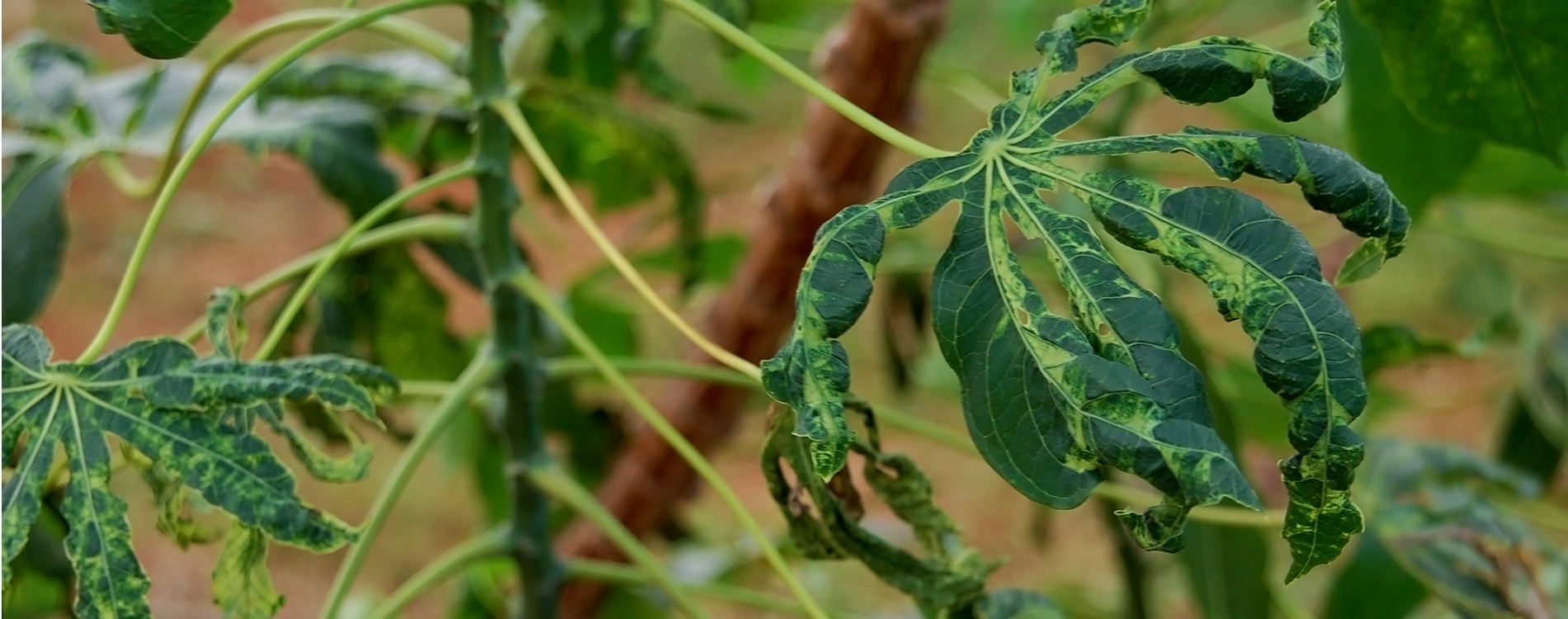
Cassava Mosaic Disease

How crop diseases affect people

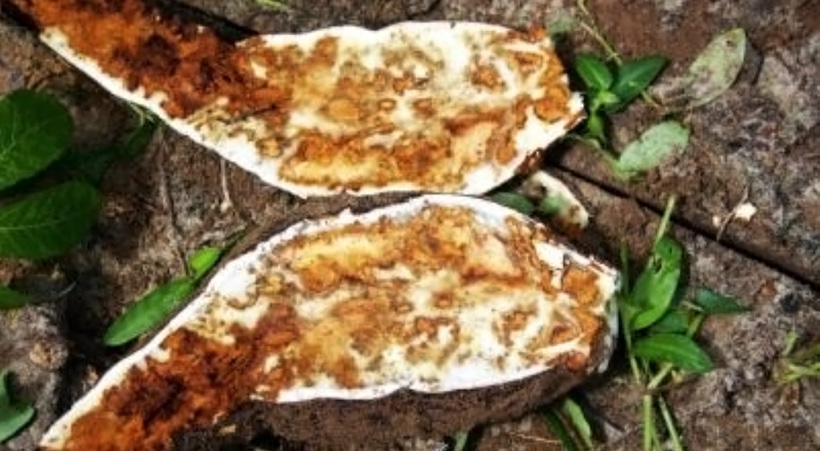
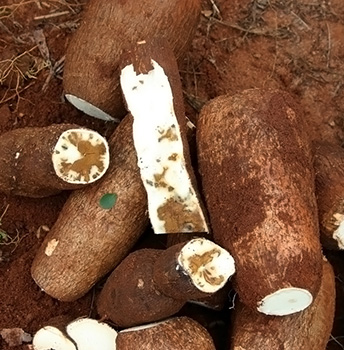
Since 2004, millions of farmers growing cassava in the Great Lakes region of East and Central Africa have been hit by the devastating p andemic of cassava brown streak disease (CBSD) just as they were recovering from losing their production to another catastrophic viral plague—cassava mosaic disease (CMD). The CBSD p andemic almost set back to zero the concerted efforts by scientists from national and international research programs to develop and distribute improved disease-resistant varieties. Scientists had to go back to the drawing board, and only in the last few years have farmers begun to see light at the end of the ‘cassava tunnel’, as new varieties resistant to both diseases have been identified and disseminated through high-quality seed systems.

But people are their own worst enemy as plant viruses and other pathogens get moved from place to place through casual uncontrolled movements of infected cuttings, stems, and plantlets that are used to establish new crops in new locations. It’s believed that this is how Asian CMD ‘jumped’ tens of thous ands of kilometers from India or Sri Lanka in South Asia to Southeast Asia, where a small outbreak in northeastern Cambodia kicked off a br and-new p andemic of CMD. In no time, new reports of CMD were received from Vietnam and Thail and, and within four years it has spread to affect 10% of cassava cultivation in the region, threatening millions of smallholder farmers and exports of cassava starch worth US$4 billion annually.

The cassava examples are just one of many cases of the dangers that pests and diseases pose to global agriculture, and their spread to new areas is currently among the top threats to efforts to increase global agricultural productivity.

To satisfy the growing dem and for food, global agricultural production should increase by 70% by 2050, but more than a fifth of the five staple crops that provide half the globe’s caloric intake is lost to pests and diseases each year. Climate change and global trade are the main drivers of the spread, emergence, and reemergence of crop pests and diseases, and containment action is often inefficient, especially in low-income countries (LICs).

A global system to prevent pest and disease spread

To counter these threats, a team of international scientists are calling for the creation of a Global Surveillance System (GSS) to improve and interconnect crop biosecurity systems and enhance global food security. In a paper published in the June 28 edition of Science, the team propose that the system prioritize six major food crops—maize, potato, cassava, rice, beans, and wheat—as well as other important food and cash crops that are traded across borders. The position paper sets out why such a system is needed, what the key components of the system would be, and how it could be set up.
IITA joins call for a global surveillance system to detect and halt the spread of crop disease
Cassava Brown Streak Disease

The GSS proposal is the result of a scientific meeting convened by CIAT in 2018 at the Rockefeller Foundation’s Bellagio Center in Italy. James Legg, a Principal Scientist and plant virologist at IITA who has worked for more than 25 years on cassava diseases, is among the team of international scientists behind these efforts.

“We have seen the destructive impacts that cassava disease epidemics have on the food and income security of farmers in East and Central Africa and the time and effort required to control these diseases. IITA has been working with governments and other partners in the region for over 20 years to bring these diseases under control.

Great progress is now being achieved but experience has shown that we can control pest/disease outbreaks much more effectively by responding with greater speed and coordination. Establishing a robust surveillance system is one of the most effective ways to prevent pests and diseases spreading to new areas, thereby protecting our food supply,” says Legg.

Although many national and regional plant protection organizations (NPPOs and RPPOs) work to monitor and contain crop disease outbreaks, many countries, particularly LICs, do not efficiently exchange information, leading to delays in coordinated responses that are required to prevent disease establishment and spread.

Mónica Carvajal, a researcher at the International Center for Tropical Agriculture (CIAT) and lead author says that a GSS would help expedite action for future outbreaks. “The question I asked was why does it take so long to respond to crop diseases in some cases?” said Carvajal. “What is the limitation to responding faster from the outset?”

What would GSS do?
IITA joins call for a global surveillance system to detect and halt the spread of crop disease
Cassava Brown Streak Disease

The GSS proposes to focus on tightening networks of “active surveillance” and “passive surveillance” personnel who are on the front lines of disease outbreaks. Active surveillance consists of labs at agriculture inspection stations, and customs and phytosanitary inspectors at borders and ports of entry.

The second group includes loose networks of farmers, extension workers with national agricultural organizations, scientists and agronomists at research centers and universities, and specialists in agriculture industries.

The GSS would tap into cutting-edge technology for rapid disease diagnostics and take advantage of communication networks, including social media, to rapidly share information.

The proposed GSS aims to bring together the more than 180 member nations of the International Plant Protection Convention (IPPC), with a focus on countries that have high risk relative to ability to respond.

The proposed GSS framework is especially important as 2020 has been designated as the International Year of Plant Health by the United Nations.

Media contacts:

Katherine Lopez, Head of Communication, k.lopez@cgiar.org
Catherine Njuguna, Regional Communication Manager, c.njuguna@cgiar.org


Contribué par

Recent stories

Aucun article trouvé

Laisser un commentaire

Votre adresse e-mail ne sera pas publiée. Les champs obligatoires sont indiqués avec *

Retour en haut
Olaosebikan, Olamide

Olamide Deborah Nwanze est une chercheuse principale spécialisée dans la recherche sur l'approche "genre" afin d'éclairer les politiques de sélection participative et inclusive, de développement de variétés et de systèmes semenciers concernant les cultures de racines, tubercules et bananes (RTB) au siège de l'Institut International d'Agriculture Tropicale, à Ibadan, au Nigeria. Elle est candidate au doctorat à l'Université d'Ibadan et titulaire d'un master et d'un diplôme d'ingénieur agronome en vulgarisation agricole et développement rural. Olamide est membre du programme African Women in Agricultural Research and Development – Gender Responsive Agricultural Systems Policy (SAISIE DE RÉCOMPENSEet les Chercheuses Sensibles au Genre Équipées pour la Transformation Agricole (SUPER. Elle cherche à appliquer ses apprentissages en matière d’approche genre, recherche sensible au genre, et expertise en développement et examen de politiques pour faciliter l’accès et l’adoption par les femmes, les jeunes, les enfants et les groupes sociaux vulnérables aux innovations agricoles qui garantissent la sécurité alimentaire, nutritionnelle, des revenus et des moyens de subsistance en Afrique. Ses rôles actuels comprennent le mentorat de chercheurs stagiaires, le développement de guides et manuels de formation, la mise en œuvre et l'adaptation de cadres et d'outils genre, l'engagement des acteurs de la chaîne de valeur en tant que partenaires de la science citoyenne, l'examen et la refonte des politiques, la gestion et l'analyse des données. Ses recherches actuelles portent sur les méthodes mixtes ainsi que sur les approches participatives et interdisciplinaires pour saisir et mettre en évidence les dynamiques de genre, les besoins, les préférences et les défis rencontrés par les parties prenantes au sein de la chaîne de valeur des moyens de subsistance agricoles afin de prioriser des stratégies axées sur le genre dans les programmes de sélection, la conception et la mise en œuvre des politiques.

À l'IITA, elle contribue à la mise en œuvre du CGIAR Initiative d'Élevage Accéléré et Innovation génétique Programmes ; recherche participative et genre au sein des Prochaine Génération ManiocHarvestPlusRTBAliments, et Tricot-ClimMob 1000Fermes Projets ; et la communication des connaissances sur le genre via le Série de webinaires G-LENS, vidéo documentaire, notes de politiquepublications, et blogs.


Publications récentes

de Sousa, K., van Etten, J., Manners, R. Bello, A., Teeken, B., Olaosebikan, O., et al. 2024. L'approche tricot : un cadre agile pour les essais décentralisés à la ferme soutenus par la science citoyenne. Une rétrospective. Agron. Sustain. Dev. 44, 8. https://doi.org/10.1007/s13593-023-00937-1

Madu, T., Onwuka, S., Nwafor, S., Onyemauwa, N., Ejechi, M., Ofoeze, M., Ukeje, B., Eluagu, C., Olaosebikan, O., Okoye, B., 2024. Les études sur les consommateurs inclusifs en matière de genre améliorent l'amélioration du manioc au Nigeria dans : Frontiers in Sociology, volume 9, numéro : 1224504, doi : 10.3389/fsoc.2024.1224504

Olaosebikan, O. ; Bello, A. ; Utoblo, O. ; Okoye, B. ; Olutegbe, N. ; Garner, E. ; Teeken, B. ; Bryan, E. ; Forsythe, L. ; Cole, S. ; Madu, T. 2023. Facteurs de stress et résilience au sein de la chaîne de valeur du manioc au Nigeria : Caractéristiques préférées des variétés de manioc et stratégies de réponse des hommes et des femmes pour informer l'amélioration variétale. Sustainability 15, 7837. https://doi.org/10.3390/su15107837

Okoye, B., Ofoeze, M., Ejechi, M., Onwuka, S., Nwafor, S., Onyemauwa, N., Ukeje, B., Eluagu, C., Obidiegwu, J.*, Olaosebikan, O., Madu, T.* 2023. Priorisation des traits préférés dans la chaîne de valeur de l'igname au Nigeria : une analyse de la situation en matière de genre in: Frontiers in Sociology, volume 8, numéro : 1232626, pages 1 – 9, ISSN 2297-7775, 2023. https://www.frontiersin.org/articles/10.3389/fsoc.2023.1232626/full

Olaosebikan, O., Bello, A. A., de Sousa, K., Ndjouenkeu, R., Adesokan, M., Alamu, E. O., Agbona, A., van Etten, J., Kegah, F. N.*, Dufour, D., Bouniol, A., Teeken, B. 2023. Acceptabilité par les consommateurs des produits alimentaires à base de gari-eba de manioc dans des contextes culturels et environnementaux variés en utilisant l'approche triade de comparaison des technologies (tricot) dans : Journal of the Science of Food and Agriculture,

Teeken, B., Olaosebikan, O., Bello, A. A., Madu, T.*, Cole, S. M. 2023. Évaluation qualitative de la positionnalité et des préférences des dyades en relation avec les activités liées au manioc : travailler avec des scientifiques citoyens du procès tricot https://hdl.handle.net/10568/138326 Type : Manuel

Bouniol, A., Ceballos, H., Bello, A. A., Teeken, B., Olaosebikan, O., Owoade, D., Agbona, A., Fotso Kuate, A., Madu, T.*, Okoye, B.*, Ofoeze, M.*, Nwafor, S.*, Onyemauwa, N.*, Adinsi, L.*, Forsythe, L., Dufour, D. 2023. Impact variétal sur le travail des femmes, la charge de travail et la pénibilité associée dans le traitement des plantes à racines, tubercules et bananes : focus sur le manioc en Afrique subsaharienne dans : Journal of the Science of Food and Agriculture, pages 1 – 25, ISSN 0022-5142,

Bello, A. A., Agbona, A., Olaosebikan, O., Edughaen, G., Dufour, D., Bouniol, A., Iluebbey, P., Ndjouenkeu, R.*, Rabbi, I. Y., Teeken, B. 2023. Effets génétiques et environnementaux sur la productivité de la transformation et le rendement des produits alimentaires : la pénibilité du travail des femmes dans : Journal of the Science of Food and Agriculture, pages 1 – 32, ISSN 0022-5142, 5

Cavicchioli, M., Zimbiti, T., Teeken, B., Nwanze, D.O., Liani, M., Parkes, E. & Bello, A. 2023. Rapport sur la formation en sélection génétique sensible au genre à l'IITA. Genetic Resources Center, IITA-HQ, Ibadan, 21-23 septembre 2022. Ibadan, Nigéria : IITA, (34 p.).https://hdl.handle.net/10568/131368

Agbona, A. Peteti P., Teeken B., Olaosebikan O. Bello, A. A., Parkes, E., Rabbi, I. Y., Mueller, L., Egesi, C., Kulakow, P. 2022. Gestion des données dans les programmes d'amélioration des cultures RTB africaines multidisciplinaires. In : Williamson, H.F., Leonelli, S. (eds) Towards Responsible Plant Data Linkage: Data Challenges for Agricultural Research and Development. Springer, Cham. https://doi.org/10.1007/978-3-031-13276-6_5

Lora Forsythe, Pricilla Marimo, Sarah Mayanja, Olamide D. Olaosebikan, Esme Stuart, Bela Teeken, Benjamin Okoye, Tessy Madu, (2021). Analyse transversale du genre dans RTBfoods Étape 2 Cartographie des genres sur les produits RTB. Comprendre les moteurs des préférences en matière de traits et le développement de profils de produits RTB multi-utilisateurs, WP1. Londres, Royaume-Uni : Rapport scientifique de terrain RTBfoods, 30 p.

Teeken, B., Garner, E., Agbona, A., Balogun, I., Olaosebikan, O., Bello, A., Madu, T., Okoye, B., Egesi, C., Kulakow, P. et Tufan, H.A. 2021. Au-delà des “ traits des femmes ” : explorer comment le genre, les différences sociales et les caractéristiques des ménages influencent les préférences pour les traits. Frontiers Systèmes alimentaires durables 5:740926. https://doi.org/10.3389/fsufs.2021.740926

Teeken, B., Agbona, A., Bello, A., Olaosebikan, O., Alamu, E., Adesokan, M., Awoyale, W., Madu, T., Okoye, B., Chijioke, U., Owoade, D., Okoro, M., Bouniol, A., Dufour, D., Hershey, C., Rabbi, I., Maziya‐Dixon, B., Egesi, C., Tufan, H. et Kulakow, P. (020. Comprendre les préférences variétales du manioc par le classement par paires du gari-eba et du fufu préparés par des agriculteurs-transformateurs locaux. Int J Food Sci Technol. https://doi.org/10.1111/ijfs.14862

Bela Teeken, Olamide Olaosebikan, Ireti Balogun, Benjamin Okoye, Tessy Madu, Steven Cole, Abolore Bello, Elizabeth Parkes. (2020). Pilotage des outils de profil client et produit G+ pour l'amélioration sensible au genre du manioc au Nigeria. Nigeria : Institut international d'agriculture tropicale (IIAT). https://hdl.handle.net/20.500.11766/13000