
Institutional collaborations are critical for effectively monitoring, preventing, and controlling plant pathogens and pests. The Nigerian Agricultural Quarantine Service (NAQS) has partnered with IITA–CGIAR, through the Institute’s Germplasm Health Unit (IITA-GHU), as a resource base to enhance the knowledge, surveillance, and diagnostics capacity of its workforce. A 100-member team of newly recruited NAQS staff visited IITA on 17 April, as part of a 3-week induction course at the NAQS training center in Ibadan.
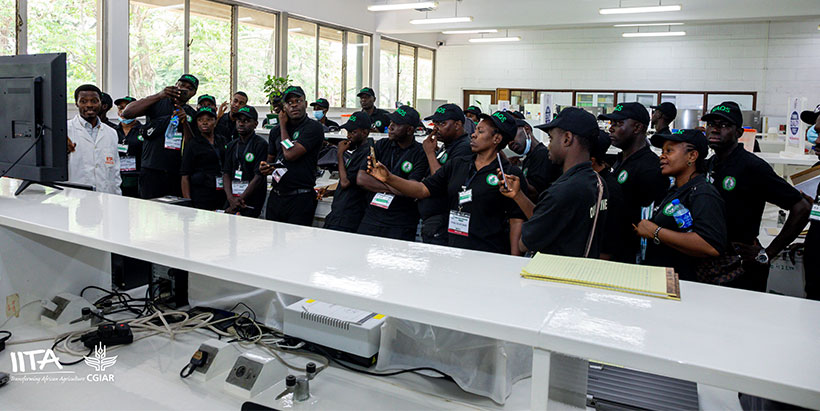
Head of IITA-GHU Lava Kumar welcomed the participants and introduced GHU functions and its role as a facilitator of import and export of pest-free germplasm (seed) and other bioresources, ensuring institutional compliance to phytosanitary regulations and biosecurity measures. He explained the interdependency of IITA and NAQS in preventing the spread of seed-transmitted pests during international seed exchange programs.
IITA and NAQS share an important mandate to prevent the transboundary spread of pests. He highlighted examples of epidemics and pandemics caused by inadvertently-introduced pests, such as the banana bunchy top virus, one of the earliest records of transboundary diseases reported in Africa. This has become a major concern after the virus’ expansion from Central Africa to Western and Eastern Africa, as well as the most recent introductions such as the fall armyworm, maize lethal necrosis, taro blight, and a few others.
Kumar also highlighted threats of pathogens originated in Africa, such as cassava brown streak virus and banana bacterial wilt. He emphasized the critical role of NAQS in mitigating the threat of pest invasion through biosecurity measures and border controls. He equated the staff of NAQS to the army protecting the national agriculture from pest invasion.
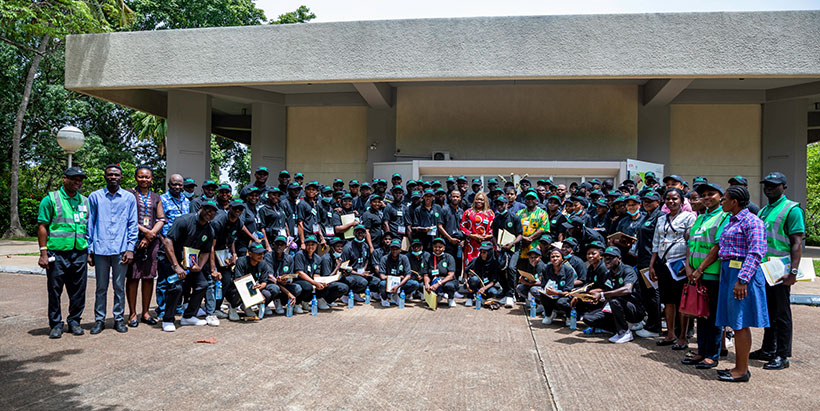
The participants were exposed to the R4D work on preventing the transboundary spread of pests and pathogens, diagnostics methods for seed health testing, and phytosanitary procedures for producing pest-free planting materials.
The NAQS Head of Post-entry, Diagnostic, and Surveillance Station, Ogunfunmilayo Akindele, thanked IITA for hosting the team and encouraged the staff to make the most of the knowledge gained during the training program. One of the trainees, Adeh Grace, expressed satisfaction with the experience, highlighting IITA as one of the most indispensable stakeholders NAQS could work with to protect Nigeria’s agricultural economy and that of the world.
During the session, IITA-GHU Laboratory Manager, Oguntade Oluwole, encouraged the new staff to leverage the collaboration and assured good support throughout the training and national duties.
Participants visited the Genetic Resources Center, GHU, and Virology and Diagnostics Unit as part of their visit. IITA Director-West Africa and Head of the GRC, Michael Abberton, thanked NAQS for its continued support of IITA and highlighted the significant contributions of NAQS to the IITA mission.
The two institutions have shared a working relationship for over 50 years, and their representatives spoke fondly of the collaboration and mutual benefits gained.
Proposé par Folake Oduntan
Contribué par
Histoires récentes