
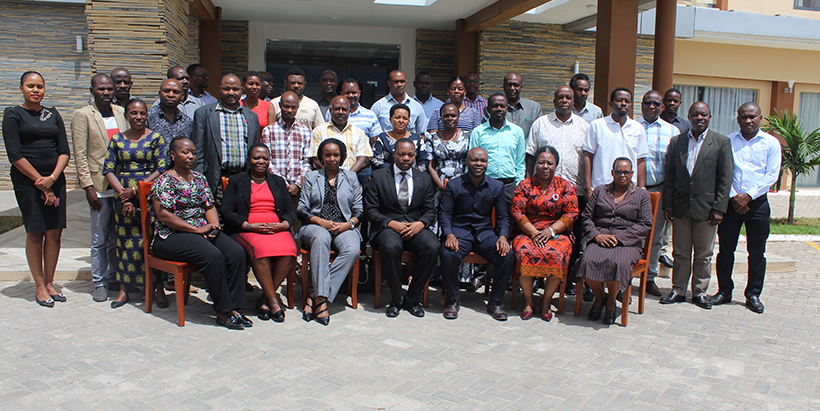
IITA, en collaboration avec le Alliance Bioversity International – CIAT, launched a project in partnership with Tanzania’s Ministry of Agriculture (MoA) and the Fonds international de développement agricole (FIDA). The project aims to restore and increase the productivity and profitability of key food and oilseed crops and enhance market access for rural women and young farmers in Tanzania to mitigate the negative impact of COVID-19 and enhance resilience. The launch was held on 14 April at Rafiki Hotel, Dodoma, Tanzania.
The two-year project will benefit at least 20,000 smallholder farmers (women and youth) by strengthening the value chains of cassava, sunflower, and beans in five regions: Dodoma, Geita, Manyara, Morogoro, and Mwanza.
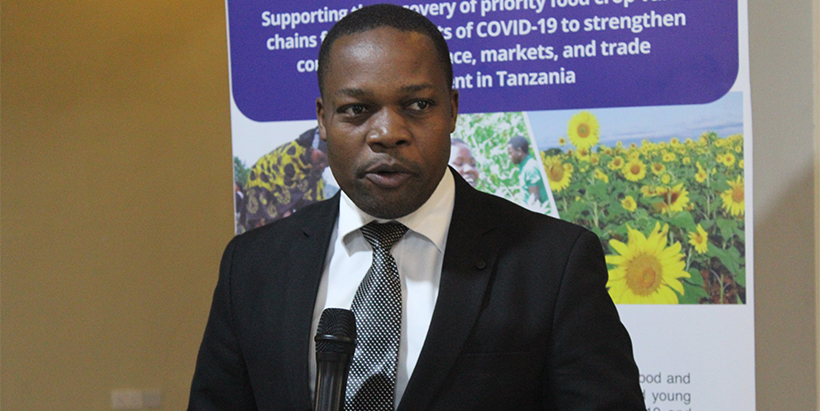
In his opening remarks, the IITA Eastern Africa Director representative, Frederick Baijukya, noted that the project would empower farmers by giving them quality seed to enhance crop production and strengthen market opportunities. Engaging youth in agriculture and processing and linking them to the market, government, and the private sector, is one of the project’s priorities.
“We all know that COVID-19 has negatively impacted the agriculture sector, destroying the entire global supply chain of inputs like fertilizer, chemicals, and seed. They became less available and were sold at a higher price to farmers. For such reasons, this project was designed to help farmers increase income to tackle COVID-19 impacts. IITA commits to ensuring that this project succeeds,” said Baijukya.
Director of Planning and Budget representing the Secretary-General of the Prime Minister’s Office, Mr Eleuter Kihwele, admitted that the project would serve as a catalyst for increased productivity and revitalizing Tanzania’s industrial sector because quality seed production remains low and does not meet current market demand.
“I’m grateful for these efforts, but also we need to keep researching to ensure that farmers have access to high-quality seed through this synergy. I hope that the project’s execution will greatly help increase food security, strengthen nutrition, and grow the agriculture and fisheries sectors,” Mr Eleuter added.
CIAT Country Coordinator representative, Adeguna Kessy, thanked IFAD for the funds and stressed the importance of selected crops in domestic and external trade development, particularly employment opportunities. He said, “I anticipate that enormous outcomes will be achieved after project implementation, resulting in a stable society with good health and sufficient revenue.”
Abdallah Ali (33), a sunflower oil processor from the Manyara region, noted that this project would open doors for cooperative associations since it has brought new technology in sunflower milling to assist in commercializing farmers’ products.
To implement the project, IITA will lead in close collaboration with the Alliance Bioversity International-CIAT. Tanzanians will lead implementation, working closely with IFAD country representation and supported by teams from IITA and CIAT.
The launched project contributes to two out of four major impact areas highlighted in the Ministry of Agriculture COVID-19 Response Plan for Agriculture and Food Security (CORPAF).
Contributed by Hadi Rashid
Contribué par
Histoires récentes