NEWS

Improving food security requires more than fertilizer use, stakeholders say at Nigeria Fertilizer Summit
octobre 23, 2026

ABUJA, Nigeria, 20 octobre 2026 — Improving food security requires more than increasing fertilizer use. It requires better soil intelligence, stronger collaboration, and practical systems that help farmers make informed decisions about the nutrients they apply to their fields. This was a recurring message from the 2026 Nigeria Fertilizer Summit on “Phosphorus and food security: Challenges in food production systems in Nigeria,” held on 19-20 October in Abuja.
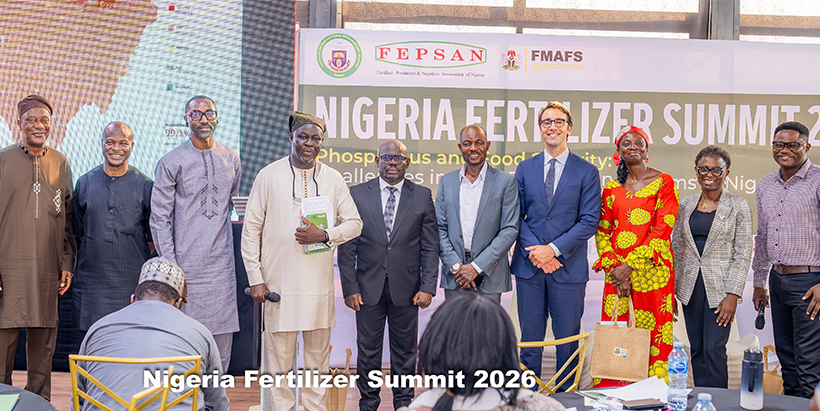
Summit organizers and key stakeholders on Day 1 of the summit.

The summit, organized by the Institute of Agricultural Research and Training (IAR&T), Obafemi Awolowo University, in partnership with the Fertilizer Producers and Suppliers Association of Nigeria (FEPSAN) and the Federal Ministry of Agriculture and Food Security’s Fertilizer and Inputs Support Services (FISS) Department, convened key stakeholders across Nigeria’s agricultural sector to explore how improved nutrient management can drive productivity and strengthen food security.

During the opening session, the Honorable Minister of Agriculture and Food Security, Senator Aliyu Sabi Abdullahi, represented by the Director of Agricultural Land and Climate Change Management Services, Federal Ministry of Agriculture and Food Security, Oshadiya Olanipekun, emphasized the importance of soil data, soil testing, and crop-specific fertilizer recommendations in improving farmers’ outcomes. He also acknowledged the contribution of the Regional Hub for Fertilizer and Soil Health for West Africa and the Sahel. The director noted that collaboration with the Hub creates opportunities to leverage regional expertise, technical support, and methodologies for site-specific fertilizer recommendations.
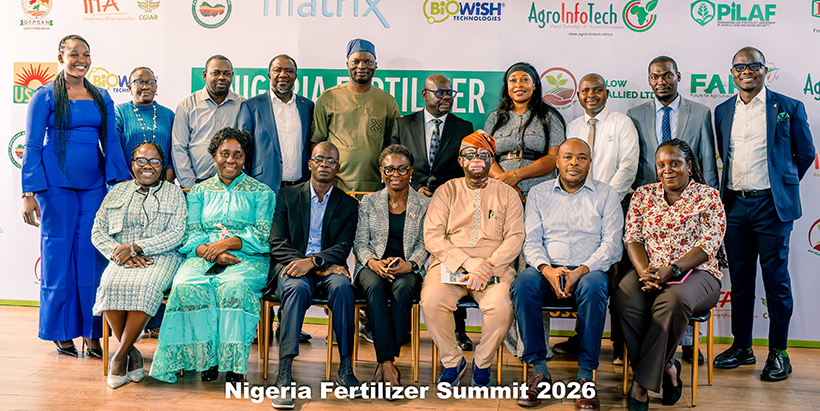
Local organizing committee members after the summit's opening ceremony.
Local organizing committee members after the summit’s opening ceremony.

Similarly, the Vice-Chancellor of Obafemi Awolowo University, Prof. Adebayo Simeon Bamire, stressed that improving agricultural productivity goes beyond fertilizer use alone and requires responsible nutrient management, research, innovation, and stronger partnerships.

Improving fertilizer-use efficiency through soil intelligence

Throughout the summit, speakers challenged the idea that agricultural transformation can be achieved simply by increasing fertilizer application. Discussions instead focused on fertilizer-use efficiency, balanced fertilization, nutrient management, and fertilizer recommendations tailored to local conditions. “Improving crop productivity is not only about applying fertilizer. It is about ensuring the right nutrient is applied in the right amount, at the right place, and under the right conditions,” said Prof. Vincent Aduramigba-Modupe, soil scientist and modeling expert at IAR&T and one of the summit organizers.

A major focus of the discussions was the growing role of soil data and information systems in agricultural decision-making. Participants highlighted the importance of digital soil maps, soil information systems, laboratory services, site-specific nutrient recommendations, and digital advisory tools in helping farmers and advisers make more informed decisions. Prof. Jibrin Mohammed Jibrin, Visiting Scientist with the Regional Hub and Professor of Soil Science at Bayero University Kano, described soil intelligence as fundamental to achieving food security. “The basis of food production and food security is the soil. You need healthy soil to produce well and feed the nation with nutritious food. To do that, you need soil intelligence,” he said.
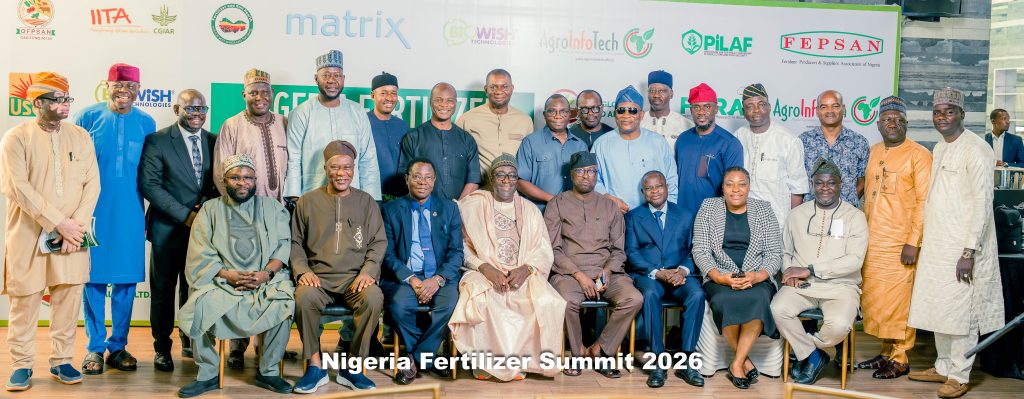
Panelists after the panel session on day 1 of the summit.

Presentations by the Regional Hub highlighted ongoing efforts to strengthen evidence-based nutrient management across Nigeria and the wider West Africa and Sahel region. These include the development of digital soil maps, support for national soil information systems, laboratory assessments and the validation of site- and crop-specific fertilizer recommendations. According to Dr Bello Muhammad Shehu, Senior Agronomist at the Regional Hub, improving phosphorus management is not simply about increasing fertilizer application. “It is about understanding what different soils and crops need and ensuring that farmers have access to the right products and the right advice,” he said.

Strengthening coordination and regional collaboration

Beyond technical solutions, participants emphasized the need for stronger coordination among institutions and initiatives working on soil health and fertilizer management. Although several initiatives are already underway, fragmented approaches can lead to duplication and slow implementation. Discussions highlighted the role of technical working groups, the Coalition of the Willing and Nigeria’s National Technical Team (NTT). The NTT serves as an interface between the country and the Regional Hub, helping align national priorities with regional expertise and technical support. “If we want to achieve our goals, we have to work together. Too many initiatives have been implemented in silos. Real progress will come when stakeholders align, collaborate and follow through on agreed actions,” Jibrin said.

Further discussions highlighted the Regional Hub’s role as a technical resource and convening platform for countries working to improve fertilizer use and soil health. Established as an ECOWAS sub-program, the Hub supports fertilizer and soil health priorities across West Africa and the Sahel by connecting regional expertise, technical support, and country-led initiatives. The Hub works with a consortium of partners including the Institut International d'Agriculture Tropicale (IIAT), the International Fertilizer Development Center (IFDC), OCP Africa, the International Soil Reference and Information Center (ISRIC), the African Plant Nutrition Institute (APNI) and Mohammed VI Polytechnic University (UM6P), alongside National Technical Teams, country focal points and research institutions across West Africa and the Sahel.

In a goodwill message, the incoming Hub Director, Bastiaan Huesken, said the Hub’s objective is to help countries transform evidence into practical solutions for farmers. “The Hub was created to turn soil data into recommendations, and recommendations into products and advice that farmers can use,” he said.

Turning discussions into action

As the summit concluded, participants adopted resolutions to strengthen soil information systems, extension and advisory services, fertilizer quality monitoring, fertilizer use efficiency, and digital decision-support tools. The resolutions underscored the need to translate research, soil data, and stakeholder collaboration into practical improvements in nutrient management and agricultural productivity.

For many participants, the goal extends beyond fertilizer application to healthier soils, more productive farms, and stronger agricultural economies. “The goal is better fertilizer use, healthier soils, better farm productivity and economies,” said Dr Donald Madukwe, Head of Partnerships in Africa at OCP Africa.

À propos du pôle régional pour les engrais et la santé des sols en Afrique de l'Ouest et au Sahel

Established in June 2024 and endorsed as an ECOWAS sub-program, the Regional Hub provides technical assistance to support investments in fertilizer and soil health across 17 countries in West Africa and the Sahel.

Hosted at the IITA campus in Ibadan, Nigeria, the Hub operates under ECOWAS governance. It is jointly managed by IITA, APNI, IFDC, Mohammed VI Polytechnic University (UM6P) and ISRIC, with support from the World Bank and OCP Africa. The Hub supports countries through 20 technical functions across six thematic areas, connecting scientific evidence, institutional capacity, policy support and regional collaboration.

Plus d'informations : https://regionalhub-west.org/

Contact presse : Ilerioluwa Oladipupo, Communications Officer, I.Oladipupo@cgiar.org


Contribué par

Ilerioluwa Oladipupo

Histoires récentes

Aucun article trouvé
Retour en haut
Olaosebikan, Olamide

Olamide Deborah Nwanze est une chercheuse principale spécialisée dans la recherche sur l'approche "genre" afin d'éclairer les politiques de sélection participative et inclusive, de développement de variétés et de systèmes semenciers concernant les cultures de racines, tubercules et bananes (RTB) au siège de l'Institut International d'Agriculture Tropicale, à Ibadan, au Nigeria. Elle est candidate au doctorat à l'Université d'Ibadan et titulaire d'un master et d'un diplôme d'ingénieur agronome en vulgarisation agricole et développement rural. Olamide est membre du programme African Women in Agricultural Research and Development – Gender Responsive Agricultural Systems Policy (SAISIE DE RÉCOMPENSEet les Chercheuses Sensibles au Genre Équipées pour la Transformation Agricole (SUPER. Elle cherche à appliquer ses apprentissages en matière d’approche genre, recherche sensible au genre, et expertise en développement et examen de politiques pour faciliter l’accès et l’adoption par les femmes, les jeunes, les enfants et les groupes sociaux vulnérables aux innovations agricoles qui garantissent la sécurité alimentaire, nutritionnelle, des revenus et des moyens de subsistance en Afrique. Ses rôles actuels comprennent le mentorat de chercheurs stagiaires, le développement de guides et manuels de formation, la mise en œuvre et l'adaptation de cadres et d'outils genre, l'engagement des acteurs de la chaîne de valeur en tant que partenaires de la science citoyenne, l'examen et la refonte des politiques, la gestion et l'analyse des données. Ses recherches actuelles portent sur les méthodes mixtes ainsi que sur les approches participatives et interdisciplinaires pour saisir et mettre en évidence les dynamiques de genre, les besoins, les préférences et les défis rencontrés par les parties prenantes au sein de la chaîne de valeur des moyens de subsistance agricoles afin de prioriser des stratégies axées sur le genre dans les programmes de sélection, la conception et la mise en œuvre des politiques.

À l'IITA, elle contribue à la mise en œuvre du CGIAR Initiative d'Élevage Accéléré et Innovation génétique Programmes ; recherche participative et genre au sein des Prochaine Génération Manioc, HarvestPlus, RTBAliments, et Tricot-ClimMob 1000Fermes Projets ; et la communication des connaissances sur le genre via le Série de webinaires G-LENS, vidéo documentaire, notes de politique, publications, et blogs.


Publications récentes

de Sousa, K., van Etten, J., Manners, R. Bello, A., Teeken, B., Olaosebikan, O., et al. 2024. L'approche tricot : un cadre agile pour les essais décentralisés à la ferme soutenus par la science citoyenne. Une rétrospective. Agron. Sustain. Dev. 44, 8. https://doi.org/10.1007/s13593-023-00937-1

Madu, T., Onwuka, S., Nwafor, S., Onyemauwa, N., Ejechi, M., Ofoeze, M., Ukeje, B., Eluagu, C., Olaosebikan, O., Okoye, B., 2024. Les études sur les consommateurs inclusifs en matière de genre améliorent l'amélioration du manioc au Nigeria dans : Frontiers in Sociology, volume 9, numéro : 1224504, doi : 10.3389/fsoc.2024.1224504

Olaosebikan, O. ; Bello, A. ; Utoblo, O. ; Okoye, B. ; Olutegbe, N. ; Garner, E. ; Teeken, B. ; Bryan, E. ; Forsythe, L. ; Cole, S. ; Madu, T. 2023. Facteurs de stress et résilience au sein de la chaîne de valeur du manioc au Nigeria : Caractéristiques préférées des variétés de manioc et stratégies de réponse des hommes et des femmes pour informer l'amélioration variétale. Sustainability 15, 7837. https://doi.org/10.3390/su15107837

Okoye, B., Ofoeze, M., Ejechi, M., Onwuka, S., Nwafor, S., Onyemauwa, N., Ukeje, B., Eluagu, C., Obidiegwu, J.*, Olaosebikan, O., Madu, T.* 2023. Priorisation des traits préférés dans la chaîne de valeur de l'igname au Nigeria : une analyse de la situation en matière de genre in: Frontiers in Sociology, volume 8, numéro : 1232626, pages 1 – 9, ISSN 2297-7775, 2023. https://www.frontiersin.org/articles/10.3389/fsoc.2023.1232626/full

Olaosebikan, O., Bello, A. A., de Sousa, K., Ndjouenkeu, R., Adesokan, M., Alamu, E. O., Agbona, A., van Etten, J., Kegah, F. N.*, Dufour, D., Bouniol, A., Teeken, B. 2023. Acceptabilité par les consommateurs des produits alimentaires à base de gari-eba de manioc dans des contextes culturels et environnementaux variés en utilisant l'approche triade de comparaison des technologies (tricot) dans : Journal of the Science of Food and Agriculture,

Teeken, B., Olaosebikan, O., Bello, A. A., Madu, T.*, Cole, S. M. 2023. Évaluation qualitative de la positionnalité et des préférences des dyades en relation avec les activités liées au manioc : travailler avec des scientifiques citoyens du procès tricot https://hdl.handle.net/10568/138326 Type : Manuel

Bouniol, A., Ceballos, H., Bello, A. A., Teeken, B., Olaosebikan, O., Owoade, D., Agbona, A., Fotso Kuate, A., Madu, T.*, Okoye, B.*, Ofoeze, M.*, Nwafor, S.*, Onyemauwa, N.*, Adinsi, L.*, Forsythe, L., Dufour, D. 2023. Impact variétal sur le travail des femmes, la charge de travail et la pénibilité associée dans le traitement des plantes à racines, tubercules et bananes : focus sur le manioc en Afrique subsaharienne dans : Journal of the Science of Food and Agriculture, pages 1 – 25, ISSN 0022-5142,

Bello, A. A., Agbona, A., Olaosebikan, O., Edughaen, G., Dufour, D., Bouniol, A., Iluebbey, P., Ndjouenkeu, R.*, Rabbi, I. Y., Teeken, B. 2023. Effets génétiques et environnementaux sur la productivité de la transformation et le rendement des produits alimentaires : la pénibilité du travail des femmes dans : Journal of the Science of Food and Agriculture, pages 1 – 32, ISSN 0022-5142, 5

Cavicchioli, M., Zimbiti, T., Teeken, B., Nwanze, D.O., Liani, M., Parkes, E. & Bello, A. 2023. Rapport sur la formation en sélection génétique sensible au genre à l'IITA. Genetic Resources Center, IITA-HQ, Ibadan, 21-23 septembre 2022. Ibadan, Nigéria : IITA, (34 p.).https://hdl.handle.net/10568/131368

Agbona, A. Peteti P., Teeken B., Olaosebikan O. Bello, A. A., Parkes, E., Rabbi, I. Y., Mueller, L., Egesi, C., Kulakow, P. 2022. Gestion des données dans les programmes d'amélioration des cultures RTB africaines multidisciplinaires. In : Williamson, H.F., Leonelli, S. (eds) Towards Responsible Plant Data Linkage: Data Challenges for Agricultural Research and Development. Springer, Cham. https://doi.org/10.1007/978-3-031-13276-6_5

Lora Forsythe, Pricilla Marimo, Sarah Mayanja, Olamide D. Olaosebikan, Esme Stuart, Bela Teeken, Benjamin Okoye, Tessy Madu, (2021). Analyse transversale du genre dans RTBfoods Étape 2 Cartographie des genres sur les produits RTB. Comprendre les moteurs des préférences en matière de traits et le développement de profils de produits RTB multi-utilisateurs, WP1. Londres, Royaume-Uni : Rapport scientifique de terrain RTBfoods, 30 p.

Teeken, B., Garner, E., Agbona, A., Balogun, I., Olaosebikan, O., Bello, A., Madu, T., Okoye, B., Egesi, C., Kulakow, P. et Tufan, H.A. 2021. Au-delà des “ traits des femmes ” : explorer comment le genre, les différences sociales et les caractéristiques des ménages influencent les préférences pour les traits. Frontiers Systèmes alimentaires durables 5:740926. https://doi.org/10.3389/fsufs.2021.740926

Teeken, B., Agbona, A., Bello, A., Olaosebikan, O., Alamu, E., Adesokan, M., Awoyale, W., Madu, T., Okoye, B., Chijioke, U., Owoade, D., Okoro, M., Bouniol, A., Dufour, D., Hershey, C., Rabbi, I., Maziya‐Dixon, B., Egesi, C., Tufan, H. et Kulakow, P. (020. Comprendre les préférences variétales du manioc par le classement par paires du gari-eba et du fufu préparés par des agriculteurs-transformateurs locaux. Int J Food Sci Technol. https://doi.org/10.1111/ijfs.14862

Bela Teeken, Olamide Olaosebikan, Ireti Balogun, Benjamin Okoye, Tessy Madu, Steven Cole, Abolore Bello, Elizabeth Parkes. (2020). Pilotage des outils de profil client et produit G+ pour l'amélioration sensible au genre du manioc au Nigeria. Nigeria : Institut international d'agriculture tropicale (IIAT). https://hdl.handle.net/20.500.11766/13000