
NEWS

Futures workshop challenges conventional thinking on agricultural research
octobre 23, 2026
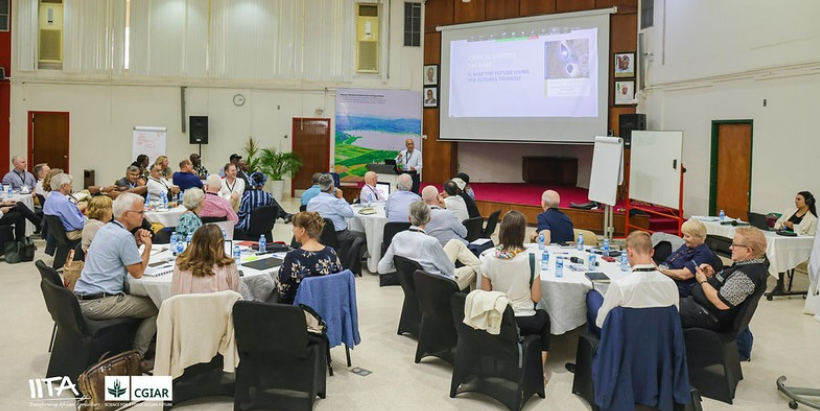
Workshop Facilitator, Sohail Inayatullah during a futures-thinking approaches session at the workshop.

Agricultural research institutions may need to rethink not only how they develop technologies, but also the assumptions, relationships, and systems that determine whose knowledge counts, how solutions are shaped, and what ultimately defines impact.

That was a central message that emerged from the CGIAR futures workshop, which brought together Board Members and the 12 Director Generals of CGIAR institutes to examine how agricultural research could evolve in the face of climate change, food-system vulnerabilities, and increasingly complex challenges confronting farmers and communities.

Facilitated by the UNESCO Chair on Future Studies Sohail Inayatullah, the workshop introduced participants to futures-thinking approaches designed to question assumptions about the future, explore alternative possibilities, and identify pathways towards a preferred future.

One of the key concepts explored was the idea of a “used future,” a future shaped by assumptions, practices, and institutional models inherited from the past and repeatedly carried forward, even when the conditions around them have changed.

Within agricultural research, the traditional Green Revolution model was discussed as an example of this kind of thinking: scientists generate technologies, research institutions transfer them through extension systems, and farmers are positioned largely as recipients expected to adopt the resulting innovations.

The workshop questioned whether such a linear model is sufficient for a world where climate pressures, changing food systems, diverse local realities, and the value of indigenous and farmer knowledge are increasingly important.

For CGIAR Executive Managing Director Dr Ismahane Elouafi, the challenge goes beyond changing organizational structures. It requires changing the relationship between agricultural research and the people and systems it seeks to serve. Elouafi highlighted the need to move from a predominantly supply-driven, expert-to-recipient model towards greater co-creation involving researchers, farmers, and other actors across food systems.
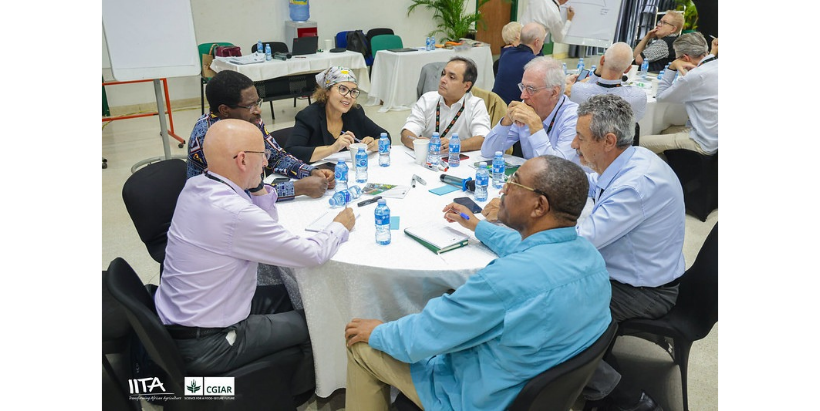
Former Ethiopian Prime Minister, Hailemariam Desalegn, CGIAR Executive Managing Director Dr Ismahane Elouafi and some Board Members deliberating during a break session.

In such a model, farmers are not simply end users of technology. Their knowledge, experience, and understanding of local conditions become part of the process of defining problems, shaping solutions, and determining whether those solutions are relevant.

This also means looking beyond formal strategies and organizational structures to examine the deeper assumptions that influence how institutions operate.

Through causal layered analysis, participants explored how visible policies and strategies can coexist with deeper worldviews, narratives, and assumptions that continue to shape institutional behavior.

The exercise suggested that changing structures alone may not necessarily change the way institutions think or work. A deeper transformation may require institutions to question the stories they tell about their purpose, the relationships they build, and the measures they use to define success.

Beyond scientific publications and yield gains, Dr Elouafi pointed to considerations such as long-term soil health, nutritional diversity, and community agency as important elements in imagining future food systems.

Imagining a different CGIAR

The workshop did not stop at diagnosing what needs to change. In breakout sessions, participants were asked to imagine alternative futures and develop new metaphors for the systems and relationships they would like to see.

One vision was captured through the metaphor of “the Nimble Wise Octopus,” an image of a system with empowered and capable national agricultural research systems, or NARS, rooted in their ecosystems through equitable relationships.
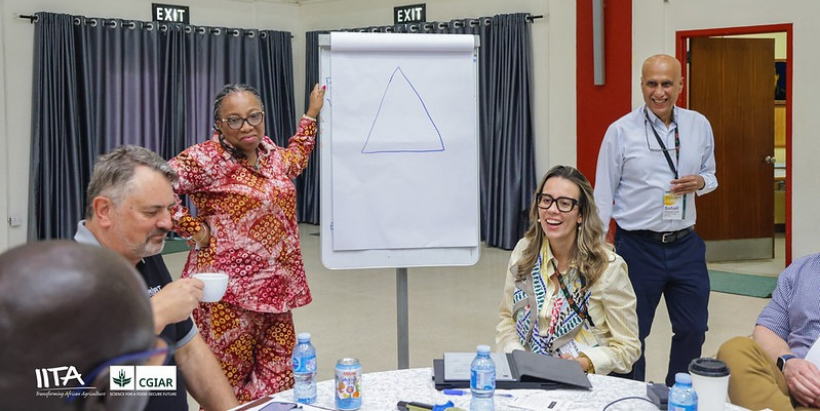
Participants during a group exercise using collaborative discussions and visual mapping to explore alternative futures for agricultural research.

Another group envisioned “the Hive,” describing a CGIAR that engages countries and regions through a demand-driven worldview and focuses on delivering science with measurable impact.

The “Neural Network” offered another possible direction, centered on connecting knowledge and actors around packaged, scalable solutions.

Participants also imagined a future in which agriculture and nature are trusted allies, with locally contextualized agriculture and nature systems that serve purposes beyond food production, connect with other systems, and draw on a much wider range of commodities than those dominant today.

A further metaphor, “the Baobab Talking Tree,” captured the idea of building a single, connected system that brings people, data, and expertise together around real needs, both virtually and on the ground.

Taken together, these visions point to a different conception of agricultural research: less isolated, less linear, and more connected to the ecosystems, institutions, knowledge systems, and communities in which research is ultimately expected to create value.

From preferred futures to action

Participants also examined different possible pathways towards what a preferred future could look like. A fundamental question was what the relationship between science, farmers, national research systems, policymakers, and other food-system actors should look like in the future.

The answer, according to the deliberations, may require more than new technologies or organizational restructuring. It may require new relationships, new measures of impact, stronger connections between knowledge systems, and a willingness to challenge institutional assumptions that have become so familiar that they are no longer questioned.

Dr Ismahane stated that the significance of the futures exercise lies not in predicting a single future for agricultural research, but in making alternative futures visible and asking what institutions must begin doing differently now if they want those futures to become possible.


Contribué par

Anu Oyeleye

Retour en haut
Olaosebikan, Olamide

Olamide Deborah Nwanze est une chercheuse principale spécialisée dans la recherche sur l'approche "genre" afin d'éclairer les politiques de sélection participative et inclusive, de développement de variétés et de systèmes semenciers concernant les cultures de racines, tubercules et bananes (RTB) au siège de l'Institut International d'Agriculture Tropicale, à Ibadan, au Nigeria. Elle est candidate au doctorat à l'Université d'Ibadan et titulaire d'un master et d'un diplôme d'ingénieur agronome en vulgarisation agricole et développement rural. Olamide est membre du programme African Women in Agricultural Research and Development – Gender Responsive Agricultural Systems Policy (SAISIE DE RÉCOMPENSEet les Chercheuses Sensibles au Genre Équipées pour la Transformation Agricole (SUPER. Elle cherche à appliquer ses apprentissages en matière d’approche genre, recherche sensible au genre, et expertise en développement et examen de politiques pour faciliter l’accès et l’adoption par les femmes, les jeunes, les enfants et les groupes sociaux vulnérables aux innovations agricoles qui garantissent la sécurité alimentaire, nutritionnelle, des revenus et des moyens de subsistance en Afrique. Ses rôles actuels comprennent le mentorat de chercheurs stagiaires, le développement de guides et manuels de formation, la mise en œuvre et l'adaptation de cadres et d'outils genre, l'engagement des acteurs de la chaîne de valeur en tant que partenaires de la science citoyenne, l'examen et la refonte des politiques, la gestion et l'analyse des données. Ses recherches actuelles portent sur les méthodes mixtes ainsi que sur les approches participatives et interdisciplinaires pour saisir et mettre en évidence les dynamiques de genre, les besoins, les préférences et les défis rencontrés par les parties prenantes au sein de la chaîne de valeur des moyens de subsistance agricoles afin de prioriser des stratégies axées sur le genre dans les programmes de sélection, la conception et la mise en œuvre des politiques.

À l'IITA, elle contribue à la mise en œuvre du CGIAR Initiative d'Élevage Accéléré et Innovation génétique Programmes ; recherche participative et genre au sein des Prochaine Génération Manioc, HarvestPlus, RTBAliments, et Tricot-ClimMob 1000Fermes Projets ; et la communication des connaissances sur le genre via le Série de webinaires G-LENS, vidéo documentaire, notes de politique, publications, et blogs.


Publications récentes

de Sousa, K., van Etten, J., Manners, R. Bello, A., Teeken, B., Olaosebikan, O., et al. 2024. L'approche tricot : un cadre agile pour les essais décentralisés à la ferme soutenus par la science citoyenne. Une rétrospective. Agron. Sustain. Dev. 44, 8. https://doi.org/10.1007/s13593-023-00937-1

Madu, T., Onwuka, S., Nwafor, S., Onyemauwa, N., Ejechi, M., Ofoeze, M., Ukeje, B., Eluagu, C., Olaosebikan, O., Okoye, B., 2024. Les études sur les consommateurs inclusifs en matière de genre améliorent l'amélioration du manioc au Nigeria dans : Frontiers in Sociology, volume 9, numéro : 1224504, doi : 10.3389/fsoc.2024.1224504

Olaosebikan, O. ; Bello, A. ; Utoblo, O. ; Okoye, B. ; Olutegbe, N. ; Garner, E. ; Teeken, B. ; Bryan, E. ; Forsythe, L. ; Cole, S. ; Madu, T. 2023. Facteurs de stress et résilience au sein de la chaîne de valeur du manioc au Nigeria : Caractéristiques préférées des variétés de manioc et stratégies de réponse des hommes et des femmes pour informer l'amélioration variétale. Sustainability 15, 7837. https://doi.org/10.3390/su15107837

Okoye, B., Ofoeze, M., Ejechi, M., Onwuka, S., Nwafor, S., Onyemauwa, N., Ukeje, B., Eluagu, C., Obidiegwu, J.*, Olaosebikan, O., Madu, T.* 2023. Priorisation des traits préférés dans la chaîne de valeur de l'igname au Nigeria : une analyse de la situation en matière de genre in: Frontiers in Sociology, volume 8, numéro : 1232626, pages 1 – 9, ISSN 2297-7775, 2023. https://www.frontiersin.org/articles/10.3389/fsoc.2023.1232626/full

Olaosebikan, O., Bello, A. A., de Sousa, K., Ndjouenkeu, R., Adesokan, M., Alamu, E. O., Agbona, A., van Etten, J., Kegah, F. N.*, Dufour, D., Bouniol, A., Teeken, B. 2023. Acceptabilité par les consommateurs des produits alimentaires à base de gari-eba de manioc dans des contextes culturels et environnementaux variés en utilisant l'approche triade de comparaison des technologies (tricot) dans : Journal of the Science of Food and Agriculture,

Teeken, B., Olaosebikan, O., Bello, A. A., Madu, T.*, Cole, S. M. 2023. Évaluation qualitative de la positionnalité et des préférences des dyades en relation avec les activités liées au manioc : travailler avec des scientifiques citoyens du procès tricot https://hdl.handle.net/10568/138326 Type : Manuel

Bouniol, A., Ceballos, H., Bello, A. A., Teeken, B., Olaosebikan, O., Owoade, D., Agbona, A., Fotso Kuate, A., Madu, T.*, Okoye, B.*, Ofoeze, M.*, Nwafor, S.*, Onyemauwa, N.*, Adinsi, L.*, Forsythe, L., Dufour, D. 2023. Impact variétal sur le travail des femmes, la charge de travail et la pénibilité associée dans le traitement des plantes à racines, tubercules et bananes : focus sur le manioc en Afrique subsaharienne dans : Journal of the Science of Food and Agriculture, pages 1 – 25, ISSN 0022-5142,

Bello, A. A., Agbona, A., Olaosebikan, O., Edughaen, G., Dufour, D., Bouniol, A., Iluebbey, P., Ndjouenkeu, R.*, Rabbi, I. Y., Teeken, B. 2023. Effets génétiques et environnementaux sur la productivité de la transformation et le rendement des produits alimentaires : la pénibilité du travail des femmes dans : Journal of the Science of Food and Agriculture, pages 1 – 32, ISSN 0022-5142, 5

Cavicchioli, M., Zimbiti, T., Teeken, B., Nwanze, D.O., Liani, M., Parkes, E. & Bello, A. 2023. Rapport sur la formation en sélection génétique sensible au genre à l'IITA. Genetic Resources Center, IITA-HQ, Ibadan, 21-23 septembre 2022. Ibadan, Nigéria : IITA, (34 p.).https://hdl.handle.net/10568/131368

Agbona, A. Peteti P., Teeken B., Olaosebikan O. Bello, A. A., Parkes, E., Rabbi, I. Y., Mueller, L., Egesi, C., Kulakow, P. 2022. Gestion des données dans les programmes d'amélioration des cultures RTB africaines multidisciplinaires. In : Williamson, H.F., Leonelli, S. (eds) Towards Responsible Plant Data Linkage: Data Challenges for Agricultural Research and Development. Springer, Cham. https://doi.org/10.1007/978-3-031-13276-6_5

Lora Forsythe, Pricilla Marimo, Sarah Mayanja, Olamide D. Olaosebikan, Esme Stuart, Bela Teeken, Benjamin Okoye, Tessy Madu, (2021). Analyse transversale du genre dans RTBfoods Étape 2 Cartographie des genres sur les produits RTB. Comprendre les moteurs des préférences en matière de traits et le développement de profils de produits RTB multi-utilisateurs, WP1. Londres, Royaume-Uni : Rapport scientifique de terrain RTBfoods, 30 p.

Teeken, B., Garner, E., Agbona, A., Balogun, I., Olaosebikan, O., Bello, A., Madu, T., Okoye, B., Egesi, C., Kulakow, P. et Tufan, H.A. 2021. Au-delà des “ traits des femmes ” : explorer comment le genre, les différences sociales et les caractéristiques des ménages influencent les préférences pour les traits. Frontiers Systèmes alimentaires durables 5:740926. https://doi.org/10.3389/fsufs.2021.740926

Teeken, B., Agbona, A., Bello, A., Olaosebikan, O., Alamu, E., Adesokan, M., Awoyale, W., Madu, T., Okoye, B., Chijioke, U., Owoade, D., Okoro, M., Bouniol, A., Dufour, D., Hershey, C., Rabbi, I., Maziya‐Dixon, B., Egesi, C., Tufan, H. et Kulakow, P. (020. Comprendre les préférences variétales du manioc par le classement par paires du gari-eba et du fufu préparés par des agriculteurs-transformateurs locaux. Int J Food Sci Technol. https://doi.org/10.1111/ijfs.14862

Bela Teeken, Olamide Olaosebikan, Ireti Balogun, Benjamin Okoye, Tessy Madu, Steven Cole, Abolore Bello, Elizabeth Parkes. (2020). Pilotage des outils de profil client et produit G+ pour l'amélioration sensible au genre du manioc au Nigeria. Nigeria : Institut international d'agriculture tropicale (IIAT). https://hdl.handle.net/20.500.11766/13000