
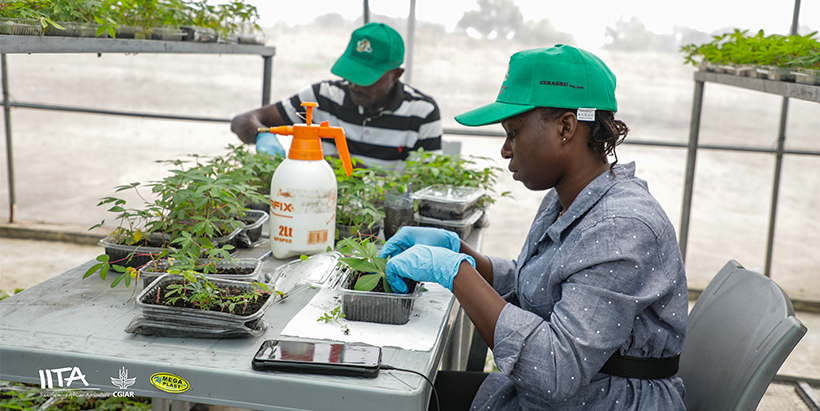
Within the IITA–CGIAR technical assistance framework in implementing the ATA-DRC program under the Ministry of Agriculture in the Democratic Republic of Congo, the private sector intervenes in the rapid multiplication of cassava varieties using SAH technology. They are also involved in the intensive production of corn, rice, and soybean seeds.
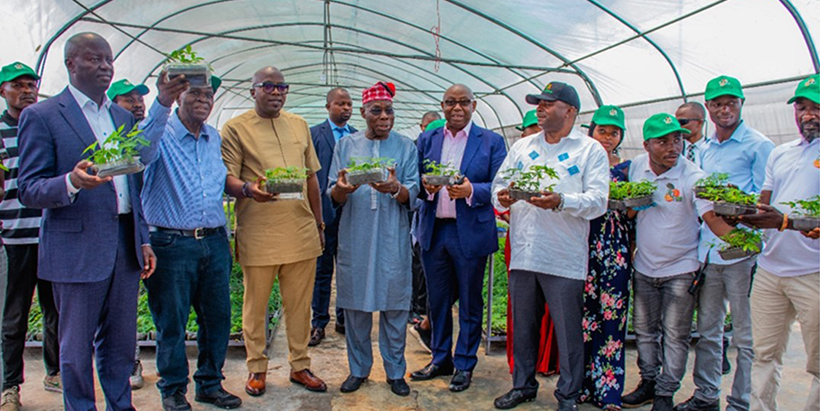
Kahasha (chargé de mission du president), Olusegun Obasanjo (former Président of Nigeria),
Adewale Adeosun (Chairman, KURAMO, Capital management/ Majority shaholder PHC),
Nteranya Sanginga (DG, IITA).
The Centre de Recherche en Agrumiculture (CERAGRU), whose market is the Mongata agricultural site, produces planting materials for cassava seed fields for the city of Kinshasa and the Plantations des huileries du Congo (PHC). Their operations will progress to the multiplication of cassava seeds and the intensive production of maize, soybean, and rice seeds to cover the demand of the province of Tshopo and the former Equateur.
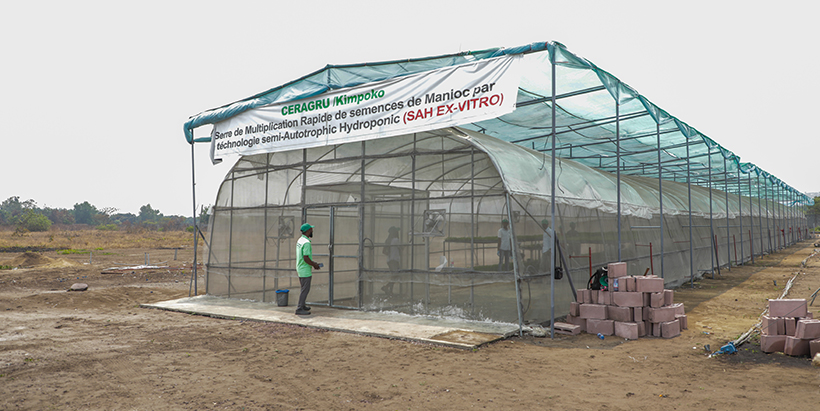
Other economic operators such as LAYUKA in the province of Kongo-Centrale and ECOSAC in the peri-urban part of Kinshasa that produce and sell fermented cassava flour, maize flour, and starch, will also participate in the ATA-DRC program as stakeholders to maximize flour production and guarantee supply in the Congolese market.
Government efforts now center around strengthening the environmental structures for agricultural transformation in the DRC, developing improved seed systems across the DRC through engagement with the public and private sectors, and improving production systems for cassava, rice, maize, soybeans, beans, and plantain. The government is also focusing on enhancing the value addition of priority agricultural products, especially those that lead to an increase in agro-industrialization and a reduction in dependence on food imports.
These activities by the government will enable the establishment of a favorable agricultural sector, attracting greater private sector participation and investment in DRC’s agricultural value chains because of the increased financial potential. This bodes well for the country’s agricultural transformation and would undoubtedly lead to a more robust economy.
Contribué par
Histoires récentes