
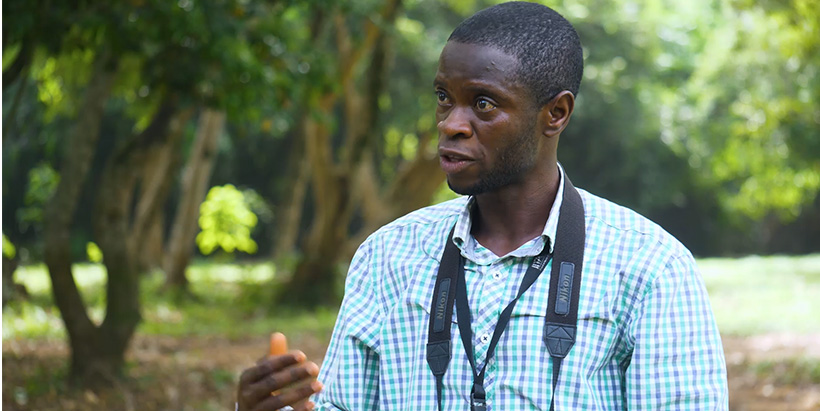
Urbanization converts natural areas into built environments, and scientists are keenly investigating how this global human-induced activity affects biodiversity to propose actionable plans for amelioration purposes. Adewale Awoyemi, Head of IITA Forest Center, delivered a seminar on 19 October titled “Status of urban ecology in Africa: A systematic review”. The presentation was based on his PhD research supervised by Juan Diego Ibanez-Alamo of the University of Granada in Spain.
Awoyemi and Ibanez-Alamo conducted a rigorous literature search in Web of Science, Scopus, and Google Scholar to determine what is known regarding African urban ecology in the last century (1920‒2020) and found only about 800 relevant peer-reviewed scientific papers.
Compared to other regions such as North America and Europe, the publication rate on urban ecology from Africa was meager, with less than 10 papers published per year from the entire African continent up to the 1990s. About 28% of countries in Africa were never studied in terms of urban ecology, whereas South Africa alone accounts for about 40% of all published papers, already suggesting mismatches in the research effort. In addition, all the studies were either conducted at the city (55%) or local/country (34%) level, suggesting the lack of transnational research collaboration among African urban ecologists.
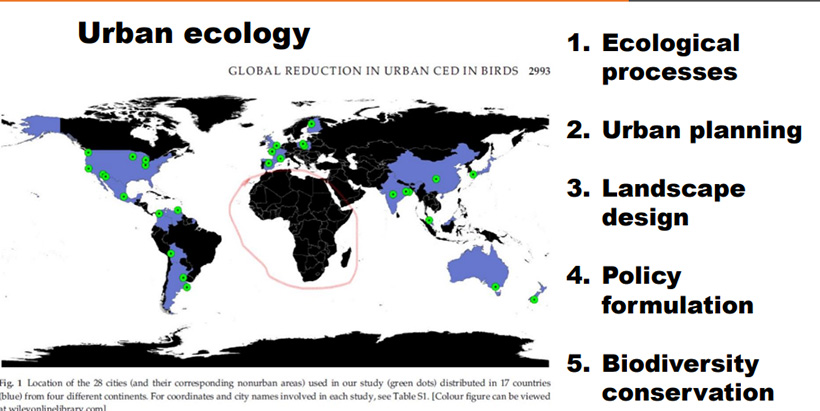
Awoyemi said, “We had expected that countries with high current or future urban expansion would be significantly more studied as such research effort could contribute important data needed for sustainable urban development in Africa. This is very important because those rapidly urbanizing countries are mainly found in the Afro-tropical region with huge but dwindling biodiversity for which urbanization is a leading cause. We need to re-orientate our research efforts to cover unrepresented African countries, regions, and taxa we found in our study. This is crucial to achieving the 11th Sustainable Development Goal in the rapidly urbanizing African continent.”
The author made several suggestions that could boost urban ecology research efforts in Africa, such as training and capacity building of African urban ecologists, strengthening collaborations between researchers and institutes, and increased funding and awareness creation. Awoyemi said their review has already shown that African urban dwellers are willing to promote urban nature, which could be leveraged to promote urban nature in Africa.
Proposé par Folake Oduntan
Contribué par
Histoires récentes