
 Les petits agriculteurs du Malawi, l'une des nations les plus pauvres d'Afrique, dépendent de l'agriculture de subsistance. L'agriculture malawienne a connu des conditions météorologiques extrêmes ces dernières années — sécheresse liée à El Niño, inondations, etc. —, ce qui rend la situation de l'approvisionnement alimentaire précaire. La population malawienne, malnutrie, dépend souvent d'une aide alimentaire qui ne suffit jamais. Dans le secteur de la santé, 14 pour cent des 12 millions de Malawiens sont séropositifs.
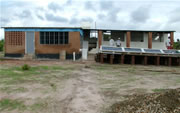
Mais quelque chose de positif dans le domaine de la sécurité alimentaire et du développement rural se produit dans le district lacustre de Nkhotakota au Malawi. C'est le résultat d'un projet de partenariat public-privé sur le manioc de l'Institut international d'agriculture tropicale en collaboration avec le Réseau de recherche sur les cultures de racines d'Afrique australe (IITA/SARRNET). Les habitants ruraux du district lacustre connaissent un renouveau, car ils sont autonomisés économiquement pour se débarrasser du fardeau de la pauvreté grâce à leur participation au projet introduit par les scientifiques de l'IITA. Financé par l'USAID/Washington et la mission bilatérale de l'USAID au Malawi, le projet a ouvert de nouvelles perspectives de vie pour les personnes qui produisent du manioc à haut rendement destiné à la transformation en amidon industriel à l'usine de manioc du club Masinda dans le village de Tandwe.
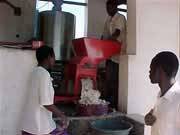
Pour démontrer une chaîne de valeur ajoutée du manioc utilisant des technologies à faible coût en milieu rural et améliorer les revenus des populations tirés de cette culture, l'IITA/SARRNET et ses partenaires ont formé les membres du club Masinda à la production, la transformation, la gestion d'usine, l'assainissement environnemental, la dynamique de groupe, la tenues des comptes, l'identification des marchés et la recherche d'informations sur les marchés. Avec l'aide du programme de développement rural de Nkhotakota du ministère de l'Agriculture et de la Sécurité alimentaire, le personnel du département de vulgarisation conseille les agriculteurs sur la gestion d'entreprise, tandis que l'IITA/SARRNET offre un soutien d'accompagnement.
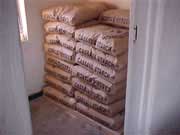 Résultat ? L'amidon de manioc produit par l'usine est désormais largement acheté par trois grandes entreprises spécialisées dans la fabrication de piles sèches, d'allumettes et d'emballages en papier. Créée en 2003 avec une capacité initiale de production de quatre tonnes d'amidon industriel par mois, l'usine en produit aujourd'hui 20 tonnes. Avec un prix moyen de $471 la tonne, la production totale d’amidon de manioc de l’usine depuis sa création s’élève à environ $47 100. Les bénéfices générés par ces transactions reviennent directement aux habitants des zones rurales. Outre l’augmentation des revenus des petits agriculteurs membres du club, d’autres agriculteurs des villages voisins tirent désormais de meilleurs revenus de la vente de racines de manioc brutes à l’usine. En l’espace de deux ans d’activité, l’usine a permis une augmentation d’environ 38,42% de la production de manioc, qui est passée de 18,7 tonnes par hectare à 21,0 tonnes. Cette progression s’explique par l’augmentation du rendement à l’unité de surface, grâce aux variétés améliorées de manioc distribuées par l’IITA/SARRNET et aux meilleures pratiques de gestion des cultures enseignées aux agriculteurs. Par ailleurs, la superficie consacrée à la culture du manioc a également augmenté, passant de 10 780 ha en 2003 à 15 258 ha en 2006.
Avec les niveaux de production actuels de 20 tonnes par hectare, les agriculteurs tirent plus de US$1000 d'un hectare de manioc. À ce jour, sur les 16 membres du groupe qui détiennent des parts dans l’usine, 15 ont construit des maisons en briques grâce aux ventes de leur manioc à l’usine et aux bénéfices tirés des dividendes de leurs parts. La dernière personne a acheté un ensemble de meubles haut de gamme pour sa maison et est en train de faire construire une maison moderne. En l’espace de trois ans d’activité, plusieurs maisons modernes en briques cuites, au toit de tôle ondulée, ont commencé à pousser comme des champignons dans la région. Cet effet bénéfique se répercute sur les autres agriculteurs des environs. Les membres du Masinda Club qui travaillent à l’usine perçoivent un revenu régulier sous forme de salaires. Ils peuvent également obtenir des prêts pour acheter des engrais et d’autres intrants destinés à la production de maïs.
 Selon le Dr Nzola Mahungu, sélectionneur de manioc à l’IITA/SARRNET au Malawi, parmi les nombreux agriculteurs qui possèdent désormais des maisons modernes, on compte M. O. Yatimu, membre du Masinda Club, et M. Godwin Chibowa, qui n’en est pas membre. Jusqu’à présent, ces deux agriculteurs cultivaient le manioc uniquement pour leur consommation familiale. Cependant, grâce à la création de l’usine d’amidon, M. Chibowa a gagné plus de 60 000 MK ($487) grâce à la vente de racines de manioc à l’usine, tandis que M. Yatimu a gagné plus de 50 000 MK (US$406) grâce au manioc et à son salaire d’ouvrier à l’usine. Certains membres possèdent désormais des téléphones portables, ce qui leur permet de communiquer plus facilement avec leurs proches et de développer leur activité agricole.
La société Warm Heart Products, basée à Lilongwe, a obtenu un prêt bancaire de $5,2 millions pour créer à Lilongwe une usine de fécule de manioc à grande échelle, d’une capacité de production de 20 tonnes par jour. Cette initiative a été prise après la visite des dirigeants de l’entreprise au Masinda Club. Warm Heart Products a mis en place une exploitation de manioc de 15 ha dans le cadre d’une intégration en amont, tandis que des producteurs commerciaux sont également engagés sous contrat pour fournir du manioc à l’usine. “ C’est une bonne nouvelle pour les petits agriculteurs situés dans un rayon de 120 km autour de l’usine, qui fourniront plus de 50 % de la matière première nécessaire à l’usine ”, déclare M. Mahungu. Selon lui, plusieurs exploitations commerciales qui produisaient auparavant du tabac se reconvertissent déjà dans la production de manioc grâce à l’irrigation afin d’approvisionner Warm Heart Products. L’entreprise a commandé des équipements lourds destinés à la transformation du manioc, tandis que la construction de l’usine s’achèvera dans les deux prochains mois. Par ailleurs, le Masinda Club s’associera à Warm Heart Products pour la commercialisation de son amidon.
L'usine de manioc du club Masinda est devenue une sorte de lieu de pèlerinage pour les groupes d'agriculteurs, le personnel gouvernemental, les ONG locales, les organisations communautaires et les entreprises commerciales privées. “ Voici un modèle de projet d'industrialisation rurale et de génération de revenus ”, déclare Mahungu. À tous égards, l'usine de manioc du club Masinda est une réussite en matière de partenariat public-privé. Qui sait, c'est peut-être ce dont le Malawi a besoin pour sortir de l'extrême pauvreté et devenir une nation économiquement stable, où l'agriculture occupera la place qui lui revient.
Contribué par
Histoires récentes