
With the high cost of fertilizers, bio-stimulants are becoming an affordable source for increasing farmers’ productivity. They are also known to enhance nutrition efficiency, abiotic stress tolerance, and the quality of crops while preserving the environment.
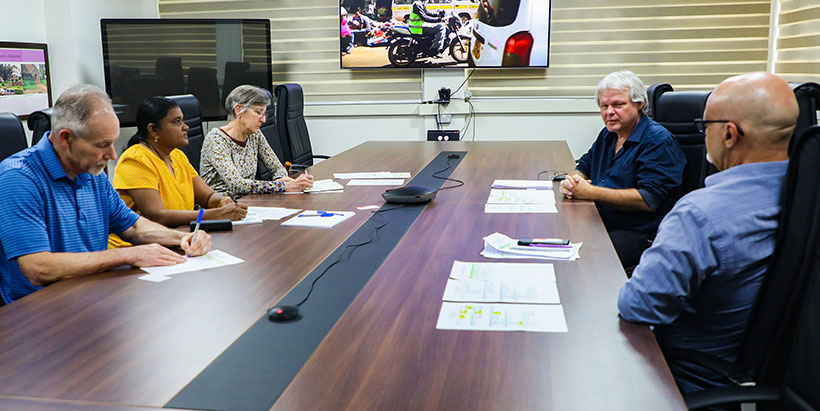
A Fondation Bill & Melinda Gates team—Senior Program Officer Dr Lakshmi Manavalan, Program Officer Dr Jeff Ehlers, and Crops Research and Development Director Dr Renée Lafitte—visited IITA–CGIAR Ibadan recently as part of efforts to ensure that Africa is food secure. The delegation explored the potential of bio-stimulants for staple crops in Africa using the Institute’s research facilities.
In his welcome remarks, IITA Interim Director General Bernard Vanlauwe highlighted the Institute’s leadership in Africa through its progress in agricultural research activities. He also spoke about the IITA Youth program, which has provided job opportunities for the youths while scaling up agriculture in Africa.
Vanlauwe highlighted the CGIAR initiatives and IITA’s significant roles in Excellence in Agronomy (EiA), plant health, and breeding. However, he added that there is a need for increased interaction. “With support from the Gates Foundation, there would be improved interaction and coordination amongst them,” he stated.
IITA Deputy Director General, Partnerships for Delivery (DDG-P4D), Kenton Dashiell, gave insights into some of IITA’s projects, including the Technologies for African Agricultural Transformation (TAAT) program funded by African Development Bank (AFDB) and the Gates Foundation. He further revealed that effective communication and good partnership have significantly contributed to the impact of TAAT so far.
Manavalan commended IITA on the impact and successes of the Gates Foundation-funded Aflasafe and Nodumax projects. Based on the excellent job done by the Institute, she mentioned that there would be a new project focused on introducing other bio-stimulants, including nitrogen and phosphorus, to leguminous crops.
This will focus on improving the nutrition efficiency, abiotic stress tolerance, and crop quality traits, regardless of the nutrient content of the target crops such as soybean, cowpea, maize, and some root and tuber crops.
Ehlers and Lafitte also applauded the Institute on the existing cutting-edge technologies and unique facilities like the Business Incubation Platform (BIP), which links the Institute and end-users.
Hence, “we would leverage on IITA’s relationship with other national partners to create a network to other continents to out-scale these innovations to the end-users,” Ehlers added.
Good quality field trials and good laboratory equipment are needed to achieve this.
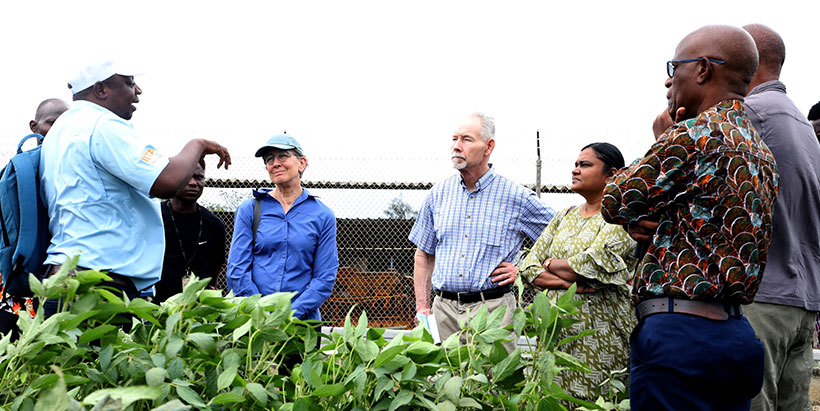
After meeting with the IITA Management team, the Gates Foundation delegation visited the soil micro-biology laboratory, pathology, virology and germplasm health unit, threshing building, and Genetic Resources Center (GRC) to see the different activities contributing to food and nutrition security and safety. They also visited the farm office and soybean field to see the effect of Nodumax on soybean and the potential for improvement.
Contribué par Anita Akinyomade
Contribué par
Histoires récentes