
Histoire de réussite N2Africa : Malawi
10 septembre 2017
Ceci est le deuxième d'une série d'articles sur les bénéficiaires et les réussites du projet N2Africa, un projet de recherche-développement à grande échelle, fondé sur la science, qui vise à exploiter la fixation biologique de l'azote au profit des petits agriculteurs cultivant des légumineuses en Afrique. Le projet, qui en est actuellement à la moitié de sa deuxième phase, intervient en République démocratique du Congo, en Éthiopie, au Ghana, au Kenya, au Malawi, au Mozambique, au Nigeria, au Rwanda, en Tanzanie, en Ouganda et au Zimbabwe. Notre article (et les photos) a été fourni par Emmanuel Mwale de l'IITA Malawi.
 “Lorsque nous avons commencé, nous avons amélioré l'emballage et la manutention de Nitrofix. Nous avons investi dans des chambres froides solaires pour un stockage adéquat. Des 20 000 premiers sachet de 50 g, nous sommes passés à 280 000 sachets, réussissant à atteindre plus de 95 000 agriculteurs. Tout cela s'est produit en l'espace de trois ans. Nous prévoyons d'atteindre 1 million de sachets, ce qui se traduira par environ 350 000 agriculteurs ayant accès au produit au cours des cinq prochaines années.” Il a déclaré :
Kawalewale, qui est titulaire d'un MBA, affirme que son parcours lui a donné l'occasion de trouver des solutions pratiques pour les agriculteurs.
“Je n'avais pas besoin d'être agronome pour comprendre que les agriculteurs font face à des problèmes dans la chaîne de valeur. Nous devions faire des choses qui répondent aux besoins des agriculteurs,” Il a dit.
“Lorsque nous avons commencé, nous avons amélioré l'emballage et la manutention de Nitrofix. Nous avons investi dans des chambres froides solaires pour un stockage adéquat. Des 20 000 premiers sachet de 50 g, nous sommes passés à 280 000 sachets, réussissant à atteindre plus de 95 000 agriculteurs. Tout cela s'est produit en l'espace de trois ans. Nous prévoyons d'atteindre 1 million de sachets, ce qui se traduira par environ 350 000 agriculteurs ayant accès au produit au cours des cinq prochaines années.” Il a déclaré :
Kawalewale, qui est titulaire d'un MBA, affirme que son parcours lui a donné l'occasion de trouver des solutions pratiques pour les agriculteurs.
“Je n'avais pas besoin d'être agronome pour comprendre que les agriculteurs font face à des problèmes dans la chaîne de valeur. Nous devions faire des choses qui répondent aux besoins des agriculteurs,” Il a dit.
Un partenariat réussi avec le secteur privé facilite la fourniture d'inoculant pour soja au Malawi : L'histoire d'AISL
Après avoir mis au point et démontré les avantages des inoculants à base de soja pour améliorer la productivité de cette culture au Malawi, le défi du projet N2Africa consistait à garantir que cette technologie soit à la fois accessible et abordable pour les agriculteurs. Il a été démontré que cet inoculant, qui ajoute au sol des bactéries fixatrices d’azote afin d’en améliorer la fertilité, permet d’augmenter le rendement du soja d’au moins 40 à 50%. Parmi les autres avantages, on peut citer l’augmentation de la teneur en protéines des graines — une hausse pouvant atteindre 40,6% si l’inoculation est bien réalisée. Le projet importait jusqu’alors l’inoculant Biofix de MEA, au Kenya, à des fins de recherche et de démonstration. Auparavant, le gouvernement du Malawi, par l’intermédiaire du Département des services de recherche agricole (DARS), produisait et fournissait environ 2 000 sachets d’un inoculant appelé “ Soy ”, accessible à un nombre limité d’agriculteurs qui se rendaient à la station de recherche pour acheter le produit et à des fins de recherche.Le secteur privé à la rescousse
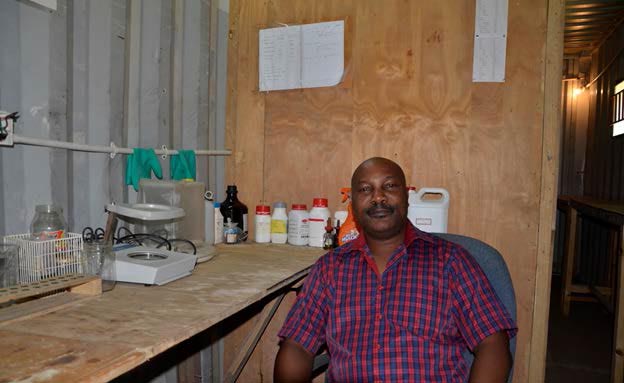
Le projet a donc recherché des acteurs du secteur privé pour s'associer à la production d'inoculant abordable au Malawi. Fredrick Kawalewale, comptable qualifié, a rapidement saisi l'opportunité commerciale par le biais de son entreprise Agro-Input Suppliers Limited (AISL). Il a investi dans du matériel de laboratoire et, en 2014, AISL a produit 20 000 sachets d'inoculant Nitrofix à titre de projet pilote.
M. Kawalewale dans son laboratoire de production d'inoculants.
Assurance qualité
Pour garantir que l'inoculant répond aux normes requises, Kawalewale a mis en place un laboratoire bien équipé et de haut niveau pour la production et les tests, ainsi qu'un excellent emballage pour la livraison aux agriculteurs. Il construit également actuellement des installations plus grandes dotées d'équipements de laboratoire robustes afin d'augmenter la production de l'inoculant pour répondre aux besoins de l'ensemble de l'Afrique australe, puis du monde entier. L'AISL développe également des inoculants pour les haricots et les arachides. Les agriculteurs du Malawi récoltent d'immenses avantages de l'utilisation de l'inoculant et d'autres bonnes pratiques agronomiques introduites par N2Africa et ont constaté une plus grande accessibilité de l'inoculum grâce à l'implication d'AISL.Les agriculteurs ont désormais un accès plus facile à l'inoculant pour soja
Natalia Matiasi, agricultrice de référence dans la culture du soja au sein de la zone de planification et de vulgarisation (EPA) de Mpingu, à Lilongwe, aide ses collègues agriculteurs à adopter les meilleures pratiques et les nouvelles technologies en matière de culture des légumineuses. Dans son champ, elle met en œuvre toutes les pratiques agronomiques qu’elle a apprises grâce à N2Africa pour augmenter sa production de légumineuses : elle traite ses semences avec un inoculant avant de les planter, et les sème en doubles rangs pour augmenter les rendements. Elle illustre parfaitement comment les nouvelles technologies peuvent améliorer les moyens de subsistance des agriculteurs. Natalia explique qu’il existe des différences nettes dans la culture lorsque l’inoculant est appliqué. Les plantes ont des feuilles plus vertes, des tiges plus longues et davantage de gousses que lorsque l’inoculant n’est pas appliqué. Même les racines présentaient de nombreux nodules et étaient donc capables d’introduire davantage d’azote dans le sol. Elle a également comparé sa récolte de maïs de l’année suivante sur la même parcelle et a constaté que les rendements avaient augmenté, malgré une utilisation réduite d’engrais inorganiques. Grâce à l’AISL, l’accès à l’inoculant est désormais plus facile. ’ Cette année, il nous a été plus facile de nous procurer l’inoculant que les autres années. Nous l’avons acheté chez notre distributeur agricole local au prix de 1 000,00 MK ($1,4 US) par sachet et avons appliqué 12 sachets sur au moins deux hectares de terre (ce qui correspond à $8,4 d’inoculant par hectare), ce qui prouve à quel point la culture du soja est économique par rapport à celle du tabac, que je pratiquais auparavant et qui nécessitait environ $220 d’engrais pour établir la culture. Je suis désormais en mesure d’envoyer mes enfants à l’école grâce à mes revenus issus de la culture du soja. “ Et comme toute mère, Natalia espère que la culture du soja contribuera à améliorer sa vie et celle de ses enfants. Elle espère pouvoir envoyer ses enfants au lycée et à l’université grâce aux économies réalisées grâce à la culture du soja. Elle prévoit de rénover sa maison et d’acheter davantage de terres. En tant qu’agricultrice de référence, elle explique que plus de 400 agriculteurs ont visité son champ au cours de la dernière saison de plantation pour s’informer sur ses pratiques agricoles. Certains d’entre eux ont déjà commencé à cultiver du soja inoculé sous sa supervision. N2Africa la soutient en lui proposant des formations, en mettant en place des parcelles de démonstration et en organisant des journées de terrain consacrées à la culture du soja et des légumineuses ainsi qu’aux stratégies de commercialisation. Phiphira est fière de voir que la vision de N2Africa se concrétise et considère que le Malawi est un exemple de réussite obtenue grâce au partenariat entre le secteur privé et le gouvernement. “N2Africa est fier de ce qu'AISL a accompli. Nombre de nos objectifs ont été atteints principalement grâce à des partenariats. Nous avons vu la vie des agriculteurs s'améliorer et c'était notre objectif. Nous sommes également heureux de voir le secteur privé s'épanouir et être prêt à pérenniser ce dont nous rêvions dès la première phase du projet.” dit Phiphira. N2Africa est un projet à grande échelle, fondé sur la science et financé par la Fondation Bill & Melinda Gates, qui intervient dans différents pays d'Afrique.Contribué par
Histoires récentes
Aucun article trouvé