
A strategy meeting of BASICS-II was held at the IITA Ibadan campus to discuss the line of action toward improving cassava production systems in Nigeria on 17 and 18 July 2023. This meeting with key stakeholders from the National Agricultural Seed Council (NASC) and the National Root Crops Research Institute (NRCRI) was hosted by IITA Head of Virology and Germplasm Health, Lava Kumar.
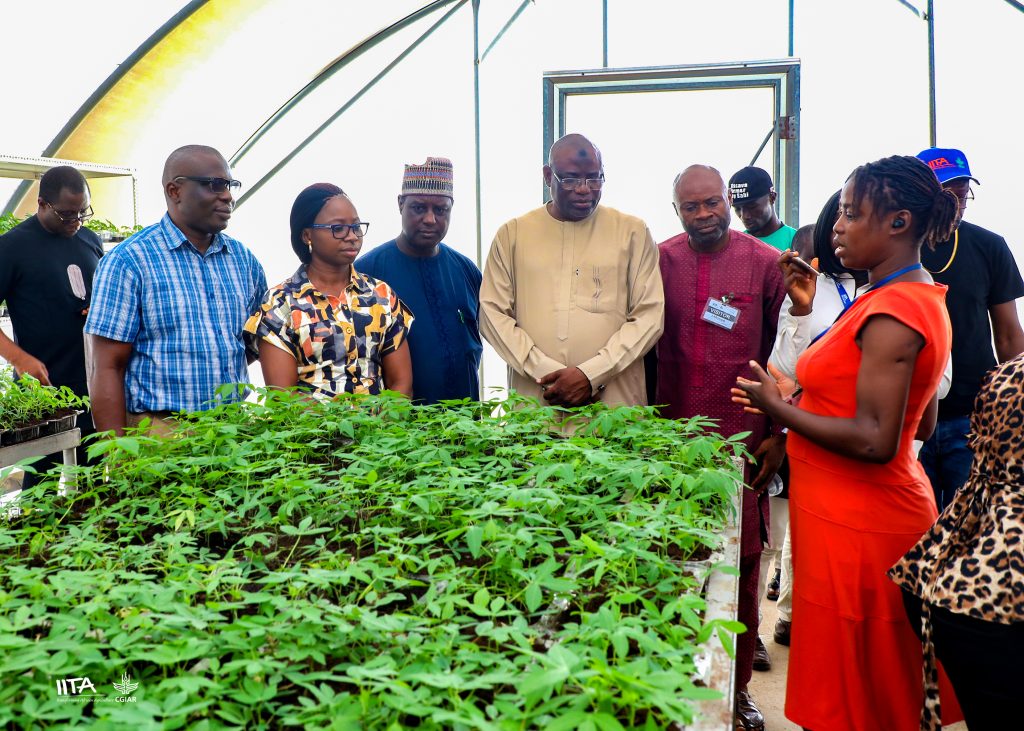
Speaking at the meeting, Dr Ishiak Khalid, newly appointed Acting Director General of NASC, revealed that part of the delegations’ goal is to seek viable ways to strengthen the already existing relationship between both organizations. “IITA and NASC have a productive history of over three decades, and during my tenure, NASC will be leveraging that to address issues in food security and seed systems not only in Nigeria but West Africa,” he said.
While addressing the delegation, Michael Abberton, IITA West Africa Hub Director, emphasized the connection between breeding and seed systems in delivering the benefits of improved varieties to farmers. He referred to various IITA efforts to strengthen seed delivery systems, including through TAAT, and the scope for scaling the BASICS-II seed system model to Angola and Sierra Leone.
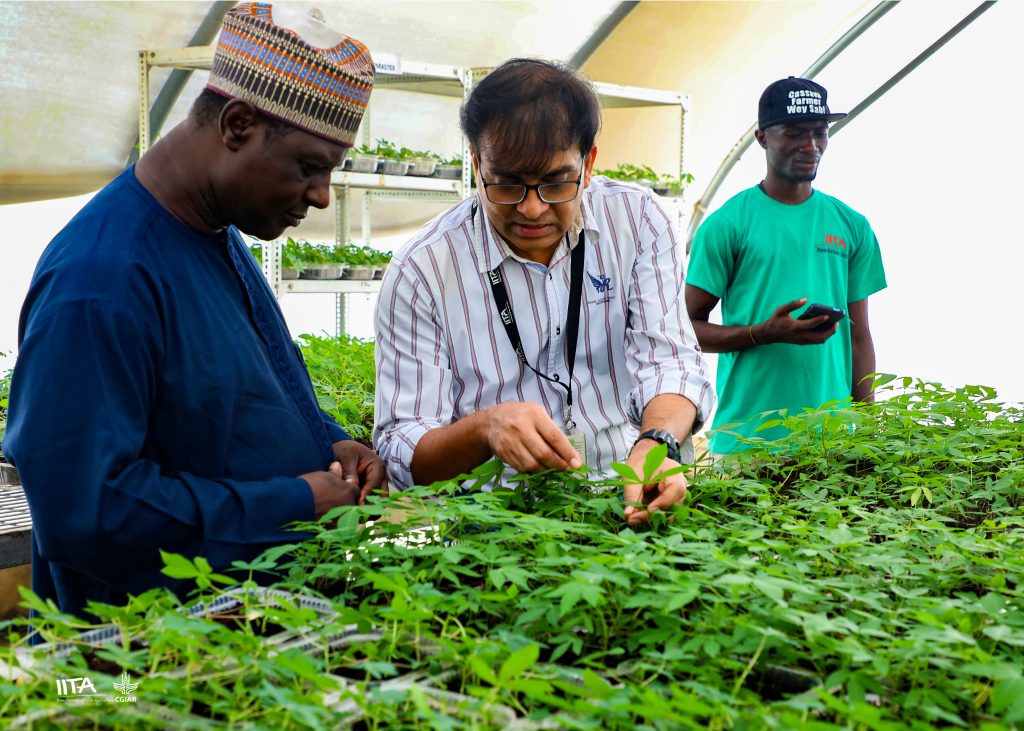
NRCRI Director Dr Joe Onyeka informed the need for a strong focus on regulatory capacity development to enhance biosecurity to prevent the spread of dangerous pathogens, such as brown streak. He recalled the IITA’s role in strengthening breeding capacity through annual training to breeders from West Africa and urged for a similar model to enhance the capacity of NASC and similar agencies.
A member of the NASC delegation, Director of Seed Certification and Quality Control, Mallam Ubandoma Hudu, while commending IITA’s research innovations, especially in seed and plant health, said he looks forward to providing the needed support to ensure an enabling environment for a progressive seed system in Nigeria. Hudu lauded the progress made at IITA through BASICS-II, including new methods, such as “pencil stems” developed for cassava propagation. NASC is ready to support the commercialization of new planting materials through appropriate quality assurance procedures.
Kumar, along with IITA Tissue Culture Specialist Morufat Balogun, representing IITA during the meeting, said NASC has actively contributed to major projects such as BASICS at IITA, and the Institute looks forward to working with NASC on the PROSSIVA project.
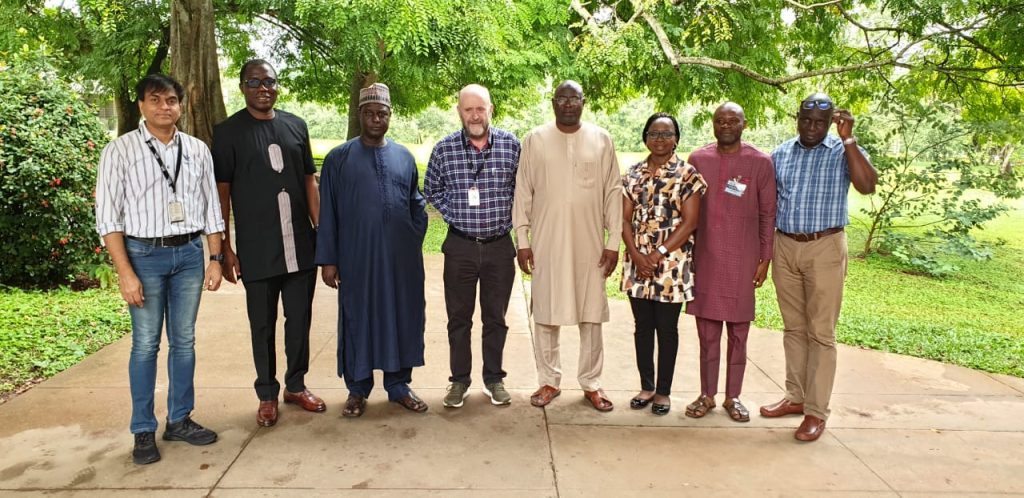
The PROSSIVA project is positioned to enhance the efficiency and productivity of vegetatively-propagated crop (VPC) seed systems in Africa is targeting five major components – banana, cassava, sweet potato, yam, and a cross-cutting component that addresses issues common to several VPC crops.
Speaking on the relationship between the two organizations, Kumar stated that NASC is an essential partner to IITA; “Not only has the Council contributed in significant ways to our research in areas like seed and plant health, they are also ambassadors for the Suivi des semences—a fully featured ICT program for real-time tracking of cassava seed production, integrating seed value chain and promoting quality seed of improved varieties.”
The delegation reiterated its commitment to work with IITA towards achieving a strong seed system in Nigeria and West Africa to address food and nutrition insecurity, seed and plant health, and livelihood improvement for smallholder farmers.
Contributed by Timilehin Osunde and Lava Kumar
Contribué par
Histoires récentes