
Le 25 juillet, IITA–CGIAR, sous le HealthyDiets4Africa Un projet financé par l'UE a lancé son troisième laboratoire vivant à Accra dans le cadre de ses stratégies innovantes pour lutter contre la malnutritions au Ghana et au-delà en générant l'accès à des régimes alimentaires plus diversifiés pour les populations cibles et en soutenant les changements alimentaires des consommateurs vers des régimes plus diversifiés et sûrs à consommer.
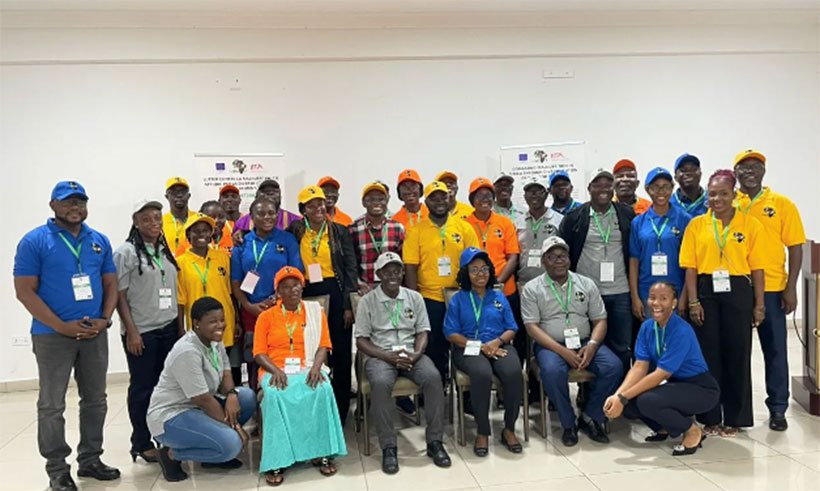
Lors de la cérémonie d'ouverture, Richard Asare, représentant pays de l'IITA au Ghana, a accueilli les partenaires au nom du Directeur Général de l'IITA, le Dr Simeon Ehui. Il leur a assuré un soutien continu et l'accès aux solutions de l'IITA pour améliorer leurs activités agricoles et la production alimentaire en vue d'une productivité optimale. Il a ensuite présenté l'IITA et le projet HD4A. Le programme s'est poursuivi par des interventions et de nouveaux points saillants du projet et des objectifs de l'atelier. Il a également mis en avant les résultats attendus avec Djana Mignouna, organisateur du projet, au nom de Rousseau Djouaka, chef de projet, avant d'autres interventions de Titilayo Falade et Carline Santos. En outre, les partenaires du projet présents à l'atelier ont partagé un aperçu de leurs activités, de leurs défis et de leurs succès concernant la sécurité alimentaire.
Les participants à l'atelier ont travaillé à la mise en place et au soutien de nouveaux laboratoires vivants novateurs destinés à divers acteurs de la chaîne alimentaire (producteurs, transformateurs, commerçants ou industrie agroalimentaire), en se concentrant sur deux aspects différents priorisés pour le Ghana : (i) la sécurité sanitaire des aliments : procédures opérationnelles standardisées (POS), utilisation insuffisante et excessive de pesticides ; (ii) les aliments locaux et sous-utilisés : conservation, source de semences, etc.
Cela s'accompagnera d'une production de données pour la prise de décision, d'un plaidoyer pour des politiques nutritionnelles mieux informées et de stratégies visant à façonner un environnement sociétal propice à la diversification du système alimentaire. À l'issue de l'atelier, divers programmes d'action pour la bonne mise en œuvre du projet ont été bien définis, avec différentes institutions à associer à la mise en œuvre et un mécanisme innovant de conduite de la mise en œuvre, du suivi et de l'évaluation des programmes et plans d'action à mettre en place.
Pour la clôture de l'atelier, Robert Asiedu s'est félicité de l'atteinte des objectifs de cet atelier et a souligné la richesse des discussions, qui ont été d'un niveau élevé. En effet, selon lui, il est rare de voir de telles rencontres entre ceux qui conçoivent et développent des technologies et ceux qui les utilisent. Enfin, les participants ont été instamment priés de continuer à travailler ensemble pour réaliser les plans d'action dotés d'indicateurs SMART dans un délai imparti. Selon lui, l'intérêt réside dans l'impact que le living lab va créer.
(Concept de laboratoires vivants tel qu'adopté dans HD4A (Steen & van Buren 2017)
Contribué par Djana Mignouna
Contribué par
Histoires récentes