
One on one: Laura Cortada-Gonzalez: A journey in science
avril 5, 2019
Dr Laura Cortada-Gonzalez est IITA Soil Health Scientist based in Kenya. In this interview, Cortada-Gonzalez talks about how she started in science and her journey so far as a scientist.
 Q: As an upcoming young female scientist at IITA, did you always want to pursue a science career?
A: Actually not. Surprisingly, when I was a young girl, I was told I had skills towards the social sciences. But there was nothing in those fields that I felt passionate about, so I decided to pursue science studies because I was fascinated by biology and how organisms and ecosystems work. It was much later when I realized that I was naturally curious about nature and my surroundings, and that I wanted to find answers to many questions. I found that science was ‘the art’ to find answers to those many questions.
Q: Tell us about your journey into studying nematodes and why nematodes?
A: When I was doing my BSc in Biology, I studied integrated pest management (IPM). I found that biological control was a fascinating discipline—how to use nature to control nature. Later, when I studied Technical Agriculture Engineering, I took a complete IPM course and I started a lab internship with the lecturers, who happened to be nematologists. I realized how interesting and relevant, yet how understudied this discipline is. I won a PhD scholarship to study biological control of root-knot nematodes. That’s how it all started.
Q: What has been your biggest challenge in your science career?
A: Probably the biggest challenge all scientists must face is making personal and professional life compatible, especially after the arrival of children to the family. Science is a very competitive field and, at times, it is difficult not to feel you are underperforming, both scientifically and as a parent, with not enough time dedicated to either. Also, realizing that you have to slow down in comparison with other colleagues if you want to try to balance both aspects—you can’t be everywhere. And that makes you look like you are dragging your feet, compared to your male colleagues.
Q: What uniqueness do you bring into the research field as a woman?
A: I don’t think I am bringing any particular uniqueness just because I am a woman, but it is true that at times we are more sensitive to gender-related issues, both in the workplace and in the field environment, which conditions our research.
As an example, I was recently told that one of our female research associates in Uganda, when resuming from maternity leave, was pumping milk for her baby in her car. That’s not the way things should be—our workplace should be able to embrace women in all stages of their professional and personal life. Together with Brigitte and Janet from Sendusu, we’ve now come up with a pumping room where mums can have a quiet time at the workplace and be able to continue breastfeeding their children. Having such facilities is key for providing welfare and supporting women to be more productive and less stressed in their workplace. What we are advocating for in the field, namely breastfeed children to maximize nutrition in the early stages of life, should also be enabled for our workers.
Q: What unique challenges do women face in their science career?
A: Challenges faced by young female researchers include: First, because we are women and young (presumably inexperienced), our scientific outcomes tend not to be well echoed by an audience of middle-aged men that currently dominates academia. Our statements are at times “overheard” by our own colleagues, sometimes even until a man repeats or reshapes the same idea. Second, our ability to lead teams is sometimes questioned. A woman trying to balance her personal and professional life can be perceived as a weak leader—either unsuitable for or lacking dedication to the task. Fortunately though, we have lots of male colleagues and mentors who are very supportive and who empower their young female staff. And we have examples of this in IITA.
Q: What would you tell young students who want to venture into science but are afraid?
A: Science is not just maths, physics, chemistry, or biology. Science is being curious, passionate, persistent, determined, honest, and hard working. These are qualities that apply both to men and women. So, I would say: Go for it! A scientific career is like a marathon, a long-standing effort, but very beautiful.
Q: What should IITA and other research institutes do to attract more women scientists?
A: Ensuring policies that can support a good balance between professional and personal life is something that is key to attract both talented women and men. But supporting women that would eventually like to become mothers or that have small babies would be key, such as by taking it into account in performance appraisals and career evaluations, because of the impact that maternity leave or a pregnancy or breastfeeding period would have. Also, creating awareness among male supervisors on their needs during such special periods. A flexible work schedule is also something important for parents of both sexes during early childhood stages. Certain duty stations can be challenging at times because of cultural constraints that undermine the role of women.
Q: Who are some of your mentors and role models? How important are mentors and role models for girls in science?
A: Since the start, my PhD supervisors always encouraged me to give the best and never thought I would underperform for being a woman. My best mentors have actually been all men who had a well-balanced personal and professional career but were also passionate about their job. They always made me feel there was space for me to grow professionally while I was growing personally. They have been very understanding, and my current supervisor Danny Coyne is no exception. I have also come across teams led by women who could not see the person beyond the scientist: the daughter, the mother, the sister, the partner. We women should support each other more at times and embrace the diversity of our personal choices in life.
Q: As an upcoming young female scientist at IITA, did you always want to pursue a science career?
A: Actually not. Surprisingly, when I was a young girl, I was told I had skills towards the social sciences. But there was nothing in those fields that I felt passionate about, so I decided to pursue science studies because I was fascinated by biology and how organisms and ecosystems work. It was much later when I realized that I was naturally curious about nature and my surroundings, and that I wanted to find answers to many questions. I found that science was ‘the art’ to find answers to those many questions.
Q: Tell us about your journey into studying nematodes and why nematodes?
A: When I was doing my BSc in Biology, I studied integrated pest management (IPM). I found that biological control was a fascinating discipline—how to use nature to control nature. Later, when I studied Technical Agriculture Engineering, I took a complete IPM course and I started a lab internship with the lecturers, who happened to be nematologists. I realized how interesting and relevant, yet how understudied this discipline is. I won a PhD scholarship to study biological control of root-knot nematodes. That’s how it all started.
Q: What has been your biggest challenge in your science career?
A: Probably the biggest challenge all scientists must face is making personal and professional life compatible, especially after the arrival of children to the family. Science is a very competitive field and, at times, it is difficult not to feel you are underperforming, both scientifically and as a parent, with not enough time dedicated to either. Also, realizing that you have to slow down in comparison with other colleagues if you want to try to balance both aspects—you can’t be everywhere. And that makes you look like you are dragging your feet, compared to your male colleagues.
Q: What uniqueness do you bring into the research field as a woman?
A: I don’t think I am bringing any particular uniqueness just because I am a woman, but it is true that at times we are more sensitive to gender-related issues, both in the workplace and in the field environment, which conditions our research.
As an example, I was recently told that one of our female research associates in Uganda, when resuming from maternity leave, was pumping milk for her baby in her car. That’s not the way things should be—our workplace should be able to embrace women in all stages of their professional and personal life. Together with Brigitte and Janet from Sendusu, we’ve now come up with a pumping room where mums can have a quiet time at the workplace and be able to continue breastfeeding their children. Having such facilities is key for providing welfare and supporting women to be more productive and less stressed in their workplace. What we are advocating for in the field, namely breastfeed children to maximize nutrition in the early stages of life, should also be enabled for our workers.
Q: What unique challenges do women face in their science career?
A: Challenges faced by young female researchers include: First, because we are women and young (presumably inexperienced), our scientific outcomes tend not to be well echoed by an audience of middle-aged men that currently dominates academia. Our statements are at times “overheard” by our own colleagues, sometimes even until a man repeats or reshapes the same idea. Second, our ability to lead teams is sometimes questioned. A woman trying to balance her personal and professional life can be perceived as a weak leader—either unsuitable for or lacking dedication to the task. Fortunately though, we have lots of male colleagues and mentors who are very supportive and who empower their young female staff. And we have examples of this in IITA.
Q: What would you tell young students who want to venture into science but are afraid?
A: Science is not just maths, physics, chemistry, or biology. Science is being curious, passionate, persistent, determined, honest, and hard working. These are qualities that apply both to men and women. So, I would say: Go for it! A scientific career is like a marathon, a long-standing effort, but very beautiful.
Q: What should IITA and other research institutes do to attract more women scientists?
A: Ensuring policies that can support a good balance between professional and personal life is something that is key to attract both talented women and men. But supporting women that would eventually like to become mothers or that have small babies would be key, such as by taking it into account in performance appraisals and career evaluations, because of the impact that maternity leave or a pregnancy or breastfeeding period would have. Also, creating awareness among male supervisors on their needs during such special periods. A flexible work schedule is also something important for parents of both sexes during early childhood stages. Certain duty stations can be challenging at times because of cultural constraints that undermine the role of women.
Q: Who are some of your mentors and role models? How important are mentors and role models for girls in science?
A: Since the start, my PhD supervisors always encouraged me to give the best and never thought I would underperform for being a woman. My best mentors have actually been all men who had a well-balanced personal and professional career but were also passionate about their job. They always made me feel there was space for me to grow professionally while I was growing personally. They have been very understanding, and my current supervisor Danny Coyne is no exception. I have also come across teams led by women who could not see the person beyond the scientist: the daughter, the mother, the sister, the partner. We women should support each other more at times and embrace the diversity of our personal choices in life.
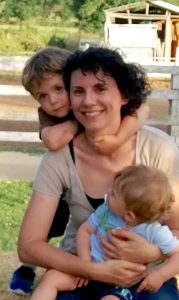
Laura Cortada-Gonzalez spending time with family
Contribué par
Histoires récentes
Aucun article trouvé