
NOUVELLES DE L'IITA

Pathology and Mycotoxin/Aflasafe Unit continues outstanding record with multiple BoT awards
février 13, 2023

Since the establishment of the IITA BoT Awards in 2012, the Pathology and Mycotoxin/Aflasafe Unit of IITACGIAR has been frequently recognized for the science, partnerships, and teamwork that are resulting in safer food for millions of consumers and higher income for tens of thousands of farmers who are moving from subsistence to commercial agriculture. The team has achieved the unique milestone of winning IITA BoT awards in all five categories, four of them twice.
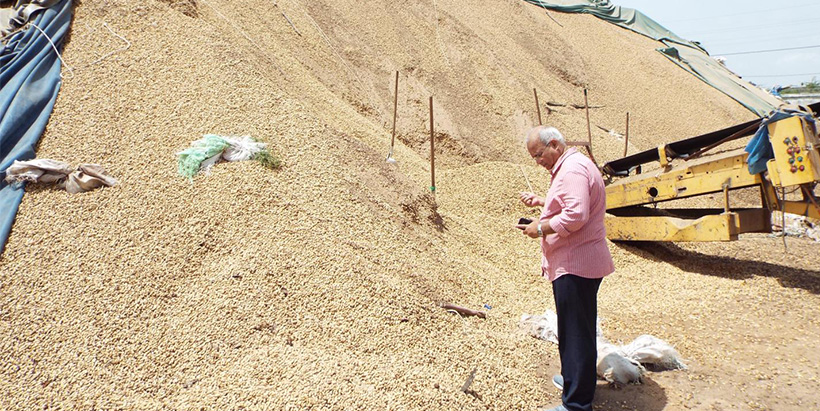
IITA Emeritus Scientist Ranajit Bandyopadhyay co-founded the Aflasafe Initiative in 2002 for which he was awarded the first Outstanding Scientist award in 2012.

The first Outstanding Scientist award was conferred on IITA Emeritus Scientist Ranajit Bandyopadhyay in 2012 for the management of seemingly intractable plant disease problems of all IITA mandate crops in many African countries and for the promising results of the Aflasafe technology, which translated into the Aflasafe Initiative (that he co-founded in 2002) now being recognized as the world authority in aflatoxin biocontrol. In 2021, George Mahuku, Senior Plant Pathologist for East Africa, was recognized as the Outstanding Scientist for his multiple contributions to mycotoxin management in maize and groundnut, Aflasafe activities in Tanzania and Uganda, and research for control of multiple maize (i.e., maize lethal necrosis) and banana diseases (e.g., black Sigatoka, Fusarium wilt, Xanthomonas wilt).

In the category of Outstanding Support Staff, Titilayo Falade, now an Associate Scientist, was recognized in 2013 for excellent contributions to the Aflasafe program, which were critical to achieving current progress: development, testing, registration, and technology transfer of Aflasafe products in multiple countries. In 2022, Lawrence Kaptoge, Process Engineer, was recognized for enabling the moving of the Aflasafe technology from the laboratory to a world-class industrialized technology. He has been instrumental in setting up Aflasafe manufacturing plants and research laboratories in multiple countries; he also provides technical, engineering, and processing oversight to several IITA Units and led the renovation of IITA Golf Course towards an eco-friendly course.
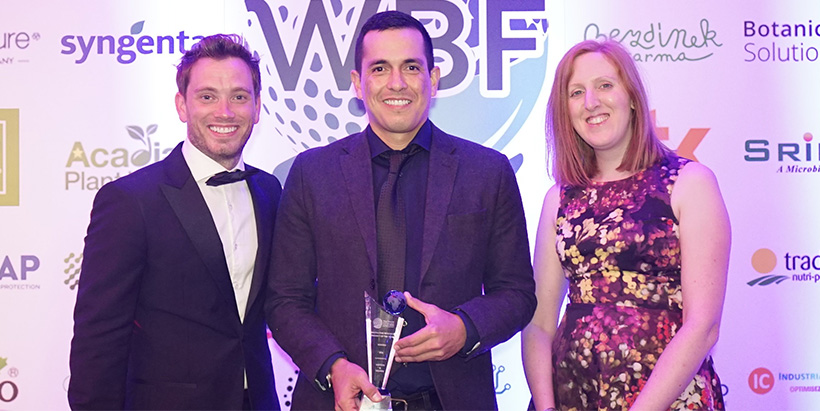
IITA Plant Pathologist Alejandro Ortega-Beltran (center) receiving an award for Aflasafe on behalf of IITA.

In 2019 and 2020, Alejandro Ortega-Beltran, now a Senior Plant Pathologist, was awarded the Outstanding Young Scientist award for his contributions to developing, testing, and registering Aflasafe products with regulatory authorities; for technology transfer efforts to private sector partners in multiple countries. This was also a recognition for work on aflatoxin resistance, cowpea bacterial blight, maize foliar diseases, among others. He is the first and only scientist to receive an IITA BoT award twice.

In 2016, the team was awarded Outstanding Scientific Article for the publication “Environmental distribution and genetic diversity of vegetative compatibility groups determine biocontrol strategies to mitigate aflatoxin contamination of maize by Aspergillus flavus” (Atehnkeng et al., Microbial Biotechnology.) The paper reported strategies to select and deploy native atoxigenic isolates to mitigate aflatoxin contamination in maize in Nigeria, which were adopted in other countries where the Aflasafe Initiative operates. In 2017, the team was awarded Outstanding Scientific Article for the publication “Biological control of aflatoxins in Africa: current status and potential challenges in the face of climate change” (Bandyopadhyay et al., World Mycotoxin Journal.) It is a highly quoted state-of-the-art review on aflatoxin mitigation strategies across Africa, summarizing past activities of the Aflasafe Initiative, challenges, and opportunities.

In 2013, the Aflasafe team earned the Outstanding Team award for progress on aflatoxin mitigation strategies in multiple countries. In addition to all Unit members, other IITA scientists, considered part of the extended Aflasafe Initiative, were part of the awarded team: Bussie Maziya-Dixon, Abebe Menkir, Lava Kumar, Tahirou Abdoulaye, and Godwin Atser.

Overall, the work of the team allows fulfillment of several core objectives of IITA: the transference of technologies to partners, reduced rural poverty through generated income, reduced malnutrition by making safer foods available, and improved both income and trade opportunities of farmers, aggregators, distributors, and traders in several countries. All these have been possible through forming a strong multidisciplinary team comprising biological scientists, engineers, social scientists, communication experts, extension agencies, policymakers, regulators, business development specialists, private sector investors, among others, which is allowing sustainable use of the aflatoxin biocontrol technology.

Contributed by Alejandro Ortega-Beltran


Contribué par

Nouvelles connexes

Aucun article trouvé

Laisser un commentaire

Votre adresse e-mail ne sera pas publiée. Les champs obligatoires sont indiqués avec *

Retour en haut
Olaosebikan, Olamide

Olamide Deborah Nwanze est une chercheuse principale spécialisée dans la recherche sur l'approche "genre" afin d'éclairer les politiques de sélection participative et inclusive, de développement de variétés et de systèmes semenciers concernant les cultures de racines, tubercules et bananes (RTB) au siège de l'Institut International d'Agriculture Tropicale, à Ibadan, au Nigeria. Elle est candidate au doctorat à l'Université d'Ibadan et titulaire d'un master et d'un diplôme d'ingénieur agronome en vulgarisation agricole et développement rural. Olamide est membre du programme African Women in Agricultural Research and Development – Gender Responsive Agricultural Systems Policy (SAISIE DE RÉCOMPENSEet les Chercheuses Sensibles au Genre Équipées pour la Transformation Agricole (SUPER. Elle cherche à appliquer ses apprentissages en matière d’approche genre, recherche sensible au genre, et expertise en développement et examen de politiques pour faciliter l’accès et l’adoption par les femmes, les jeunes, les enfants et les groupes sociaux vulnérables aux innovations agricoles qui garantissent la sécurité alimentaire, nutritionnelle, des revenus et des moyens de subsistance en Afrique. Ses rôles actuels comprennent le mentorat de chercheurs stagiaires, le développement de guides et manuels de formation, la mise en œuvre et l'adaptation de cadres et d'outils genre, l'engagement des acteurs de la chaîne de valeur en tant que partenaires de la science citoyenne, l'examen et la refonte des politiques, la gestion et l'analyse des données. Ses recherches actuelles portent sur les méthodes mixtes ainsi que sur les approches participatives et interdisciplinaires pour saisir et mettre en évidence les dynamiques de genre, les besoins, les préférences et les défis rencontrés par les parties prenantes au sein de la chaîne de valeur des moyens de subsistance agricoles afin de prioriser des stratégies axées sur le genre dans les programmes de sélection, la conception et la mise en œuvre des politiques.

À l'IITA, elle contribue à la mise en œuvre du CGIAR Initiative d'Élevage Accéléré et Innovation génétique Programmes ; recherche participative et genre au sein des Prochaine Génération ManiocHarvestPlusRTBAliments, et Tricot-ClimMob 1000Fermes Projets ; et la communication des connaissances sur le genre via le Série de webinaires G-LENS, vidéo documentaire, notes de politiquepublications, et blogs.


Publications récentes

de Sousa, K., van Etten, J., Manners, R. Bello, A., Teeken, B., Olaosebikan, O., et al. 2024. L'approche tricot : un cadre agile pour les essais décentralisés à la ferme soutenus par la science citoyenne. Une rétrospective. Agron. Sustain. Dev. 44, 8. https://doi.org/10.1007/s13593-023-00937-1

Madu, T., Onwuka, S., Nwafor, S., Onyemauwa, N., Ejechi, M., Ofoeze, M., Ukeje, B., Eluagu, C., Olaosebikan, O., Okoye, B., 2024. Les études sur les consommateurs inclusifs en matière de genre améliorent l'amélioration du manioc au Nigeria dans : Frontiers in Sociology, volume 9, numéro : 1224504, doi : 10.3389/fsoc.2024.1224504

Olaosebikan, O. ; Bello, A. ; Utoblo, O. ; Okoye, B. ; Olutegbe, N. ; Garner, E. ; Teeken, B. ; Bryan, E. ; Forsythe, L. ; Cole, S. ; Madu, T. 2023. Facteurs de stress et résilience au sein de la chaîne de valeur du manioc au Nigeria : Caractéristiques préférées des variétés de manioc et stratégies de réponse des hommes et des femmes pour informer l'amélioration variétale. Sustainability 15, 7837. https://doi.org/10.3390/su15107837

Okoye, B., Ofoeze, M., Ejechi, M., Onwuka, S., Nwafor, S., Onyemauwa, N., Ukeje, B., Eluagu, C., Obidiegwu, J.*, Olaosebikan, O., Madu, T.* 2023. Priorisation des traits préférés dans la chaîne de valeur de l'igname au Nigeria : une analyse de la situation en matière de genre in: Frontiers in Sociology, volume 8, numéro : 1232626, pages 1 – 9, ISSN 2297-7775, 2023. https://www.frontiersin.org/articles/10.3389/fsoc.2023.1232626/full

Olaosebikan, O., Bello, A. A., de Sousa, K., Ndjouenkeu, R., Adesokan, M., Alamu, E. O., Agbona, A., van Etten, J., Kegah, F. N.*, Dufour, D., Bouniol, A., Teeken, B. 2023. Acceptabilité par les consommateurs des produits alimentaires à base de gari-eba de manioc dans des contextes culturels et environnementaux variés en utilisant l'approche triade de comparaison des technologies (tricot) dans : Journal of the Science of Food and Agriculture,

Teeken, B., Olaosebikan, O., Bello, A. A., Madu, T.*, Cole, S. M. 2023. Évaluation qualitative de la positionnalité et des préférences des dyades en relation avec les activités liées au manioc : travailler avec des scientifiques citoyens du procès tricot https://hdl.handle.net/10568/138326 Type : Manuel

Bouniol, A., Ceballos, H., Bello, A. A., Teeken, B., Olaosebikan, O., Owoade, D., Agbona, A., Fotso Kuate, A., Madu, T.*, Okoye, B.*, Ofoeze, M.*, Nwafor, S.*, Onyemauwa, N.*, Adinsi, L.*, Forsythe, L., Dufour, D. 2023. Impact variétal sur le travail des femmes, la charge de travail et la pénibilité associée dans le traitement des plantes à racines, tubercules et bananes : focus sur le manioc en Afrique subsaharienne dans : Journal of the Science of Food and Agriculture, pages 1 – 25, ISSN 0022-5142,

Bello, A. A., Agbona, A., Olaosebikan, O., Edughaen, G., Dufour, D., Bouniol, A., Iluebbey, P., Ndjouenkeu, R.*, Rabbi, I. Y., Teeken, B. 2023. Effets génétiques et environnementaux sur la productivité de la transformation et le rendement des produits alimentaires : la pénibilité du travail des femmes dans : Journal of the Science of Food and Agriculture, pages 1 – 32, ISSN 0022-5142, 5

Cavicchioli, M., Zimbiti, T., Teeken, B., Nwanze, D.O., Liani, M., Parkes, E. & Bello, A. 2023. Rapport sur la formation en sélection génétique sensible au genre à l'IITA. Genetic Resources Center, IITA-HQ, Ibadan, 21-23 septembre 2022. Ibadan, Nigéria : IITA, (34 p.).https://hdl.handle.net/10568/131368

Agbona, A. Peteti P., Teeken B., Olaosebikan O. Bello, A. A., Parkes, E., Rabbi, I. Y., Mueller, L., Egesi, C., Kulakow, P. 2022. Gestion des données dans les programmes d'amélioration des cultures RTB africaines multidisciplinaires. In : Williamson, H.F., Leonelli, S. (eds) Towards Responsible Plant Data Linkage: Data Challenges for Agricultural Research and Development. Springer, Cham. https://doi.org/10.1007/978-3-031-13276-6_5

Lora Forsythe, Pricilla Marimo, Sarah Mayanja, Olamide D. Olaosebikan, Esme Stuart, Bela Teeken, Benjamin Okoye, Tessy Madu, (2021). Analyse transversale du genre dans RTBfoods Étape 2 Cartographie des genres sur les produits RTB. Comprendre les moteurs des préférences en matière de traits et le développement de profils de produits RTB multi-utilisateurs, WP1. Londres, Royaume-Uni : Rapport scientifique de terrain RTBfoods, 30 p.

Teeken, B., Garner, E., Agbona, A., Balogun, I., Olaosebikan, O., Bello, A., Madu, T., Okoye, B., Egesi, C., Kulakow, P. et Tufan, H.A. 2021. Au-delà des “ traits des femmes ” : explorer comment le genre, les différences sociales et les caractéristiques des ménages influencent les préférences pour les traits. Frontiers Systèmes alimentaires durables 5:740926. https://doi.org/10.3389/fsufs.2021.740926

Teeken, B., Agbona, A., Bello, A., Olaosebikan, O., Alamu, E., Adesokan, M., Awoyale, W., Madu, T., Okoye, B., Chijioke, U., Owoade, D., Okoro, M., Bouniol, A., Dufour, D., Hershey, C., Rabbi, I., Maziya‐Dixon, B., Egesi, C., Tufan, H. et Kulakow, P. (020. Comprendre les préférences variétales du manioc par le classement par paires du gari-eba et du fufu préparés par des agriculteurs-transformateurs locaux. Int J Food Sci Technol. https://doi.org/10.1111/ijfs.14862

Bela Teeken, Olamide Olaosebikan, Ireti Balogun, Benjamin Okoye, Tessy Madu, Steven Cole, Abolore Bello, Elizabeth Parkes. (2020). Pilotage des outils de profil client et produit G+ pour l'amélioration sensible au genre du manioc au Nigeria. Nigeria : Institut international d'agriculture tropicale (IIAT). https://hdl.handle.net/20.500.11766/13000