
Building the capacities of the younger generation would translate into immediate and long-term goal gains within and outside the organization and the agricultural enterprise as a whole. This was the drive of the conversation when Prof. John Derera, IITA Head of Breeding, received ten students from the Pan African University for Life and Earth Sciences (PAULESI) on 6 August. The students were drawn from eight countries: Ethiopia, Gambia, Ghana, Kenya, Lesotho, Niger, Nigeria, and Rwanda.
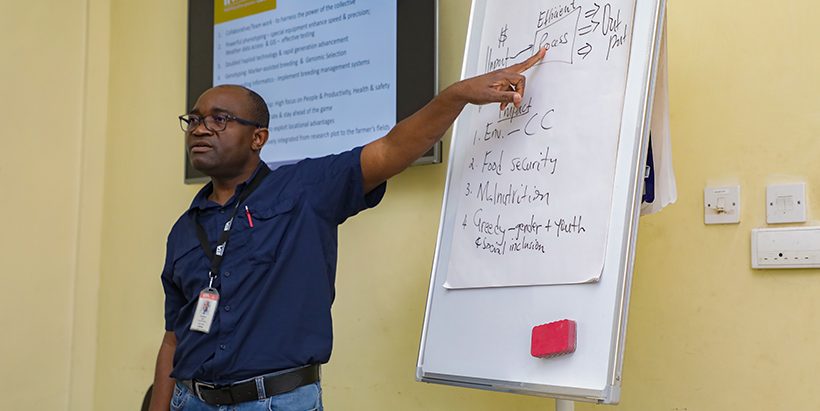
The one-day lecture at the Institute’s headquarters was themed “Modern Plant Breeding- Integrating Biotechnology and New Breeding Tools in Classical Breeding Programs.” The lecture exposed the students to modern breeding systems to ensure that genetic gains can be accelerated in the smallholder farming sector. These gains would enhance food security, reduce malnutrition, improve environmental health, strengthen farmer and community resilience to the vagaries of climate change, and foster gender, youth, and social inclusion. This training will help the young and future plant breeders to apply the knowledge gained in their careers and pass it to the next generation.
Prof Derera explained the evolution of the plant breeding profession from before the first World War through to the second World War, and the current conflict in eastern Europe causing food insecurity challenges. He emphasized the role played by modern plant breeding systems to ensure food security and better nutrition for vulnerable communities, especially in the global south. Modern plant breeding includes accelerated breeding processes, producing seed more cheaply, thereby reducing seed prices and standardizing the product development process.
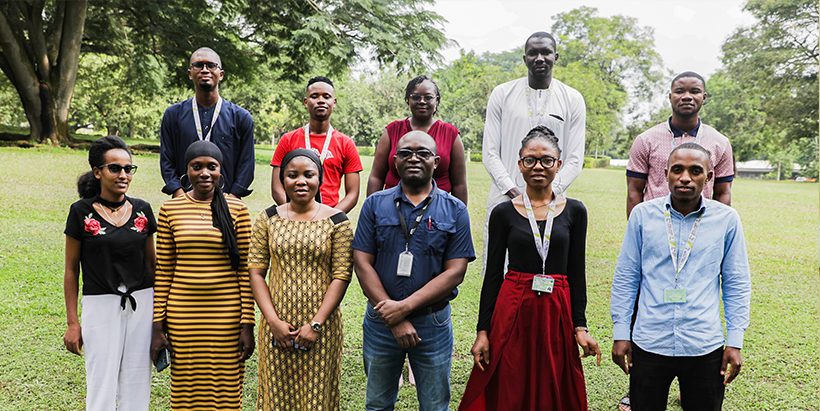
Furthermore, he highlighted the essential elements of a breeding program, such as people, plants, and processes, which all require improvement in organization, use of state-of-the-art technology, and global information systems. Following this explanation, “he mentioned that ‘efficiency’ in the breeding process would lead to a high output and high benefits per dollar invested in product development.”
One of the students, Mahamane Abdoul-Razak, from Niger, commended Prof Derera on how zealous he is about modern plant breeding. He also appreciated his insightful knowledge about modern plant breeding, using practical examples to ensure a better understanding of breeding terms.
Ruth Oluwasegun, from Nigeria, a student of the Plant Breeding Department, stated, “I would incorporate the knowledge gained into practical use to make sure food insecurity, malnutrition, and poverty are eradicated to achieve a sustainable agriculture in Africa.”
Contribué par Anita Akinyomade
Contribué par
Histoires récentes