
Lors du premier événement secondaire lors du récent CGIAR Semaine de la science organisée à Nairobi, au Kenya, des leaders d'opinion, des décideurs politiques et des chercheurs se sont réunis sous le thème : “ Le pouvoir de la recherche et des partenariats pour passer à l'échelle – Leçons de l'expérience. ”
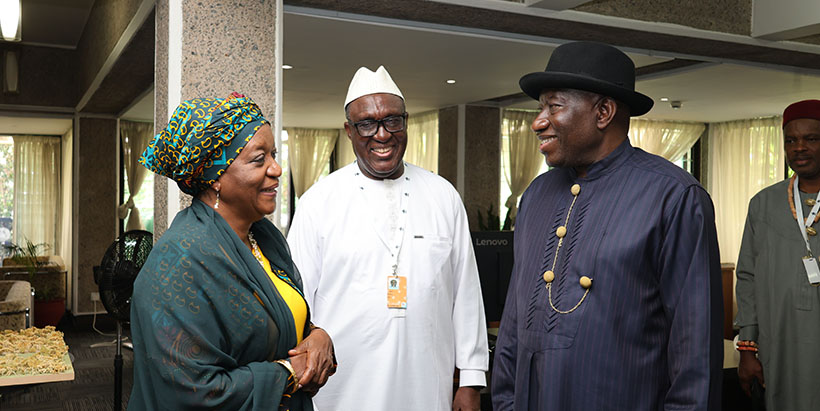
S'exprimant lors de ses remarques préliminaires, IITA Directeur général et directeur régional du CGIAR pour l'Afrique, Dr Siméon Ehui, a indiqué que l'urgence de transformer les systèmes alimentaires, fonciers et aquatiques pour un avenir plus durable et غذائي (sécurisé sur le plan alimentaire) n'a jamais été aussi grande.
Ajoutant que la capacité collective à relever ce défi dépend non seulement de la production d'une science de pointe, mais aussi de l'efficacité avec laquelle les parties prenantes traduisent cette science en impact à grande échelle.
Modérant une session de discussion avec S.E. le Dr Goodluck Ebele Jonathan, ancien président du Nigéria, le Dr Ehui a souligné comment les alliances stratégiques et la science novatrice peuvent transformer l'agriculture africaine à grande échelle.
S'inspirant de l'Programme de transformation agricole (ATA) de son administration, le Dr Jonathan a illustré l'impact profond d'un leadership visionnaire et de partenariats multisectoriels. Il a souligné comment les efforts coordonnés entre les gouvernements, les institutions de recherche telles que l'IITA et d'autres centres du CGIAR, le secteur privé et les partenaires internationaux au développement ont considérablement amélioré la sécurité alimentaire et réduit la dépendance du Nigéria à l'égard des importations.
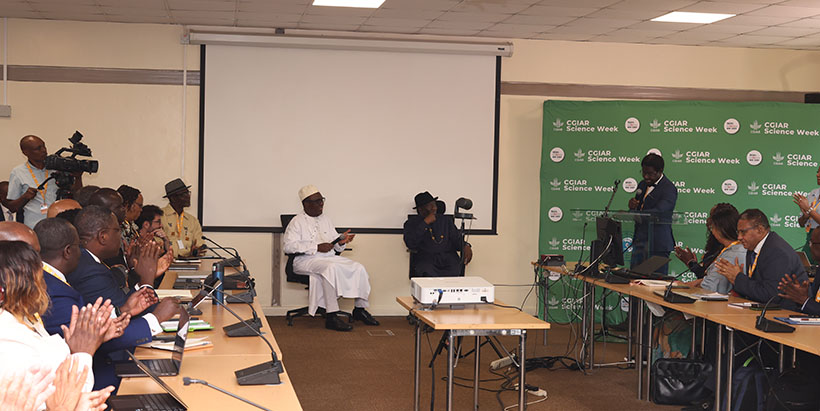
“ Grâce à des partenariats stratégiques, nous avons développé la chaîne de valeur du manioc au Nigeria et stimulé la production nationale de riz tout en créant des opportunités pour les jeunes grâce à des programmes tels que les Nagropreneurs, a souligné le Dr Jonathan. Ces efforts démontrent que la recherche et l'innovation peuvent être véritablement transformatrices avec les systèmes de soutien appropriés. ”
Le Dr Ehui s'est fait l'écho de l'appel en faveur de cadres politiques favorables, d'un soutien institutionnel et de modèles d'innovation inclusifs pour reproduire et déployer à plus grande échelle des réussites similaires à travers l'Afrique. Les rôles de l'agriculture numérique et des plateformes technologiques ont également été soulignés comme des facteurs décisifs, permettant une portée plus large et plus rapide auprès de millions d'agriculteurs.
“ Les partenariats ont toujours été au cœur de la réussite du CGIAR. Qu'il s'agisse de collaborations avec les systèmes nationaux de recherche agricole, le secteur privé, les gouvernements, les groupements d'agriculteurs ou les organisations de développement, nous avons constaté à maintes reprises que l'action collective est le moteur d'un changement significatif et durable ”, a ajouté le Dr Ehui.
Alors que le CGIAR et ses partenaires continuent de promouvoir un programme unifié pour mettre à l'échelle les innovations, cette session a servi de rappel saisissant que l'impact transformateur découle de la fusion de la science, des politiques et de partenariats centrés sur l'humain.
Contribué par ’Timilehin Osunde
Contribué par
Histoires récentes