
Egypt is among the top aquaculture producers globally, and tilapia alone accounts for 47.7% of the country’s per capita fish supply, 55.1% of fish production, and 68.6% of total aquaculture production. The growth of tilapia production increased rapidly in the last four years, following the release of the genetically improved Nile tilapia strain to Egyptian farmers.
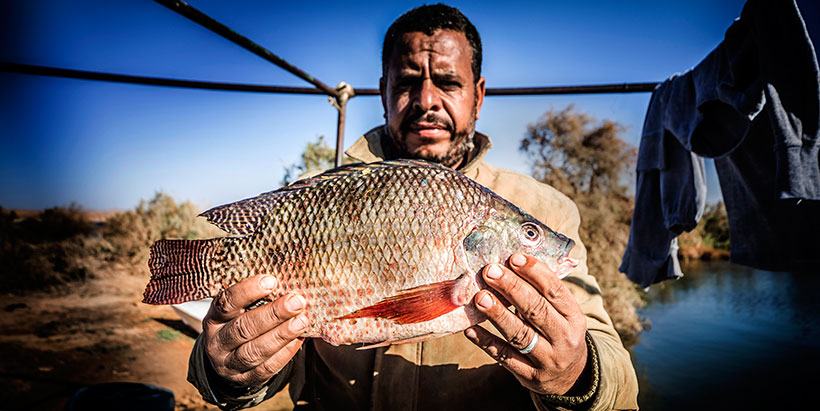
Fish farms are concentrated mainly in the Lower Delta districts of Egypt’s coastal lagoons, so the bulk of farmed tilapia is produced in only four northern governorates: Beheira, Kafr el Sheikh, Port Said, and Sharkhia. While there has been significant aquaculture development, the country continues to suffer from high rates of child stunting, maternal obesity, and maternal anemia owing to malnutrition. More significantly, studies have found higher rates of double-burden malnutrition occurring in areas far from fish farms, such as Upper Egypt and Metropolitan Egypt.
Globally, limited research is available regarding the links between expanding aquaculture and fish consumption patterns among low-income consumers. Fewer studies have examined socially differentiated preferences for farmed fish. Researchers carried out a étudier to address this research gap and explore tilapia consumption patterns and trait preferences of low-income consumers in Egypt. The study took into account significant factors not considered in the literature to date.
The research team, which included IITA Spécialiste en genre Steven Cole, was led by Seamus Murphy, CGIAR Gender Postdoctoral Fellow at WorldFish. The team surveyed 739 low-income consumers comprising 474 women and 265 men. One key respondent per household replied to a four-stage questionnaire. The first two stages—conducted weekly and monthly—inquired about their total household characteristics and food and non-food expenditure. Stages 3 and 4 asked about the personal preferences of tilapia among the key respondents.
“Although we recognized the significance of gender norms in driving food preferences and consumption patterns in Egypt, the study did not examine intra-household relations in decision-making processes. Instead, data collection and analyses were limited to consumers’ individual and household characteristics, and the intersection of these variables with tilapia preferences,” Cole said.
The team found a significant effect of sex on consumers’ preferences for longer body length and a significant effect of location on preference for smaller tilapia size and larger head traits among low-income households. Results showed that the share of fish-consuming households in Lower Egypt far outweighed numbers in Upper Egypt by 53.9%. They found greater geographic disparity at more local governorates, both within and between administrative regions.

Younger women from larger households with children were more likely to consume smaller tilapia grades, as women considered household dietary requirements in their tilapia preferences. Women cited smaller tilapia sizes more frequently in their top preferences and preferred head and longer body length traits. This suggests that tilapia selective breeding programs considering food and nutrition security objectives or gender-responsive breeding objectives may better reach such targets by selecting traits including size and total length.
The results offer methodological and empirical recommendations for future genetic selection programs considering gender-responsive and pro-poor breeding objectives. The results will also contribute to gender research debates regarding the need to investigate the connection between sex and other social and economic characteristics such as age, education, household size, household structure, age of children, employment, and location.
Contribué par
Histoires récentes