
As Africa’s leading partner in research for development, IITA–CGIAR is making significant strides in fostering partnerships with various stakeholders to transform agriculture in Africa. In a meeting on 11 April with the Ministry of Agriculture and Livestock of Madagascar, an IITA delegation led by the Director of Eastern Africa Hub, Leena Tripathi, discussed ways to develop the Malagasy agricultural sector by improving food security, enhancing nutrition, generating incomes, and creating employment.
The meeting focused on identifying the country’s priority agricultural needs on crops for interventions, including maize, cassava, and soybean, and implementing IITA technologies and expertise to address these needs through strong partnerships. This followed discussions during Dakar 2 Summit in Senegal, especially the priority value chains.
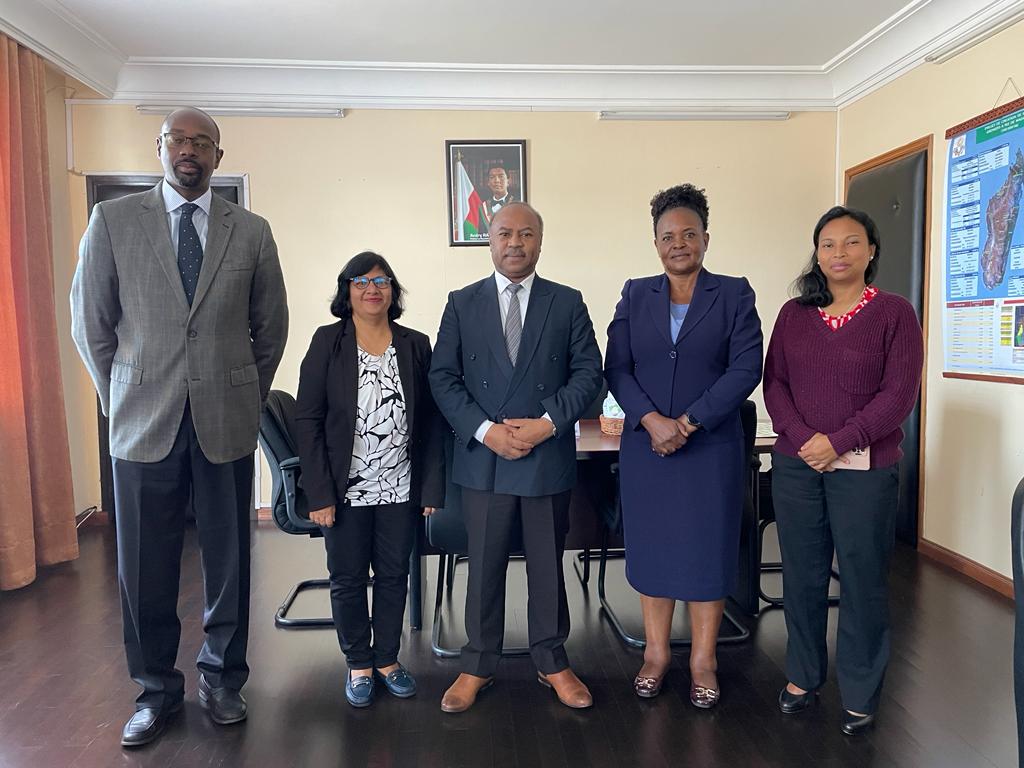
The Minister of Agriculture and Livestock, Hon. Harifidy Ramilison, explained that the main challenge facing the agriculture sector in the country is cyclones and reoccurring droughts resulting in food insecurity in some regions, including the South-East and the Southwest of Madagascar. “The ministry wants technologies transferred to communities to address critical food security and nutrition challenges. Therefore, the ministry is keen to scale up technologies related to productivity, seed production, and processing,” said Hon. Ramilison.
The minister noted that the ministry is eager to initiate mobile cassava processing plants in areas with plenty of cassava and advocates for establishing the demonstration plots to make the communities believe by seeing.
Tripathi briefed the minister on IITA technologies of the three value chains: varieties, seed systems, good agronomic practices, climate-smart agriculture, processing, and cassava value addition. “IITA, through BRECOMA project, is evaluating eight improved varieties of maize, including the drought-tolerant yellow maize and five Cassava Brown Streak Disease (CBSD)-tolerant cassava varieties, including three white and two yellow, which were developed by the Institute,” Tripathi explained.
Moreover, Tripathi explained the importance of the cassava seed system and highlighted the risk of spreading viral diseases using stem cuttings directly from the farmers’ fields. Thus, training has been provided to Madagascar researchers on seed multiplication through pencil cutting and handling post-flask material.
To express the government’s political will, Minister Ramilison showed processed products, including breadfruit, cassava, sweet potato, rice, maize, sorghum, and millet flours, in his office as a gesture of readiness to support processing and value addition to improve security, nutrition, and income of the people in the country.
Overall, IITA’s meeting with the Madagascar Ministry of Agriculture and Livestock demonstrates the organization’s commitment to transforming agriculture in Madagascar, which is critical to achieving food security and improving livelihoods.
Contribué par Gloriana Ndibalema
Contribué par
Histoires récentes