
In a bid to strengthen partnerships across the continent, CGIAR Regional Director for Continental Africa and IITA Directeur général, Dr Siméon Ehui, was on a mission to Sierra Leone, Ghana, and the Federal Capital Territory of Nigeria, Abuja, to meet with key stakeholders in the agri-food sector in West Africa. The mission covered multiple explorative ways to strengthen collaborative efforts across the board while providing the opportunity to address critical issues and challenges in the agri-food sector.
In a meeting with Sierra Leone Minister of Agriculture Honorable Henry Kpaka, Dr Ehui highlighted key areas of the Feed SALONE agenda in alignment with IITA’s research and how scaling existing innovations from IITA and other CGIAR centers would aid the success of the program’s implementation.
In another development, Minister of Finance Honorable Sheku Ahmed Bangura, commending IITA’s research impact on the continent during a meeting with Dr Ehui, said the Sierra Leone government is exploring partnerships that will drive the sustainable delivery of the agricultural agenda.
He added that collaborating with IITA and other CGIAR centers will be strategic to improving the country’s economy.
During the meeting with the World Bank team in Sierra Leone, the IITA delegation discussed areas of interest between both organizations that will impact the implementation of the Food Systems Resilience Program (FSRP)—a program IITA supported in undertaking the study on pathways to the transformation of the agri-food sector.
With the occurrence of aflatoxin in some parts of the country, African Development Bank (AfDB) Country Manager for Sierra Leone Halima Hashi emphasized the need to introduce IITA’s bio-control measure Aflasafe under the Feed SALONE agenda as this has recorded huge success in other countries. Speaking during the meeting at the AfDB office in Sierra Leone, DG Ehui said there is a need to scale technologies that will strengthen seed systems, “I would like IITA to be the conduit for the implementation of programs in Africa in a synergy of CGIAR centers,” he added.
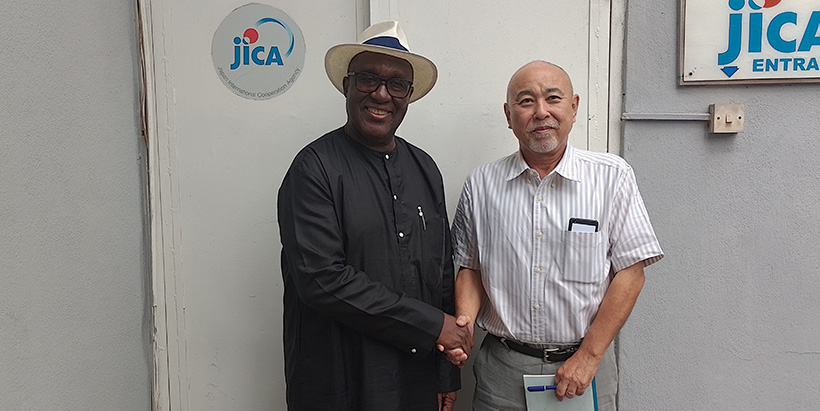
IITA Development and Delivery Director Alfred Dixon, who was part of the delegation on the Sierra Leone mission while meeting with Hitoshi Sato, Sierra Leone Country representative for Japan International Cooperation Agency (JICA), said IITA is focusing on strengthening the seed systems in the country and exploring collaborations with strategic partners.
Welcoming the IITA team, Sato emphasized the importance of empowering government agencies, adding that this is key to the success of programs like FSRP.
Speaking at the meeting, Dr Ehui said IITA is working towards increasing its presence in Sierra Leone and increasing the capacities of government agencies by providing technical expertise.
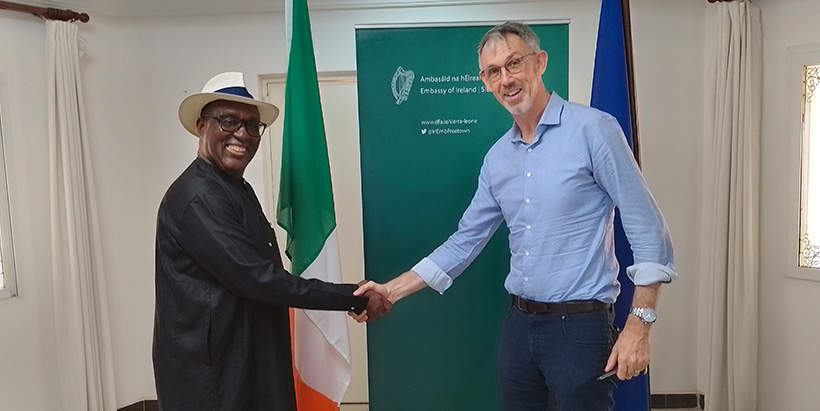
Introducing IITA’s innovations during a meeting with Irish Ambassador to Sierra Leone Aidan Fitzpatrick, Dr Ehui said there is a need for emergency measures to circumvent the rudimentary seed systems in the country, and the Institute is exploring collaborations that will address challenges in the country’s agriculture sector.
Highlighting some of the Irish Foundation’s focus areas, Fitzpatrick said both organizations could consolidate activities in areas of youth and women empowerment, nutrition, food security, and governance.
In a meeting with First Counsellor of the European Union Delegation to Sierra Leone Holger Rommen, Dr Ehui said IITA and other CGIAR centers are scaling existing innovations to strengthen Africa’s food systems and garnering support from strategic partners.
During the Ghana mission, DG Ehui, in the company of IITA Ghana Country representative Richard Asare and IITA Agricultural Economist Bekele Kotu, met with Council for Scientific and Industrial Research (CSIR) Director General Prof Paul Bosu to address ways to improve the existing relationship between both institutes and how to embark on joint resource mobilization for effective collaboration.
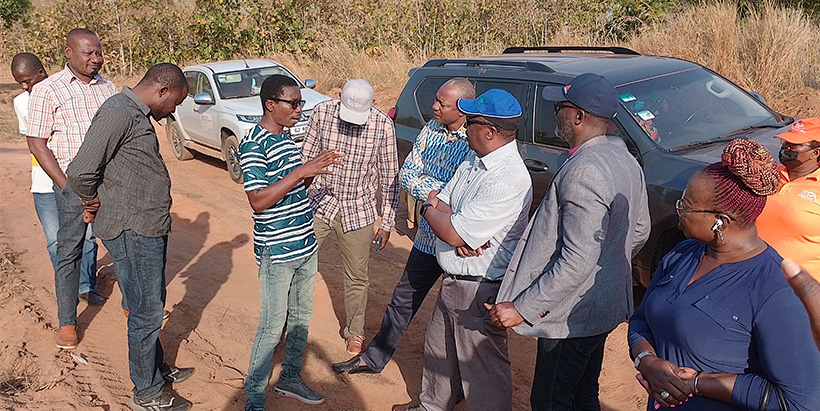
Speaking with Ghana Cocoa Board (COCOBOD) CEO Honorable Boahen Aidoo during a meeting with the IITA delegation in Accra, both organizations discussed the possibility of introducing AICCRA technologies into cocoa research, leveraging the proposed Soil Fertility Laboratory.
As part of efforts to strengthen R4D activities in the cocoa growing systems, Dr Ehui stressed the importance of enhancing collaboration based on the CocoaSoils project by leveraging resources from other funding partners.
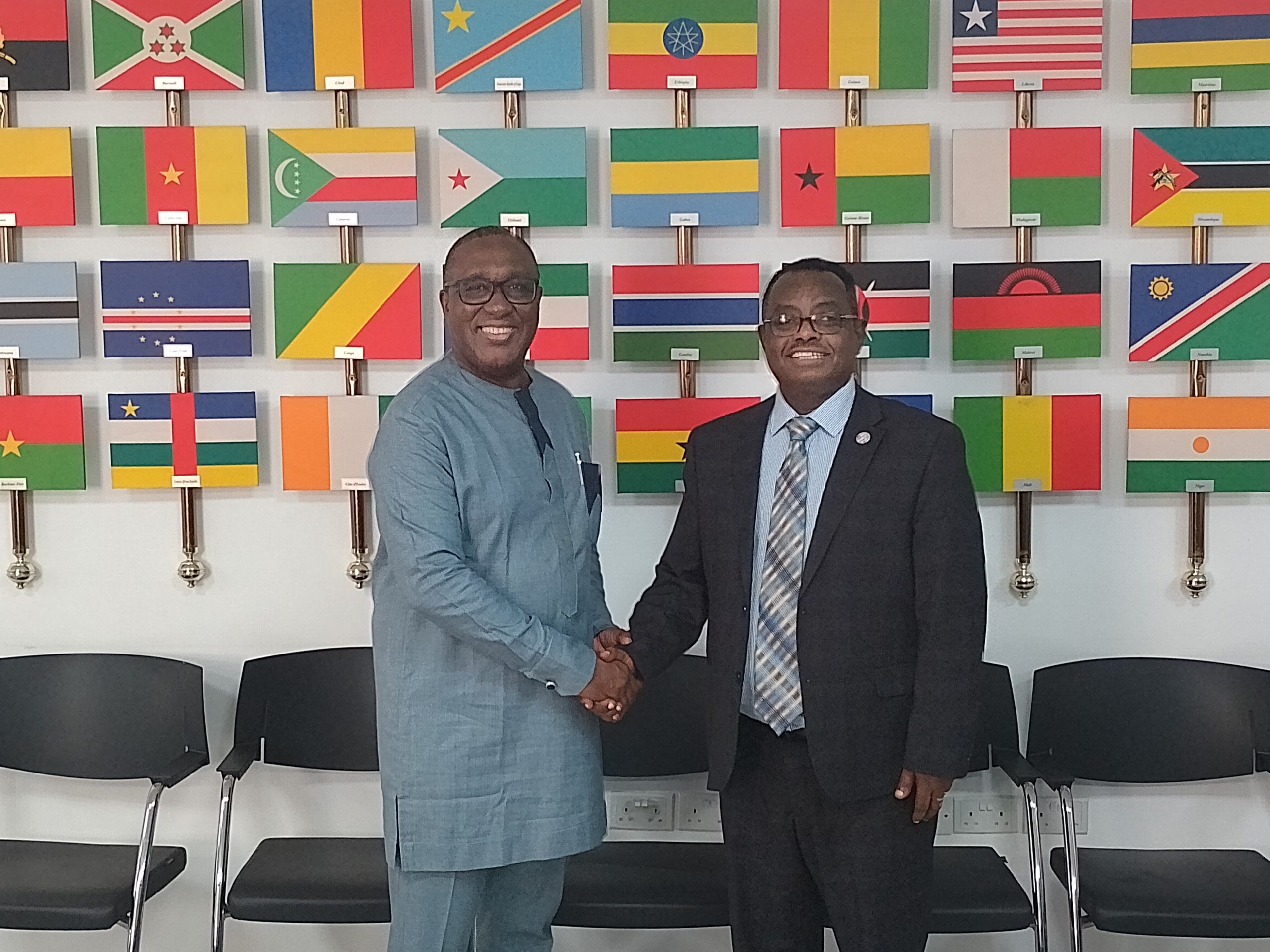
Welcoming the IITA team to the FAO office in Accra, Assistant Director General and Regional Representative for Africa Dr Abebe Haile-Gabriel commended IITA’s research impact on the continent, adding that expanding collaborative efforts on the implementation of the Technologies for African Agricultural Transformation (TAAT) program is a top priority.
Looking at overlapping focus areas such as nutrition and climate, both organizations agreed on integrating research into FAO’s interventions.
Highlighting AICCRA’s work during a meeting with World Bank’s Senior Agricultural Economist Ashwini Sebastian and Financial Specialist Ben Johnson in Accra, Dr Ehui recommended targeting commercialization in the value chain through climate-smart technologies being tested to attract the private sector.
Agreeing on the importance of leveraging partnerships with national programs, the World Bank team proposed that the AICCRA team adopt working with the government to ensure cross-fertilization of ideas rather than duplication of efforts, as these can be integrated into the national climate-smart agriculture agenda.
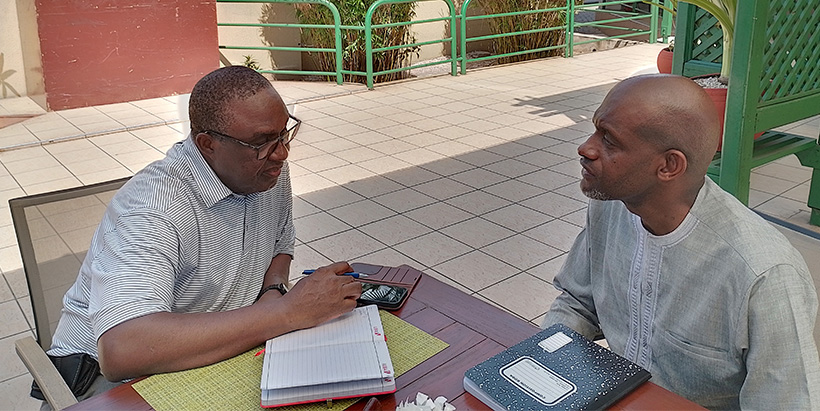
Executive Director of the Forum for Agricultural Research in Africa (FARA) Aggrey Agumya, speaking with Dr Ehui in Accra, said FARA is open to exploring areas of collaboration with IITA. Following the meeting, both institutions will work together to aid research in Africa by driving collaborative efforts among major stakeholders, including CGIAR centers across the continent.
In Nigeria, emphasizing the need to scale research innovations to address food insecurity in Nigeria, Dr Ehui, while meeting with the Minister for Agriculture and Food Security, Honorable Abubakar Kyari, revealed that IITA is open to strategically partnering with the Ministry.
Speaking at the meeting, the Honorable Minister said there is a need to look at sustainable strategies to help initiate strong institutionalized policies as IITA’s visit coincided with President Bola Ahmed Tinubu initiating the 8-point agenda with food security at the top of the list.
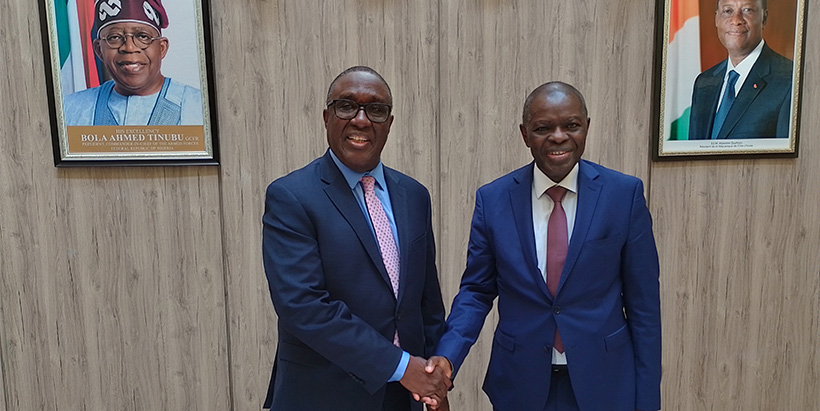
In a meeting with Côte d’Ivoire Ambassador to Nigeria, Honorable Kalilou Traore, in his office in Abuja, discussions centered on exploring strategies to revamp IITA’s research activities in the country.
Hon. Traore welcomed IITA’s visit as an opportunity to address issues like bilateral cooperation and reconstituting a research hub in Cote d’Ivoire with the overall mission to improve food security and seed systems in the country.
According to Dr Ehui, one of his goals is to see an Africa where institutes like IITA, CGIAR centers, and other key players in the agri-food systems sector can seamlessly work together without competition but focusing on one goal, which is an Africa that is food and nutrition secure but that has to start with establishing strategic partnerships.
Proposé par Timilehin Osunde
Contribué par
Histoires récentes