
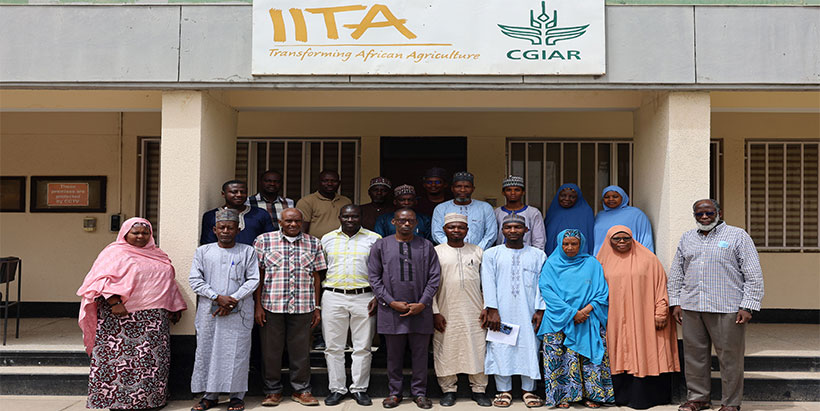
Le 16 mai, le IITA La station de Kano a accueilli une réunion d'une journée organisée par l'équipe de sélection du niébé de l'Institut de recherche agronomique (IAR) de Zaria, en collaboration avec le programme de sélection du niébé de l'IITA. Cette réunion visait à élaborer un profil de produit pour les futures variétés de niébé afin de prendre en compte les exigences des consommateurs et des producteurs de niébé lors de la création de nouvelles variétés pour le Nigéria. Cette stratégie est considérée comme un moyen de faciliter l'adoption de ces nouvelles variétés par les agriculteurs et les consommateurs lorsque celles-ci, conçues conjointement par toutes les parties prenantes, seront développées et déployées.
Des acteurs de divers aspects de la chaîne de valeur du niébé au Nigéria ont participé à des discussions pour guider l'équipe de sélection sur les besoins du marché et prioriser le développement de leurs variétés en conséquence.
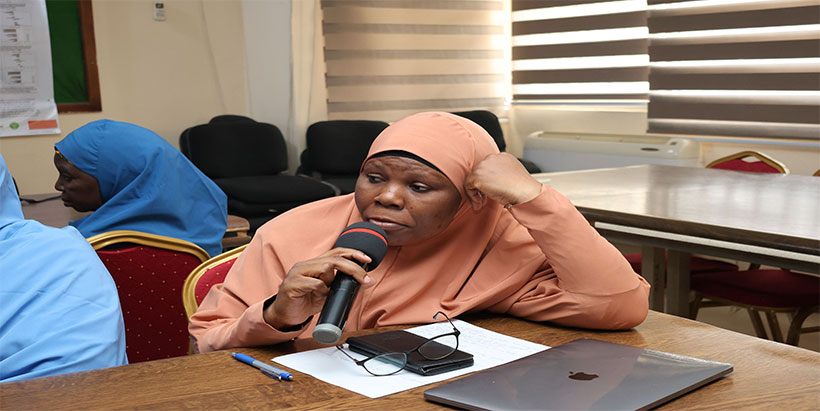
Le chef du programme d'amélioration du niébé de l'IITA basé à la station de Kano, Boukar Ousmane, et des scientifiques de la station ont assisté à la réunion. Parmi les autres participants des partenaires nationaux figuraient des sélectionneurs, des entomologistes, des agronomes, des nutritionnistes, des transformateurs, des agents de vulgarisation, un représentant d'un groupe de jeunes, des entreprises semencières, la Fondation Syngenta pour une agriculture durable et des spécialistes du genre. Au cours de la réunion, le professeur Muhammad Lawan Umar, sélectionneur de niébé de l'Institut de recherche agricole (IAR) de Zaria, a mentionné que l'objectif de la réunion était d'abord de rendre opérationnelle l'équipe de conception de produits à base de niébé pour le Nigéria et d'examiner les profils de produits cibles. Cette équipe aidera les sélectionneurs à développer des produits et à les concevoir pour qu'ils servent de modèle directeur pour le développement de nouvelles variétés.
Lawan a noté : “ J'ai énormément bénéficié de cette réunion car il y avait des experts de différents secteurs, et nous avons besoin de leur aide pour développer de nouvelles variétés de niébé qui seront acceptables pour les parties prenantes au Nigéria. ”
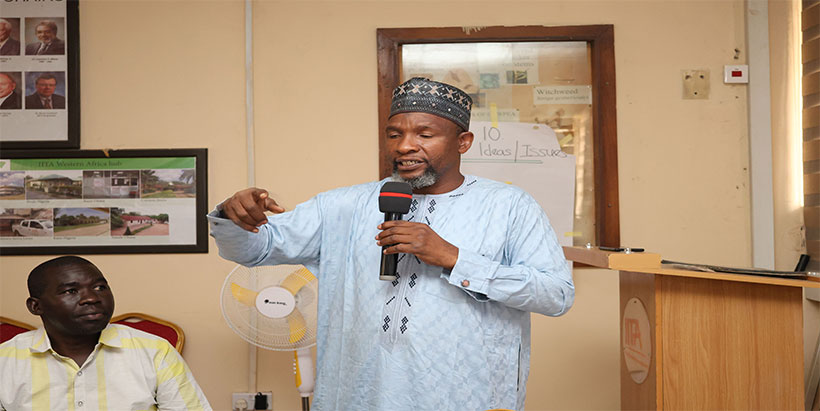
Au cours d'un entretien, le professeur Hajara Shuaibu, experte en socio-économie de l'Université Ahmadu Bello, a indiqué qu'elle avait assisté à la réunion pour mettre à profit son expérience auprès des agriculteurs et des consommateurs sur le terrain. Elle a affirmé que tout devrait être axé sur la demande et qu'il faut comprendre le problème avant de proposer une solution. Elle a souligné que les chercheurs élaborent souvent des solutions en se basant sur ce qu'ils supposent être les besoins des agriculteurs.
La réunion visait à rassembler des experts pour partager des idées sur les besoins des agriculteurs, en se basant sur leurs expériences de chercheurs. Elle a qualifié la réunion d'opportune et productive.
Dije Ibrahim, une transformatrice alimentaire de la zone de gouvernement local de Tudun Wada, dans l'État de Kano, a trouvé la réunion extrêmement précieuse et instructive, en tirant un grand profit. Elle a exprimé le désir d'assister à de futures sessions et de rechercher davantage de connaissances et de compétences.
Proposé par Sarah Sallau
Contribué par
Histoires récentes