
IITA and ILRI teams reflect on ongoing activities under the Crop–Livestock Integration Project
juillet 24, 2018
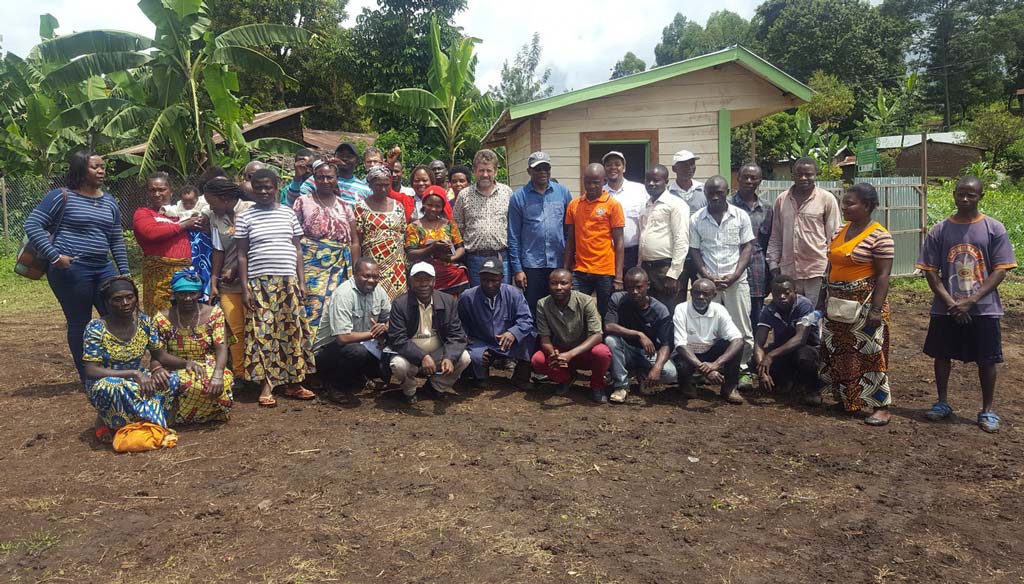
IITA-Kalambo Station, in April, hosted an Institut international de recherche sur l'élevage (ILRI) team from the United Kingdom, Nairobi, and Bujumbura on a study visit to reflect on and learn from ongoing activities being implemented in the Democratic Republic of Congo. They visited field sites at Mite and Kamanyola under the Crop–Livestock Integration Project (CLiP), a project funded by Fonds international de développement agricole (IFAD) and the EU, and jointly implemented by ILRI and IITA in Burundi and DRC, respectively. The ILRI team was led by Dr Peter Thorne.
 Before the field visit, IITA staff presented an overview of project activities by outputs and briefed visitors on ongoing activities following the Annual Review and Planning Meeting held in November 2017 in Bukavu and approved workplan as submitted to the donors.
After the presentations, the team had very fruitful and constructive reflections and learning sessions to improve on the implementation protocols. Suggestions and recommendations were also provided to IITA staff.
The turning point for this session was based on the need for proper documentation of the partnership pathway, which has been a point repeatedly noted by IFAD following the country based business model agenda to align project interventions with country specific portfolios that promote and strengthen public-private partnerships.
The livestock ladder tracking system was also another topic of discussion during the meeting. Beneficiaries who received a small stock of animals, especially rabbits, pigs, and chickens, are closely monitored to ensure that farmers “climb the ladder” and that the solidarity chain is not broken. Linda Burume, DRC Mite Field Site Facilitator, said “We are now observing a few farmers who received the animals such as rabbits and pigs, sell and buy goats, and maintain the solidarity chain principle.”
The following day, the team visited the Centers for Agribusiness and Agro- Services (CAAS) established by CLiP in Katana and Kamanyola field sites. The team visited the different enterprises including piggery, poultry, maize and cassava processing units, vegetable and mushroom garden, and the selling point.
Recommendations to improve the mushroom production and the forage demonstration plots were formulated. The visits were highly appreciated by both farmers and the visitors. On behalf of CAAS, Pascal Buganza, the Katana CAAS Committee Chair, expressed his satisfaction by saying “We are pursuing our dreams with the establishment of these centers. We are growing slowly but progressively we will be become real entrepreneurs. Please do not leave us before we fly on our own.”
Moved by the commitment and the enthusiasm of CAAS members, IITA- Bukavi OIC Chris Okafor said “This a journey we have started together and you are in the front line. If you walk, we will walk; if you run, we will run, but if you stop, we will stop. So be encouraged and do the good work.”
After the field tour, the team visited two individual farmers, namely Ferdiana and Fatuma in Katana and Kamanyola, respectively. These farmers shared their stories of how the integrated crop– livestock system has brought more cash and improved their livelihood. Ferdiana, who received six rabbits from the project has already given out 12 offsprings to three other farmers along the solidarity chain and has climbed the ladder from rearing rabbits to goats. On the other hand, Fatuma said she realized that agriculture can provide a decent life when it is taken seriously. She built a big house and pays for her son’s fees for his master’s degree abroad from the income generated from her maize farming system.
The evaluation team expressed their appreciation of the ongoing work, the commitment of CAAS members, and appreciated the agro-vet network as well as the ICT platform. Voicing his satisfaction, Thorne committed to fully support the CAAS initiatives and expressed his appreciation by saying: “I have visited this center twice, but this time around, I am impressed by the idea of putting in place a network of agro- veterinarians to provide veterinary care to farmers facilitated by the ICT platform.” Before winding up the meeting, Dr Vincent Muhigirwa, the Inspector of the Inspection Provincial de l’Agriculture, Pêche et Elevage (IPAPEL), expressed the engagement and full support of the CAAS in general and the agro-vet network in particular to ensure animal health and safety.
Mrs Kijana Ruhebuza, the Director of the Institut National d’Etude et Recherche Agronomiques (INERA) closed the session by saying “I visited CLiP’s sites and was particularly impressed by the work that the project is doing and the commitment of its beneficiaries who contributed their money to start up their business. I am confident that together we can achieve our goals.” The team then proceeded to Burundi where they wrapped up the meeting.
Before the field visit, IITA staff presented an overview of project activities by outputs and briefed visitors on ongoing activities following the Annual Review and Planning Meeting held in November 2017 in Bukavu and approved workplan as submitted to the donors.
After the presentations, the team had very fruitful and constructive reflections and learning sessions to improve on the implementation protocols. Suggestions and recommendations were also provided to IITA staff.
The turning point for this session was based on the need for proper documentation of the partnership pathway, which has been a point repeatedly noted by IFAD following the country based business model agenda to align project interventions with country specific portfolios that promote and strengthen public-private partnerships.
The livestock ladder tracking system was also another topic of discussion during the meeting. Beneficiaries who received a small stock of animals, especially rabbits, pigs, and chickens, are closely monitored to ensure that farmers “climb the ladder” and that the solidarity chain is not broken. Linda Burume, DRC Mite Field Site Facilitator, said “We are now observing a few farmers who received the animals such as rabbits and pigs, sell and buy goats, and maintain the solidarity chain principle.”
The following day, the team visited the Centers for Agribusiness and Agro- Services (CAAS) established by CLiP in Katana and Kamanyola field sites. The team visited the different enterprises including piggery, poultry, maize and cassava processing units, vegetable and mushroom garden, and the selling point.
Recommendations to improve the mushroom production and the forage demonstration plots were formulated. The visits were highly appreciated by both farmers and the visitors. On behalf of CAAS, Pascal Buganza, the Katana CAAS Committee Chair, expressed his satisfaction by saying “We are pursuing our dreams with the establishment of these centers. We are growing slowly but progressively we will be become real entrepreneurs. Please do not leave us before we fly on our own.”
Moved by the commitment and the enthusiasm of CAAS members, IITA- Bukavi OIC Chris Okafor said “This a journey we have started together and you are in the front line. If you walk, we will walk; if you run, we will run, but if you stop, we will stop. So be encouraged and do the good work.”
After the field tour, the team visited two individual farmers, namely Ferdiana and Fatuma in Katana and Kamanyola, respectively. These farmers shared their stories of how the integrated crop– livestock system has brought more cash and improved their livelihood. Ferdiana, who received six rabbits from the project has already given out 12 offsprings to three other farmers along the solidarity chain and has climbed the ladder from rearing rabbits to goats. On the other hand, Fatuma said she realized that agriculture can provide a decent life when it is taken seriously. She built a big house and pays for her son’s fees for his master’s degree abroad from the income generated from her maize farming system.
The evaluation team expressed their appreciation of the ongoing work, the commitment of CAAS members, and appreciated the agro-vet network as well as the ICT platform. Voicing his satisfaction, Thorne committed to fully support the CAAS initiatives and expressed his appreciation by saying: “I have visited this center twice, but this time around, I am impressed by the idea of putting in place a network of agro- veterinarians to provide veterinary care to farmers facilitated by the ICT platform.” Before winding up the meeting, Dr Vincent Muhigirwa, the Inspector of the Inspection Provincial de l’Agriculture, Pêche et Elevage (IPAPEL), expressed the engagement and full support of the CAAS in general and the agro-vet network in particular to ensure animal health and safety.
Mrs Kijana Ruhebuza, the Director of the Institut National d’Etude et Recherche Agronomiques (INERA) closed the session by saying “I visited CLiP’s sites and was particularly impressed by the work that the project is doing and the commitment of its beneficiaries who contributed their money to start up their business. I am confident that together we can achieve our goals.” The team then proceeded to Burundi where they wrapped up the meeting.
The ILRI team with some IITA-Kalambo staff and farmers during the visit to a field site
Contribué par
Histoires récentes
Aucun article trouvé