
Partout en Afrique, des cultures telles que le taro, l'amarante, le sésame, le pois de terre, le pois d'Angole, l'éleusine et le gombo, souvent qualifiées de cultures “ d'opportunité ” ou sous-utilisées, restent essentielles pour les régimes alimentaires locaux, la nutrition et la résilience climatique, mais elles continuent de recevoir des investissements limités en matière de recherche, d'amélioration génétique et de développement des systèmes semenciers. Alors que la variabilité climatique s'intensifie et que les systèmes alimentaires font face à une pression croissante, ces cultures offrent un potentiel significatif pour diversifier la production, améliorer la nutrition et renforcer la résilience des petits exploitants agricoles.
Le projet de Vision pour les cultures et les sols adaptés (VACS) s'emploie à libérer ce potentiel en accordant la priorité à ces cultures dans le cadre d'un effort plus large visant à bâtir des systèmes alimentaires plus diversifiés et plus résilients en Afrique.
Au cœur de cet effort se trouve le renforcement de la capacité des chercheurs et des praticiens à développer, tester et diffuser à grande échelle des variétés améliorées qui répondent aux besoins des agriculteurs.
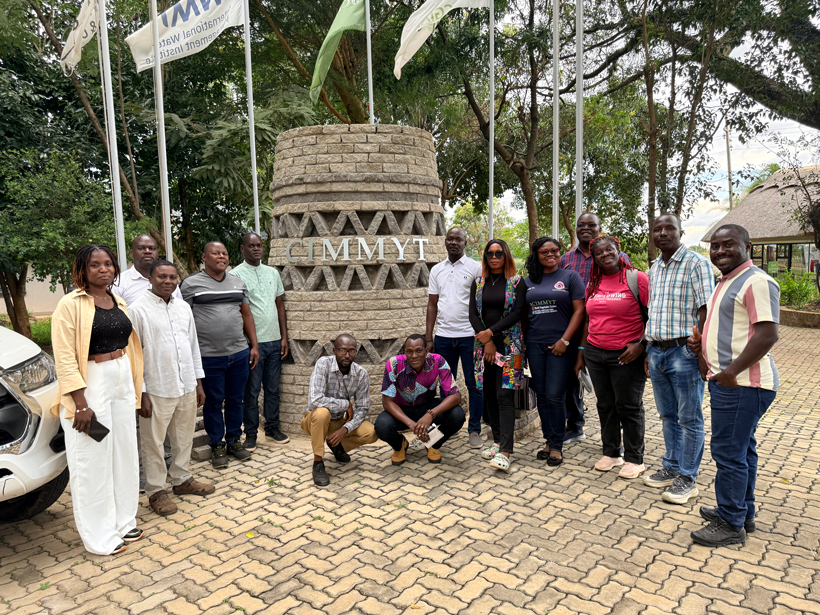
C'est dans ce contexte que l'IITA-CGIAR a collaboré avec le Centre international d'amélioration du maïs et du blé (CIMMYT) pour recruter des stagiaires professionnels du Bénin, du Ghana, du Mali, du Nigéria et du Sénégal.
Les boursiers du VACS se sont réunis au Zimbabwe du 13 au 17 avril 2026 pour un voyage d'étude conçu pour les doter des compétences pratiques et des connaissances nécessaires pour faire progresser la sélection et la promotion de ces cultures essentielles.
S'exprimant lors de la tournée d'apprentissage, Dean Muungani, responsable des cultures céréalières à l'IITA, a déclaré qu'avec le changement climatique et l'Afrique qui continue de connaître des conditions plus sèches, il était temps de se tourner vers des cultures mieux adaptées aux conditions météorologiques extrêmes et de les gérer en fonction des exigences du marché.
“ L'idée générale est de renforcer les capacités des obtenteurs qui vont développer ces cultures. Nous voulons qu'ils apprennent auprès d'experts de l'industrie et qu'ils soient exposés à la gestion des essais, des démonstrations ainsi qu'à la manière d'impliquer les agriculteurs dans l'obtention de ces cultures ”, a-t-il déclaré.
Le parcours d'apprentissage a débuté par une visite au centre de recherche de Seed Co, où les boursiers ont exploré les systèmes de développement de semences hybrides, notamment la conception des essais, la gestion et les processus d'assurance qualité. Un enseignement clé a été le rôle essentiel d'essais bien gérés dans la production de données fiables qui éclairent des décisions de sélection efficaces. Les participants ont également été initiés à des techniques avancées telles que la technologie des haploïdes doublés, les protocoles de dépistage des maladies et l'utilisation d'outils moléculaires pour garantir la pureté et la qualité des semences.
“ Je ne saurais trop insister sur l'importance du croisement des idées. J'espère que ce qu'ils ont vu ici les inspirera à reproduire ce que nous faisons ici dans leurs cultures respectives. Ce que nous cherchons à démontrer ici, c'est la discipline requise pour produire de manière cohérente des variétés fiables et performantes ”, a déclaré Gorden Mabuyaye, responsable mondial de la recherche et du développement chez Seed Co.
La visite s'est poursuivie à l'Agricultural Research Trust (ART), où les boursiers ont découvert des modèles durables de recherche agricole, notamment des partenariats et de la recherche sous contrat. Ils ont également été exposés à des solutions d'engrais innovantes, incluant des technologies émergentes de production d'azote à la ferme visant à réduire les coûts des intrants.
L'un des temps forts de la visite a été le déplacement vers les Champs-écoles des producteurs à Mudzi, organisés par l'Organisation de développement de la technologie communautaire (CTDO), au cours duquel les boursiers ont pu observer la sélection participative des plantes en pratique. Les agriculteurs ont participé activement aux tests et à la sélection de variétés de cultures encore en cours de développement, garantissant ainsi que les produits finaux répondent aux besoins et aux préférences locaux.
Patrick Kasasa, coordinateur des programmes du CTDO, a déclaré : “ Lorsque les agriculteurs sont impliqués dès le début, l'adoption devient beaucoup plus facile. Ils ne sont pas de simples bénéficiaires de technologies, ils sont les co-créateurs de solutions adaptées à leurs réalités. ”
“Voir des agriculteurs activement impliqués dans le processus de sélection, de la sélection des caractères et de la contribution au développement des variétés, est à la fois instructif et inspirant. Cela souligne la valeur de l'engagement continu des agriculteurs dans le développement de variétés adaptées à leurs environnements, a déclaré Mawulawoe Awity, l'un des boursiers participants du Ghana.
Les boursiers ont également exploré les banques de semences communautaires, qui jouent un rôle essentiel dans la conservation des variétés locales et le maintien de la diversité génétique. Ces systèmes offrent aux agriculteurs une solution de recours fiable, renforçant ainsi la résilience tout en préservant un important matériel génétique au sein des communautés.
D'autres engagements ont inclus des visites des systèmes de production de légumes de Seed Co et du CIMMYT, où les boursiers ont été introduits au programme d'amélioration du maïs et aux technologies de mécanisation. Ces expériences ont mis en évidence l'importance d'intégrer des variétés améliorées à des systèmes de production efficaces pour stimuler la transformation agricole.
“ Ce programme de renforcement des capacités du VACS est idéal parce que l'agriculture est dynamique, nous avons de nouvelles technologies qui voient le jour, et dans ce contexte de changement climatique, il est nécessaire que les obtenteurs apprennent et utilisent ces technologies pour la sélection avancée ”, a déclaré Xaxier Mikeh, responsable du développement des programmes au CIMMYT pour l'Afrique australe.
Tout au long de la visite, les partenariats sont apparus comme un thème central. Les engagements avec des institutions telles que Seed Co, CTDO, ART et CIMMYT ont démontré le rôle crucial de la collaboration dans la mise à l'échelle de l'innovation et la création d'impact au niveau des agriculteurs.
À la fin de la visite, les boursiers avaient acquis non seulement des connaissances techniques, mais aussi des perspectives pratiques sur la manière dont les innovations agricoles peuvent être adaptées et mises en œuvre dans leurs pays respectifs, en particulier pour les cultures d'opportunité dans le cadre de l'initiative VACS.
La tournée d'apprentissage a souligné un message clair : le renforcement des capacités humaines est essentiel pour transformer les systèmes agricoles. Alors que les boursiers rentrent chez eux, ils emportent avec eux les outils, les connaissances et les réseaux nécessaires pour stimuler l'adoption de technologies améliorées, renforcer les systèmes semenciers et améliorer la productivité et les moyens de subsistance des agriculteurs dans toute la région.
Proposé par Rachel Namukolo-Nali
Contribué par
Histoires récentes