
Programme d'amélioration de l'igname
Why The Yam Improvement Program
The Yam Improvement Program (YIP) is transforming yam breeding and variety delivery across Africa through an integrative breeding design that combines genomics, modern breeding approaches, advanced phenotyping, and seed system technologies. By bringing complementary tools and methods together within a data-informed framework, YIP accelerates the development of high-performing, climate-resilient yam varieties that meet farmers’ and markets’ needs.
Yam is a major staple crop that supports the food security, nutrition, and livelihoods of millions of smallholder farmers across tropical regions, particularly in West and Central Africa. Although it is important, productivity is still constrained by pests and diseases, long breeding cycles, restricted access to quality planting material, and increasing climate-related stresses.
Lire la suite
To overcome these problems, YIP integrates genomic selection, high-throughput phenotyping, digital breeding tools, innovative vegetative propagation and robust data management systems to accelerate genetic gain and shorten breeding cycles. This integrated approach improves selection precision, speeds the multiplication and dissemination of improved yam varieties, and helps deliver better varieties to farmers.
Working via strategic partnerships with national agricultural research systems, universities, development organizations, and the private sector, YIP is building efficient, scalable breeding and seed delivery systems that help improved varieties reach farmers faster. By advancing breeding innovation and strengthening seed systems, the program contributes to robust food systems, increased farmer incomes, sustainable agricultural transformation, and enhanced food security across Africa.

Dr Asrat Amele
Chef de projet
a.amele@cgiar.org
Portée géographique
The program operates across multiple countries in West, Central, and East Africa, including: Nigeria, Ghana, Benin, Côte d’Ivoire, Sierra Leone, DR Congo, Uganda, and Ethiopia, with expanding collaborations across additional regions
Objectifs
- Accelerate the development and delivery of high-performing, climate-resilient, pest- and disease-resistant yam varieties with enhanced nutritional and market value.
- Integrate advanced genomics, digital technologies, and modern breeding tools into an innovative, data-driven yam breeding pipeline to increase breeding efficiency and genetic gain.
- Strengthen sustainable seed systems to enable rapid multiplication, quality assurance, and timely delivery of improved planting materials to farmers.
- Strengthen integrated pest, disease, and agronomic management for sustainable cassava production.
- Build the capacity of national breeding programs and partners through germplasm and knowledge sharing, breeding technology transfer, and collaborative research.
- Promote farmer adoption and impact by implementing participatory, demand-driven, and gender-responsive breeding approaches that respond to the needs of farmers, consumers, and value chain actors.
- Foster strategic partnerships to accelerate innovation, scale the dissemination of improved varieties, and enhance the resilience and sustainability of yam production systems across Africa and beyond.
Domaines de concentration
The Yam Improvement Program integrates modern breeding approaches, genomic selection, advanced phenotyping, digital tools, and seed system technologies to develop improved yam varieties. It aims to enhance productivity, climate resilience, pest and disease resistance, nutritional and market quality, seed delivery, and value chain impact across Africa.

Define yam market segment (MS) and product profile
Integration of market dynamism to understand market and end-user demand.
Genomics and Trait Discovery
Application of genomic tools to identify genes associated with yield, disease resistance, and quality traits.
Breeding Innovation
Integration of genomic selection, functional genomics, optimized trial designs, digital data collection, and data analytics to improve breeding efficiency and reduce cycle time.
Multi-location Testing and Product Advancement
Evaluation of candidate varieties across diverse agro-ecologies to ensure stability, adaptability, and performance.
Seed Systems and Delivery
Development of clean seed systems and partnerships to scale dissemination of improved yam varieties to farmers.
Digital Agriculture and Data Systems
Implementation of platforms such as YamBase/EBS and phenotyping tools for data-driven decision-making.
Activités clés
Maket Segment and Yam Product Profile Definition
Identifies priority markets and defines the traits required in new yam varieties based on the needs of farmers, consumers, processors, and other value chain actors.
Genotyping and sequencing of yam germplasm
Analyses the genetic diversity of yam collections to identify useful genes and traits for breeding improved varieties.
Development and release of high-quality yam varieties
Develops productive, climate-resilient, pest- and disease-resistant varieties with improved food quality and market appeal.
Multi-location field trials and phenotyping
Evaluates promising yam varieties across different environments to assess yield, adaptability, stability, resistance, and quality traits.
Development and deployment of genomic tools
Creating and applying molecular markers, genomic selection models, and other genomic resources to improve selection accuracy and shorten breeding cycles.
Dissemination of improved varieties
Promotes the adoption of released yam varieties through demonstrations, demand creation, partnerships, and farmer-focused delivery approaches.
Capacity building and training for breeders and partners
Showcase improved varieties and agronomic practices to farmers, extension agents, and private sector partners.
Seed multiplication and delivery systems development
Establishes efficient systems for rapidly multiplying, assuring the quality of, and delivering clean planting materials to farmers.
Data management and digital platform implementation
Uses platforms such as YamBase and the Enterprise Breeding System to manage breeding data and support timely, evidence-based decisions.
Réalisations
Development of the yam market segment
Defined priority markets and the key traits required in new yam varieties to better meet the needs of farmers, consumers, processors, and traders.
Extensive Yam Germplasm Genotyped and Sequenced
Sur 900 yam accessions were genotyped with Illumina 30 X, et 300+ genomes were sequenced using paired-end long reads, with an additional 30 genotypes sequenced using PacBio and assembled into a high-quality reference genome
Quality assurance and quality control (QA/QC) SNP makers developed
Created SNP markers that support accurate variety identification, genetic purity testing, and routine breeding quality control.
Mid-density SNP markers deployed
Introduced practical marker sets that enable efficient genotyping, selection, and advancement of promising breeding materials.
Release of over 30 highly performing yam varieties
Developed and released high-performing yam varieties with improved productivity, resilience, food quality, and market value across West Africa.
Reduction of the yam breeding cycle by 50%
Combined rapid seed multiplication with modified genomic selection approaches to shorten the time required to develop and deliver new varieties.
Genomic tools integrated into breeding pipelines
Embedded molecular markers, genomic selection models, and genome resources into routine breeding activities to improve selection precision.
Demand creation model developed
Established approaches that increase awareness, adoption, and dissemination of improved yam varieties among farmers and value chain actors.
Multi-country breeding programs supported
Strengthened variety testing and advancement across several national programs through shared germplasm, tools, expertise, and collaborative research.
Capacity building across multiple national programs
Trained breeders and partners in genomics, phenotyping, data management, seed systems, and modern breeding methods.
PROJECTEUR
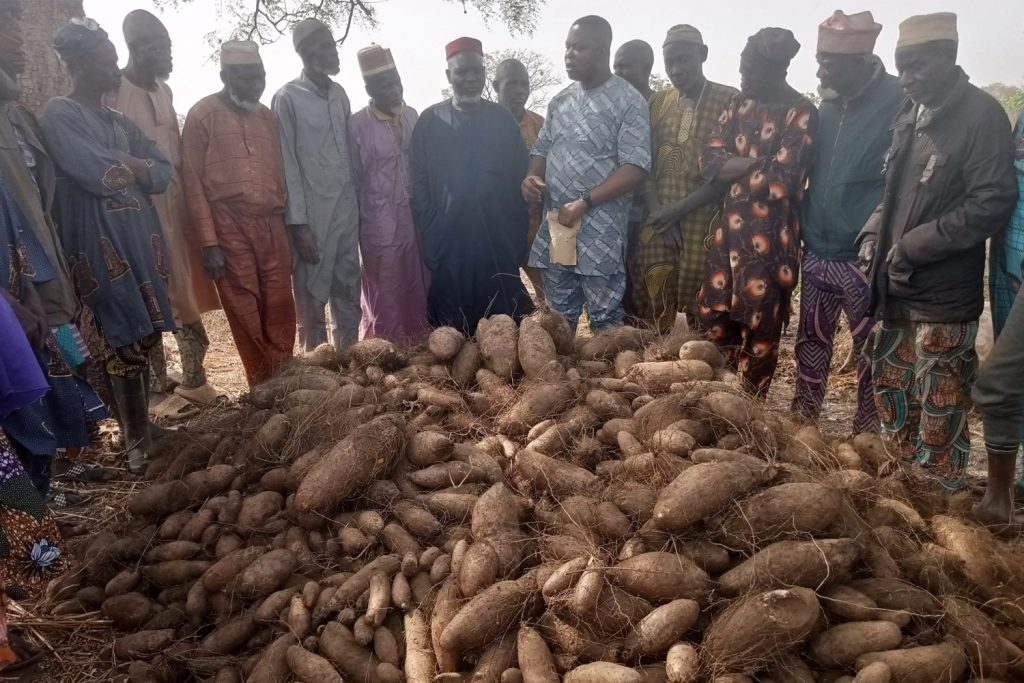
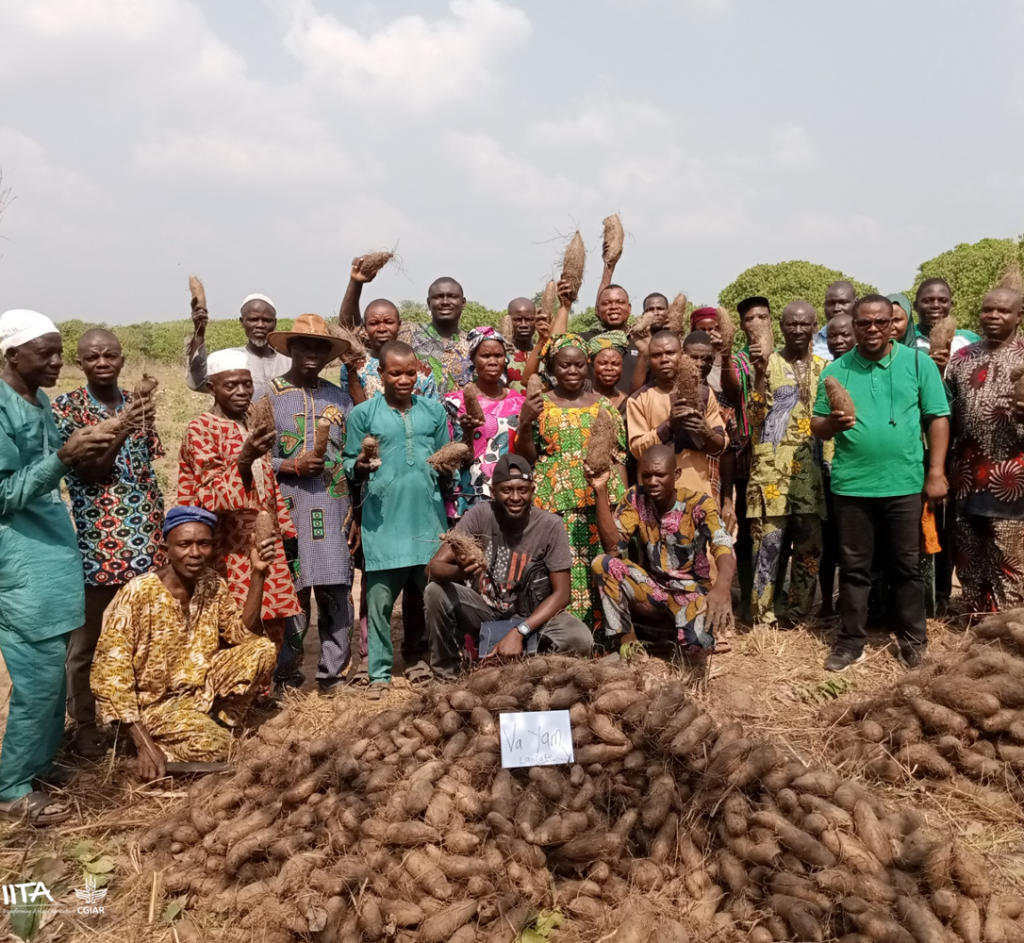
Yam is an important crop with the largest mono-product market that attracts buyers and sellers from various parts of Nigeria and West Africa. It has become a cash crop and, recently, has been servicing some food industries in Nigeria.
Related Resources
- Yam genomics and breeding publications
- YamBase platform resources
- Project reports (RTB-Yam)
- Conference presentations (AGBT, PAG, APBA, ISTRC)
- Product Advancement meeting
Nouvelles Connexes
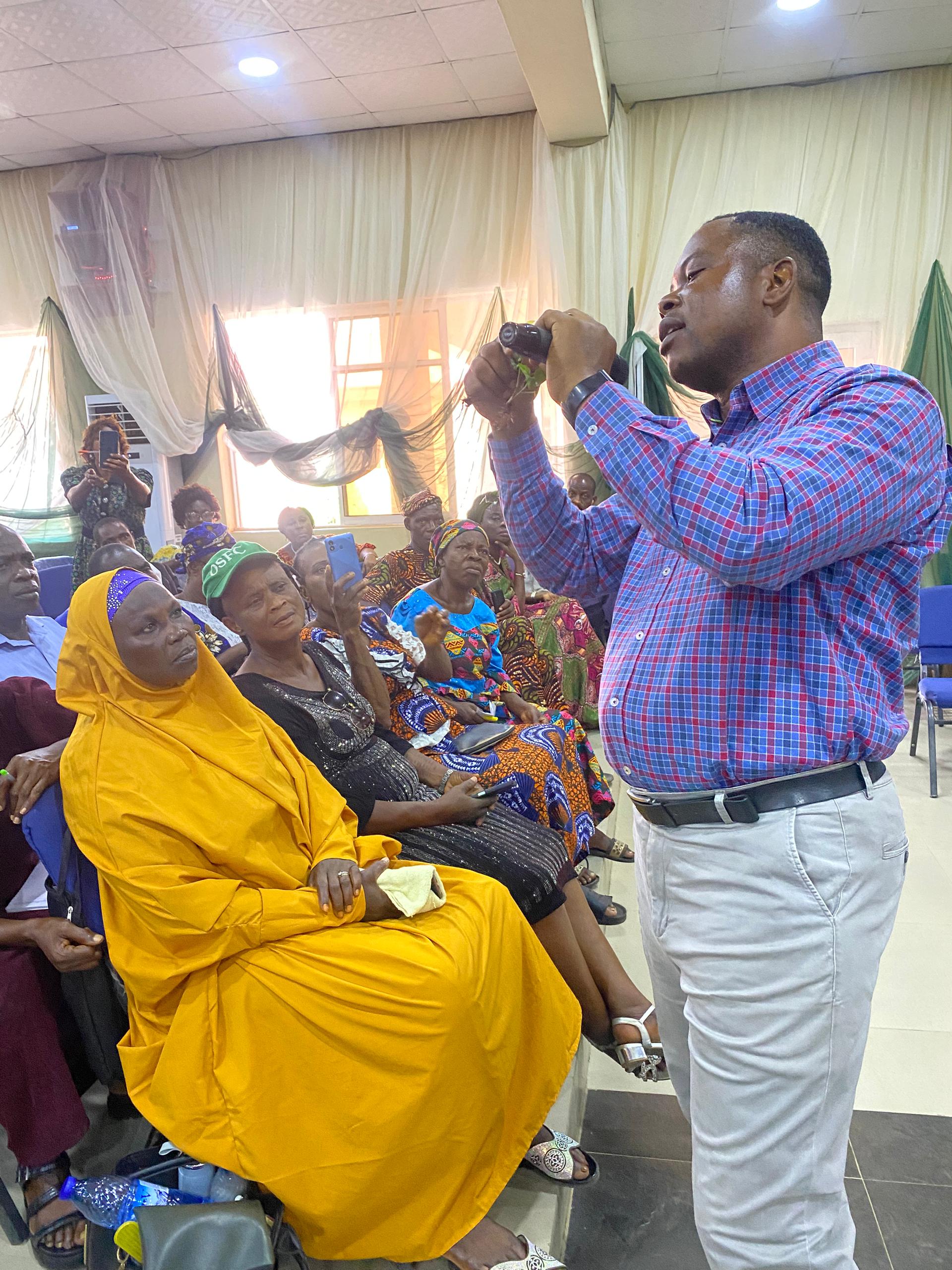
Revolutionary yam seed technology to boost yield by 40% in Ondo state
Nigeria and the rest of Africa is facing mounting food security challenges, like a lot of the staple crops, yam, a crop feeding millions across West Africa.
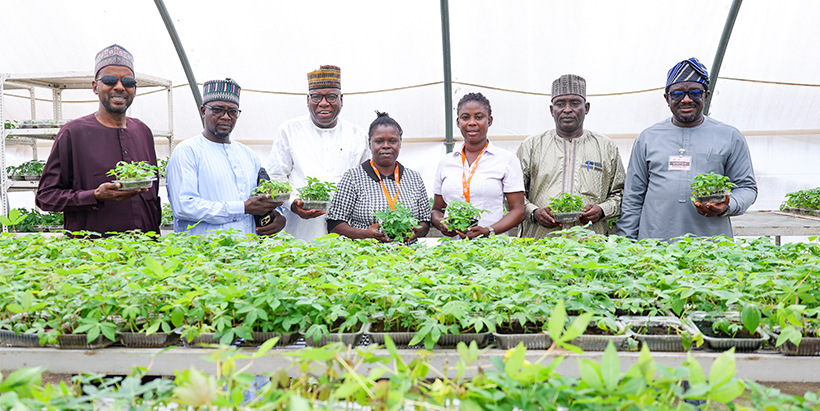
The Federal University of Agriculture and Entrepreneurship, explores partnership to build future agricultural entrepreneurs
Delegates from the newly established Federal University of Agriculture and Entrepreneurship, Bama (FUAEB), Borno State,
How nematodes are limiting productivity in yam farms across Ghana
In West Africa, yam production is far more than an agricultural activity. It is a
Partenariats et Collaboration
The program partners with several National Agricultural Research Systems (NARS) and Ubiversity across Africa including
- National Root Crop Research Institute (NRCRI-Nigeria), University of Abomey-Calavi (UAC-Benin), Centre National de la Recherche Agronomique (CNRA-Bouake Cote, D’Ivoire) Sierra Leone Agrigol Research Institute (SLARI-Sierra Leone), the Ethiopian Institute of Agricultural Research (EIAR-Ethiopia)
- Council for Scientific and Industrial Research (CSIR-Kumassi, Ghana), the Savanna Agricultural Research Institute (SARI-Tamale, Ghana), Université, Evangelique (UE-Bukavu, DR Congo), theNational Agricultural Research Organisation (NARO-Uganda) )
- Advanced Universities and Research Institutions: Cornell University and BTI (Ithaca, New York, USA), Salk Institute (La Jolla, San Diego, California, USA), Tokyo University of Agriculture (Tokyo NODAI), Japanthe North Carolina State University (NCSU, USA), The Iwate Biotechnology Research Center (IBRC-Japan), University of Queensland, Australia.
CIRAD, France, for backstopping in activities related to yam food quality.
The breeding program interacts as well with development partners and NGOs, including Private sectors and seed companies