
NEWS

Three IITA scientists named among World’s Top Agri-food Pioneers
30 octobre 2026
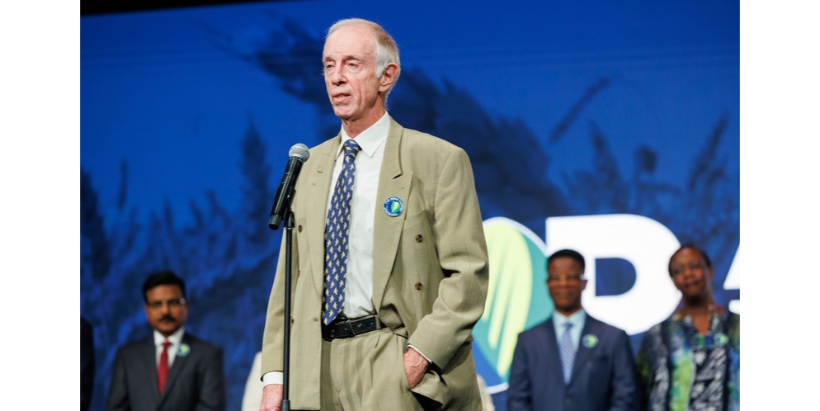
Professor em. Rony Swennen.

Three IITA scientists have earned global recognition during a formal recognition ceremony by the World Food Prize Foundation for 40 Top Agri-food Pioneers (TAP) from across six continents whose work is helping transform food systems and advance global food security.

The award ceremony for the Pioneers took place during the 2026 Norman E. Borlaug International Dialogue on October 20–22 in Des Moines, Iowa.

The three scientists, Professor em. Rony Swennen, Professor Chiedozie Egesi, and Dr Alejandro Ortega-Beltran, represent three critical fronts in the fight against hunger and malnutrition: crop improvement, nutrition-sensitive breeding, and food safety. Their recognition highlights the growing global recognition of African-led and Africa-focused agricultural innovations that are improving the lives of millions of farmers and consumers.

Announced by the World Food Prize Foundation on 17 June 2026, the TAP list recognizes individuals “driving bold and innovative solutions to the most pressing challenges in global food security.” The 2026 cohort spans 30 countries and reflects a diverse range of expertise, from crop research and nutrition to climate resilience and emerging technologies.

Advancing the future of banana and plantain production

For more than four decades, Professor em. Rony Swennen has been a world leading authority on banana and plantain research and delivery. His work has helped shape modern approaches to breeding, conservation, genetic improvement and impact of some of the world’s most important staple crops.

Prof. Swennen established pioneering banana and plantain research programs at IITA and played a key role in developing disease-resistant hybrids that have helped farmers tackle devastating threats such as Black Sigatoka disease.

He also contributed significantly to the creation and preservation of the global banana germplasm collection and has led efforts to develop climate-resilient and disease-resistant banana varieties for African farmers.

Today, his research continues to bridge advanced genomics, breeding, conservation, and farmer-centered innovation to strengthen the resilience of banana-based farming systems across Africa and beyond.
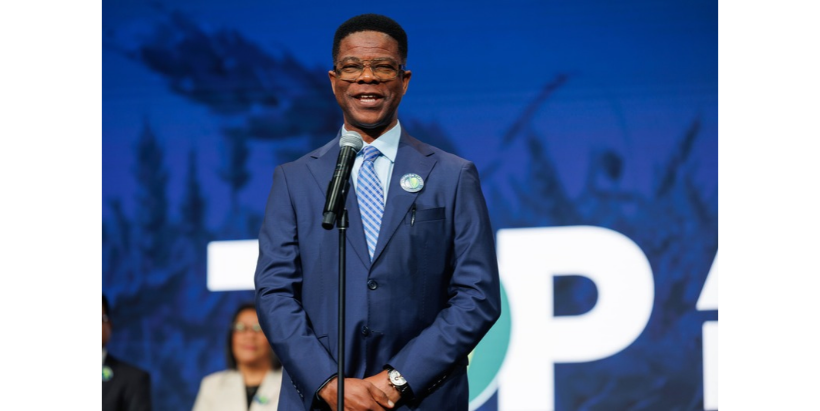
Professor Chiedozie Egesi.

“Banana has a very rich biodiversity and if TAPped properly this so-called “sterile” polyploid perennial crop can be improved drastically, testimony are the high-yielding varieties developed together with African national programs with yield increases between 60 to 245%. In addition, they can be multiplied by the millions and generate impact as shown by our work in Tanzania. The banana breeding pipeline can now stand proudly next to other root and tuber breeding programs.” – Professor Rony Swennen

Transforming cassava for food and nutrition security

A leading cassava breeder and geneticist, Professor Chiedozie Egesi has dedicated his career to improving one of Africa’s most important food crops. His work has accelerated the development and dissemination of improved cassava varieties, including biofortified pro-vitamin A cassava that addresses both food and nutrition security challenges.

Over the years, Prof. Egesi has led breeding programs that produced numerous improved cassava varieties and helped modernize cassava breeding using advanced biotechnology, genomic tools, and data-driven approaches. His leadership of the NextGen Cassava Breeding Project strengthened breeding capacity across Africa and contributed significantly to the delivery of farmer-preferred varieties with higher yields, improved nutrition, and greater resilience.

As climate change, population growth, and food insecurity place increasing pressure on food systems, cassava remains a strategic crop for millions of households, making his contributions especially significant.

 “Having devoted much of my career to cassava research, I have seen firsthand how science can transform this remarkable crop into a powerful force for food and nutrition security, climate resilience, improved livelihoods, and economic prosperity. This TAP recognition is deeply humbling, not just as a personal honor, but as a celebration of the collective efforts of African scientists and a powerful reminder that our research can transform Africa and impact the world.”- Professor Chiedozie Egesi

Making food safer through aflatoxin biocontrol

Food security is not only about producing more food. It is also about ensuring that food is safe. This challenge has been central to the work of Dr Alejandro Ortega-Beltran, whose most of his research and technology-delivery efforts focus on reducing aflatoxin contamination in staple crops.
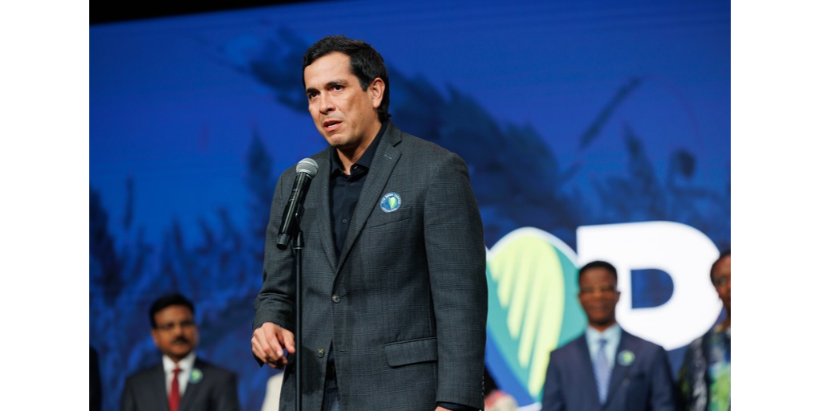
Dr Alejandro Ortega-Beltran.

Aflatoxins, produced by certain Aspergillus fungi, are among the most dangerous naturally occurring compounds, posing serious risks to human health, livestock productivity, agricultural trade, and farmer livelihoods. Dr Ortega-Beltran has played a key role in advancing Aflasafe, a biological control technology that significantly reduces aflatoxin contamination in crops such as maize, groundnut, and sorghum. He leads the design of integrated strategies combining Aflasafe with good agricultural practices, timely harvesting, proper drying, and safe storage, to provide effective and sustainable aflatoxin management. The technology is now commercially deployed across 12 countries through private-public partnerships, helping farmers produce safer food and access higher-value markets.

Dr Ortega-Beltran has also played an important role in building research and regulatory capacity across multiple countries. His recognition underscores the growing importance of food safety as a pillar of food-system transformation and economic development.

 “Food safety is part of food security. We have proven solutions to reduce aflatoxin, from biocontrol like Aflasafe to tolerant germplasm, to good practices from field to storage. With strong partnerships and sustained commitment, farmers can produce safer food, earn more, and reach better markets. Receiving the TAP recognition is an encouragement to continue working with partners to scale these proven solutions and address food safety challenges across Africa and beyond.” – Dr Alejandro Ortega-Beltran

A testament to science that delivers impact

The recognition of Prof. Swennen, Prof. Egesi, and Dr Ortega-Beltran reflects the breadth of scientific excellence within IITA and CGIAR, spanning crop improvement, nutrition, resilience, and food safety. Together, their work demonstrates how research can deliver practical solutions that reach farmers’ fields, improve livelihoods, and contribute to a more food-secure future.

As the global community confronts increasingly complex food-system challenges, the achievements of these three scientists serve as a reminder that transformative change often begins with sustained investment in agricultural research, innovation, and partnerships.


Contribué par

Timilehin Osunde, Rony Swennen, Chiedozie Egesi and Alejandro Ortega-Beltran

Retour en haut
Olaosebikan, Olamide

Olamide Deborah Nwanze est une chercheuse principale spécialisée dans la recherche sur l'approche "genre" afin d'éclairer les politiques de sélection participative et inclusive, de développement de variétés et de systèmes semenciers concernant les cultures de racines, tubercules et bananes (RTB) au siège de l'Institut International d'Agriculture Tropicale, à Ibadan, au Nigeria. Elle est candidate au doctorat à l'Université d'Ibadan et titulaire d'un master et d'un diplôme d'ingénieur agronome en vulgarisation agricole et développement rural. Olamide est membre du programme African Women in Agricultural Research and Development – Gender Responsive Agricultural Systems Policy (SAISIE DE RÉCOMPENSEet les Chercheuses Sensibles au Genre Équipées pour la Transformation Agricole (SUPER. Elle cherche à appliquer ses apprentissages en matière d’approche genre, recherche sensible au genre, et expertise en développement et examen de politiques pour faciliter l’accès et l’adoption par les femmes, les jeunes, les enfants et les groupes sociaux vulnérables aux innovations agricoles qui garantissent la sécurité alimentaire, nutritionnelle, des revenus et des moyens de subsistance en Afrique. Ses rôles actuels comprennent le mentorat de chercheurs stagiaires, le développement de guides et manuels de formation, la mise en œuvre et l'adaptation de cadres et d'outils genre, l'engagement des acteurs de la chaîne de valeur en tant que partenaires de la science citoyenne, l'examen et la refonte des politiques, la gestion et l'analyse des données. Ses recherches actuelles portent sur les méthodes mixtes ainsi que sur les approches participatives et interdisciplinaires pour saisir et mettre en évidence les dynamiques de genre, les besoins, les préférences et les défis rencontrés par les parties prenantes au sein de la chaîne de valeur des moyens de subsistance agricoles afin de prioriser des stratégies axées sur le genre dans les programmes de sélection, la conception et la mise en œuvre des politiques.

À l'IITA, elle contribue à la mise en œuvre du CGIAR Initiative d'Élevage Accéléré et Innovation génétique Programmes ; recherche participative et genre au sein des Prochaine Génération Manioc, HarvestPlus, RTBAliments, et Tricot-ClimMob 1000Fermes Projets ; et la communication des connaissances sur le genre via le Série de webinaires G-LENS, vidéo documentaire, notes de politique, publications, et blogs.


Publications récentes

de Sousa, K., van Etten, J., Manners, R. Bello, A., Teeken, B., Olaosebikan, O., et al. 2024. L'approche tricot : un cadre agile pour les essais décentralisés à la ferme soutenus par la science citoyenne. Une rétrospective. Agron. Sustain. Dev. 44, 8. https://doi.org/10.1007/s13593-023-00937-1

Madu, T., Onwuka, S., Nwafor, S., Onyemauwa, N., Ejechi, M., Ofoeze, M., Ukeje, B., Eluagu, C., Olaosebikan, O., Okoye, B., 2024. Les études sur les consommateurs inclusifs en matière de genre améliorent l'amélioration du manioc au Nigeria dans : Frontiers in Sociology, volume 9, numéro : 1224504, doi : 10.3389/fsoc.2024.1224504

Olaosebikan, O. ; Bello, A. ; Utoblo, O. ; Okoye, B. ; Olutegbe, N. ; Garner, E. ; Teeken, B. ; Bryan, E. ; Forsythe, L. ; Cole, S. ; Madu, T. 2023. Facteurs de stress et résilience au sein de la chaîne de valeur du manioc au Nigeria : Caractéristiques préférées des variétés de manioc et stratégies de réponse des hommes et des femmes pour informer l'amélioration variétale. Sustainability 15, 7837. https://doi.org/10.3390/su15107837

Okoye, B., Ofoeze, M., Ejechi, M., Onwuka, S., Nwafor, S., Onyemauwa, N., Ukeje, B., Eluagu, C., Obidiegwu, J.*, Olaosebikan, O., Madu, T.* 2023. Priorisation des traits préférés dans la chaîne de valeur de l'igname au Nigeria : une analyse de la situation en matière de genre in: Frontiers in Sociology, volume 8, numéro : 1232626, pages 1 – 9, ISSN 2297-7775, 2023. https://www.frontiersin.org/articles/10.3389/fsoc.2023.1232626/full

Olaosebikan, O., Bello, A. A., de Sousa, K., Ndjouenkeu, R., Adesokan, M., Alamu, E. O., Agbona, A., van Etten, J., Kegah, F. N.*, Dufour, D., Bouniol, A., Teeken, B. 2023. Acceptabilité par les consommateurs des produits alimentaires à base de gari-eba de manioc dans des contextes culturels et environnementaux variés en utilisant l'approche triade de comparaison des technologies (tricot) dans : Journal of the Science of Food and Agriculture,

Teeken, B., Olaosebikan, O., Bello, A. A., Madu, T.*, Cole, S. M. 2023. Évaluation qualitative de la positionnalité et des préférences des dyades en relation avec les activités liées au manioc : travailler avec des scientifiques citoyens du procès tricot https://hdl.handle.net/10568/138326 Type : Manuel

Bouniol, A., Ceballos, H., Bello, A. A., Teeken, B., Olaosebikan, O., Owoade, D., Agbona, A., Fotso Kuate, A., Madu, T.*, Okoye, B.*, Ofoeze, M.*, Nwafor, S.*, Onyemauwa, N.*, Adinsi, L.*, Forsythe, L., Dufour, D. 2023. Impact variétal sur le travail des femmes, la charge de travail et la pénibilité associée dans le traitement des plantes à racines, tubercules et bananes : focus sur le manioc en Afrique subsaharienne dans : Journal of the Science of Food and Agriculture, pages 1 – 25, ISSN 0022-5142,

Bello, A. A., Agbona, A., Olaosebikan, O., Edughaen, G., Dufour, D., Bouniol, A., Iluebbey, P., Ndjouenkeu, R.*, Rabbi, I. Y., Teeken, B. 2023. Effets génétiques et environnementaux sur la productivité de la transformation et le rendement des produits alimentaires : la pénibilité du travail des femmes dans : Journal of the Science of Food and Agriculture, pages 1 – 32, ISSN 0022-5142, 5

Cavicchioli, M., Zimbiti, T., Teeken, B., Nwanze, D.O., Liani, M., Parkes, E. & Bello, A. 2023. Rapport sur la formation en sélection génétique sensible au genre à l'IITA. Genetic Resources Center, IITA-HQ, Ibadan, 21-23 septembre 2022. Ibadan, Nigéria : IITA, (34 p.).https://hdl.handle.net/10568/131368

Agbona, A. Peteti P., Teeken B., Olaosebikan O. Bello, A. A., Parkes, E., Rabbi, I. Y., Mueller, L., Egesi, C., Kulakow, P. 2022. Gestion des données dans les programmes d'amélioration des cultures RTB africaines multidisciplinaires. In : Williamson, H.F., Leonelli, S. (eds) Towards Responsible Plant Data Linkage: Data Challenges for Agricultural Research and Development. Springer, Cham. https://doi.org/10.1007/978-3-031-13276-6_5

Lora Forsythe, Pricilla Marimo, Sarah Mayanja, Olamide D. Olaosebikan, Esme Stuart, Bela Teeken, Benjamin Okoye, Tessy Madu, (2021). Analyse transversale du genre dans RTBfoods Étape 2 Cartographie des genres sur les produits RTB. Comprendre les moteurs des préférences en matière de traits et le développement de profils de produits RTB multi-utilisateurs, WP1. Londres, Royaume-Uni : Rapport scientifique de terrain RTBfoods, 30 p.

Teeken, B., Garner, E., Agbona, A., Balogun, I., Olaosebikan, O., Bello, A., Madu, T., Okoye, B., Egesi, C., Kulakow, P. et Tufan, H.A. 2021. Au-delà des “ traits des femmes ” : explorer comment le genre, les différences sociales et les caractéristiques des ménages influencent les préférences pour les traits. Frontiers Systèmes alimentaires durables 5:740926. https://doi.org/10.3389/fsufs.2021.740926

Teeken, B., Agbona, A., Bello, A., Olaosebikan, O., Alamu, E., Adesokan, M., Awoyale, W., Madu, T., Okoye, B., Chijioke, U., Owoade, D., Okoro, M., Bouniol, A., Dufour, D., Hershey, C., Rabbi, I., Maziya‐Dixon, B., Egesi, C., Tufan, H. et Kulakow, P. (020. Comprendre les préférences variétales du manioc par le classement par paires du gari-eba et du fufu préparés par des agriculteurs-transformateurs locaux. Int J Food Sci Technol. https://doi.org/10.1111/ijfs.14862

Bela Teeken, Olamide Olaosebikan, Ireti Balogun, Benjamin Okoye, Tessy Madu, Steven Cole, Abolore Bello, Elizabeth Parkes. (2020). Pilotage des outils de profil client et produit G+ pour l'amélioration sensible au genre du manioc au Nigeria. Nigeria : Institut international d'agriculture tropicale (IIAT). https://hdl.handle.net/20.500.11766/13000