
NOUVELLES DE L'IITA

BoA, experts say more youth are needed in the agribusiness
août 27, 2024

In commemoration of this year’s International Youth Day (IYD), the Youth in Agribusiness unit (IYA) of the International Institute of Tropical Agriculture (IITA) and the Institut Africain de Leadership Agricole (AALI) hosted a symposium on youth involvement in agriculture and the imperatives of digitizing agricultural practices for sustainable development.
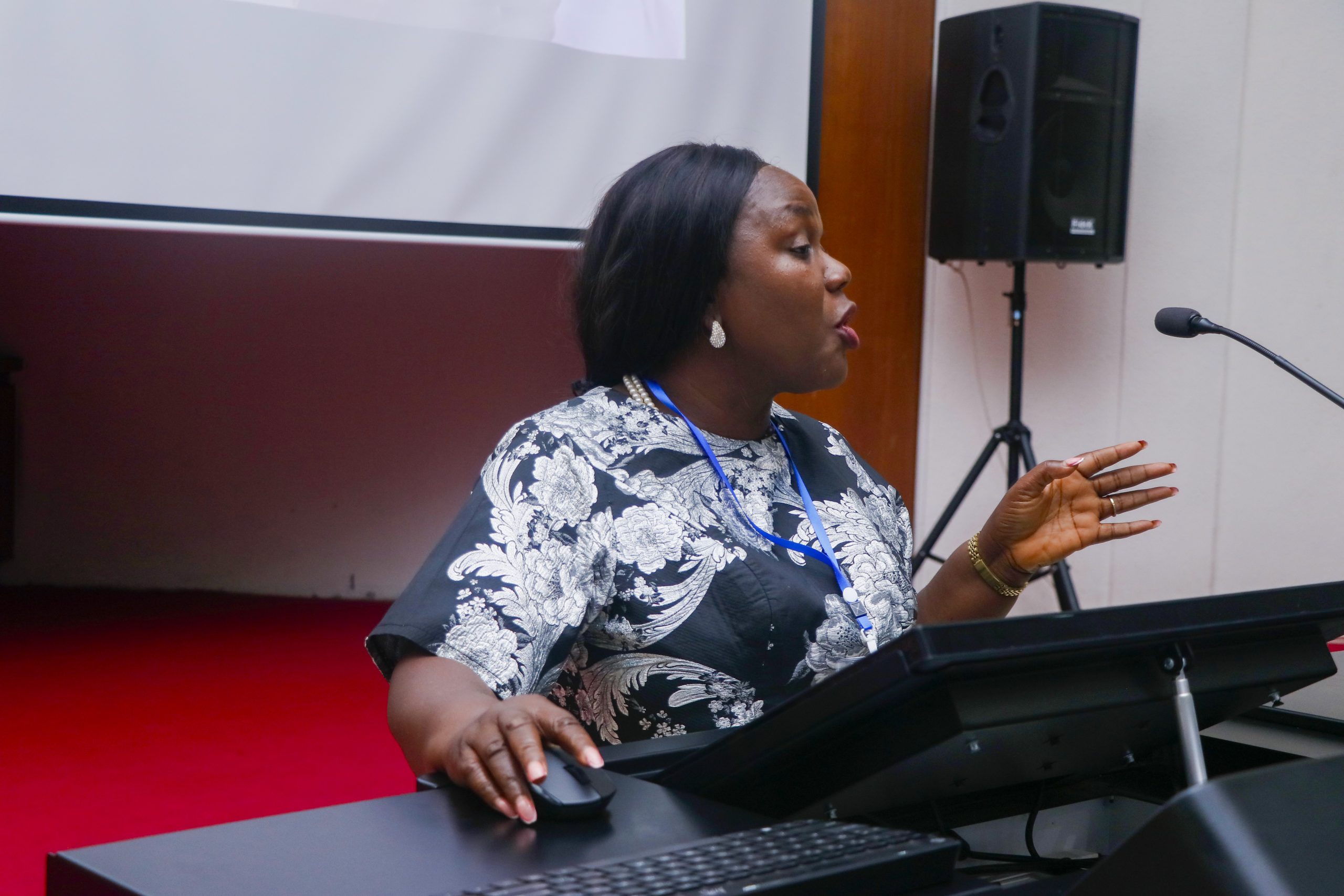
 Mrs Yemisi Iranloye, MD/CEO of Psaltry International Limited, delivering the keynote speech
Mrs Yemisi Iranloye, MD/CEO of Psaltry International Limited, delivering the keynote speech

The event, held on August 12 at the institute’s headquarters in Ibadan, was attended by hundreds of youths drawn from different fields. The IYD, which had the theme, ‘From clicks to progress: Youth digital pathways for sustainable development,’ featured a keynote speech, panel discussion, and exhibition from the public and by past beneficiaries of the various projects in the unit.

Speaking at the event, the Coordinator of Technologies for African Agricultural Transformation (TAAT), Dr Chrysantus Akem, applauded the IYA for organizing the event and exposing young people to the various opportunities in agriculture.

He stated, “Over the last few years, the unit celebrated International Youth Day internally, but this year, they invited others to join them, like the African Agricultural Leadership Institute (AALI). I’m particularly pleased that AALI, with headquarters in the Democratic Republic of Congo and a strong presence in Nigeria, was co-opted to join them in the celebration. I’m sure many others would join as time goes by.

“They brought the Bank of Agriculture, the Oyo State Commissioner for Agriculture, and business enterprises to join them. The unit has trained many youths who have established their own businesses in different commodities. Much impact is being made as many of them are really doing well, and they always get support from IITA because we keep guiding them and linking them up with any opportunity we see, as mentors would. An event like this makes me conclude that the young have grown.”
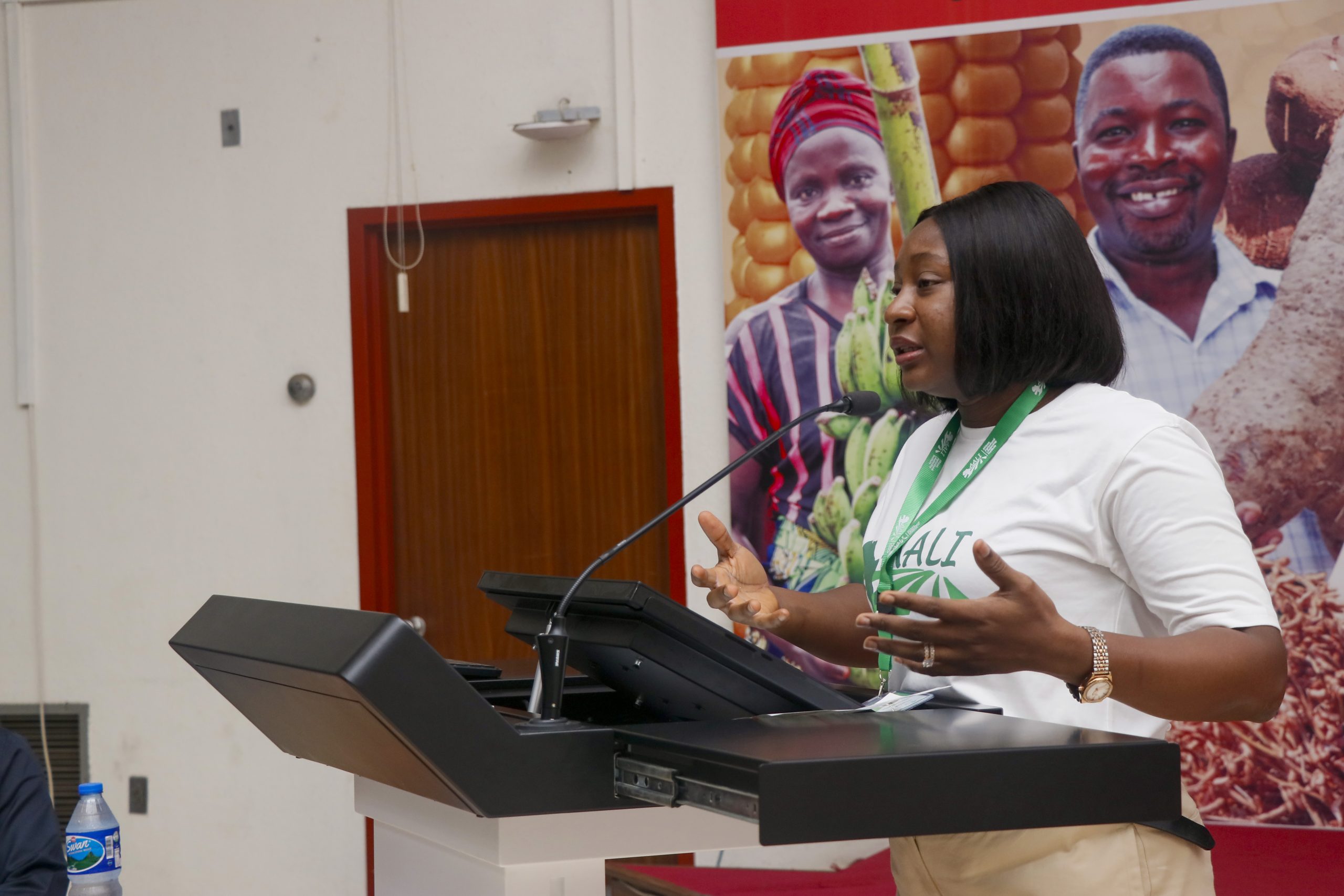
Ms. Dolapo Ogunsola, Director of Youth Empowerment at AALI (African Agricultural Leadership Institute), presenting the Youth Champion Network

In her address, the keynote speaker, Yemisi Iranloye, the MD and CEO of Psaltry International Limited, stressed that young people should realize that agriculture has become a venture for forward-looking people who want to earn good income, unlike in the past when it was seen as a venture for poor people.

She said, “Look at what IITA is doing today: creating a platform for young people to be trained in the aspect of agriculture they are interested in. That’s a major milestone, making it very easy for young people to earn their livelihoods from agriculture. One of the areas you can make money is using tech; I call it low-hanging fruit because right now in Nigeria, we don’t have enough tractors.”

Meanwhile, the panel session featured renowned stakeholders in the sector, including the Oyo State Commissioner for Agriculture and Rural Development, Hon. Olasunkanmi Olaleye; representative of the Bank of Agriculture, Balogun Ajara; a former bank executive and lead consultant, LA Consult, Ololade Adesola; the MD and CEO of Niji Group, Kolawole Adeniji; and the MD and CEO of Psaltry International Limited, Yemisi Iranloye.
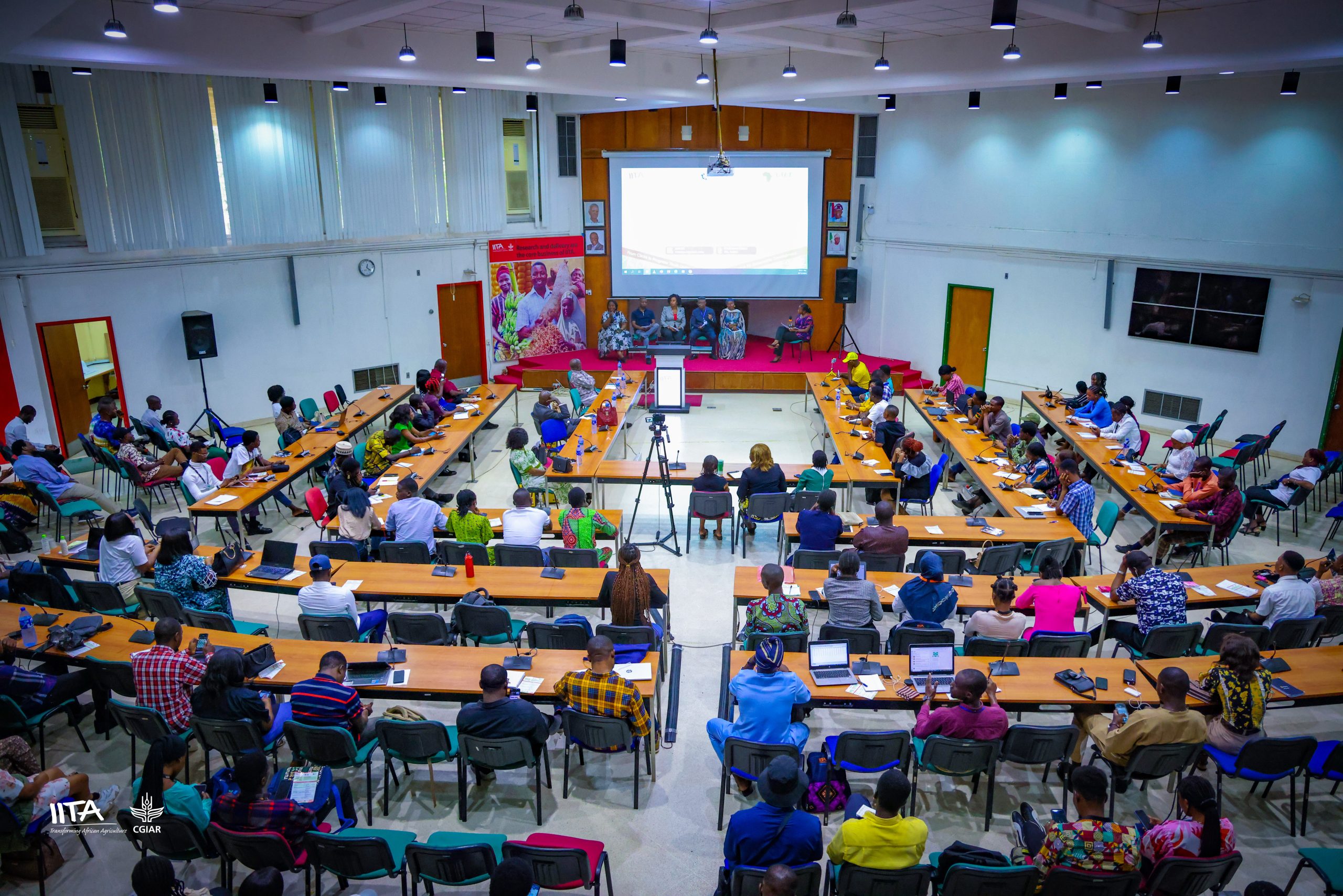
Panelists and participants during the panel discussion

In a consensus, the panelists said the level of youth involvement in agriculture was below par.

Ajara, the branch head of BoA in Ibadan, noted, “We are not satisfied with youth involvement in agriculture. We give loans to farmers, especially the youth, but we have not seen most of our youth in the branch. We see only the older people. I want young people to know that agriculture is the in-thing and many people are going into it. It will pay the young people better than internet fraud.”

Also, the commissioner stated, “Youth involvement in agriculture is better nowadays than before, but we are not fully satisfied. I discovered that our youth do not seem to have much interest. I came to that conclusion because of the very few youths who approached us in the ministry for support and those who took advantage of government policies.”

The panelists, however, called on the government to incentivize farming to increase youth participation.

“Why would a youth who can work elsewhere choose agriculture when the feeder roads are bad, with no telephone signal or electricity?” Adesola queried. “If we want the youth and our best brains to be in agriculture, we must make agriculture attractive. With that, we won’t have to beg them; they would choose the field themselves.”

Adeniji also stressed that if the system worked efficiently, many youths would want to do farming. “However, the youth need to start doing many things,” he stated. “I was discussing this with one of my key partners, who runs one of the biggest African stores in the United Kingdom, and he explained that common things like vegetables, jute – ewedu, and okra are being shipped from Egypt and other areas. These are simple things that young people can do. You can make frozen vegetables and okra, and the market is ready. You can even use that to develop a new market. The youth can do better. If your product is good, the packaging is good, and affordable, people will be bound to it.”
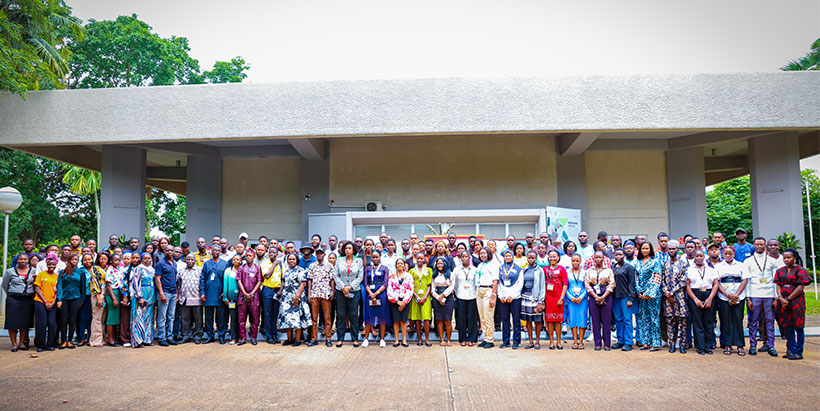
 Group photograph of the IYD conference attendees
Group photograph of the IYD conference attendees

In her submission, Iranloye said there were several opportunities young people could take advantage of, adding, “I think it’s better today than ten years ago when the youth were running away. We still need more youth to take over from the old men.”

The panelists advised young people to embrace the various digital innovations available in the agricultural space. They added that digitizing their agricultural activities would help reduce overhead and simplify profit and loss tracking. They noted that data collection and analysis would also help them make informed decisions.

They described agribusiness as a rewarding and profitable venture but noted that resilience and hard work were key ingredients for success. They emphasized the need for young farmers to make their passion for agriculture visible if they must attract investors.

By: Babatunde Ajaja

Contribué par

Nouvelles connexes

Aucun article trouvé

Laisser un commentaire

Votre adresse e-mail ne sera pas publiée. Les champs obligatoires sont indiqués avec *

Retour en haut
Olaosebikan, Olamide

Olamide Deborah Nwanze est une chercheuse principale spécialisée dans la recherche sur l'approche "genre" afin d'éclairer les politiques de sélection participative et inclusive, de développement de variétés et de systèmes semenciers concernant les cultures de racines, tubercules et bananes (RTB) au siège de l'Institut International d'Agriculture Tropicale, à Ibadan, au Nigeria. Elle est candidate au doctorat à l'Université d'Ibadan et titulaire d'un master et d'un diplôme d'ingénieur agronome en vulgarisation agricole et développement rural. Olamide est membre du programme African Women in Agricultural Research and Development – Gender Responsive Agricultural Systems Policy (SAISIE DE RÉCOMPENSEet les Chercheuses Sensibles au Genre Équipées pour la Transformation Agricole (SUPER. Elle cherche à appliquer ses apprentissages en matière d’approche genre, recherche sensible au genre, et expertise en développement et examen de politiques pour faciliter l’accès et l’adoption par les femmes, les jeunes, les enfants et les groupes sociaux vulnérables aux innovations agricoles qui garantissent la sécurité alimentaire, nutritionnelle, des revenus et des moyens de subsistance en Afrique. Ses rôles actuels comprennent le mentorat de chercheurs stagiaires, le développement de guides et manuels de formation, la mise en œuvre et l'adaptation de cadres et d'outils genre, l'engagement des acteurs de la chaîne de valeur en tant que partenaires de la science citoyenne, l'examen et la refonte des politiques, la gestion et l'analyse des données. Ses recherches actuelles portent sur les méthodes mixtes ainsi que sur les approches participatives et interdisciplinaires pour saisir et mettre en évidence les dynamiques de genre, les besoins, les préférences et les défis rencontrés par les parties prenantes au sein de la chaîne de valeur des moyens de subsistance agricoles afin de prioriser des stratégies axées sur le genre dans les programmes de sélection, la conception et la mise en œuvre des politiques.

À l'IITA, elle contribue à la mise en œuvre du CGIAR Initiative d'Élevage Accéléré et Innovation génétique Programmes ; recherche participative et genre au sein des Prochaine Génération ManiocHarvestPlusRTBAliments, et Tricot-ClimMob 1000Fermes Projets ; et la communication des connaissances sur le genre via le Série de webinaires G-LENS, vidéo documentaire, notes de politiquepublications, et blogs.


Publications récentes

de Sousa, K., van Etten, J., Manners, R. Bello, A., Teeken, B., Olaosebikan, O., et al. 2024. L'approche tricot : un cadre agile pour les essais décentralisés à la ferme soutenus par la science citoyenne. Une rétrospective. Agron. Sustain. Dev. 44, 8. https://doi.org/10.1007/s13593-023-00937-1

Madu, T., Onwuka, S., Nwafor, S., Onyemauwa, N., Ejechi, M., Ofoeze, M., Ukeje, B., Eluagu, C., Olaosebikan, O., Okoye, B., 2024. Les études sur les consommateurs inclusifs en matière de genre améliorent l'amélioration du manioc au Nigeria dans : Frontiers in Sociology, volume 9, numéro : 1224504, doi : 10.3389/fsoc.2024.1224504

Olaosebikan, O. ; Bello, A. ; Utoblo, O. ; Okoye, B. ; Olutegbe, N. ; Garner, E. ; Teeken, B. ; Bryan, E. ; Forsythe, L. ; Cole, S. ; Madu, T. 2023. Facteurs de stress et résilience au sein de la chaîne de valeur du manioc au Nigeria : Caractéristiques préférées des variétés de manioc et stratégies de réponse des hommes et des femmes pour informer l'amélioration variétale. Sustainability 15, 7837. https://doi.org/10.3390/su15107837

Okoye, B., Ofoeze, M., Ejechi, M., Onwuka, S., Nwafor, S., Onyemauwa, N., Ukeje, B., Eluagu, C., Obidiegwu, J.*, Olaosebikan, O., Madu, T.* 2023. Priorisation des traits préférés dans la chaîne de valeur de l'igname au Nigeria : une analyse de la situation en matière de genre in: Frontiers in Sociology, volume 8, numéro : 1232626, pages 1 – 9, ISSN 2297-7775, 2023. https://www.frontiersin.org/articles/10.3389/fsoc.2023.1232626/full

Olaosebikan, O., Bello, A. A., de Sousa, K., Ndjouenkeu, R., Adesokan, M., Alamu, E. O., Agbona, A., van Etten, J., Kegah, F. N.*, Dufour, D., Bouniol, A., Teeken, B. 2023. Acceptabilité par les consommateurs des produits alimentaires à base de gari-eba de manioc dans des contextes culturels et environnementaux variés en utilisant l'approche triade de comparaison des technologies (tricot) dans : Journal of the Science of Food and Agriculture,

Teeken, B., Olaosebikan, O., Bello, A. A., Madu, T.*, Cole, S. M. 2023. Évaluation qualitative de la positionnalité et des préférences des dyades en relation avec les activités liées au manioc : travailler avec des scientifiques citoyens du procès tricot https://hdl.handle.net/10568/138326 Type : Manuel

Bouniol, A., Ceballos, H., Bello, A. A., Teeken, B., Olaosebikan, O., Owoade, D., Agbona, A., Fotso Kuate, A., Madu, T.*, Okoye, B.*, Ofoeze, M.*, Nwafor, S.*, Onyemauwa, N.*, Adinsi, L.*, Forsythe, L., Dufour, D. 2023. Impact variétal sur le travail des femmes, la charge de travail et la pénibilité associée dans le traitement des plantes à racines, tubercules et bananes : focus sur le manioc en Afrique subsaharienne dans : Journal of the Science of Food and Agriculture, pages 1 – 25, ISSN 0022-5142,

Bello, A. A., Agbona, A., Olaosebikan, O., Edughaen, G., Dufour, D., Bouniol, A., Iluebbey, P., Ndjouenkeu, R.*, Rabbi, I. Y., Teeken, B. 2023. Effets génétiques et environnementaux sur la productivité de la transformation et le rendement des produits alimentaires : la pénibilité du travail des femmes dans : Journal of the Science of Food and Agriculture, pages 1 – 32, ISSN 0022-5142, 5

Cavicchioli, M., Zimbiti, T., Teeken, B., Nwanze, D.O., Liani, M., Parkes, E. & Bello, A. 2023. Rapport sur la formation en sélection génétique sensible au genre à l'IITA. Genetic Resources Center, IITA-HQ, Ibadan, 21-23 septembre 2022. Ibadan, Nigéria : IITA, (34 p.).https://hdl.handle.net/10568/131368

Agbona, A. Peteti P., Teeken B., Olaosebikan O. Bello, A. A., Parkes, E., Rabbi, I. Y., Mueller, L., Egesi, C., Kulakow, P. 2022. Gestion des données dans les programmes d'amélioration des cultures RTB africaines multidisciplinaires. In : Williamson, H.F., Leonelli, S. (eds) Towards Responsible Plant Data Linkage: Data Challenges for Agricultural Research and Development. Springer, Cham. https://doi.org/10.1007/978-3-031-13276-6_5

Lora Forsythe, Pricilla Marimo, Sarah Mayanja, Olamide D. Olaosebikan, Esme Stuart, Bela Teeken, Benjamin Okoye, Tessy Madu, (2021). Analyse transversale du genre dans RTBfoods Étape 2 Cartographie des genres sur les produits RTB. Comprendre les moteurs des préférences en matière de traits et le développement de profils de produits RTB multi-utilisateurs, WP1. Londres, Royaume-Uni : Rapport scientifique de terrain RTBfoods, 30 p.

Teeken, B., Garner, E., Agbona, A., Balogun, I., Olaosebikan, O., Bello, A., Madu, T., Okoye, B., Egesi, C., Kulakow, P. et Tufan, H.A. 2021. Au-delà des “ traits des femmes ” : explorer comment le genre, les différences sociales et les caractéristiques des ménages influencent les préférences pour les traits. Frontiers Systèmes alimentaires durables 5:740926. https://doi.org/10.3389/fsufs.2021.740926

Teeken, B., Agbona, A., Bello, A., Olaosebikan, O., Alamu, E., Adesokan, M., Awoyale, W., Madu, T., Okoye, B., Chijioke, U., Owoade, D., Okoro, M., Bouniol, A., Dufour, D., Hershey, C., Rabbi, I., Maziya‐Dixon, B., Egesi, C., Tufan, H. et Kulakow, P. (020. Comprendre les préférences variétales du manioc par le classement par paires du gari-eba et du fufu préparés par des agriculteurs-transformateurs locaux. Int J Food Sci Technol. https://doi.org/10.1111/ijfs.14862

Bela Teeken, Olamide Olaosebikan, Ireti Balogun, Benjamin Okoye, Tessy Madu, Steven Cole, Abolore Bello, Elizabeth Parkes. (2020). Pilotage des outils de profil client et produit G+ pour l'amélioration sensible au genre du manioc au Nigeria. Nigeria : Institut international d'agriculture tropicale (IIAT). https://hdl.handle.net/20.500.11766/13000