
Gros plan : La responsable d'unité forestière revient sur son expérience alors que le projet touche à sa fin
20 janvier 2018
Deni Bown, la responsable de l'Unité des forêts, est une écrivaine, botaniste, photographe, éditrice et consultante originaire de Norfolk, en Angleterre, qui s'intéresse tout particulièrement aux herbes, aux arbres, au jardinage et à l'histoire naturelle. Elle a voyagé dans des endroits reculés du monde entier pour mener des recherches en vue d'écrire ses nombreux livres sur les plantes. Cela l'a incitée à accepter un poste de bénévole à temps partiel au sein de l'Unité de la biodiversité et des forêts de l'IITA-Ibadan, dont elle est devenue la responsable deux ans plus tard.
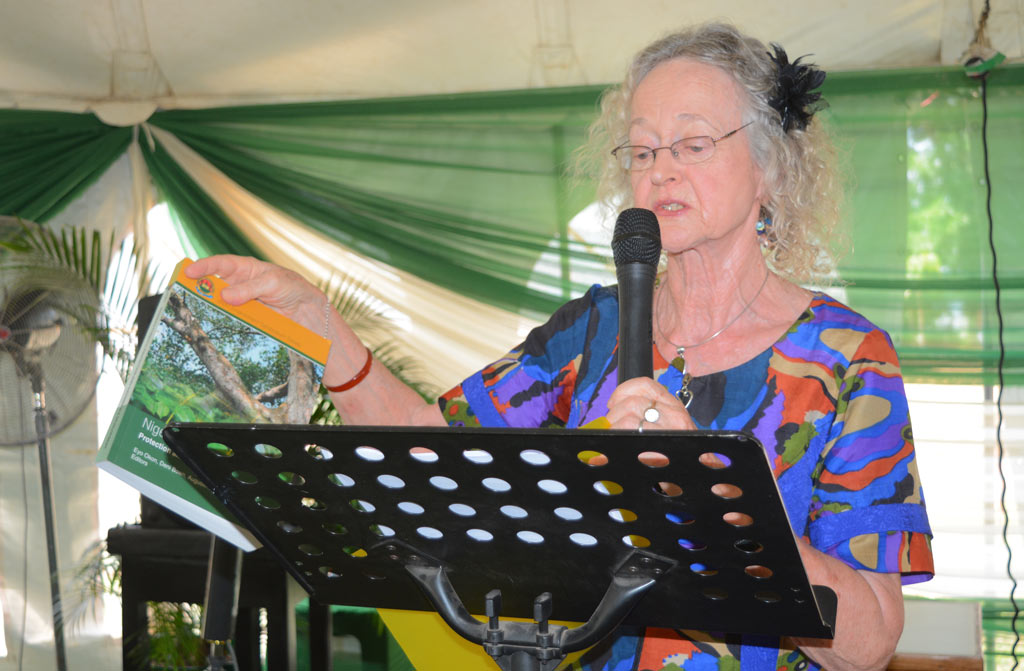 Interrogée sur ses réalisations, elle a déclaré : “ Au cours de mes sept années en tant que cheffe de projet, j’ai réalisé ce qui suit avec l’aide de mon équipe dévouée et de mes partenaires : j’ai transformé la pépinière, qui avait été en grande partie mise en place par l’IITA, pour en faire ce qu’elle est aujourd’hui — la meilleure pépinière du Nigeria, non seulement pour les plantes ornementales et les jardins, mais surtout pour les arbres indigènes et les plantes médicinales.
Une autre étape importante a été la création d’un jardin botanique national en décembre 2016. Nous avons invité les Yorubas des villages situés autour de l’IITA et de son périmètre, qui n’étaient jamais venus à l’IITA, afin de les sensibiliser et de les informer sur l’importance des ressources naturelles. À l’issue du projet en 2014, mon contrat a été renouvelé pour deux ans. Au cours de cette période, nous avons accompli beaucoup de choses, notamment dans les domaines de la surveillance de la biodiversité et de la conservation des forêts.
J’ai également lancé un nouveau projet : la plantation d’arbres. Si l’on examine la situation au Nigeria, le couvert forestier est tombé à 4% en raison du déboisement, et tout le monde sait que la disparition des forêts continuera d’être un problème critique si elle n’est pas correctement traitée ; aujourd’hui, la disparition des forêts est un facteur significatif du réchauffement climatique et de l’atténuation des changements climatiques.
Une autre étape importante a été le lancement des protocoles écrits sous la forme d’un manuel de multiplication des arbres, disponible gratuitement et téléchargeable sur le site web de l’Unité forestière. Il existe peu de jardins ethnobotaniques au Nigeria et ce manuel de multiplication des arbres est le premier du genre.
L’Unité forestière a réhabilité l’arboretum du campus de l’IITA à Ibadan pour en faire un parc du patrimoine arboricole dédié à la conservation des essences nigérianes rares et menacées. Au fil du temps, la première ” école de la forêt “ du Nigeria a vu le jour : des élèves, des familles et des groupes ont ainsi eu l’occasion de venir découvrir l’environnement naturel, en s’adonnant à des activités allant de la pêche à l’observation et à l’identification des oiseaux. Un club d’initiative scientifique citoyenne, comptant plus de 30 membres, a également été créé pour sensibiliser le public aux oiseaux, à la faune sauvage et à ses habitats.
Lors d’un entretien avec Bown, cette horticultrice talentueuse a mis en avant les défis auxquels elle a été confrontée : ” La meilleure façon de surmonter les défis, c’est de s’appuyer sur sa propre expérience. Au départ, mon plus grand défi était la barrière linguistique et culturelle, car je suis étrangère et c’était la première fois que je venais au Nigeria. Malgré tout cela, j’ai apprécié d’être entourée de nombreuses personnes de nationalités, d’origines ethniques, de religions et de milieux familiaux différents. D’après mon expérience, la meilleure façon de relever les défis est de rester concentrée et de continuer à apprendre. “
Afin de renforcer la pérennité du projet, Mme Bown a évoqué certaines des mesures qu’elle a prises tout au long de sa mise en œuvre. ” La direction m’a assuré que le Tree Heritage Park et la forêt scolaire seraient entretenus et maintenus en tant qu’atouts du campus, accessibles à tous, et pas seulement aux résidents du campus ou au personnel de l’Institut. L’école des arbres suscite beaucoup d’intérêt et nous y emmenons des groupes, y compris des visiteurs de l’IITA. C’est une expérience unique et pratique “, a-t-elle expliqué.
Tout en remerciant la direction et le personnel de l’IITA pour leur soutien et leur engagement, Mme Bown a ajouté : ” Je pense que le plus important pour l’IITA et l’ensemble de son personnel est de prendre conscience de la valeur de l’environnement naturel. La richesse de la nation réside dans ses ressources et je pense que la gestion des ressources naturelles est confrontée à des défis liés au changement des régimes hydrologiques et à la déforestation. Si ces problèmes ne sont pas traités, et si l’on ne prend pas conscience de la valeur des ressources naturelles et de leur utilité concrète pour les populations, ces ressources finiront par disparaître. J’espère vivement que l’IITA contribuera à préserver et à renforcer les bases déjà établies. Je pense que nous devons prendre conscience de l’urgence de la situation. Oui, nous avons besoin de recherche, mais bien plus qu’une seule personne menant des recherches, il faut un millier de personnes sur le terrain qui agissent concrètement, qui commencent à multiplier, à protéger et à replanter. »
Interrogée sur ses réalisations, elle a déclaré : “ Au cours de mes sept années en tant que cheffe de projet, j’ai réalisé ce qui suit avec l’aide de mon équipe dévouée et de mes partenaires : j’ai transformé la pépinière, qui avait été en grande partie mise en place par l’IITA, pour en faire ce qu’elle est aujourd’hui — la meilleure pépinière du Nigeria, non seulement pour les plantes ornementales et les jardins, mais surtout pour les arbres indigènes et les plantes médicinales.
Une autre étape importante a été la création d’un jardin botanique national en décembre 2016. Nous avons invité les Yorubas des villages situés autour de l’IITA et de son périmètre, qui n’étaient jamais venus à l’IITA, afin de les sensibiliser et de les informer sur l’importance des ressources naturelles. À l’issue du projet en 2014, mon contrat a été renouvelé pour deux ans. Au cours de cette période, nous avons accompli beaucoup de choses, notamment dans les domaines de la surveillance de la biodiversité et de la conservation des forêts.
J’ai également lancé un nouveau projet : la plantation d’arbres. Si l’on examine la situation au Nigeria, le couvert forestier est tombé à 4% en raison du déboisement, et tout le monde sait que la disparition des forêts continuera d’être un problème critique si elle n’est pas correctement traitée ; aujourd’hui, la disparition des forêts est un facteur significatif du réchauffement climatique et de l’atténuation des changements climatiques.
Une autre étape importante a été le lancement des protocoles écrits sous la forme d’un manuel de multiplication des arbres, disponible gratuitement et téléchargeable sur le site web de l’Unité forestière. Il existe peu de jardins ethnobotaniques au Nigeria et ce manuel de multiplication des arbres est le premier du genre.
L’Unité forestière a réhabilité l’arboretum du campus de l’IITA à Ibadan pour en faire un parc du patrimoine arboricole dédié à la conservation des essences nigérianes rares et menacées. Au fil du temps, la première ” école de la forêt “ du Nigeria a vu le jour : des élèves, des familles et des groupes ont ainsi eu l’occasion de venir découvrir l’environnement naturel, en s’adonnant à des activités allant de la pêche à l’observation et à l’identification des oiseaux. Un club d’initiative scientifique citoyenne, comptant plus de 30 membres, a également été créé pour sensibiliser le public aux oiseaux, à la faune sauvage et à ses habitats.
Lors d’un entretien avec Bown, cette horticultrice talentueuse a mis en avant les défis auxquels elle a été confrontée : ” La meilleure façon de surmonter les défis, c’est de s’appuyer sur sa propre expérience. Au départ, mon plus grand défi était la barrière linguistique et culturelle, car je suis étrangère et c’était la première fois que je venais au Nigeria. Malgré tout cela, j’ai apprécié d’être entourée de nombreuses personnes de nationalités, d’origines ethniques, de religions et de milieux familiaux différents. D’après mon expérience, la meilleure façon de relever les défis est de rester concentrée et de continuer à apprendre. “
Afin de renforcer la pérennité du projet, Mme Bown a évoqué certaines des mesures qu’elle a prises tout au long de sa mise en œuvre. ” La direction m’a assuré que le Tree Heritage Park et la forêt scolaire seraient entretenus et maintenus en tant qu’atouts du campus, accessibles à tous, et pas seulement aux résidents du campus ou au personnel de l’Institut. L’école des arbres suscite beaucoup d’intérêt et nous y emmenons des groupes, y compris des visiteurs de l’IITA. C’est une expérience unique et pratique “, a-t-elle expliqué.
Tout en remerciant la direction et le personnel de l’IITA pour leur soutien et leur engagement, Mme Bown a ajouté : ” Je pense que le plus important pour l’IITA et l’ensemble de son personnel est de prendre conscience de la valeur de l’environnement naturel. La richesse de la nation réside dans ses ressources et je pense que la gestion des ressources naturelles est confrontée à des défis liés au changement des régimes hydrologiques et à la déforestation. Si ces problèmes ne sont pas traités, et si l’on ne prend pas conscience de la valeur des ressources naturelles et de leur utilité concrète pour les populations, ces ressources finiront par disparaître. J’espère vivement que l’IITA contribuera à préserver et à renforcer les bases déjà établies. Je pense que nous devons prendre conscience de l’urgence de la situation. Oui, nous avons besoin de recherche, mais bien plus qu’une seule personne menant des recherches, il faut un millier de personnes sur le terrain qui agissent concrètement, qui commencent à multiplier, à protéger et à replanter. »
Bown est un botaniste autodidacte et un chercheur de longue date.
Contribué par
Histoires récentes
Aucun article trouvé