NOUVELLES DE L'IITA

Resilient agriculture: IITA empowers stakeholders to build sustainable food systems in Burundi and South Sudan
septembre 13, 2024

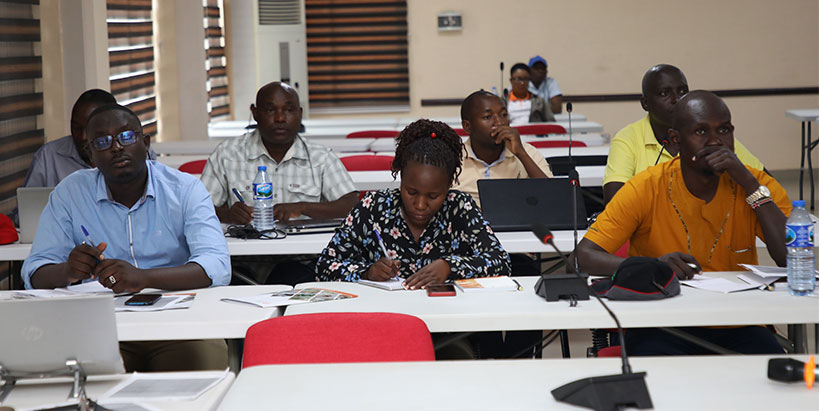
The participants from Burundi and South-Sudan at the training.

Efforts to enhance agriculture breeding programs in countries, specifically those considered fragile, are crucial to addressing the ongoing food and water shortages in the current climate crises. Strong research programs equip countries with a pipeline of modern agriculture solutions that help these nations respond to climate shocks and erratic rainfall patterns. These solutions must ensure that breeding programs are paired with effective agronomy advice. This integrated approach, driven by collaboration among scientists across the continent, turns research into real-world solutions for farmers.

Through two MoUs between IITACGIAR and the Food and Agriculture Organization (FAO), supporting the African Development Bank’s Strengthening Emergency Preparedness and Response to Food Crisis (SEPAREF) project and the World Bank’s Resilient Agriculture Livelihood Project (RALP), a comprehensive five-day training program was organized for agronomists, breeders, seed certification officers, and extension agents from Burundi and South Sudan. Coordinated by the IITA Capacity Development Office (CDO), this training represents the first step in helping stakeholders and policymakers from both countries develop soybean and maize breeding programs tailored to the needs of these countries. The linkage of IITA to these projects results from TAAT’s efforts to link technologies to country investment projects funded by Multilateral Development Banks, namely the World Bank and the African Development Bank.

The TAAT Monitoring and Evaluation Expert and SEPAREF Coordinator, Rachel Zozo, highlighted the immense value of the training, noting that uniting national experts at IITA’s research station fosters collaboration, trust, and mutual gains. She also emphasized that this training is just the start of a long-term commitment to helping countries in fragile states develop their breeding programs that can contribute to feeding their people and achieving food security.

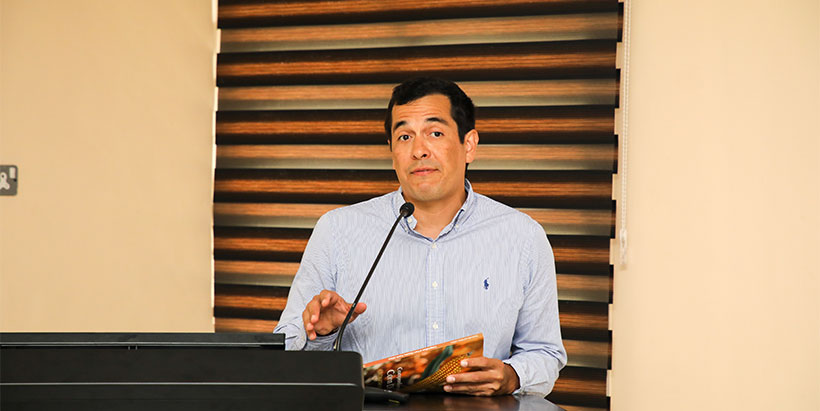
IITA Senior Plant Pathologist Alejandro Ortega-Beltran, encouraging the participants to adopt aflatoxin management in their countries.

The training emphasized research’s critical role in developing resilient and sustainable food production systems. The experts and scientists provided in-depth knowledge and practical skills to equip these frontline professionals with the necessary modern tools and techniques to establish breeding programs to help countries produce high-quality early-generation seeds (EGS) of maize and soybean—essential components in improving high-quality crop yields.

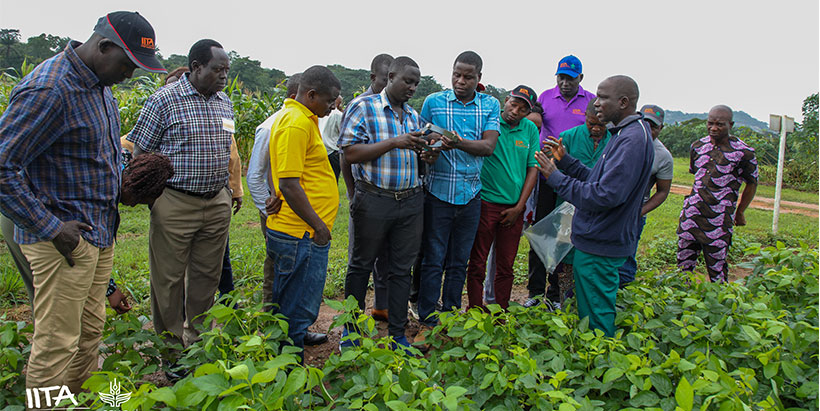
Participants learned about the development and selection of maize and soybean varieties, participated in field tours in the research fields, and observed cross-pollination techniques. Such practical demonstrations helped deepen understanding of the breeding methods and controls key to developing high-yielding and resilient crops. This experience created new partnerships between scientists and highlighted the importance of adapting agronomic practices to their local context.

Dr Luka Atwok, a Maize Breeder from the Ministry of Agriculture and Food Security (MAFS) in South Sudan, noted that the valuable knowledge gained from guiding the team through a wealth of new scientific information is the turning point for establishing a sustainable maize breeding program in South Sudan.

IITA Soybean Breeder Abebe Abush and Maize Breeder Abebe Menkir led the training on breeding high-yielding varieties. They focused on the scientific principles and practical applications that underpin successful crop improvement.


IITA Soybean Research Technician Sunday Ojo, demonstrating the process of crossing soybean plants on the field.

Nigeria National Agricultural Seed Council’s (NASC) South-West Regional Coordinator, Dr Adekunle Adeseko, introduced the participants to the importance of field and seed certification, assuring them that quality seeds would have to be identified and accessible through an established NASC of equivalent. He emphasized that certified seeds are crucial for increasing private-sector investment and supporting sustainable agricultural growth. ENABLE TAAT Business Development Officer Idowu Osun guided participants on agribusiness development and emphasized the importance of registering seed businesses with regulatory agencies for long-term success and compliance with industry standards.

IITA Senior Plant Pathologist Alejandro Ortega-Beltran urged participants from Burundi to engage in the ongoing integrated aflatoxin management efforts in their country, led by IITA and its partners. He also encouraged those from South Sudan to collaborate with IITA in establishing a mycotoxin control program. He also stressed that mycotoxin contamination is a significant concern in both countries. He expressed hope that the training would catalyze the implementation of effective management strategies, leading to safer food supplies and increased public health awareness.

TAAT Soybean Compact Coordinator David Ojo remarked that this training is a prime example of how IITA’s research and innovations remain central to the agricultural priorities of these countries. By nurturing these collaborations, IITA ensures its cutting-edge technologies are leveraged to promote sustainable agricultural growth and strengthen food security across Africa. He noted that this training is not just a one-time event but the beginning of a broader initiative to build the capacity of these countries to develop and maintain resilient farming systems.

The comprehensive training was an impactful first step, with positive feedback affirming that the information was well received. However, the journey does not end here. The strong appetite for further collaboration highlights a clear mandate to do more and build on this momentum, working closely with our Burundi and South Sudan partners to develop their research and breeding programs. By leveraging the expertise of IITA, CGIAR, and TAAT, we can translate the available knowledge into tangible results that will significantly enhance agricultural innovation and sustainability in these regions.

Contributed by Anita Akinyomade


Contribué par

Nouvelles connexes

Aucun article trouvé

Laisser un commentaire

Votre adresse e-mail ne sera pas publiée. Les champs obligatoires sont indiqués avec *

Retour en haut
Olaosebikan, Olamide

Olamide Deborah Nwanze est une chercheuse principale spécialisée dans la recherche sur l'approche "genre" afin d'éclairer les politiques de sélection participative et inclusive, de développement de variétés et de systèmes semenciers concernant les cultures de racines, tubercules et bananes (RTB) au siège de l'Institut International d'Agriculture Tropicale, à Ibadan, au Nigeria. Elle est candidate au doctorat à l'Université d'Ibadan et titulaire d'un master et d'un diplôme d'ingénieur agronome en vulgarisation agricole et développement rural. Olamide est membre du programme African Women in Agricultural Research and Development – Gender Responsive Agricultural Systems Policy (SAISIE DE RÉCOMPENSEet les Chercheuses Sensibles au Genre Équipées pour la Transformation Agricole (SUPER. Elle cherche à appliquer ses apprentissages en matière d’approche genre, recherche sensible au genre, et expertise en développement et examen de politiques pour faciliter l’accès et l’adoption par les femmes, les jeunes, les enfants et les groupes sociaux vulnérables aux innovations agricoles qui garantissent la sécurité alimentaire, nutritionnelle, des revenus et des moyens de subsistance en Afrique. Ses rôles actuels comprennent le mentorat de chercheurs stagiaires, le développement de guides et manuels de formation, la mise en œuvre et l'adaptation de cadres et d'outils genre, l'engagement des acteurs de la chaîne de valeur en tant que partenaires de la science citoyenne, l'examen et la refonte des politiques, la gestion et l'analyse des données. Ses recherches actuelles portent sur les méthodes mixtes ainsi que sur les approches participatives et interdisciplinaires pour saisir et mettre en évidence les dynamiques de genre, les besoins, les préférences et les défis rencontrés par les parties prenantes au sein de la chaîne de valeur des moyens de subsistance agricoles afin de prioriser des stratégies axées sur le genre dans les programmes de sélection, la conception et la mise en œuvre des politiques.

À l'IITA, elle contribue à la mise en œuvre du CGIAR Initiative d'Élevage Accéléré et Innovation génétique Programmes ; recherche participative et genre au sein des Prochaine Génération ManiocHarvestPlusRTBAliments, et Tricot-ClimMob 1000Fermes Projets ; et la communication des connaissances sur le genre via le Série de webinaires G-LENS, vidéo documentaire, notes de politiquepublications, et blogs.


Publications récentes

de Sousa, K., van Etten, J., Manners, R. Bello, A., Teeken, B., Olaosebikan, O., et al. 2024. L'approche tricot : un cadre agile pour les essais décentralisés à la ferme soutenus par la science citoyenne. Une rétrospective. Agron. Sustain. Dev. 44, 8. https://doi.org/10.1007/s13593-023-00937-1

Madu, T., Onwuka, S., Nwafor, S., Onyemauwa, N., Ejechi, M., Ofoeze, M., Ukeje, B., Eluagu, C., Olaosebikan, O., Okoye, B., 2024. Les études sur les consommateurs inclusifs en matière de genre améliorent l'amélioration du manioc au Nigeria dans : Frontiers in Sociology, volume 9, numéro : 1224504, doi : 10.3389/fsoc.2024.1224504

Olaosebikan, O. ; Bello, A. ; Utoblo, O. ; Okoye, B. ; Olutegbe, N. ; Garner, E. ; Teeken, B. ; Bryan, E. ; Forsythe, L. ; Cole, S. ; Madu, T. 2023. Facteurs de stress et résilience au sein de la chaîne de valeur du manioc au Nigeria : Caractéristiques préférées des variétés de manioc et stratégies de réponse des hommes et des femmes pour informer l'amélioration variétale. Sustainability 15, 7837. https://doi.org/10.3390/su15107837

Okoye, B., Ofoeze, M., Ejechi, M., Onwuka, S., Nwafor, S., Onyemauwa, N., Ukeje, B., Eluagu, C., Obidiegwu, J.*, Olaosebikan, O., Madu, T.* 2023. Priorisation des traits préférés dans la chaîne de valeur de l'igname au Nigeria : une analyse de la situation en matière de genre in: Frontiers in Sociology, volume 8, numéro : 1232626, pages 1 – 9, ISSN 2297-7775, 2023. https://www.frontiersin.org/articles/10.3389/fsoc.2023.1232626/full

Olaosebikan, O., Bello, A. A., de Sousa, K., Ndjouenkeu, R., Adesokan, M., Alamu, E. O., Agbona, A., van Etten, J., Kegah, F. N.*, Dufour, D., Bouniol, A., Teeken, B. 2023. Acceptabilité par les consommateurs des produits alimentaires à base de gari-eba de manioc dans des contextes culturels et environnementaux variés en utilisant l'approche triade de comparaison des technologies (tricot) dans : Journal of the Science of Food and Agriculture,

Teeken, B., Olaosebikan, O., Bello, A. A., Madu, T.*, Cole, S. M. 2023. Évaluation qualitative de la positionnalité et des préférences des dyades en relation avec les activités liées au manioc : travailler avec des scientifiques citoyens du procès tricot https://hdl.handle.net/10568/138326 Type : Manuel

Bouniol, A., Ceballos, H., Bello, A. A., Teeken, B., Olaosebikan, O., Owoade, D., Agbona, A., Fotso Kuate, A., Madu, T.*, Okoye, B.*, Ofoeze, M.*, Nwafor, S.*, Onyemauwa, N.*, Adinsi, L.*, Forsythe, L., Dufour, D. 2023. Impact variétal sur le travail des femmes, la charge de travail et la pénibilité associée dans le traitement des plantes à racines, tubercules et bananes : focus sur le manioc en Afrique subsaharienne dans : Journal of the Science of Food and Agriculture, pages 1 – 25, ISSN 0022-5142,

Bello, A. A., Agbona, A., Olaosebikan, O., Edughaen, G., Dufour, D., Bouniol, A., Iluebbey, P., Ndjouenkeu, R.*, Rabbi, I. Y., Teeken, B. 2023. Effets génétiques et environnementaux sur la productivité de la transformation et le rendement des produits alimentaires : la pénibilité du travail des femmes dans : Journal of the Science of Food and Agriculture, pages 1 – 32, ISSN 0022-5142, 5

Cavicchioli, M., Zimbiti, T., Teeken, B., Nwanze, D.O., Liani, M., Parkes, E. & Bello, A. 2023. Rapport sur la formation en sélection génétique sensible au genre à l'IITA. Genetic Resources Center, IITA-HQ, Ibadan, 21-23 septembre 2022. Ibadan, Nigéria : IITA, (34 p.).https://hdl.handle.net/10568/131368

Agbona, A. Peteti P., Teeken B., Olaosebikan O. Bello, A. A., Parkes, E., Rabbi, I. Y., Mueller, L., Egesi, C., Kulakow, P. 2022. Gestion des données dans les programmes d'amélioration des cultures RTB africaines multidisciplinaires. In : Williamson, H.F., Leonelli, S. (eds) Towards Responsible Plant Data Linkage: Data Challenges for Agricultural Research and Development. Springer, Cham. https://doi.org/10.1007/978-3-031-13276-6_5

Lora Forsythe, Pricilla Marimo, Sarah Mayanja, Olamide D. Olaosebikan, Esme Stuart, Bela Teeken, Benjamin Okoye, Tessy Madu, (2021). Analyse transversale du genre dans RTBfoods Étape 2 Cartographie des genres sur les produits RTB. Comprendre les moteurs des préférences en matière de traits et le développement de profils de produits RTB multi-utilisateurs, WP1. Londres, Royaume-Uni : Rapport scientifique de terrain RTBfoods, 30 p.

Teeken, B., Garner, E., Agbona, A., Balogun, I., Olaosebikan, O., Bello, A., Madu, T., Okoye, B., Egesi, C., Kulakow, P. et Tufan, H.A. 2021. Au-delà des “ traits des femmes ” : explorer comment le genre, les différences sociales et les caractéristiques des ménages influencent les préférences pour les traits. Frontiers Systèmes alimentaires durables 5:740926. https://doi.org/10.3389/fsufs.2021.740926

Teeken, B., Agbona, A., Bello, A., Olaosebikan, O., Alamu, E., Adesokan, M., Awoyale, W., Madu, T., Okoye, B., Chijioke, U., Owoade, D., Okoro, M., Bouniol, A., Dufour, D., Hershey, C., Rabbi, I., Maziya‐Dixon, B., Egesi, C., Tufan, H. et Kulakow, P. (020. Comprendre les préférences variétales du manioc par le classement par paires du gari-eba et du fufu préparés par des agriculteurs-transformateurs locaux. Int J Food Sci Technol. https://doi.org/10.1111/ijfs.14862

Bela Teeken, Olamide Olaosebikan, Ireti Balogun, Benjamin Okoye, Tessy Madu, Steven Cole, Abolore Bello, Elizabeth Parkes. (2020). Pilotage des outils de profil client et produit G+ pour l'amélioration sensible au genre du manioc au Nigeria. Nigeria : Institut international d'agriculture tropicale (IIAT). https://hdl.handle.net/20.500.11766/13000