

NEWS

WATEA host stakeholders during progress review workshop
février 14, 2025


IITA DDG P4D Kenton Dashiell (R), French Ambassador to Nigeria, H. E. Marc Fonbaustier (M), Agriculture Counselor at the French Embassy in Nigeria Sonia Darracq (L).

IITACGIAR, in collaboration with the French Government, recently hosted a stakeholders’ workshop at the IITA Conference Center from 27 to 31 January. As the lead implementing organization for the Women in Agricultural Technical Education and Apprenticeship in Nigeria (WATEA) project, IITA organized this workshop to assess the program’s two-year achievements and equip stakeholders with the necessary tools and expertise to implement competency-based technical education, aiming to foster collaboration, innovation, and capacity building within the WATEA project.

The workshop brought together key stakeholders, including the Heads of beneficiary institutions such as ABCOAD, ANSPOLY, BUPOLY, ESPOLY, Kwara State Polytechnic, LAUTECH, et OYSCATECH. Representatives from the National Board for Technical Education (NBTE) and small and medium-sized enterprises (SMEs) also participated, alongside Commissioners of Agriculture, Education, and Women Affairs from Anambra, Enugu, Jigawa, Kano, Kwara, and Oyo states.

In his welcome address, IITA DDG Partnerships for Delivery (IITA-P4D) Kenton Dashiell, emphasized the critical role of partnerships between the government and private sectors in achieving IITA’s mission. He noted that such collaborations have been instrumental in executing numerous projects aimed at eradicating hunger and malnutrition and improving Africa’s economic landscape.
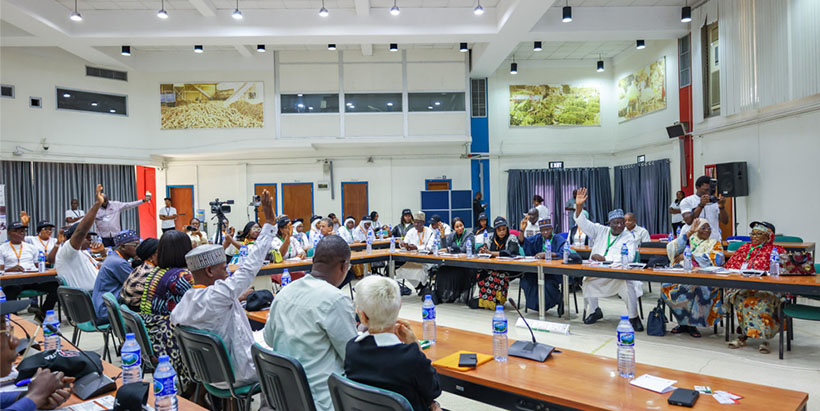
The stakeholders and beneficiaries during the workshop.

French Ambassador to Nigeria, Marc Fonbaustier, lauded IITA’s dedication and expertise in implementing the WATEA project. He highlighted the institute’s unwavering commitment to education, research, and capacity building as exemplary.

Amb. Fonbaustier commended IITA’s success stories and underscored WATEA as a testament to its positive impact. He further emphasized that the WATEA model prepares youth to become innovators and leaders in the agricultural sector. By empowering a new generation with sustainable agricultural practices and modern technologies, the project is driving the transformation of Nigeria’s agricultural landscape. He encouraged all participants to leverage the opportunities provided by WATEA fully.

Agriculture Counselor at the French Embassy in Nigeria, Sonia Darracq, reaffirmed the French Government’s commitment to enhancing agricultural technical education in Nigeria. She highlighted opportunities for selected technical schools to strengthen their apprenticeship programs, ensuring students receive hands-on, industry-relevant training.
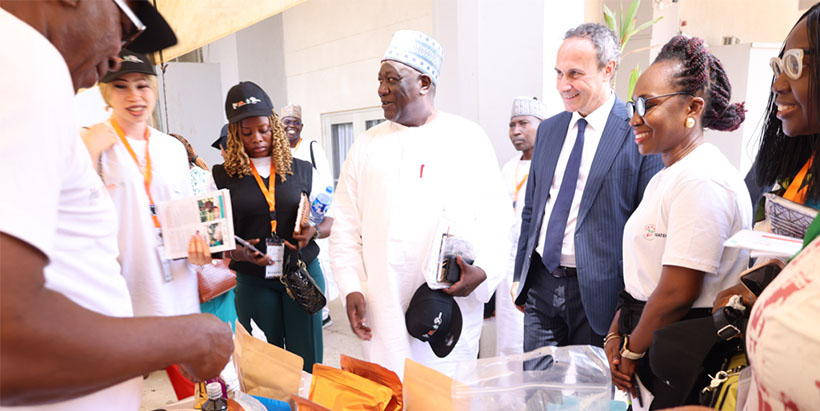
Exhibition of products from the beneficiaries.

Enugu State Commissioner for Children, Gender Affairs, and Social Development, Mrs. Ngozi Enih-Valentina, delivered a goodwill message emphasizing the crucial role of collective efforts in advancing women’s participation in agriculture. She noted that the workshop would guide decisions to combat gender-based violence, promote gender equality, and enhance women’s economic empowerment.

Throughout the workshop, stakeholders explored strategies for developing a successful apprenticeship system tailored to the needs of students in Nigerian technical schools. The event also featured testimonials from WATEA beneficiaries, highlighting the program’s transformative impact.

One of the beneficiaries, Chinaza Okoro, from ESPOLY, shared her experience, stating, “I can now produce my own high-quality honey and differentiate between genuine and counterfeit products. Additionally, I have learned to create various products from beeswax. WATEA is here to stay.”

Another beneficiary, specializing in the animal husbandry value chain, recounted how the program equipped her with the skills to process animal products into finished goods such as milk and yogurt. She also gained essential business skills, including planning, analysis, and soft skills tailored to women’s entrepreneurship. “With an initial capital of ₦5000, I started a milk candy business, which has grown to over ₦15,000. I am immensely grateful to WATEA for its inclusive approach and empowerment initiatives,” she expressed.

The workshop provided a platform for stakeholders to explore strategies for enhancing technical education in agriculture, promoting structured apprenticeship programs, and bridging the skills gap in Nigeria’s agribusiness sector. With the outcomes including improved quality of technical agricultural education and increased women’s participation in technical agriculture.

Concluding with an exhibition showcasing products developed by WATEA beneficiaries, the workshop further reinforces the program’s impact on fostering innovation, economic growth, and technical education in Nigeria’s agricultural sector.

The WATEA Project has successfully trained over 3,000 beneficiaries across six states and seven selected institutions, equipping them with technical agricultural and entrepreneurial skills. The next phase apprenticeship will commence in the coming weeks, pairing students with leading SMEs in each state. This hands-on experience will enable them to apply their training, gain confidence, and become valuable contributors to the technical agricultural sector.

Contributed by Anita Akinyomade and Isaac Ajayi


Contribué par

Histoires récentes

Aucun article trouvé

Laisser un commentaire

Votre adresse e-mail ne sera pas publiée. Les champs obligatoires sont indiqués avec *

Retour en haut
Olaosebikan, Olamide

Olamide Deborah Nwanze est une chercheuse principale spécialisée dans la recherche sur l'approche "genre" afin d'éclairer les politiques de sélection participative et inclusive, de développement de variétés et de systèmes semenciers concernant les cultures de racines, tubercules et bananes (RTB) au siège de l'Institut International d'Agriculture Tropicale, à Ibadan, au Nigeria. Elle est candidate au doctorat à l'Université d'Ibadan et titulaire d'un master et d'un diplôme d'ingénieur agronome en vulgarisation agricole et développement rural. Olamide est membre du programme African Women in Agricultural Research and Development – Gender Responsive Agricultural Systems Policy (SAISIE DE RÉCOMPENSEet les Chercheuses Sensibles au Genre Équipées pour la Transformation Agricole (SUPER. Elle cherche à appliquer ses apprentissages en matière d’approche genre, recherche sensible au genre, et expertise en développement et examen de politiques pour faciliter l’accès et l’adoption par les femmes, les jeunes, les enfants et les groupes sociaux vulnérables aux innovations agricoles qui garantissent la sécurité alimentaire, nutritionnelle, des revenus et des moyens de subsistance en Afrique. Ses rôles actuels comprennent le mentorat de chercheurs stagiaires, le développement de guides et manuels de formation, la mise en œuvre et l'adaptation de cadres et d'outils genre, l'engagement des acteurs de la chaîne de valeur en tant que partenaires de la science citoyenne, l'examen et la refonte des politiques, la gestion et l'analyse des données. Ses recherches actuelles portent sur les méthodes mixtes ainsi que sur les approches participatives et interdisciplinaires pour saisir et mettre en évidence les dynamiques de genre, les besoins, les préférences et les défis rencontrés par les parties prenantes au sein de la chaîne de valeur des moyens de subsistance agricoles afin de prioriser des stratégies axées sur le genre dans les programmes de sélection, la conception et la mise en œuvre des politiques.

À l'IITA, elle contribue à la mise en œuvre du CGIAR Initiative d'Élevage Accéléré et Innovation génétique Programmes ; recherche participative et genre au sein des Prochaine Génération ManiocHarvestPlusRTBAliments, et Tricot-ClimMob 1000Fermes Projets ; et la communication des connaissances sur le genre via le Série de webinaires G-LENS, vidéo documentaire, notes de politiquepublications, et blogs.


Publications récentes

de Sousa, K., van Etten, J., Manners, R. Bello, A., Teeken, B., Olaosebikan, O., et al. 2024. L'approche tricot : un cadre agile pour les essais décentralisés à la ferme soutenus par la science citoyenne. Une rétrospective. Agron. Sustain. Dev. 44, 8. https://doi.org/10.1007/s13593-023-00937-1

Madu, T., Onwuka, S., Nwafor, S., Onyemauwa, N., Ejechi, M., Ofoeze, M., Ukeje, B., Eluagu, C., Olaosebikan, O., Okoye, B., 2024. Les études sur les consommateurs inclusifs en matière de genre améliorent l'amélioration du manioc au Nigeria dans : Frontiers in Sociology, volume 9, numéro : 1224504, doi : 10.3389/fsoc.2024.1224504

Olaosebikan, O. ; Bello, A. ; Utoblo, O. ; Okoye, B. ; Olutegbe, N. ; Garner, E. ; Teeken, B. ; Bryan, E. ; Forsythe, L. ; Cole, S. ; Madu, T. 2023. Facteurs de stress et résilience au sein de la chaîne de valeur du manioc au Nigeria : Caractéristiques préférées des variétés de manioc et stratégies de réponse des hommes et des femmes pour informer l'amélioration variétale. Sustainability 15, 7837. https://doi.org/10.3390/su15107837

Okoye, B., Ofoeze, M., Ejechi, M., Onwuka, S., Nwafor, S., Onyemauwa, N., Ukeje, B., Eluagu, C., Obidiegwu, J.*, Olaosebikan, O., Madu, T.* 2023. Priorisation des traits préférés dans la chaîne de valeur de l'igname au Nigeria : une analyse de la situation en matière de genre in: Frontiers in Sociology, volume 8, numéro : 1232626, pages 1 – 9, ISSN 2297-7775, 2023. https://www.frontiersin.org/articles/10.3389/fsoc.2023.1232626/full

Olaosebikan, O., Bello, A. A., de Sousa, K., Ndjouenkeu, R., Adesokan, M., Alamu, E. O., Agbona, A., van Etten, J., Kegah, F. N.*, Dufour, D., Bouniol, A., Teeken, B. 2023. Acceptabilité par les consommateurs des produits alimentaires à base de gari-eba de manioc dans des contextes culturels et environnementaux variés en utilisant l'approche triade de comparaison des technologies (tricot) dans : Journal of the Science of Food and Agriculture,

Teeken, B., Olaosebikan, O., Bello, A. A., Madu, T.*, Cole, S. M. 2023. Évaluation qualitative de la positionnalité et des préférences des dyades en relation avec les activités liées au manioc : travailler avec des scientifiques citoyens du procès tricot https://hdl.handle.net/10568/138326 Type : Manuel

Bouniol, A., Ceballos, H., Bello, A. A., Teeken, B., Olaosebikan, O., Owoade, D., Agbona, A., Fotso Kuate, A., Madu, T.*, Okoye, B.*, Ofoeze, M.*, Nwafor, S.*, Onyemauwa, N.*, Adinsi, L.*, Forsythe, L., Dufour, D. 2023. Impact variétal sur le travail des femmes, la charge de travail et la pénibilité associée dans le traitement des plantes à racines, tubercules et bananes : focus sur le manioc en Afrique subsaharienne dans : Journal of the Science of Food and Agriculture, pages 1 – 25, ISSN 0022-5142,

Bello, A. A., Agbona, A., Olaosebikan, O., Edughaen, G., Dufour, D., Bouniol, A., Iluebbey, P., Ndjouenkeu, R.*, Rabbi, I. Y., Teeken, B. 2023. Effets génétiques et environnementaux sur la productivité de la transformation et le rendement des produits alimentaires : la pénibilité du travail des femmes dans : Journal of the Science of Food and Agriculture, pages 1 – 32, ISSN 0022-5142, 5

Cavicchioli, M., Zimbiti, T., Teeken, B., Nwanze, D.O., Liani, M., Parkes, E. & Bello, A. 2023. Rapport sur la formation en sélection génétique sensible au genre à l'IITA. Genetic Resources Center, IITA-HQ, Ibadan, 21-23 septembre 2022. Ibadan, Nigéria : IITA, (34 p.).https://hdl.handle.net/10568/131368

Agbona, A. Peteti P., Teeken B., Olaosebikan O. Bello, A. A., Parkes, E., Rabbi, I. Y., Mueller, L., Egesi, C., Kulakow, P. 2022. Gestion des données dans les programmes d'amélioration des cultures RTB africaines multidisciplinaires. In : Williamson, H.F., Leonelli, S. (eds) Towards Responsible Plant Data Linkage: Data Challenges for Agricultural Research and Development. Springer, Cham. https://doi.org/10.1007/978-3-031-13276-6_5

Lora Forsythe, Pricilla Marimo, Sarah Mayanja, Olamide D. Olaosebikan, Esme Stuart, Bela Teeken, Benjamin Okoye, Tessy Madu, (2021). Analyse transversale du genre dans RTBfoods Étape 2 Cartographie des genres sur les produits RTB. Comprendre les moteurs des préférences en matière de traits et le développement de profils de produits RTB multi-utilisateurs, WP1. Londres, Royaume-Uni : Rapport scientifique de terrain RTBfoods, 30 p.

Teeken, B., Garner, E., Agbona, A., Balogun, I., Olaosebikan, O., Bello, A., Madu, T., Okoye, B., Egesi, C., Kulakow, P. et Tufan, H.A. 2021. Au-delà des “ traits des femmes ” : explorer comment le genre, les différences sociales et les caractéristiques des ménages influencent les préférences pour les traits. Frontiers Systèmes alimentaires durables 5:740926. https://doi.org/10.3389/fsufs.2021.740926

Teeken, B., Agbona, A., Bello, A., Olaosebikan, O., Alamu, E., Adesokan, M., Awoyale, W., Madu, T., Okoye, B., Chijioke, U., Owoade, D., Okoro, M., Bouniol, A., Dufour, D., Hershey, C., Rabbi, I., Maziya‐Dixon, B., Egesi, C., Tufan, H. et Kulakow, P. (020. Comprendre les préférences variétales du manioc par le classement par paires du gari-eba et du fufu préparés par des agriculteurs-transformateurs locaux. Int J Food Sci Technol. https://doi.org/10.1111/ijfs.14862

Bela Teeken, Olamide Olaosebikan, Ireti Balogun, Benjamin Okoye, Tessy Madu, Steven Cole, Abolore Bello, Elizabeth Parkes. (2020). Pilotage des outils de profil client et produit G+ pour l'amélioration sensible au genre du manioc au Nigeria. Nigeria : Institut international d'agriculture tropicale (IIAT). https://hdl.handle.net/20.500.11766/13000