
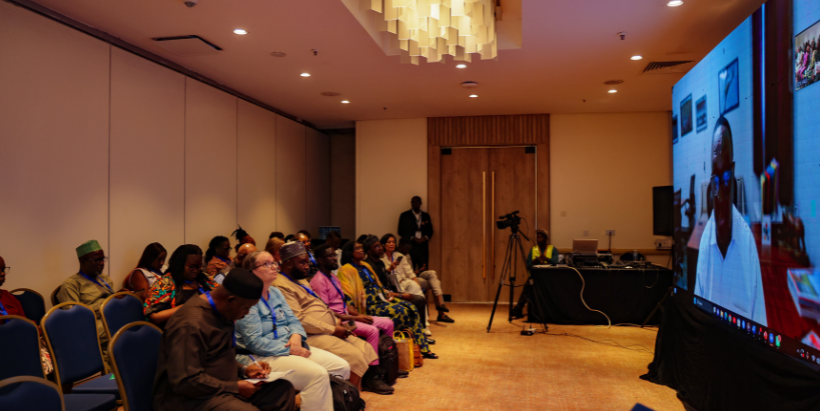
En marge de la 9e Semaine scientifique de l'agriculture en Afrique (AASW9) et de la 10e Assemblée générale du FARA, qui viennent de s'achever à Abuja, CGIAR a présenté aux partenaires et aux parties prenantes le projet de Stratégie pour l'Afrique, visant à façonner l'avenir de l'agriculture africaine.
Des scientifiques aux représentants d'organisations paysannes, les discussions ont convergé vers une seule question lors de la présentation du projet de stratégie : que faudrait-il pour que l'Afrique dirige véritablement sa propre transformation agricole ? Lors de l'événement parallèle organisé conjointement par le CGIAR et le Forum pour la recherche agricole en Afrique (FARA), les discussions se sont concentrées sur l'avenir de la recherche agricole sur le continent et le rôle que les institutions africaines devraient jouer pour la stimuler.
Avec le projet de stratégie du CGIAR pour l'Afrique, le continent dispose désormais d'une feuille de route qui vise à repositionner l'un des plus grands partenariats de recherche agricole au monde, passant du rôle de simple exécutant de projets à celui de catalyseur pour le renforcement des institutions africaines.
En ouvrant la session, le Dr Namukolo Covic, responsable du bureau de liaison du CGIAR pour l'Afrique, a clairement indiqué que le document était encore en évolution. Les discussions lors de l'événement, a-t-elle déclaré, étaient conçues pour recueillir les commentaires des parties prenantes dont les perspectives aideraient à affiner la stratégie avant la prochaine présentation au Forum sur les systèmes alimentaires en Afrique.
Cette invitation a donné le ton des conversations qui ont suivi.
S'exprimant virtuellement depuis Washington, le Dr Simeon Ehui, directeur régional de CGIAR pour l'Afrique, a mis au défi les participants de repenser la manière dont le succès du développement agricole doit être évalué. Plutôt que de compter les projets mis en œuvre ou achevés, ou les innovations lancées, le Dr Ehui a déclaré que le véritable héritage de CGIAR devrait se refléter dans la force des propres institutions de recherche, universités et systèmes d'innovation de l'Afrique.
La stratégie prévoit que d'ici 2045, le CGIAR aura une empreinte opérationnelle plus restreinte mais une plus grande influence, et sera plus étroitement aligné sur les priorités continentales.
Présentant le projet de stratégie, le Dr Steve Omamo du Institut international de recherche sur les politiques alimentaires (IFPRI), dans sa présentation, a identifié six priorités stratégiques proposées : réduire la dépendance aux importations alimentaires, renforcer les corridors commerciaux résilients, transformer les systèmes nationaux de recherche et de livraison, faire progresser la transformation numérique, fournir des régimes alimentaires sains et abordables, et restaurer les ressources naturelles et la résilience climatique. Les objectifs comprennent la modernisation de 10 à 15 instituts nationaux de recherche agricole pour atteindre des capacités comparables à celles d'institutions mondialement respectées telles que l'EMBRAPA du Brésil ou l'ICAR de l'Inde. Il propose également la création d'un fonds commun de données agricoles à l'échelle de l'Afrique pour améliorer la collaboration, la production de données probantes et la prise de décision entre les pays.
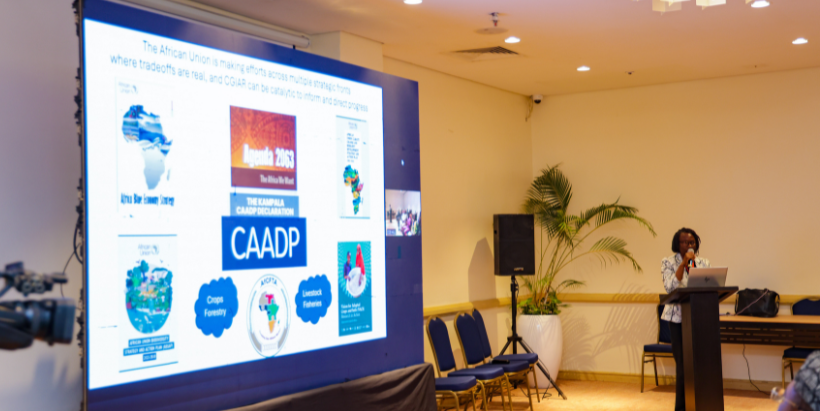
Pour le directeur exécutif du FARA, le Dr Aggrey Agumya, l'importance de la stratégie réside non seulement dans son ambition mais aussi dans son exécution.
En replaçant la stratégie dans son contexte, il a noté qu'elle s'appuie sur des efforts antérieurs, citant l'Agenda scientifique du PDDAA de 2012 et les consultations d'Abidjan de 2022. Selon le Dr Agumya, si ces deux initiatives ont généré des engagements importants, leur mise en œuvre n'a pas été à la hauteur des ambitions. Le processus actuel, a-t-il suggéré, sera jugé selon le même étalon, non pas sur la qualité de sa formulation, mais sur l'impact qu'il génère.
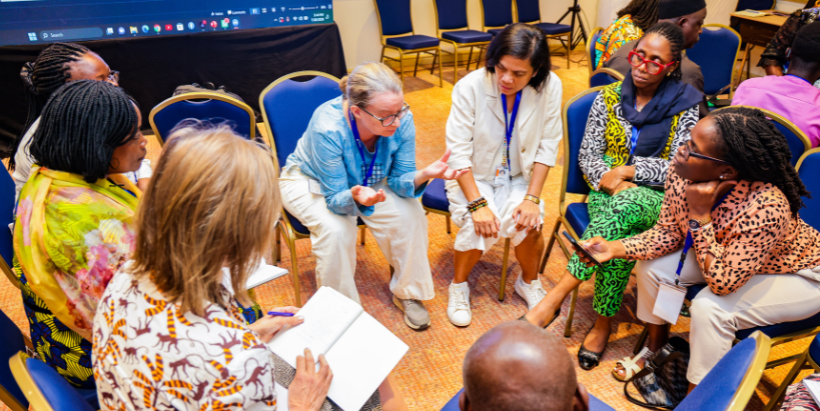
Cette réalité a façonné les discussions en ateliers, au cours desquelles les participants ont examiné l'orientation générale de la Stratégie et la faisabilité de ses priorités proposées.
Les participants ont salué l'accent mis sur le renforcement des institutions africaines, mais ont soutenu que le développement des capacités devrait aller au-delà des chercheurs pour inclure les agriculteurs et les acteurs de l'innovation locale qui sont essentiels pour traduire la science en impact.
Faisant rapport pour l'un des groupes de travail, Vivian Atakos a observé que les femmes restent concentrées dans la production de cultures à faible valeur ajoutée et hautement périssables, tout en continuant à faire face à des opportunités limitées dans des chaînes de valeur agricoles plus rentables. Les participants ont appelé à un soutien scientifique renforcé pour la génération de revenus des femmes et l'agriculture sensible à la nutrition, arguant qu'une croissance inclusive doit être délibérément conçue.
Des discussions ont également soulevé des préoccupations qui ont accompagné la recherche agricole en Afrique. Les participants ont déclaré que des organisations comme le CGIAR devraient élargir leur attention aux cultures indigènes et sous-utilisées ayant un potentiel significatif pour la nutrition, la résilience climatique et la diversification des moyens de subsistance. Ils ont également recommandé une co-création plus étroite avec le secteur privé et une continuation de la création de valeur au-delà de la durée de vie des projets individuels.
D'autres ont soutenu que la transformation numérique de l'Afrique ne devait pas créer de nouvelles formes de dépendance. Les solutions numériques, ont-ils affirmé, devaient s'appuyer sur les compétences locales, l'appropriation et les capacités pour rester viables bien après la fin des projets financés par les donateurs.
Plusieurs participants ont contesté la Stratégie visant à accorder une plus grande attention aux maillons de la chaîne de valeur agricole qui reçoivent souvent le moins d'investissements — la manutention post-récolte, la transformation, le stockage et l'accès aux marchés — où des pertes substantielles continuent d'éroder les revenus des agriculteurs et la sécurité alimentaire nationale.
Le financement est apparu comme un autre sujet de discussion récurrent, les participants faisant remarquer que le passage à une mise en œuvre dirigée par l'Afrique n'a pas encore clarifié son mode de financement, alors même qu'une grande partie des investissements actuels dans la recherche agricole continue de provenir de l'extérieur du continent. Ils ont appelé à des voies plus claires qui encouragent une mobilisation accrue des ressources nationales.
Comme les discussions a pris fin, le Dr Ehui a reconnu que la consultation avait généré de précieuses recommandations sur les partenariats, les mécanismes de financement et les objectifs mesurables pour les femmes et les jeunes. Les contributions qui façonneront la prochaine version de la Stratégie seront présentées lors du Forum sur les systèmes alimentaires en Afrique (AFSF), parallèlement aux premières discussions sur le processus de la stratégie globale du CGIAR pour 2040.
Dans ses remarques de clôture, le Dr Agumya, qui a passé six ans au sein du système du CGIAR avant de diriger le FARA, a qualifié le changement proposé de rupture audacieuse avec la convention. Il a souligné qu'un système choisissant de devenir moins central, au service du renforcement des institutions africaines, adopte une conception fondamentalement différente du partenariat.
Le succès ultime de cette vision dépendra non seulement de la stratégie elle-même, mais aussi de la volonté des gouvernements, des institutions de recherche, des universités, du secteur privé et des partenaires au développement de transformer ses aspirations en un changement durable. À en juger par la franchise des discussions à Abuja, les parties prenantes semblent déterminées à faire en sorte que cette stratégie devienne plus qu'un simple document bien rédigé, mais une feuille de route qui place véritablement l'Afrique au centre de son propre avenir agricole.
Contribué par
Anu Oyeleye et Timilehin Osunde