
Cassava Breeding Program
Why Cassava Breeding Program
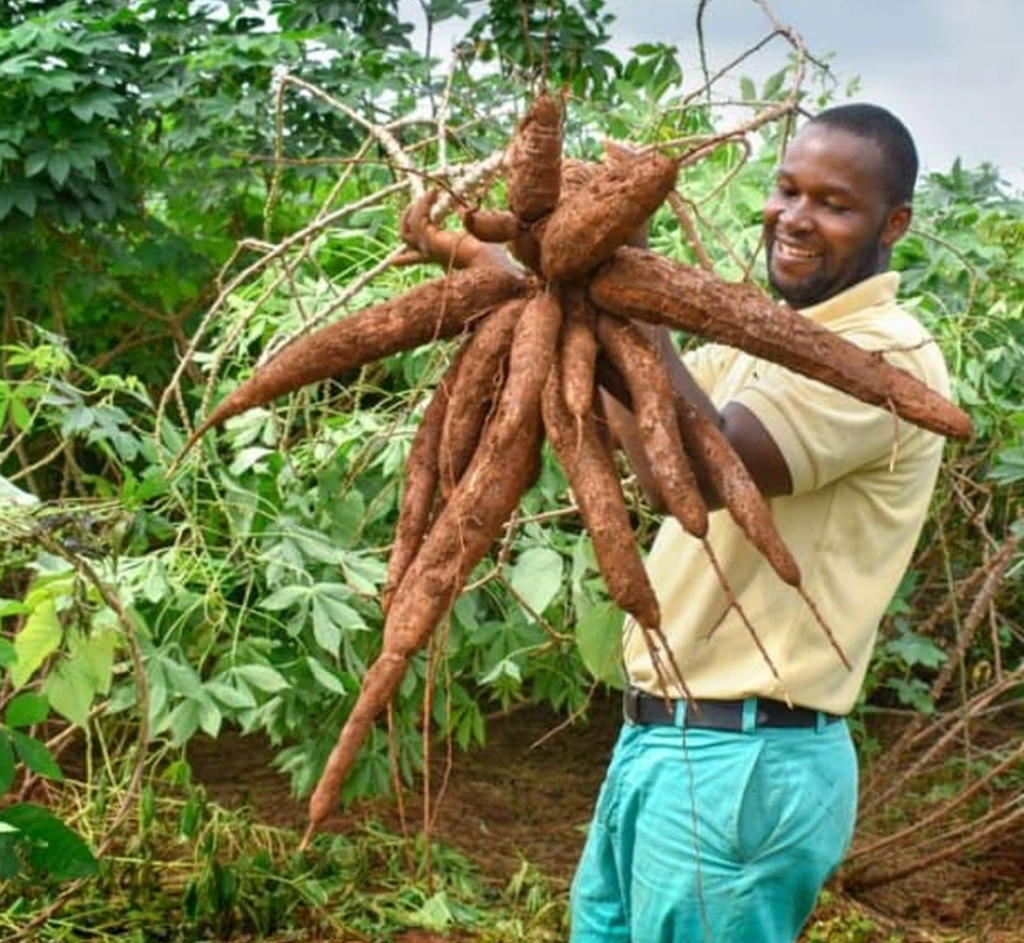
Cassava feeds over 800 million Africans, yet yields are held back by pests, diseases, poor soils and weak seed systems. IITA’s Cassava Breeding Program tackles these constraints by developing high‑yielding, disease‑resistant and climate‑resilient varieties, while advancing a commercially viable seed system that ensures sustained access to quality planting materials. The program integrates classical and genomic breeding, biological pest control, site‑specific agronomy, digital decision support, and market-oriented and seed value‑chain development. Improved varieties deliver yields about 50 % higher than local checks, while weed management more than double yields. Precision fertilizer recommendations further enhance productivity, increasing yields by 7 t/ha in Nigeria and 5 t/ha in Tanzania. The program operates across West, Central, East and Southern Africa, linking farmers, breeders, seed entrepreneurs and processors to drive inclusive growth.

Dr Ismail Yusuf Rabbi
Program Lead
I.rabbi@cgiar.org
Geographic Reach
West Africa (Core Hub): Nigeria (Ibadan – IITA Headquarters), Ghana, Benin, Togo, Côte d’Ivoire, Sierra Leone. This region hosts the main breeding pipeline and multi-environment trials targeting diverse agroecologies and product profiles)
See more
East Africa: Uganda, Tanzania, Rwanda, and Kenya, with active breeding pipelines, disease screening platforms (particularly CBSD, CMD), and collaboration with national agricultural research systems.
Central Africa Hub (Democratic Republic of Congo and Cameroon, focusing on germplasm testing, disease resistance (especially cassava mosaic and brown streak diseases), and variety deployment.rms (particularly CBSD, CMD), and collaboration with national agricultural research systems.),
Southern Africa: Malawi, Mozambique, and Zambia, supporting regional adaptation trials, seed systems, and scaling of improved varieties.
Objectives
- Develop high-yielding, disease-resistant, climate-resilient, and biofortified cassava varieties aligned with market and consumer needs.
- Accelerate genetic gain and breeding efficiency through modern breeding approaches and digital tools.
- Advance discovery research to better understand and utilize genetic variation for key agronomic, post-harvest, and quality traits.
- Strengthen integrated pest, disease, and agronomic management for sustainable cassava production.
- Enhance seed systems and scaling pathways to ensure delivery of improved varieties to farmers and markets.
- Promote inclusive, market-driven value chains and livelihood opportunities, especially for women and youth.
Focus Areas
The Cassava Breeding Program employs modern breeding techniques, genomic tools, and digital technologies to create improved cassava varieties. It aims to enhance productivity, resilience, nutritional quality, seed systems, and value chain impact in cassava farming.

Modern Cassava Breeding and Genomic Selection
The program leverages genomic selection, optimized breeding schemes, and rapid-cycle breeding to accelerate genetic gain
See more
and shorten breeding cycles, support by digital tools, such as Cassavabase, and field data apps for data-driven decision-making.
Trait Discovery and Genetic Analysis
For advanced understanding of the genetics of key traits, such as disease resistance, yield, dry matter, carotenoids,
See more
cyanide content processing quality, and post-harvest losses, the program leverage linkage mapping, genome-wide association studies (GWAS), and high-throughput phenotyping.
The program Develops and deploys genomic tools, including quality reference genomes, SNP markers, genetic linkage maps, and haplotype maps, KASP assays
See more
(https://excellenceinbreeding.org/toolbox/tools/kasp-low-density-genotyping-platform), and medium density genotyping platforms (https://excellenceinbreeding.org/toolbox/services/cassava-mid-density-genotyping-services-3k%E2%80%91cassca).
These tools support marker-assisted selection (MAS), quality control, and more efficient breeding pipelines.
Germplasm Exchange, Diversity, and Pre-breeding
Strategic germplasm exchange and characterization are conducted to broaden the genetic base.
See more
Pre-breeding efforts identify and introgress desirable alleles from landraces and wild relatives into elite breeding populations, enhancing the diversity and performance of breeding lines.
Pre-emptive Breeding for Emerging Threats
The breeding program invests in developing resilient cassava varieties to proactively address emerging pests, diseases
See more
and climate stresses, ensuring preparedness and long-term sustainability of cassava systems.
Integrated Crop Management and Digital Advisory Tools
Agronomic practices, including site-specific nutrient management, weed control, and the use of digital decision-support tools (e.g., AKILIMO) are promoted to optimize productivity.
Seed Systems and Value Chain Development
A strong emphasize is placed on strengthening formal and informal seed systems
See more
supporting seed entrepreneurs, and linking farmers to markets and processors to enhance adoption and economic impact.
Key Activities
Design and implement breeding pipelines
Generate, select, and advance breeding populations using genomic selection, rapid-cycle breeding, and structured product advancement processes.
Conduct multi-location field trials
Evaluate candidate varieties across diverse agroecologies to assess yield performance, stability, and farmer-preferred traits.
Generate and analyze genomic and phenotypic data
Collect high-throughput genotyping and phenotyping data, perform genetic analyses, and support data-driven selection decisions.
Develop and apply molecular tools in breeding operations
Integrate marker-assisted selection, quality control genotyping, and variety fingerprinting into routine breeding workflows .
Introgress and mobilize traits through pre-breeding
Incorporate useful alleles from diverse germplasm into elite populations through crossing, selection, and backcrossing strategies.
Produce and distribute early-generation seed
Support breeder and foundation seed production, including rapid multiplication of planting materials for testing and scaling.
Establish demonstration and validation trials
Showcase improved varieties and agronomic practices to farmers, extension agents, and private sector partners.
Deliver training and capacity development
Build the skills of researchers, technicians, seed entrepreneurs, and farmers in breeding, seed systems, and crop management.
Deploy digital tools and data systems
Use platforms such as Cassavabase and field data applications to support breeding decisions, quality control, and program management.
Support variety release and scaling
Work with national partners to facilitate variety testing, release, registration, and large-scale dissemination.
Achievements
Productivity gains from improved varieties
Disease‑resistant cassava varieties developed by IITA deliver about 50 % higher yields than traditional local checks.
Transformational yield increases through agronomy
Integrated weed‑management packages such as the “Six Steps” toolkit have more than doubled yields from about 9 t/ha to over 20 t/ha in farmer-managed plots . Site‑specific fertilizer recommendations boost yields by 7 t/ha in Nigeria and 5 t/ha in Tanzania, benefiting 91 % of farmers and increasing revenue for 72 % .
Effective pest and disease control at scale
Classical biological control has reduced cassava mealybug populations by ~90 % in more than 20 countries and cut cassava green‑mite damage by around 50 % , restoring productivity across large areas.
Strengthened seed systems and delivery capacity
Semi‑autotrophic hydroponics and related innovations have produced over 5 million virus‑free plantlets and established >200 ha of breeder seed fields. More than 2 000 commercial seed entrepreneurs have been trained and engaged in distributing clean planting materials
Large scale varietal development and release
IITA and partners have released over 400 improved cassava varieties, including advanced NextGen lines; 56 varieties have been registered in Nigeria.
Wide adoption of biofortified cassava
By the end of 2020, 1.76 million farming families in Nigeria were cultivating vitamin A cassava, demonstrating large scale adoption of biofortified varieties .
Postharvest efficiency and value addition
Improved cassava processing technologies have reduced postharvest losses by up to 50 % and labour requirements by 75 %, allowing farmers and processors to capture more value.
Capacity development at scale
The program has trained more than 9 000 researchers, technicians and value‑chain actors in cassava breeding, seed systems and processing technologies .
SPOTLIGHT
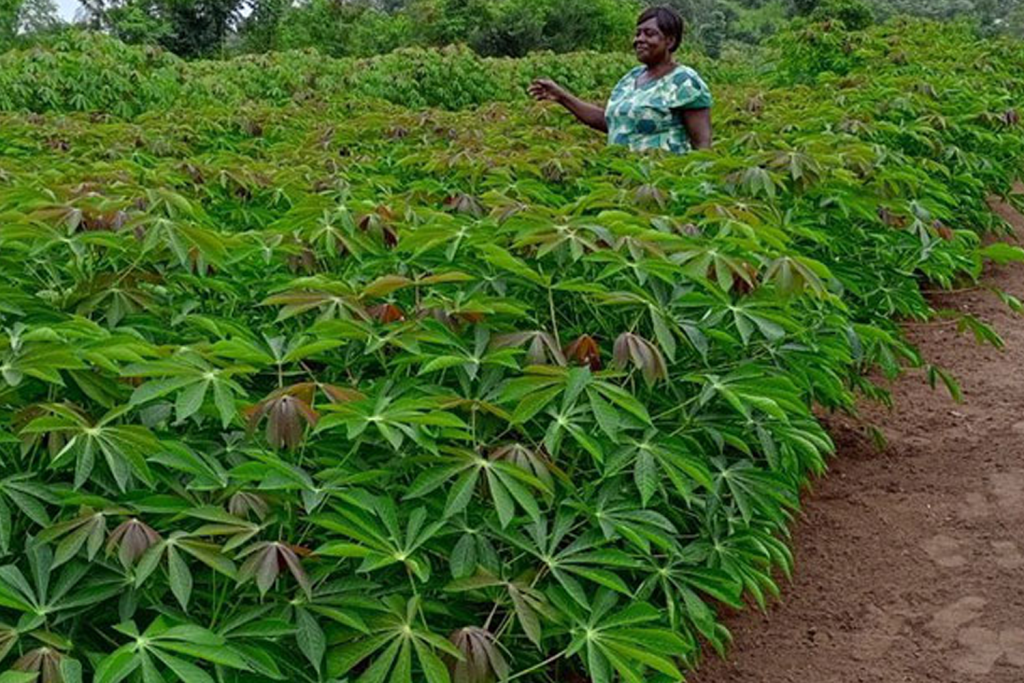
IITA scientists have played a leading role in developing improved cassava varieties which are disease- and pest-resistant, low in cyanide potential, drought-resistant, early maturing, and high yielding.
Related Resources
- NextGen Cassava Impact Report
- TAAT e-catalog: Biological Control of Cassava Mealybug
- Cassava Matters: Six Steps Weed Management Toolkit
- African Plant Nutrition Institute – Precision Fertilizer Recommendations for Cassava
- HarvestPlus Nigeria – Vitamin A Cassava Adoption
- Sasakawa Africa Association – Cassava Seed Entrepreneurship (Tu Emmanuel)
- Nigeria Cassava Industrialisation Case Studies (Niji Farms, Psaltry)
Related News
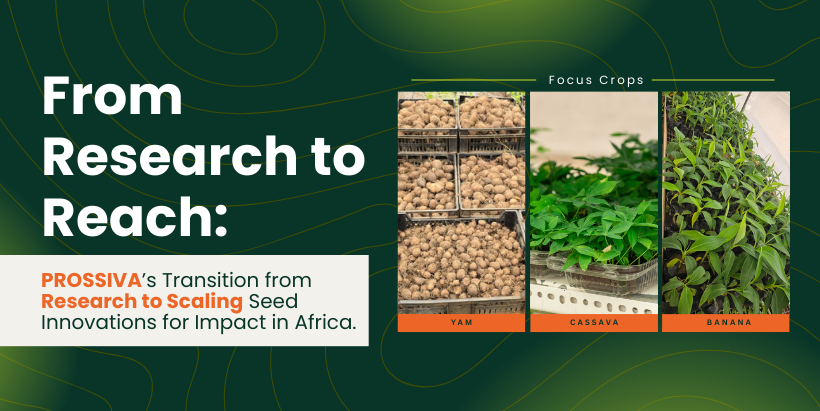
PROSSIVA’s transition from research to reach: Scaling seed innovations for impact in Africa
Vegetatively propagated crops (VPCs) such as cassava, yam, banana, and plantain are central to food security, livelihoods, and economic growth across Africa. Yet, limited access to quality, disease-free planting material
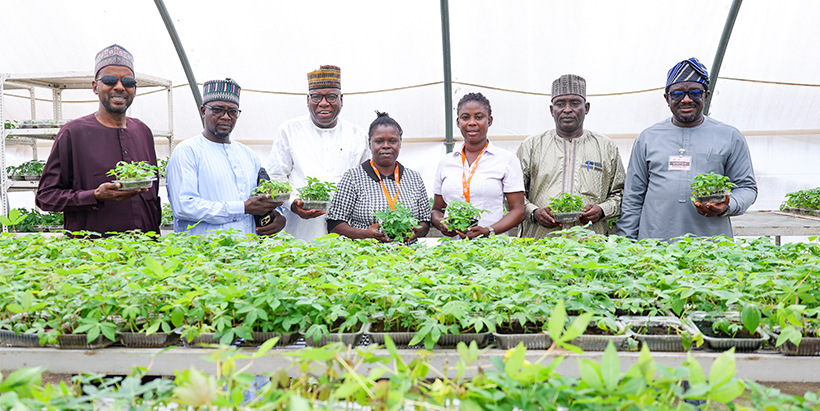
The Federal University of Agriculture and Entrepreneurship, explores partnership to build future agricultural entrepreneurs
Delegates from the newly established Federal University of Agriculture and Entrepreneurship, Bama (FUAEB), Borno State,
Research and innovation key to Africa’s agricultural resilience – Dr Kwakwa
Agriculture remains one of Africa’s greatest opportunities for economic transformation. As countries navigate changing climate
Partnerships and Collaboration
- Advanced Research Institutes: (Cornell University)
- CGIAR Centers: (Alliance of Bioversity International and CIAT, ICRISAT)
- NARS: (SARI, NRCRI, IAR/ABU, etc.)
- Development partners ( Gates Foundation, FCDO, World Bank)
- HarvestPlus, the African Cassava Agronomy Initiative and TAAT, regional networks and private seed enterprises.
- NextGen’s community of practice supports breeders in Nigeria, Uganda, Tanzania, Côte d’Ivoire, DR Congo, Ghana, Kenya, Mozambique, Sierra Leone and Zambia .