

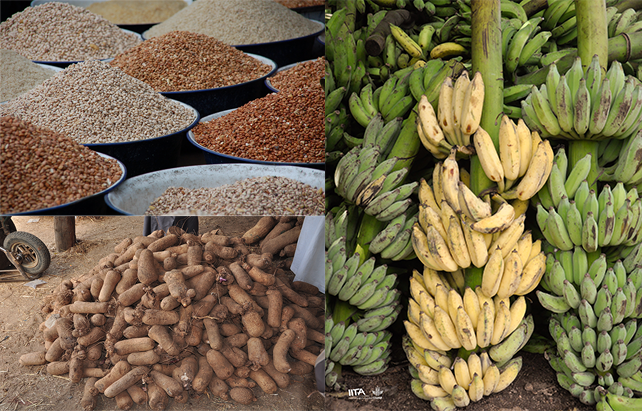
GHANA
Country Overview
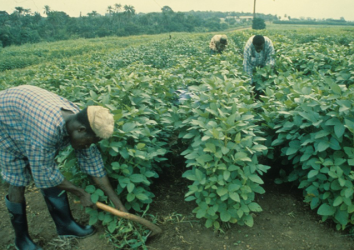
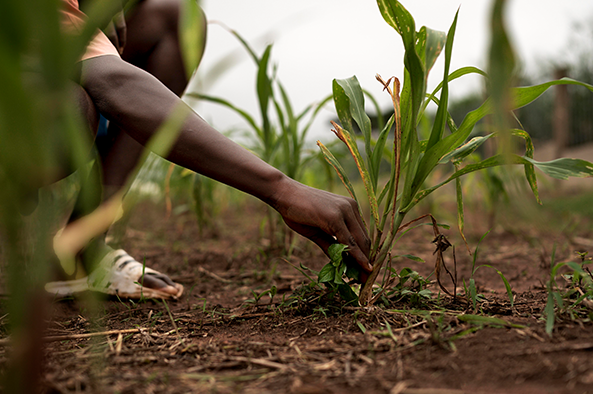
IITA has been active in the Republic of Ghana since 1979, when it established a working relationship with the International Maize and Wheat Improvement Center (CIMMYT), Crops Research Institute (CRI), and other government agencies to improve agriculture in the country. These collaborative efforts have helped release improved quality varieties of maize, cowpea, and soybean to farmers for planting.
Read more
The institute’s research on bananas and plantains, conducted in partnership with the CSIR and the University of Ghana, has yielded valuable insights into the cultivation of these crops in Ghana. With the assistance of IITA, numerous research projects are being carried out in the country. Some of them include the African Cassava Agronomy Initiative (ACAI) and the Purdue Improved Crop Storage project (PICS3), among others.
Locations
Accra
Accra, Ghana
Digital Address:
GA-037-5792
Tel: +233 303 931 023
Contacts
Dr Richard Asare
r.asare@cgiar.org
Afua Ohene-Ampofo
a.ampofo@cgiar.org
Tamale
Tamale, Ghana
ITA-Ghana(Tamale), 1st Road, off Sagnarigu Main Road, Near New Sports Stadium, Tamale, Ghana
Tel: +233 303 931 023
Contacts
Dr Richard Asare
r.asare@cgiar.org
Afua Ohene-Ampofo
a.ampofo@cgiar.org
Richard Asare
Country Representative
r.asare@cgiar.org
FOCUS AREAS
Agronomy and Sustainable Farming Practices
Supported by the CGIAR Sustainable Farming Program, this emphasises the adoption of sustainable agronomic techniques to boost productivity while ensuring soil health. This involves practical demonstrations of efficient farming practices, offering evidence-based fertilizer guidelines, and setting up long-term experiments to monitor soil conditions.
Combating Aflatoxin Contamination
Recognizing the severe health risks posed by aflatoxin contamination, the initiative prioritizes efforts aimed at reducing its prevalence. These efforts not only protect public health but also enhance the quality of agricultural products, thus improving trade opportunities for farmers.
Leveraging Biotechnology and Genome Editing
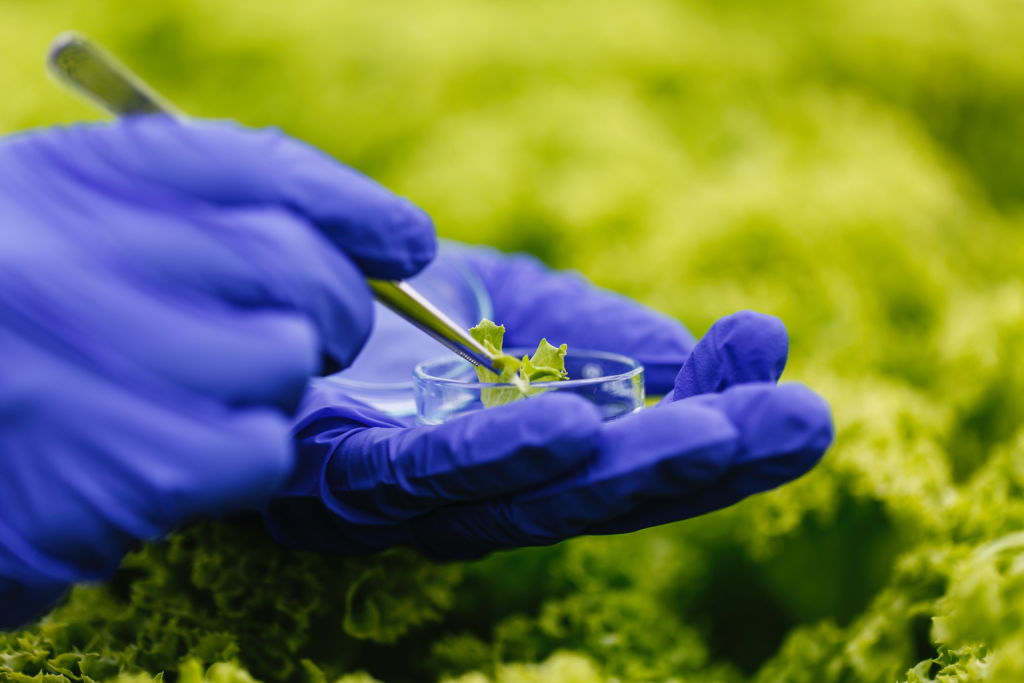
The research team is utilizing advanced biotechnological tools and genome editing techniques to develop resilient crop varieties. Such innovations are critical for creating crops that can effectively withstand various agricultural challenges, including pests, diseases, and climate change effects.
Breeding for Improved Varieties
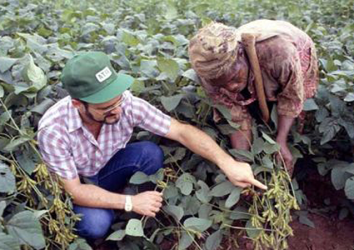
The initiative prioritizes specialized breeding programs geared towards key crops, such as soybean. These programs are designed to enhance the quality and productivity of these crops, addressing both economic and nutritional needs within local communities.
Strengthening Value Chains and Providing Quality Inputs
To empower farmers and bolster the agricultural sector, initiatives are being implemented to enhance the supply chain. This includes ensuring the availability of high-quality inputs, with a particular emphasis on soybean production, which is crucial for local and regional markets.
Conducting Extensive Field Research
Ongoing research activities are being conducted across various counties in Kenya. These efforts aim to collect valuable data and insights that will inform best practices, shape policies, and ultimately lead to a more robust agricultural sector capable of meeting the demands of the future.
Featured Projects
- Location: Burundi, Democratic Republic of Congo, Ghana, Kenya, Nigeria, Rwanda, Tanzania, Uganda
- Location: Benin, Ethiopia, Ghana, Kenya, Malawi, Mali, Nigeria, Tanzania, Uganda, Zambia
- Location: Democratic Republic of Congo, Ghana, Mali, Niger
Innovations
Black Soldier Fly (BSF) Circular Economy
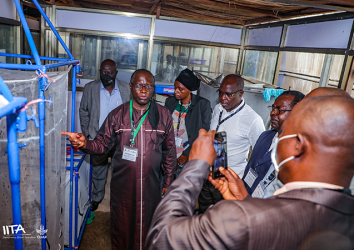
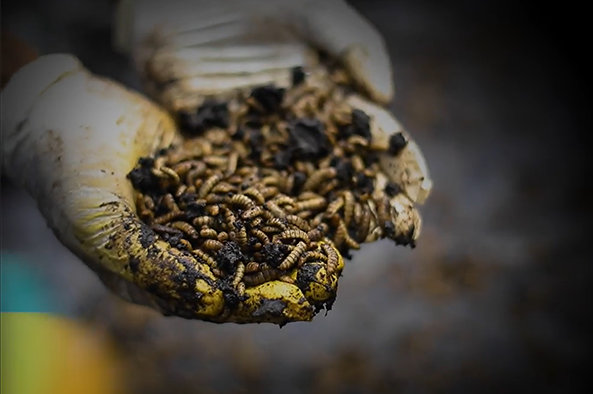
The BBEST project in Ghana is a breakthrough innovation in insect-based circular economy systems. It has established a mass-production facility for Black Soldier Fly larvae, transforming organic waste into high-value animal feed and organic fertilizer. Through the deployment of new business models, the project empowers youth agripreneurs to lead scalable enterprises in sustainable agriculture, enhancing both economic opportunities and environmental outcomes.
Evidence-Based Fertilizer Recommendations
Crop- and location-specific fertilizer recommendations for maize, rice, wheat, and potatoes. These evidence-based guidelines improve nutrient use efficiency, reduce input costs, and promote environmentally sustainable crop production.
IMPACT HIGHLIGHTS
IITA works with national partners, the private sector, and farming communities to deliver measurable impact in Ghana’s agri-food systems. Through research, innovation, and capacity development, our work supports safer food, improved crop productivity, healthier soils, stronger value chains, and informed decision-making. The impact highlights below present key results across priority areas.
62%
yield increase in Climate-Smart maize production
Climate-resilient maize varieties promoted by IITA have delivered yield gains of up to 62%, helping farmers adapt to drought stress and erratic rainfall while improving food security across multiple regions in Ghana.
180+
smallholder farmers supported with improved seed
IITA supported 180 farmers, including 70 women, with early-maturing and stress-tolerant maize varieties, strengthening decentralized seed access and accelerating adoption of improved technologies.
1,100+
farmers trained in CLimate-Samrt Agriculture
Through demonstration plots and field days, over 1,100 farmers have been trained on improved agronomic practices, stress-tolerant varieties, and climate-smart production systems that enhance productivity and resilience.
1
black soldier fly facility driving circular economy innovation
Under the BBEST project, one operational Black Soldier Fly mass-production facility has been established, converting organic waste into animal feed and organic fertilizer while creating new agribusiness and youth employment opportunities.
improved livelihoods across value chains
IITA’s integrated interventions—spanning improved varieties, seed systems, youth agribusiness incubation, and circular bioeconomy models—are contributing to higher incomes, better food security, and more resilient livelihoods for farming communities in Ghana.
Partners
IITA’s success in Ghana stems from strong partnerships with diverse organizations, allowing it to leverage local expertise and impact. This collaboration facilitates the testing and scaling of improved crop varieties, soil health interventions, and aflatoxin control throughout various counties.
- Global Forum on Agricultural Research (GFAR)
Publications
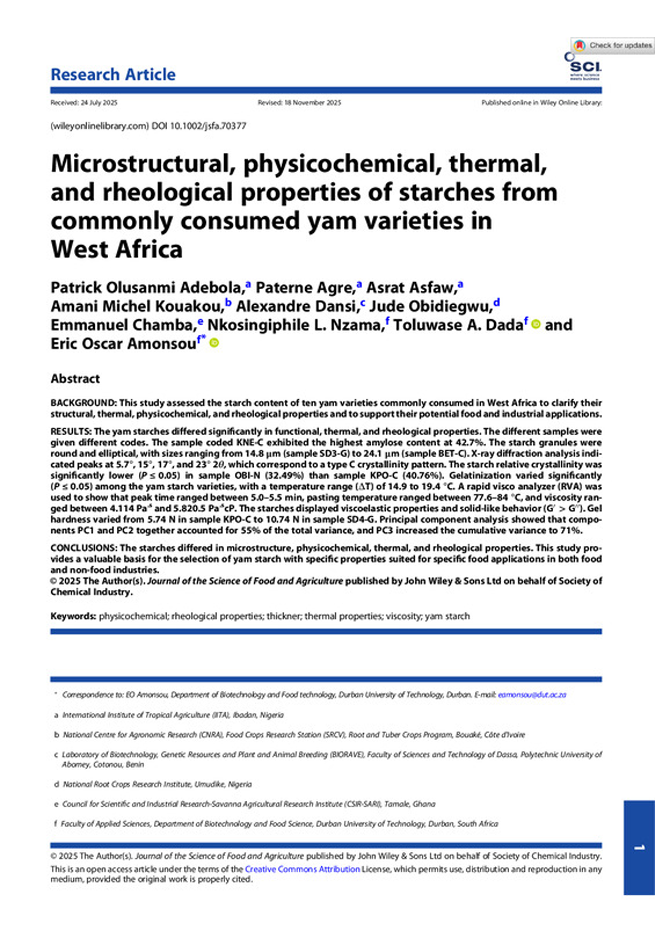
Microstructural, physicochemical, thermal, and rheological properties of starches from commonly consumed yam varieties in West Africa
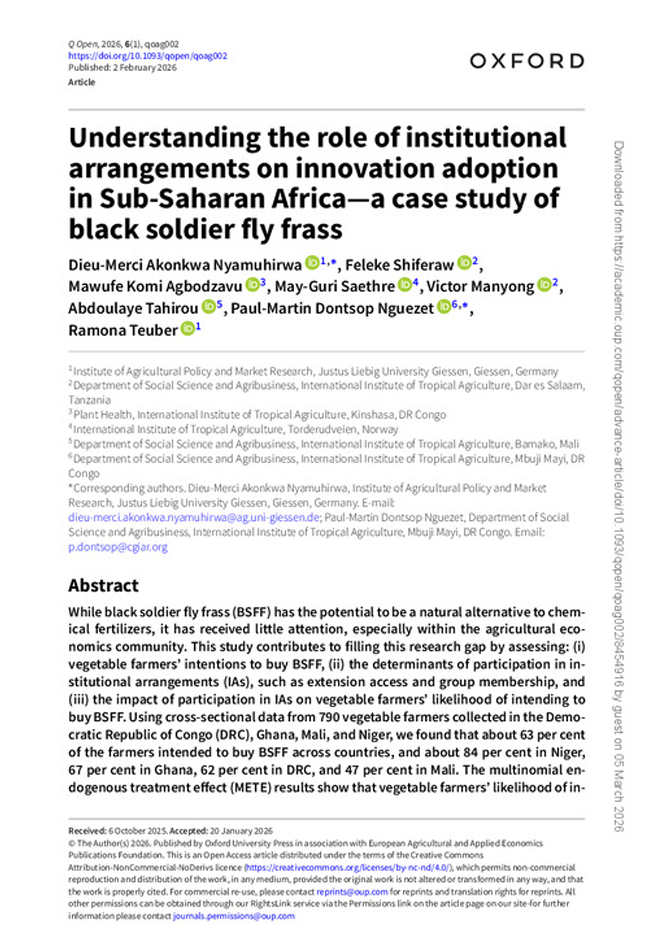
Understanding the role of institutional arrangements on innovation adoption in Sub-Saharan Africa—a case study of black soldier fly frass
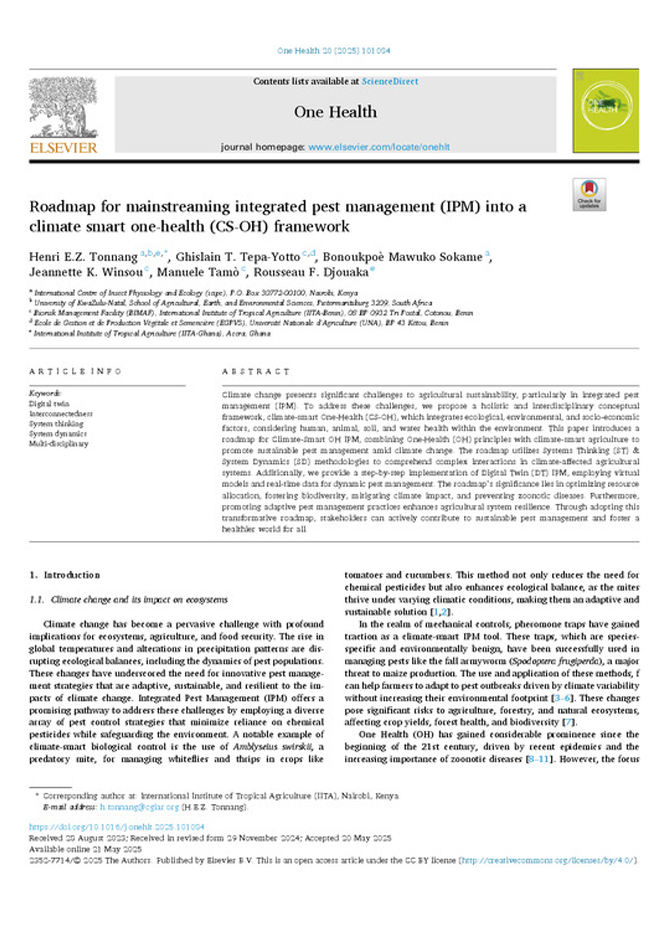
Roadmap for mainstreaming integrated pest management (IPM) into a climate smart one-health
Related News
See all news

Why Climate Finance Must Tackle Food Loss and Waste
Every harvest season in Africa, food is lost or wasted at staggering levels. Nigeria loses 45% of its 3.9 million tons of tomato harvest each year to postharvest losses and supply chain inefficiencies.
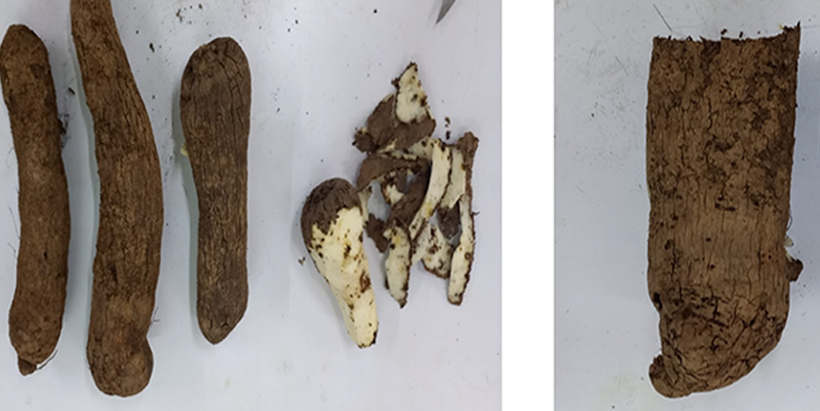
How nematodes are limiting productivity in yam farms across Ghana
In West Africa, yam production is far more than an agricultural activity. It is a
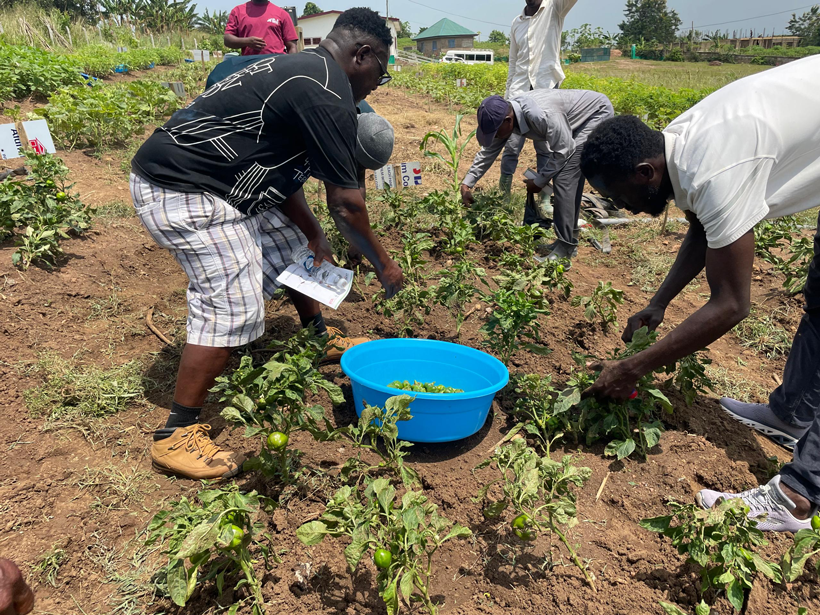
BBEST project introduces BSF technology to farmers in Nsawam
The IITA-led BBEST project in Ghana, in collaboration with BNARI, recently hosted farmer groups from
Media/Resources
Events
Explore key events and
engagements
Photos
Highlights from field activities and impact
Videos
Watch stories of innovation and transformation