

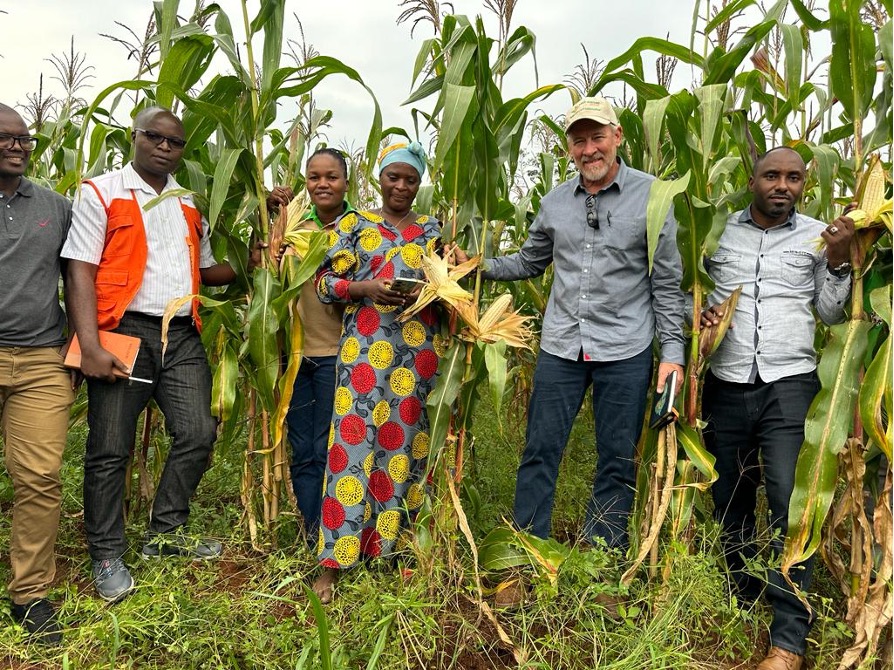
Maize Improvement Program & Innovation
Why the Maize improvement Program
Climate change and pest invasion are intensifying production risks for farmers. Many communities face declining yields, recurrent and severe drought, invasive pests, parasitic weeds, poor soil fertility, and limited access to quality seeds of improved varieties. By developing improved maize varieties and hybrids that withstand multiple stresses, the program helps farmers:
- Secure stable yields under harsh conditions – drought, fall armyworm, Striga, etc.
- Improve household nutrition and food security.
- Strengthen livelihoods and resilience.
Prof John Derera
Head of Maize Breeding & Innovation
j.derera@cgiar.org
Advancing Nutritional and Climate-Resilient Maize for Africa
Africa faces a growing challenge of food insecurity driven by poverty, malnutrition, and climate stress. Maize is a staple crop for millions, providing up to 50% of daily caloric intake in many countries. However, increasing drought, heat, soil degradation, and pest outbreaks threaten maize productivity and farmer livelihoods.
The IITA Maize Improvement Program (MIP) develops high-performing, climate-resilient maize varieties, hybrids and inbred line parents that improve productivity, nutrition, and resilience for smallholder farmers across sub-Saharan Africa.
Objective
To develop and deliver productive, high-yielding, climate-resilient maize open-pollinated varieties, hybrids and parent-inbred lines tailored to diverse agro-ecologies, farmers’ needs and market preferences across sub-Saharan Africa.
Focus Areas
Enhancing the performance of agricultural value chains through market systems development, private sector partnerships, and
scalable agribusiness solutions that improve livelihoods and food security.
Productivity & Yield
Improving grain yield and agronomic performance.
Stress Tolerance
Tolerance to drought, heat, insect pests, diseases, mycotoxin, Striga, and low soil fertility.
Biofortification
Enhancing provitamin A, iron, and zinc content to address micronutrient deficiencies and improve human nutrition.
Adaptation
Development of varieties targeting specific agro-ecological zones.
Seed systems and delivery
Strengthening delivery through provision of breeder seed of parents of hybrids and open pollinated varieties
See more
backstopping to the partners including National Agricultural Research & Extension Systems (NARES) and private seed companies to scale up seed production and ensure wide dissemination of seeds of improved open-pollinated maize varieties and hybrids.
Capacity
strengthening partners’ capacity through breeding germplasm exchange, people’s development and training.
Key Activities
The IITA maize program drives innovation through integrated activities including:
- Breeding & Testing Pipelines:
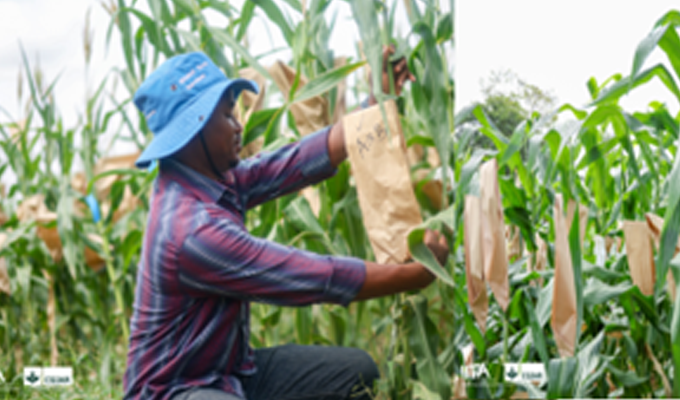
Development of yellow, orange and white maize hybrids, inbred lines, and improved open-pollinated varieties tested across diverse environments.
- Capacity Building:
Training students, researchers, scientists, technicians, extension agents, and seed producers.
- Seed Systems Development:
Partnerships to produce and distribute quality seeds.
- Farmer Engagement:
On-farm trials are conducted through a structured public-private network, with the IITA maize program providing smallholders in sub-Saharan Africa a range of valuable new varieties to experiment with and learn about.
- Seeds Exchange: germplasm deployment through Regional Variety Trials, and Inbred Line Trials.
- Innovation & Tools: Use genomic selection, molecular markers, doubled haploid technology, and digital phenotyping tools.
Achievements
Over the past 25 years, the IITA maize program achievements include:
- 250+ maize varieties released across Africa, about 40% with tolerance to drought, Striga hermonthica, and low soil nitrogen.
- Millions of smallholder farmers reached
- Multi-country testing networks established
- Seed of inbred lines shared annually
- Extensive capacity building across Sub-Saharan Africa
- Hundreds of private seed companies and National Research and Extension System partners engaged.
- Dozens of regional maize variety and inbred line trials distributed annually.
IMPACT CASES
Ethiopia: Seed of Hope (Transforming Lives and Livelihoods Through Resilient Maize)
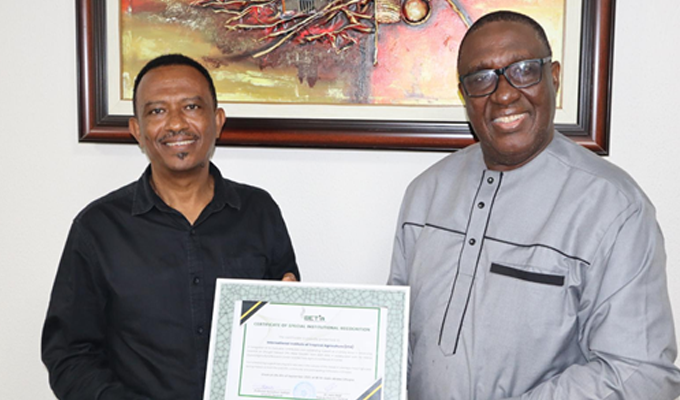
In 2025, the Bio and Emerging Technology Institute (BETin) achieved a major milestone by releasing four new maize varieties developed in partnership with the IITA.
See more
These varieties are designed to meet Ethiopia’s most urgent needs—tolerance to drought and fall armyworm, while being rich in provitamin A to fight hidden hunger. New drought-tolerant and nutrient-rich maize varieties are helping farmers rebuild their livelihoods. Farmers’ quote: “This maize grows even when the rains are poor.”
Ghana: From Low Yield to Food Security
In Ghana, smallholder farmer Ama Mensah had struggled with low maize yields due to drought and poor soil fertility. After adopting the drought-tolerant and nutrient-enriched maize variety developed by IITA
See more
her harvest increased from 1.2 tons per hectare to over 3 tons per hectare. Ama now has enough produce to feed her family year-round and sell surplus in the local market, improving her income and food security.
Increased yield from 1.2 t ha-1 to over 3 t ha-1 using improved varieties.
Farmers’ quote: “This new maize variety has changed our lives.”
The Gambia: Better Diet for Next Generation
The Pro-Vitamin A (PVA) enhanced maize variety, PVA Synthetic 13 (PVASyn13), developed by scientists at IITA–CGIAR, is gaining widespread recognition for its high-yielding performance and remarkable health benefits.
See more
The Gambia is already reporting major improvements in nutrition and increased agricultural productivity following the widespread adoption of the variety developed originally to combat vitamin A deficiency. Scientists have since discovered that PVASyn13 is also drought-tolerant and resilient against Striga weed, allowing it to thrive in harsh and low-input conditions common among smallholder farmers in sub-Saharan Africa.
Modou Sabally, a seed scientist with the National Seed Secretariat in the Gambia, explained that strong government interest in PVASyn13 prompted collaboration with development projects to scale production and ensure quality. Biofortified provitamin A maize varieties are widely cultivated by farmers and have been approved for use in the national school feeding program, improving child nutrition.
Farmers’ quote: “This maize helps us feed our children better”.
Related Resources
Related News

Enhancing access to quality seed by strengthening connections between farmers and local input suppliers
Lack of quality seeds and difficulties getting essential agricultural inputs have been significant challenges for farmers across Burundi. The AID-I GLR project – known as Kugwiza Project in Burundi – is addressing this critical need

IITA, Democratic Republic of the Congo strengthen agricultural partnership with new MoU
As part of efforts to strengthen food security in the Democratic Republic of Congo (DRC),
OAU students explore global development diplomacy at IITA
Students of the Department of International Relations, Obafemi Awolowo University (OAU), Ile-Ife, visited the IITA headquarters
Partnerships and Collaboration
The IITA Maize Improvement Program operates through a broad network of strategic partnerships that accelerate the development, testing, dissemination, and adoption of improved maize technologies across sub-Saharan Africa and beyond. These collaborations involve CGIAR Centers, National Agricultural Research and Extension Systems (NARES), private seed companies, advanced research institutions, universities, NGOs, and development agencies. The partnerships strengthen breeding efficiency, seed systems, capacity development, and scaling of climate-resilient maize varieties.
- CGIAR centers: Alliance of Bioversity–CIAT; CIP; CIMMYT, AfricaRice, ICRISAT, IFPRI
- National research & extension partners (NARES): NARO (Uganda); TARI (Tanzania); KALRO (Kenya); ISABU (Burundi); RAB (Rwanda); INERA (DR Congo); NIHORT (Nigeria); CRI (Ghana); CNRA (Côte d’Ivoire)
- Private sector partners: Seed Co; East African Seed; Premier Seeds, Masindi Seed, A to Z Seed Company
- Advanced research institutions (ARI): African Agricultural Technology Foundation (AATF); Biosciences eastern and central Africa (BecA-ILRI Hub);
- Universities: Makerere University (Uganda); Haramaya University, Ethiopia; Sokoine University of Agriculture, Tanzania; University of Ibadan (Nigeria); Ahmadu Bello University, Nigeria