


Nigeria
COUNTRY OVERVIEW
The IITA Headquarters was founded in 1967 in Ibadan, Nigeria, and we focus on food staples that are highly important to African farmers. The IITA headquarters is situated on approximately 1,000 hectares that include a 300-hectare forest reserve that preserves some of the region’s indigenous flora and fauna.
Read more
There are extensive research facilities on campus including the Biosciences Center, the Genetic Resources Center, the Germplasm Health Unit, the Virology and Molecular Diagnostics Unit, the Biometrics Unit, and a range of laboratories for Analytical Services, Nematology, Pathology, Geospatial Mapping, Soil Microbiology, Crop Breeding, Entomology, and Food and Nutrition.
Locations
HQ (Ibadan)
Headquarters, Ibadan
Social media handles:
X: @IITA_CGIAR;
Facebook: @IITA_CGIAR
Contacts
Prof Michael Abberton
m.abberton@cgiar.org
Odiambo Eveline
e.odiambo@cgiar.org
Abuja
Abuja, Nigeria
Social media handles:
X: @IITA_CGIAR;
Facebook: @IITA_CGIAR
Contacts
Prof Michael Abberton
m.abberton@cgiar.org
Odiambo Eveline
e.odiambo@cgiar.org
Kano
Kano, Nigeria
Social media handles:
X: @IITA_CGIAR;
Facebook: @IITA_CGIAR
Contacts
Prof Michael Abberton
m.abberton@cgiar.org
Odiambo Eveline
e.odiambo@cgiar.org
Onne
Onne, Nigeria
Oyo Road, Ibadan, Oyo State, Nigeria. PO Box 5320, Ibadan, Oyo State, Nigeria
Tel: +234 2 241 2626
Social media handles:
X: @IITA_CGIAR;
Facebook: @IITA_CGIAR
Contacts
Prof Michael Abberton
m.abberton@cgiar.org
Odiambo Eveline
e.odiambo@cgiar.org
Prof Michael Abberton
Director, Western Africa Hub
M.Abberton@cgiar.org
FOCUS AREAS
Maize
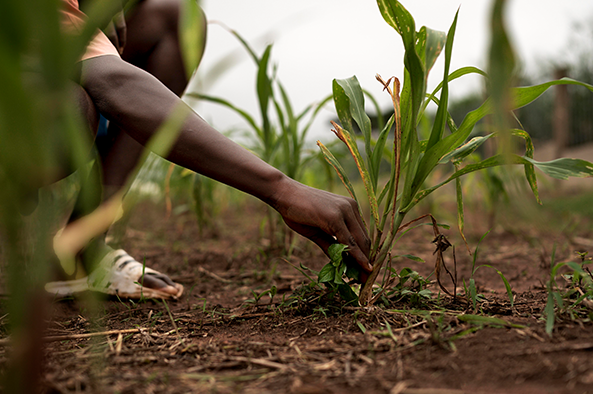
Our maize research focuses on improving productivity, stress resilience, and pest/disease resistance, ensuring stable yields and enhanced food security for Nigerian farmers.
Cassava
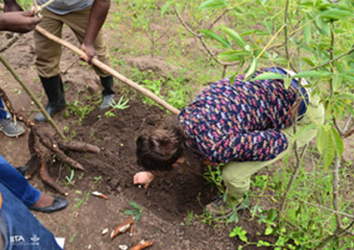
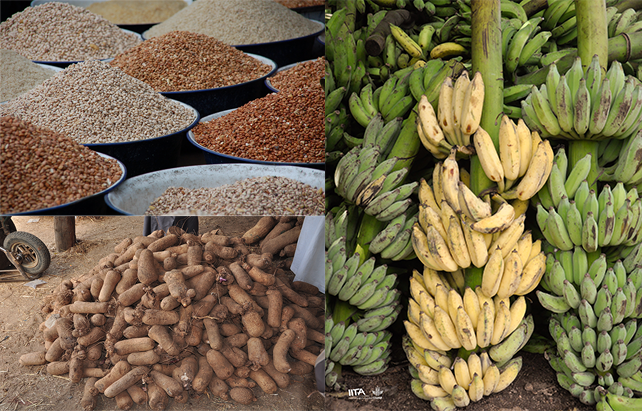
Our cassava research targets the development of improved varieties with dual resistance to major diseases, enhanced nutritional quality, and farmer-preferred traits. IITA works closely with national and regional partners to accelerate breeding, deploy clean planting materials, and strengthen cassava seed systems for increased productivity and climate resilience.
Cowpea
Targeted cowpea research enhances resistance to pests and drought, improves nutritional quality, and supports sustainable systems through biological nitrogen fixation.
Enhancing yam productivity, quality, and resilience
Yam research focuses on improving varieties for higher yields, resistance to pests and diseases, and better post-harvest quality. Through breeding, agronomy, and seed system innovations, IITA contributes to strengthening yam value chains and ensuring food and income security for farming communities.
Leveraging digital innovations to transform agricultural systems
Our digital agriculture research integrates data-driven tools, mobile applications, and decision-support systems to improve farm management, extension delivery, and technology adoption. These innovations support farmers, extension agents, and policymakers with timely, location-specific information to enhance productivity, climate resilience, and impact at scale.
Featured Projects
- Location: Burundi, Democratic Republic of Congo, Ghana, Kenya, Nigeria, Rwanda, Tanzania, Uganda
- Location: Côte d’ivoire, Ethiopia, Kenya, Nigeria, Senegal, Sudan, Tanzania, Zambia, Zimbabwe
- Location: Benin, Ethiopia, Ghana, Kenya, Malawi, Mali, Nigeria, Tanzania, Uganda, Zambia
INNOVATION
Aflasafe
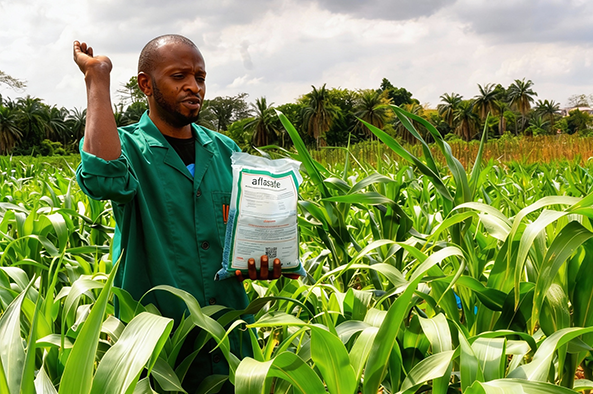
A scientifically proven, cost-effective biological product developed to significantly reduce aflatoxin contamination in staple crops. Aflasafe KE01 improves food safety, protects consumer health, and enables farmers to meet national and international market standards.
NoduMax
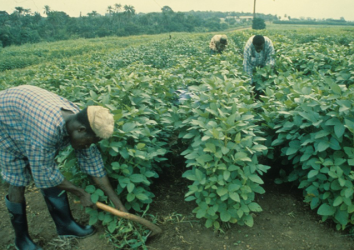
A bio-inoculant designed to enhance biological nitrogen fixation in legume crops, particularly soybean. NoduMax improves soil fertility, increases crop yields, and reduces dependence on synthetic nitrogen fertilizers.
Akilimo
A digital advisory tool that provides farmers with location-specific agronomic recommendations, particularly for cassava production. Akilimo supports informed decision-making, helping farmers optimize inputs and improve productivity.
IMPACT HIGHLIGHTS
International Institute of Tropical Agriculture delivers significant impact in Nigeria by advancing crop productivity, improving food safety, and strengthening agricultural systems. Through cutting-edge research, digital innovation, and strong partnerships, IITA translates science into scalable solutions that enhance livelihoods, food security, and economic growth.
20,000+
farmers actively using Aflasafe
Adoption is scaling across maize and groundnut systems, strengthening safer food production.
70,000
farming households benefiting from Aflasafe
Smallholder farmers are improving incomes and food safety through adoption of biocontrol technology.
60,000+
farmers trained under Feed-the-Future Nigeria Activity
IITA, in collaboration with partners, delivered training in climate-smart agriculture and good agronomic practices across northern Nigeria.
digital tools improving farmer decision-making
Innovations like Akilimo and GoSeed provide farmers with data-driven insights and access to inputs.
improved crop varieties enhancing food security
Research on major staples supports increased productivity and resilience for farmers across Nigeria.
seed systems strengthening access to quality inputs
Platforms like Seed Tracker and GoSeed improve efficiency, transparency, and availability of certified seeds.
PARTNERS
IITA’s success in Nigeria is built on strong partnerships that leverage local expertise to scale improved crop varieties, soil health solutions, and aflatoxin control across multiple states.
- Federal Ministry of Livestock Development (FMLD)
- African Development Bank (AfDB)
- Federal Ministry of Agriculture and Rural Development (FMARD)
- Harvestfield Industries Limited
- Global Convergence for Africa (GCA)
- Global Center on Adaptation (GCA)
- Japan International Cooperation Agency (JICA)
- The Gates Foundation
- World Bank
Publications
Diversity, recombination and misclassification in the family Geminiviridae: insight from bioinformatics analysis
Sand knobwood Zanthoxylum leprieurii as a keystone resource for birds in Nigeria…
Market channel and other drivers of tomato farmer production and handling practices in Nigeria
Related News
See all news

Why Climate Finance Must Tackle Food Loss and Waste
Every harvest season in Africa, food is lost or wasted at staggering levels. Nigeria loses 45% of its 3.9 million tons of tomato harvest each year to postharvest losses and supply chain inefficiencies.
The Federal University of Agriculture and Entrepreneurship, explores partnership to build future agricultural entrepreneurs
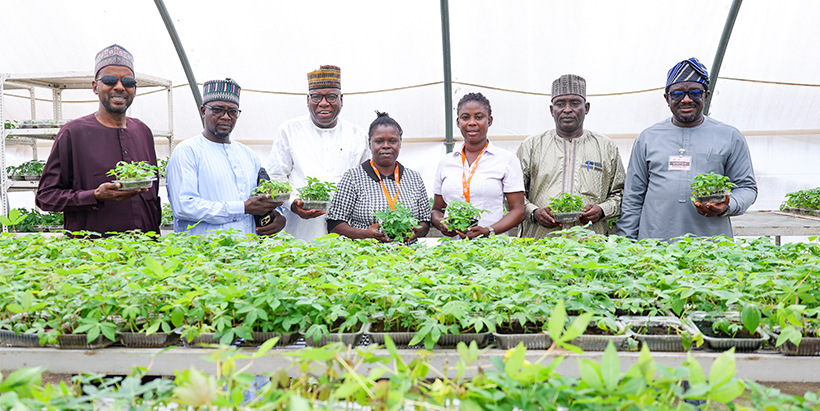
Delegates from the newly established Federal University of Agriculture and Entrepreneurship, Bama (FUAEB), Borno State,
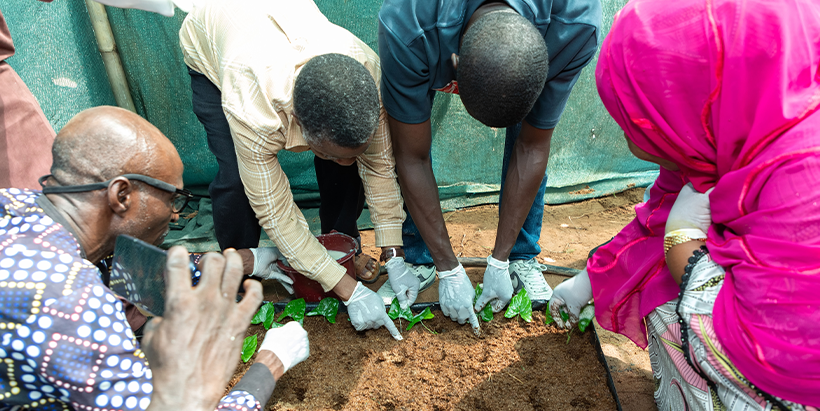
PROSSIVA strengthens Nigeria’s seed yam industry through capacity-building for seed enterprises
Access to quality seed remains one of the biggest constraints to yam productivity in Africa.
MEDIA/RESOURCES
Events
Explore key events and
engagements
Photos
Highlights from field activities and impact
Videos
Watch stories of innovation and transformation