
IITA partners to deliver a new training course in gene editing for African scientists
June 10, 2022
The International Institute of Tropical Agriculture (IITA) is pleased to announce its partnership with the University of California, Davis (UC Davis), the Innovative Genomics Institute (IGI) at UC Berkeley, and the African Orphan Crops Consortium (AOCC), to introduce a new course on gene editing as part of the African Plant Breeding Academy (AfPBA). The course will empower 80-100 African scientists to apply the CRISPR-based gene-editing technologies to improve food crops important for African nutritional security for the essential traits.
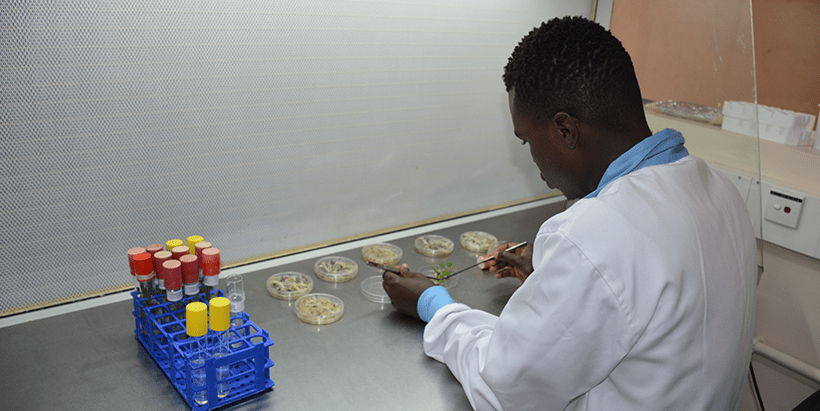 CRISPR holds enormous promise for making precise desired genetic changes, enabling plant breeders to rise to the challenges of a changing climate and rapidly growing population at the demanded pace.
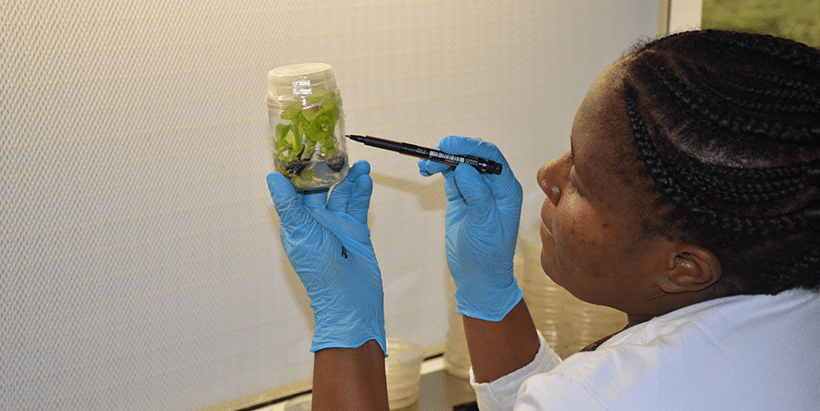 This program will be the first CRISPR hands-on training course in Africa and will run for five years to empower 80-100 scientists to use the CRISPR technology for crop improvement. Clustered Regularly Interspaced Short Palindromic Repeats (CRISPR) refers to a gene-editing approach that enables specific, directed changes to DNA. CRISPR was the basis for the 2020 Nobel Prize in Chemistry to biochemist Jennifer Doudna of UC Berkeley for her discovery of this precision tool for genome editing, together with French microbiologist Emmanuelle Charpentier. Professor Doudna founded the IGI, a partnership between UC Berkeley and UC San Francisco, to advance genome research for a better world. The AfPBA is an initiative of the AOCC developed and coordinated by the UC Davis Seed Biotechnology Center.
Thanks to the generous support of Bayer, Syngenta, and other donors, attendees are invited on full scholarship based on applications for each class.
The AfPBA CRISPR Course will launch with its first cohort in January 2023. The Call for Applications for AfPBA CRISPR Course Class I will be issued in the last quarter of 2022.
For more information, see the AfPBA website (https://pba.ucdavis.edu/PBA_in_Africa/) or contact Dr. Rita Mumm (ritamumm@illinois.edu), AOCC Director of Capacity Development and Mobilization, or Dr Leena Tripathi (L.Tripathi@cgiar.org), Director, Eastern Africa Hub, IITA.
Partners in delivering the AfPBA CRISPR course
This program will be the first CRISPR hands-on training course in Africa and will run for five years to empower 80-100 scientists to use the CRISPR technology for crop improvement. Clustered Regularly Interspaced Short Palindromic Repeats (CRISPR) refers to a gene-editing approach that enables specific, directed changes to DNA. CRISPR was the basis for the 2020 Nobel Prize in Chemistry to biochemist Jennifer Doudna of UC Berkeley for her discovery of this precision tool for genome editing, together with French microbiologist Emmanuelle Charpentier. Professor Doudna founded the IGI, a partnership between UC Berkeley and UC San Francisco, to advance genome research for a better world. The AfPBA is an initiative of the AOCC developed and coordinated by the UC Davis Seed Biotechnology Center.
Thanks to the generous support of Bayer, Syngenta, and other donors, attendees are invited on full scholarship based on applications for each class.
The AfPBA CRISPR Course will launch with its first cohort in January 2023. The Call for Applications for AfPBA CRISPR Course Class I will be issued in the last quarter of 2022.
For more information, see the AfPBA website (https://pba.ucdavis.edu/PBA_in_Africa/) or contact Dr. Rita Mumm (ritamumm@illinois.edu), AOCC Director of Capacity Development and Mobilization, or Dr Leena Tripathi (L.Tripathi@cgiar.org), Director, Eastern Africa Hub, IITA.
Partners in delivering the AfPBA CRISPR course
CRISPR holds enormous promise for making precise desired genetic changes, enabling plant breeders to rise to the challenges of a changing climate and rapidly growing population at the demanded pace.
About the AfPBA CRISPR course
The AfPBA CRISPR course aims to train African scientists engaged in crop improvement, particularly those working in national research institutions desiring to implement or initiate gene-editing programs. The course is an intensive 6-week program, delivered in three 2-week sessions at IITA hosted by B4A/ILRI hub and World Agroforestry in Nairobi, Kenya, over a period of a year and can accommodate 20 participants per course offering. It focuses on the steps to accomplish gene editing from design through validation. Using banana as a model plant, participants formulate objectives and targets, design plasmids, perform trait delivery to cells, regenerate plants, and validate results. The course prepares participants to develop key traits (e.g., nutritional content, disease resistance, longer shelf life) in crops aligned with their national and institutional priorities.Uniqueness of AfPBA CRISPR course
This program involves post-course mentorship and ongoing support for sustained lab productivity beyond course completion and the founding of translational partnerships for commercialization and value chain development. The course leverages genome sequence information being amassed by the AOCC on 101 African orphan crops, including a diversity of vegetables, fruits, nuts, legumes, oilseeds, cereals, and tree species. Furthermore, it emphasizes the role of CRISPR in the overall scheme of improved cultivar development and in addressing the needs of smallholder farmers. It will support a Community of Practice strongly linked to the disciplines required for product development and launch, improved variety distribution, and farmer adoption.Who should attend?
We invite applications from Molecular Biologists/Biotechnologists currently engaged in national programs in African institutions that are willing to embark on gene editing for crop improvement. Priority will be given to those from countries where regulatory guidelines for gene editing are either in place or under development and where AfPBA plant breeder alumni are working, as we promote the formation of multi-disciplinary teams in crop improvement. Attendees can be working on any crop.The course background
This program will be the first CRISPR hands-on training course in Africa and will run for five years to empower 80-100 scientists to use the CRISPR technology for crop improvement. Clustered Regularly Interspaced Short Palindromic Repeats (CRISPR) refers to a gene-editing approach that enables specific, directed changes to DNA. CRISPR was the basis for the 2020 Nobel Prize in Chemistry to biochemist Jennifer Doudna of UC Berkeley for her discovery of this precision tool for genome editing, together with French microbiologist Emmanuelle Charpentier. Professor Doudna founded the IGI, a partnership between UC Berkeley and UC San Francisco, to advance genome research for a better world. The AfPBA is an initiative of the AOCC developed and coordinated by the UC Davis Seed Biotechnology Center.
Thanks to the generous support of Bayer, Syngenta, and other donors, attendees are invited on full scholarship based on applications for each class.
The AfPBA CRISPR Course will launch with its first cohort in January 2023. The Call for Applications for AfPBA CRISPR Course Class I will be issued in the last quarter of 2022.
For more information, see the AfPBA website (https://pba.ucdavis.edu/PBA_in_Africa/) or contact Dr. Rita Mumm (ritamumm@illinois.edu), AOCC Director of Capacity Development and Mobilization, or Dr Leena Tripathi (L.Tripathi@cgiar.org), Director, Eastern Africa Hub, IITA.
Partners in delivering the AfPBA CRISPR course
Contributed by
Recent stories
No items found