
Uganda
COUNTRY OVERVIEW
IITA was established in 1992, in Kampala, Uganda with research stations in Sendusu, Kawanda and Serere. It has since contributed to the national development by working with and supporting government agricultural research and development agenda mainly through working with the National Agriculture Research Organization (NARO),
Read more
Ministry of Agriculture, Animal Industry and Fisheries (MAAIF) in several areas including, capacity building, crop breeding, agronomy, plant health, food safety, enhancing seed systems, mainstreaming climate smart agriculture, and other research areas. In 2022, IITA made a strategic decision and invested 2 billion Uganda shillings into office and laboratory infrastructure development. Additionally, IITA hosts Africa Rice and International Centre of Insect Physiology and Ecology (ICIPE) and provides research facilities for the Alliance of Bioversity International and CIAT (ABC), enhancing its role in agricultural research and development in the region.
Location
Kampala
Kampala, Uganda
Namulonge, – Sendusu 9Km, along Gayaza-Zirobwe Road, PO Box 7878, Kampala, Uganda
Tel: +256 (0) 414675148
Social media handles: X: @IITA_Uganda; Facebook: @IITA-Uganda
Contacts
George Mahuku
g.mahuku@cgiar.org
Mary Christine Ayuji
c.ayuji@cgiar.org

FOCUS AREAS
Improving productivity, resilience, and market value of Banana
IITA’s banana research focuses on developing high-yielding, pest- and disease-resistant varieties suited to East Africa. The program integrates advanced breeding, seed systems, and digital phenotyping to enhance food security, farmer incomes, and regional trade while safeguarding banana production against emerging threats such as Fusarium wilt and Banana Bunchy Top Disease.
Developing resilient cassava varieties and sustainable seed systems
Our cassava research targets the development of improved varieties with dual resistance to major diseases, enhanced nutritional quality, and farmer-preferred traits. IITA works closely with national and regional partners to accelerate breeding, deploy clean planting materials, and strengthen cassava seed systems for increased productivity and climate resilience.
Advancing climate-smart coffee systems for improved livelihoods
IITA supports sustainable coffee production through climate-smart agriculture, agroforestry, and digital advisory tools. Research emphasizes improved varieties, shade management, soil and water conservation, and decision-support technologies that help smallholder farmers adapt to climate variability while improving yields, quality, and incomes.
Enhancing yam productivity, quality, and resilience
Yam research focuses on improving varieties for higher yields, resistance to pests and diseases, and better post-harvest quality. Through breeding, agronomy, and seed system innovations, IITA contributes to strengthening yam value chains and ensuring food and income security for farming communities.
Leveraging digital innovations to transform agricultural systems
Our digital agriculture research integrates data-driven tools, mobile applications, and decision-support systems to improve farm management, extension delivery, and technology adoption. These innovations support farmers, extension agents, and policymakers with timely, location-specific information to enhance productivity, climate resilience, and impact at scale.
Featured Projects
- Location: Burundi, Democratic Republic of Congo, Ghana, Kenya, Nigeria, Rwanda, Tanzania, Uganda
- Location: Benin, Ethiopia, Ghana, Kenya, Malawi, Mali, Nigeria, Tanzania, Uganda, Zambia
- Location: Nigeria, Tanzania, Uganda
- Location: Burkina Faso, Mali, Senegal, Uganda
INNOVATION
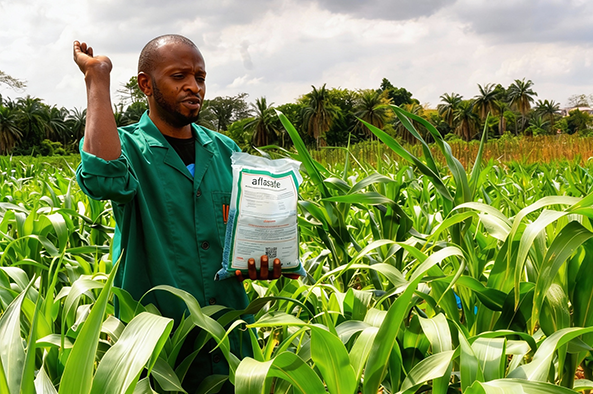
Aflasafe KE01
A scientifically proven, cost-effective biological product developed to significantly reduce aflatoxin contamination in staple crops. Aflasafe KE01 improves food safety, protects consumer health, and enables farmers to meet national and international market standards.
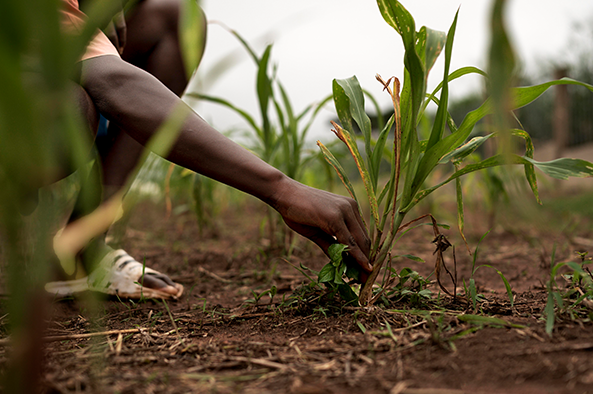
Evidence-Based Fertilizer Recommendations
Crop- and location-specific fertilizer recommendations for maize, rice, wheat, and potatoes. These evidence-based guidelines improve nutrient use efficiency, reduce input costs, and promote environmentally sustainable crop production.
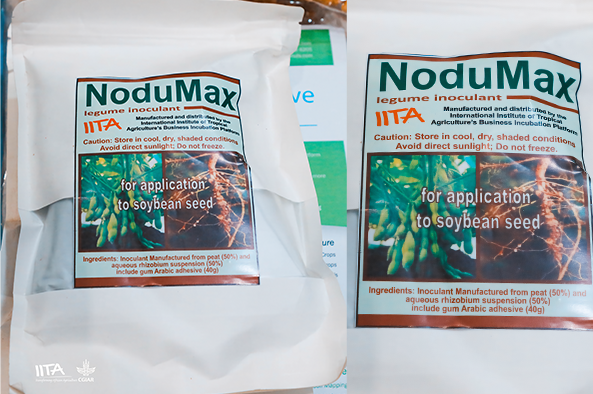
Biofix Inoculant Promotion
Promotion and adoption of Biofix inoculants as a critical input for soybean production. Biofix enhances biological nitrogen fixation, improves soil fertility, and increases soybean yields while reducing reliance on synthetic fertilizers.
IMPACT HIGHLIGHTS
IITA delivers measurable impact in Uganda through crop improvement, climate-smart agriculture, seed systems, and youth-focused innovations. Working with national and regional partners, our research translates into improved varieties, scalable technologies, and increased resilience and incomes for farmers and value-chain actors. The impact highlights below showcase key results across priority programs.
improved NARITA matooke hybrids released
Jointly developed with NARO and released after rigorous testing, these hybrids offer higher productivity, improved fruit quality, and greater resilience for banana farmers.
years of national breeding excellence supported
IITA supported the establishment of NARO’s banana breeding program, now marking 30 years of sustained investment in national and regional research capacity.
coordinating six countries in a regional breeding network
Uganda, Tanzania, Kenya, Rwanda, DRC, and Burundi collaborating on banana improvement.
Key traits unlocked through genomics
QTL and KASP SNP markers identified for fruit quality, yield, and resistance to major pests and diseases.
Multiple molecular markers developed
QA/QC tools for parentage testing, hybrid identity, and seed purity assurance.
Faster breeding through digital innovation
Genomic prediction, high-throughput in-vitro phenotyping, and image-based weevil screening deployed.
plantlets rapid-propagation capacity
A cost-effective stem production platform established using the Kitovu Janni technique.
cassava varieties released regionally
Elite IITA germplasm enabled 2 new releases with NARO, 10+ earlier releases, and new varieties across Tanzania, Rwanda, Kenya, and Burundi.
molecular markers validated
32 fingerprinting markers and 4 trait-specific markers support marker-assisted breeding for resilience, quality, and nutrition.
regional partners reached
Elite cassava germplasm shared across East and Central Africa to accelerate national breeding programs.
Dual disease-resistant germplasm developed
Germplasm combining resistance to CBSD and CMD strengthens resilience in cassava breeding.
smallholder households reached
Farmers across 23 districts supported in coffee, maize, vanilla, and bean systems.
improved coffee seedlings distributed
KR1–KR10 planting materials delivered through private-sector partnerships.
biodiversity hotspots restored
Ecosystems rehabilitated in refugee settlements, benefiting refugees and host communities.
extension officers retooled
Public and private officers trained to deliver climate-smart advisory services.
digital decision-support tools deployed
Tools supporting farmers with data-driven climate-smart recommendations.
producer organizations strengthened
Capacity built in business management, value addition, CSA practices, and market linkages.
increase in CSA adoption
Improved practices drove a 75% increase in household income.
local bean seed enterprises supported
Quality Declared Seed systems strengthened, engaging 200 women and youth farmers.
of households report better livelihoods
Families experienced improved wellbeing, health, and household resilience.
biocontrol product developed and registered
Aflasafe UG01 validated for aflatoxin control in maize, sorghum, and groundnut.
stakeholders trained
Scientists, farmers, and value chain actors trained on Aflasafe use and aflatoxin mitigation protocols.
awareness workshops delivered
Over 2,000 flyers distributed and a short video produced to promote aflatoxin awareness across value chains.
private-sector partners engaged
NARO Holdings Ltd and Shamba Bora Ltd selected to manufacture, distribute, and scale Aflasafe.
NARS staff trained
Capacity built in BBTV identification, detection, and disease management.
value chain actors reached
Awareness raised through radio, TV, print materials, jingles, and field visibility tools.
stakeholders engaged in peer learning
Farmers and partners participated in a 2-day farmer-to-farmer learning event on BBTV management.
priority regions empowered
Targeted training delivered in West Nile and Kasese, strengthening collaboration to curb disease spread.
private seed actors engaged
Technical and marketing support provided to strengthen efficient and sustainable banana seed systems.
Improved seed quality and productivity
Protocols optimized and capacities built in bacterial indexing and micropropagation for higher profitability.
New banana varieties promoted
Value proposition trials, demonstrations, and marketing campaigns raised awareness of improved seed formats.
Integrated seed regulation enabled
A coordinated regulatory system for vegetatively propagated crops established with MAAIF and NARO, led by IITA.
youth trained since 2015
Young people equipped with agribusiness and entrepreneurship skills.
youth accessed formal finance
Loans secured from Equity, Centenary, and Opportunity Banks.
youth-led enterprises created
Businesses generated 1,367 jobs and benefits for local communities.
youth-led platforms established
43 cooperatives, 23 associations, and 62 innovation platforms formed.
business plans funded
Government loans and grants secured from 600 developed plans.
PARTNERS
IITA’s success in Uganda stems from strong partnerships with diverse organizations, allowing it to leverage local expertise and impact. This collaboration facilitates the testing and scaling of improved crop varieties, soil health interventions, and aflatoxin control throughout various counties.
- National Agricultural Research Organization (NARO)
- Ministry of Agriculture, Animal Industry and Fisheries (MAAIF)
- Makerere University (MAK)
- Kaweri Coffee Plantation
- TNC
- Uganda Coffee Development Authority (UCDA)
- Senai Bioscience Laboratories
- Catholic Relief Services (CRS)
- Hanns R. Neumann Stiftung (HRNS)
- The Association for Strengthening Agricultural Research in Eastern and Central Africa (ASARECA)
- Alliance of Bioversity International and CIAT (ABC)
- Olam
- Kyambogo University
- The International Potato Center (CIP)
- Touton
- East African Community (EAC)
- Sustainable Food Lab
- Uganda Management Institute
Publications
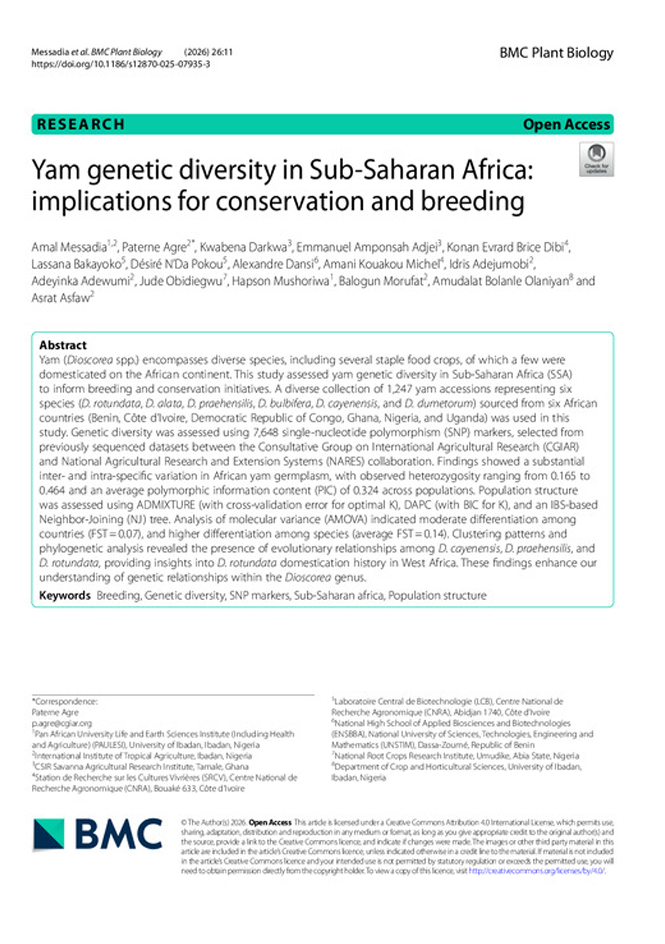
Yam genetic diversity in Sub-Saharan Africa: implications for conservation and breeding
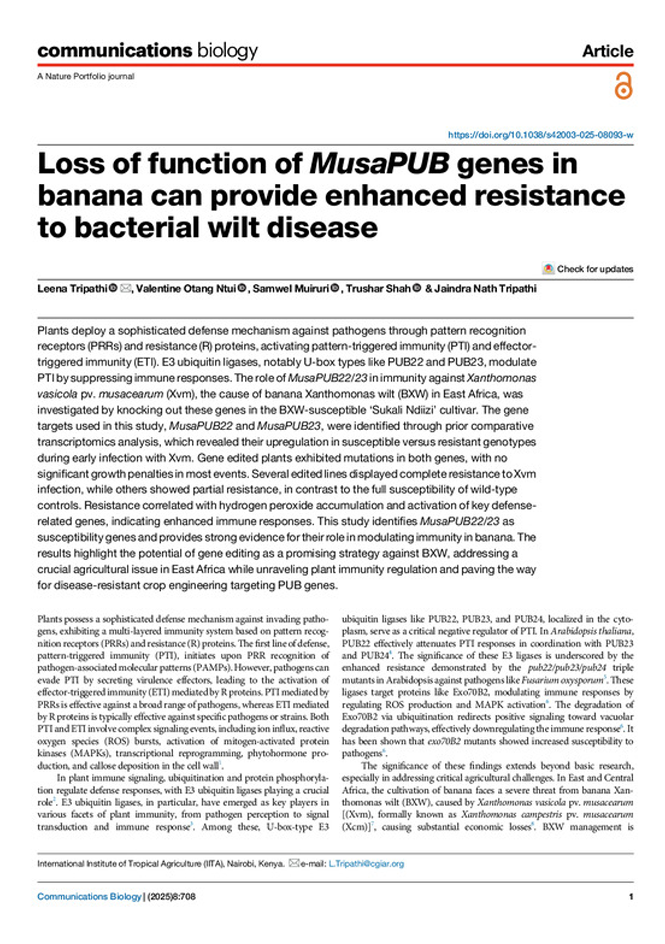
Loss of function of MusaPUB genes in banana can provide enhanced resistance to bacterial wilt disease
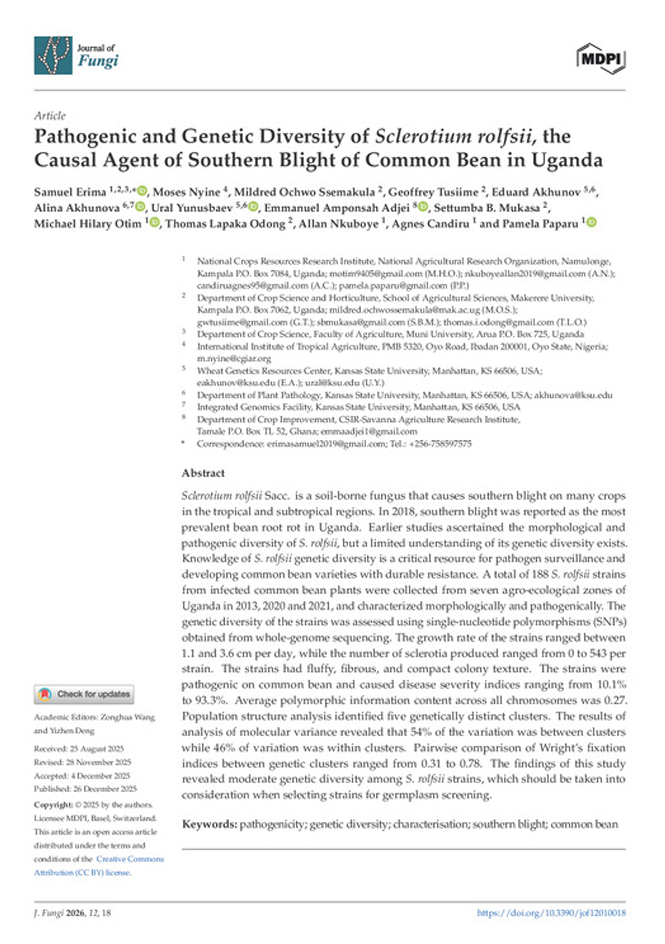
Pathogenic and genetic diversity of sclerotium rolfsii, the causal agent of southern blight of common bean in Uganda
Related News
See all news
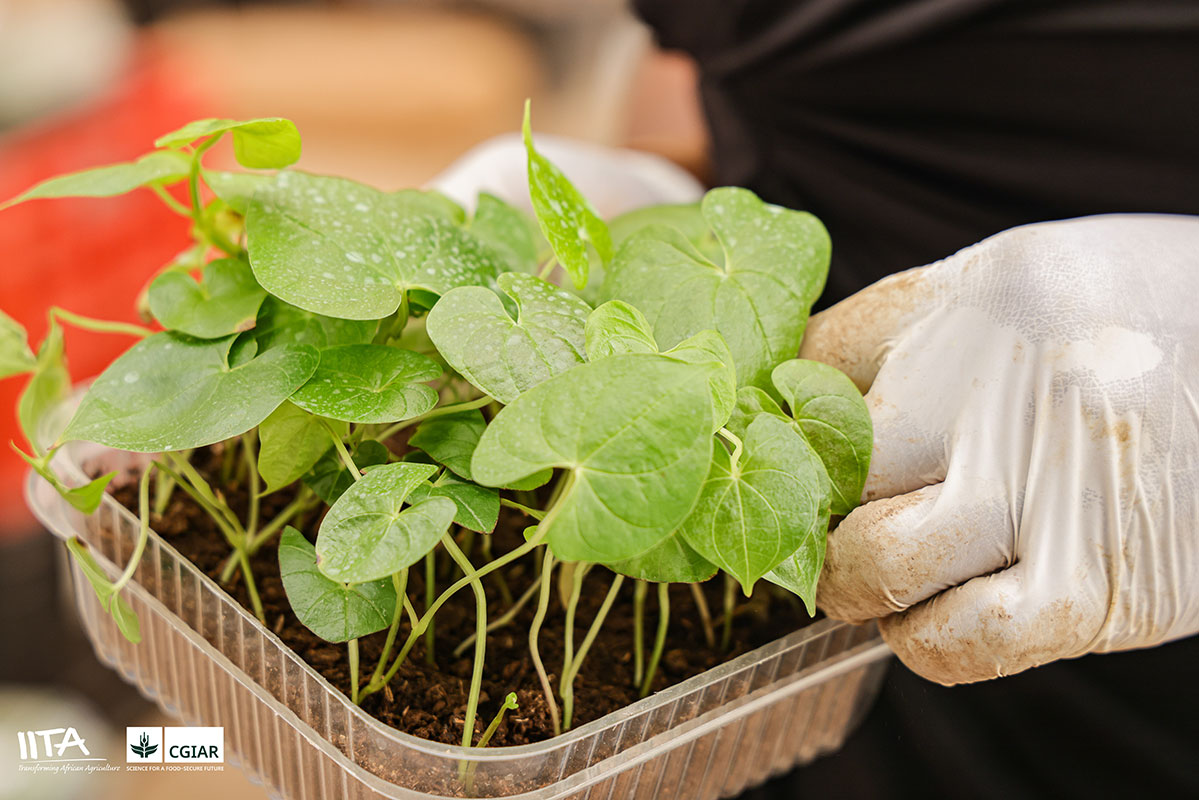
How science at IITA is transforming Africa’s food systems
When people think of agricultural research, they often picture scientists in white coats working quietly in laboratories, surrounded by microscopes, and test tubes or researchers on the field under the scorching sun collecting data from field trials.
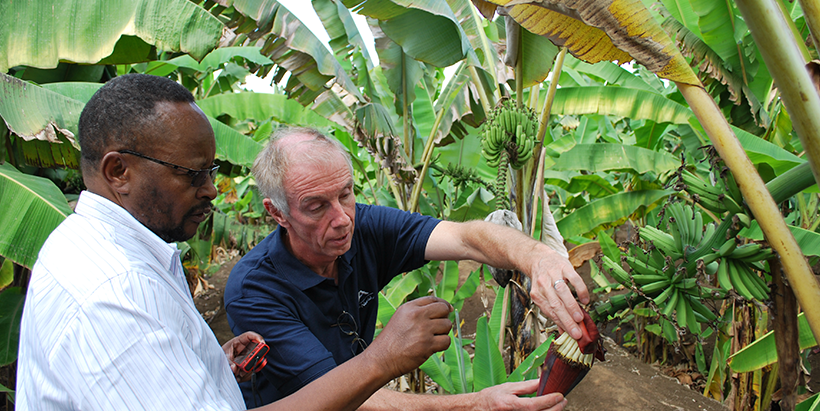
Belgium honors IITA scientist with noble title of Baron
IITA–CGIAR celebrates one of its distinguished scientists, Professor Rony Swennen, following his conferment of the noble
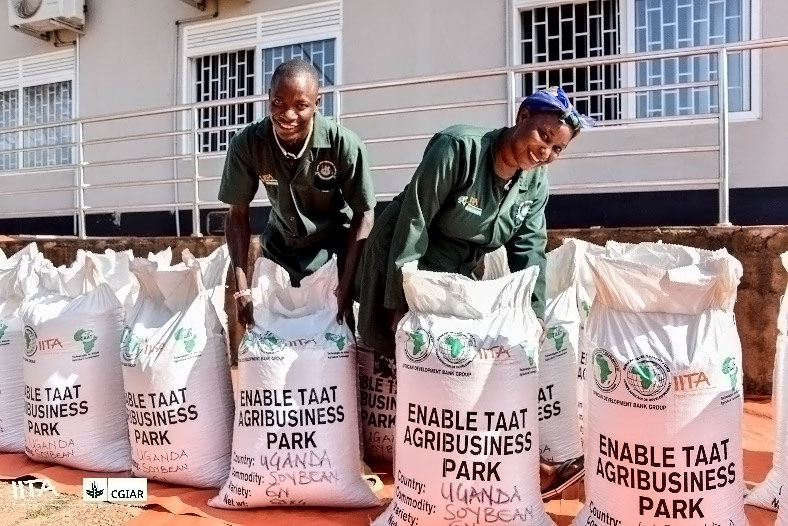
TAAT technologies drive soybean yields in Uganda: IITA youth harvest success
Mukono Youth Agripreneurs are celebrating a bountiful soybean harvest, thanks to the Technologies for African


