Cowpea Breeding Program
Why Cowpea Breeding Program
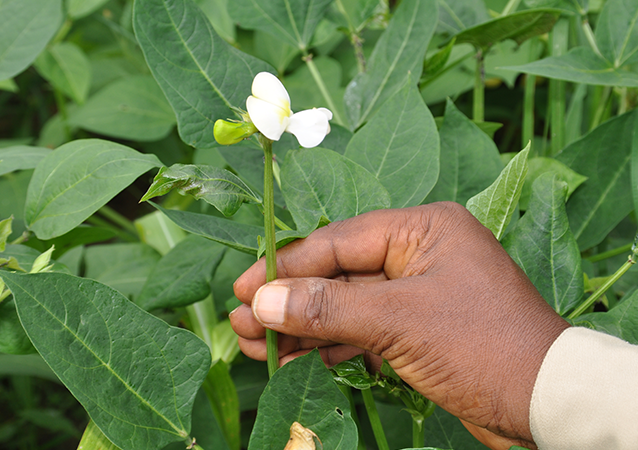
The IITA Cowpea Breeding Program develops improved cowpea varieties that enhance food security, nutrition, and livelihoods across sub-Saharan Africa. Cowpea is a vital grain legume widely grown and consumed in West and Central Africa, providing affordable protein for millions of people and income for smallholder farmers. However, cowpea production faces major constraints including pests, parasitic weeds such as Striga, drought stress, and low soil fertility.
The program combines advanced breeding methods, genomic tools, and participatory testing with farmers to develop high-yielding, climate-resilient, and market-preferred varieties. Working closely with national agricultural research systems, seed companies, and development partners, the program ensures rapid delivery and adoption of improved varieties. Over the past decades, IITA and its partners have released numerous improved cowpea varieties that have significantly increased productivity and strengthened the cowpea value chain across the region.
Objectives
- Develop breakthrough cowpea varieties that are high-yielding, climate-resilient and adapted to diverse African agroecologies.
- Utilize cutting edge tools including genomics, genome editing, and genetic transformation to improve resistance to major pests and diseases, including aphids, pod borers, bacterial blight resistance and parasitic weeds such as Striga.
- Enhance nutritional quality and grain market traits to meet consumer and market demands.
- Accelerate genetic gains through modern breeding technologies, including genomic selection and marker-assisted breeding.
- Strengthen seed systems and partnerships to ensure rapid dissemination and adoption of improved cowpea varieties.
Focus Areas
Enhancing the performance of agricultural value chains through market systems development, private sector partnerships, and
scalable agribusiness solutions that improve livelihoods and food security.
Breakthrough Product Development Using Modern Breeding Technologies
The program is developing next-generation cowpea varieties through the Cowpea Breeding Breakthrough Project, supported by the Gates Foundation.
See more
This initiative integrates advanced breeding tools such as marker validation and deployment in marker-assisted selection (MAS), genomic selection, gene editing, and genetic transformation to accelerate genetic gains and deliver high-impact varieties with improved yield, resilience, and pest resistance.
Climate Resilience through Genebank Allele Mining
IITA researchers are leveraging global cowpea germplasm collections to identify valuable alleles for adaptation to climate stress.
See more
established and approved SOPs. We measure traits such as yield, agronomic performance, pest and disease resistance and quality in both the germplasm and hybrids to select superior parents and new varieties. Image based phenotyping is under development for all traits.
Mutation Breeding for Insect Resistance
The program is exploring mutation breeding to create novel genetic variation for resistance to key insect pests such as the Maruca pod borer
See more
one of the most destructive pests of cowpea. Using gamma irradiation, breeding lines are treated to induce beneficial mutations, which are then screened for improved resistance and agronomic performance. This work is conducted in collaboration with the International Atomic Energy Agency (IAEA).
Integrated Pest and Disease Resistance Breeding
Breeding efforts prioritize resistance to major cowpea constraints including aphids, flower thrips, bacterial blight, and parasitic weeds such as Striga.
See more
Molecular markers and advanced phenotyping are used to accelerate the identification and deployment of resistance genes.
Market-Driven and Nutrition-Sensitive Breeding
The program focuses on developing varieties that meet the preferences of farmers, consumers, and markets.
See more
Traits such as grain size, seed coat color, cooking quality, and nutritional value are integrated into breeding pipelines to ensure improved varieties are widely adopted
Achievements
Over the past decade, IITA and its national partners have made remarkable progress in developing, releasing, and promoting improved cowpea varieties that respond to the needs of farmers, processors, and consumers across West and Central Africa.
Varietal Releases
| Variety | Country | Key trait | Release | |
| IT17K-1279-3-1 (SAMPEA 22) | Nigeria | High yield 2.8 t/ha, Early maturing (64 to 72) days, Resistant to Striga, Resistant to Bacterial blight | 2026 | |
| IT15K-2445 (SAMPEA 23) | Nigeria | High yield 2.5 t/ha, Early maturing (63 to 74) days, Tolerant to Striga, Resistant to Bacterial blight, small to medium sized seeds good for flour making | 2026 | |
| IT17K-2357-1 (SAMPEA 24) | Nigeria | High yield 2.9 t/ha, Dual purpose, medium maturing (76 to 86) days, Tolerant to Striga, Resistant to Bacterial blight | 2026 | |
| IT16K-2556-2 (SAMPEA 25) | Nigeria | High yield 2.7 t/ha, Dual purpose, medium maturing (76 to 86) days, Resistant to Striga, Resistant to Bacterial blight | 2026 | |
| IT13K-1308-5 (SAMPEA 21) | Nigeria | Early, medium white seed, Striga resistant, high yield 2.5 t/ha, pods above the canopy | 2022 | |
| IT14K-1424-12 (SARI-tuya) | Ghana | Early, large, white seeds, high yielding (2.2 t/ha), pods above the canopy, resistant to Striga | 2022 | |
| IT10K-817-3 (Tuzievallenga) | Ghana | Early, brown seeds, high yield, resistant to Striga | 2022 | |
| IT08K-150-12 (SAMPEA 19) | Nigeria | Early, drought tolerant, white seed, striga & Alectra tolerant Yield potential 2.7 t/ha | 2018 | |
| IT07K 297-13 (SAMPEA 18) | Nigeria | Early, drought tolerant, white seed,Bacterial blight resistant, Yield potential 2.5 t/ha | 2018 | |
| IT99K-573-1-1 | Ghana | Early, white seed, striga resistant, Fusarium wilt resistant, Yield potential 2.6 t/ha | 2017 | |
| IT99K-573-2-1 | Ghana | Early, white seed, Striga resistant, drought tolerant Yield potential 2.5 t/ha | 2017 | |
| IT07K-211-1-8 (AGRAC-216) | South Sudan | High stable grain yield (2.0t/ha), insect field resistant | 2016 | |
| IT90K-277-2 (AGRAC- 116) | South Sudan | High stable grain yield (2.4t/ha), white, large seeded | 2016 | |
| IT07K-318-33 (SAMPEA 17) | Nigeria | Early maturity, brown seed, tolerant to striga and drought, resistant to Alectra. (2,557kg/ha) | 2015 | |
| IT07K-292-10 (SAMPEA 16) | Nigeria | Early maturity, white seed, resistance to Alectra, tolerance to striga and drought. (2,595kg/ha) | 2015 | |
| IT99K-1122 | Tanzania | Early, vigorous, high biomass | 2015 | |
| IT82E-18 | Swaziland | Early maturing, drought tolerant | 2015 | |
| IT99K-390-2 | Swaziland | Yield potential of up to 1,370 kg/ha, matures in about 92 days, Tolerant to drought, leaf spot, and bacterial diseases, produces reddish-brown seeds, has a high carbohydrate content | 2015 | |
Adoption and Reach
Improved cowpea varieties developed by IITA and partners have been widely adopted in target production zones of West Africa. Field studies and program monitoring show substantial uptake. Plot-level studies report adoption rates of ~38% in some sampled areas, while DNA-verified surveys in Nigeria report adoption around ~24% in sampled states, demonstrating tangible reach and impact across farming communities.
Trait Improvement
Released varieties combine early maturity (65–75 days), high yield potential (1.5–2.5 t/ha), and resistance to major stresses including Striga gesnerioides, aphids, flower thrips, bacterial blight, and drought. The present cowpea breeding fucus at IITA is to increase the grain yield potential of incoming varieties up to 25% above current commercialized varieties. Hundreds of potential lines are in advanced testing stages.
Innovation in Breeding
- Deployment of marker-assisted and genomic selection tools to accelerate genetic gain and improve trait integration.
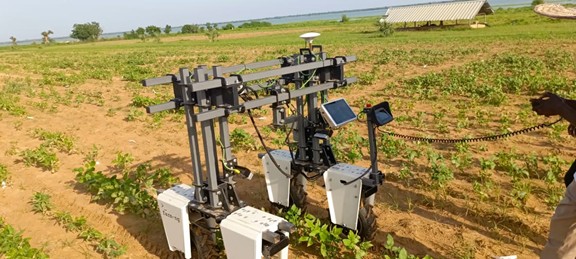
- Development of AI-driven phenotyping and robotics for more accurate, high-throughput data collection.
- Establishment of market-segmented breeding pipelines aligned with defined Target Product Profiles (TPPs) to ensure products meet user demand.
- Deploying mutation breeding to generate novel genetic variations to tackle difficult constraints, especially insects that lack natural resistant sources
- Capacity Strengthening: Several NARS scientists and technicians have been trained in modern cowpea breeding tools, especially the use of molecular markers for quality assurance and quality control (QA/QC).
These achievements contribute directly to improved food security, incomes, and climate resilience for millions of smallholder farmers.
IMPACT SPOTLIGHT
Transforming Cowpea Production for Striga-Prone Areas
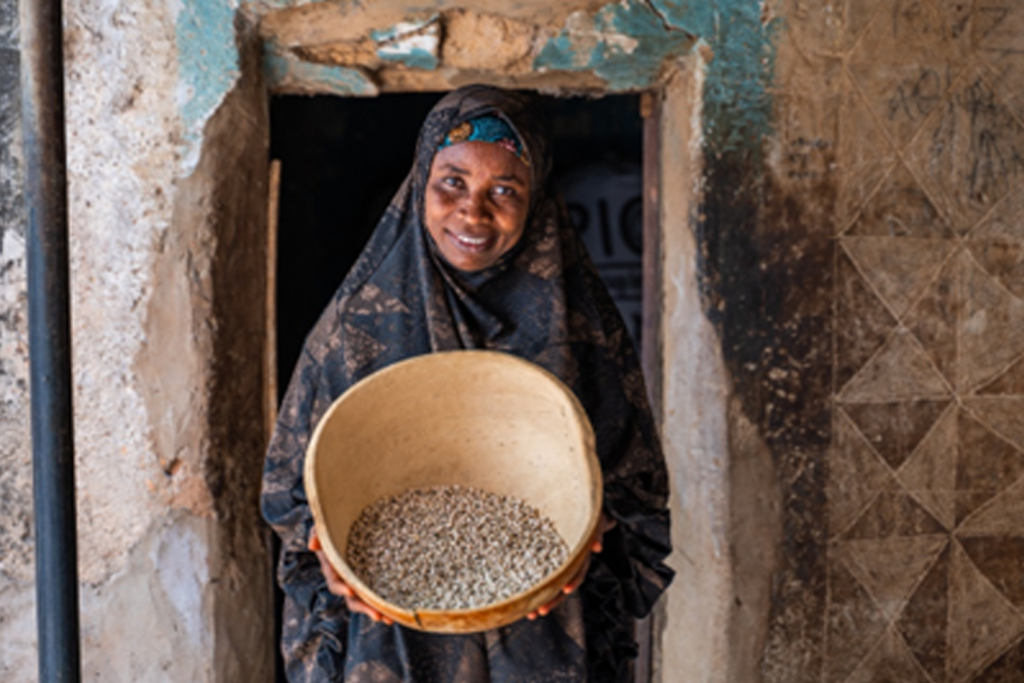
In the dry savannas of northern Nigeria, Striga gesnerioides, a parasitic weed has long devastated cowpea fields, reducing yields by up to 80%. Farmers had struggled to get any good yield and economic gains from cowpea cultivated in infested soils.
Related Resources
- Cowpea (Vigna unguiculata): Genetics, genomics and breeding
- Harnessing molecular breeding for climate-resilient cowpea improvement in sub-Saharan Africa.
- Adoption and ex‐post impacts of improved cowpea varieties on productivity and net returns in Nigeria
- Discovery and development of single-nucleotide polymorphism markers for resistance to Striga gesnerioides in cowpea (Vigna unguiculata)
- Genetic Progress in Cowpea [Vigna Unguiculata (L.) Walp.] Stemming from Breeding Modernization Efforts at the International Institute of Tropical Agriculture
- Improved cowpea varieties contribute to poverty reduction in Nigeria
Related News

Belgium honors IITA scientist with noble title of Baron
IITA–CGIAR celebrates one of its distinguished scientists, Professor Rony Swennen, following his conferment of the noble title of Baron by His Majesty King Philippe of Belgium in recognition of his outstanding contributions

Belgium honors IITA scientist with noble title of Baron
IITA–CGIAR celebrates one of its distinguished scientists, Professor Rony Swennen, following his conferment of the noble
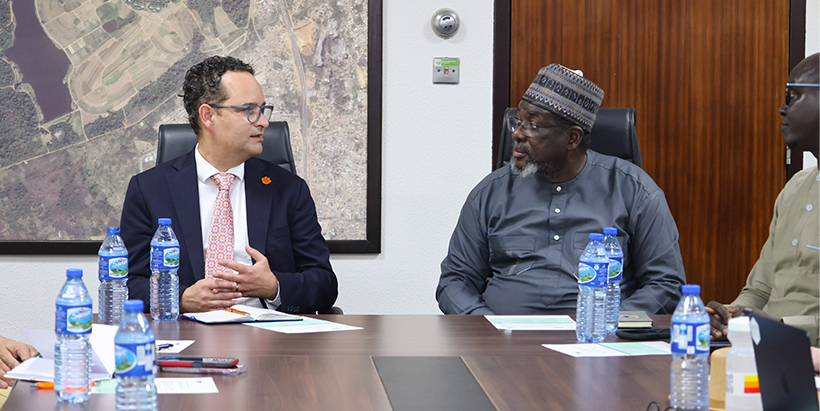
Clemson University delegation visits IITA to advance banana research and expand collaboration
A delegation from Clemson University visited IITA headquarters from May 11 to 15 for a