
Tissue Culture Lab
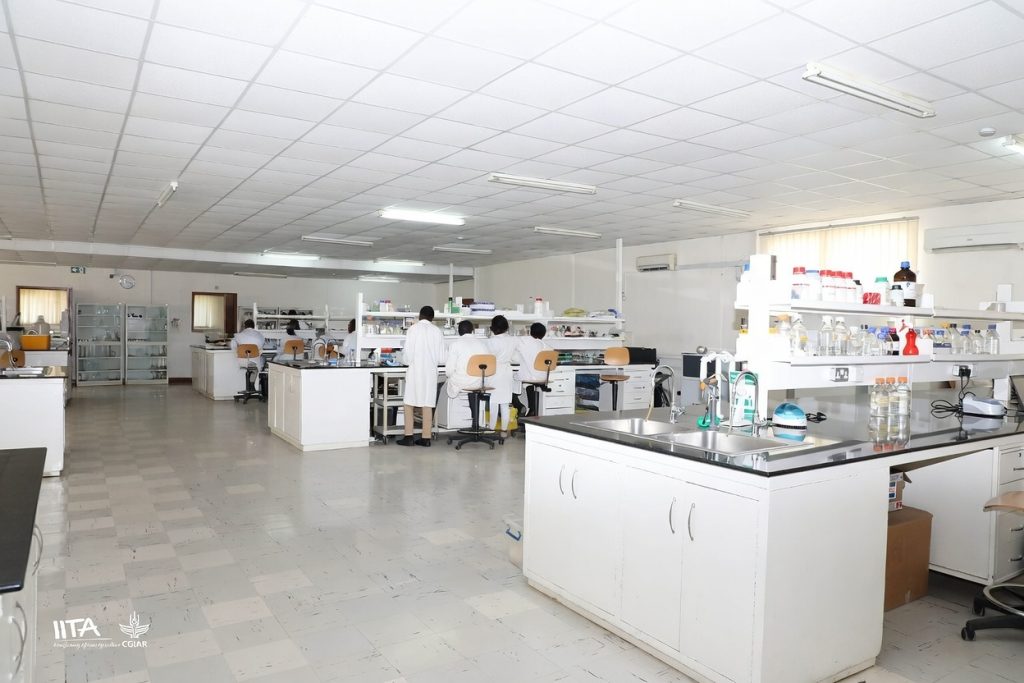
TISSUE CULTURE LAB – Ibadan, Nigeria
The Tissue Culture Laboratory at IITA is a specialized plant biotechnology facility that applies in‑vitro culture techniques to improve, propagate, and conserve important crops under controlled, sterile conditions. This lab is part of IITA’s broader research infrastructure, which supports crop improvement, germplasm conservation, rapid propagation, and clean seed systems for vegetatively propagated crops.
Core purpose and functions
- Clean, disease-free plant production: The lab uses techniques such as meristem culture and micropropagation to eliminate viruses and other pathogens from crop materials, producing virus-free, high-quality clones of crops like cassava, yam, plantain, and sweet potato. These healthy plantlets are crucial for research, breeding, and distribution.
- Rapid propagation of plant material: Tissue culture enables the production of large numbers of uniform plantlets quickly and efficiently compared with conventional seed propagation — especially important for crops with low natural seed multiplication rates or long generation times.
- Germplasm conservation and distribution: The laboratory supports germplasm conservation by maintaining in‑vitro collections of critical crop varieties. These in vitro stocks serve as a reservoir of genetic diversity and can be distributed to partner programs and research institutions, regionally and internationally.
- Support for breeding programs: Tissue culture is integrated with breeding activities (e.g., banana and cassava breeding) to ensure that clean, true-to-type plantlets are available for field trials and evaluation, accelerating the delivery of improved varieties to farmers.
Techniques and procedures
- Micropropagation: growth of plants from small explants (e.g., shoot tips) in controlled media
- Meristem culture: eliminating viruses by exploiting the virus-free nature of growing tips
- Somatic embryogenesis: regenerating whole plants from somatic cells
- In‑vitro storage: reduced‑growth culture conditions that allow plantlets to be maintained for extended periods (e.g., 1–2 years) without frequent subculturing
Applications and impact
Clean planting materials
By providing pathogen-free planting materials, the Tissue Culture Lab enhances crop health, improves field performance, and reduces disease spread, especially for root and tuber crops that are widely affected by viral diseases.
Germplasm mobility and exchange
Tissue culture plantlets are more acceptable for international exchange because they can be certified disease-free, facilitating the regional and global distribution of important genetic materials.
Support for seed systems and value chains
Through rapid propagation and distribution of high-quality plant materials, the lab contributes to formal seed systems and strengthens value chains of key staples in sub-Saharan Africa.
Infrastructure and reach
IITA’s tissue culture activities are supported by dedicated laboratory space, specialized equipment, and trained technicians. In some cases, infrastructure expansion has been supported by partnerships (e.g., African Development Bank funding in Nigeria and facility launches in other countries, such as the Democratic Republic of Congo).
The lab also works closely with other IITA units and partners, such as the Genetic Resources Center and breeding programs, integrating tissue culture outputs into broader research and deployment strategies.
Human capacity and roles
Operating a tissue culture lab requires skilled personnel, including:
- Tissue culture scientists – oversee cultures, quality control, and protocols
- Lab technicians – prepare media, perform aseptic transfers, manage cultures
- Support staff – maintain equipment, manage records, and assist with environmental controls
These roles ensure that laboratory outputs meet research-quality standards and that plantlets are suitable for downstream use in field trials, breeding, or commercial applications.
The Tissue Culture Laboratory at IITA is a vital biotechnology facility focused on producing high-quality, disease-free plant materials, rapid propagation, and germplasm conservation using advanced in‑vitro techniques. Its operations support research, breeding programs, and formal seed systems across Africa by enhancing crop health and productivity and by increasing the mobility of genetic resources.
The IITA Cameroon Tissue Culture Laboratory was established in 2002 as a component of the crop improvement and crop protection efforts of IITA. Focusing on the delivery of improved banana and plantain, yam, and cassava germplasm and associated technologies the Tissue Culture Lab is important to IITA’s tissue culture (TC) work in Central Africa.
The lab serves mainly as an entry point for the introduction of new hybrids from the breeding programs in Nigeria and other countries. Larger stocks of these hybrids are generated via micropropagation in the lab for evaluation, selection, conservation, and distribution.
Other research activities include the work on cassava and taro. The lab presently holds in conservation 15 taro genotypes that were introduced by IRAD for resistance to taro leaf blight.