
IITA boss warns against paying lip service to agriculture
December 5, 2016
The Director General of IITA, Nteranya Sanginga, has said that there would be negative consequences if Africa paid only lip service to agriculture, and failed to invest in the sector.
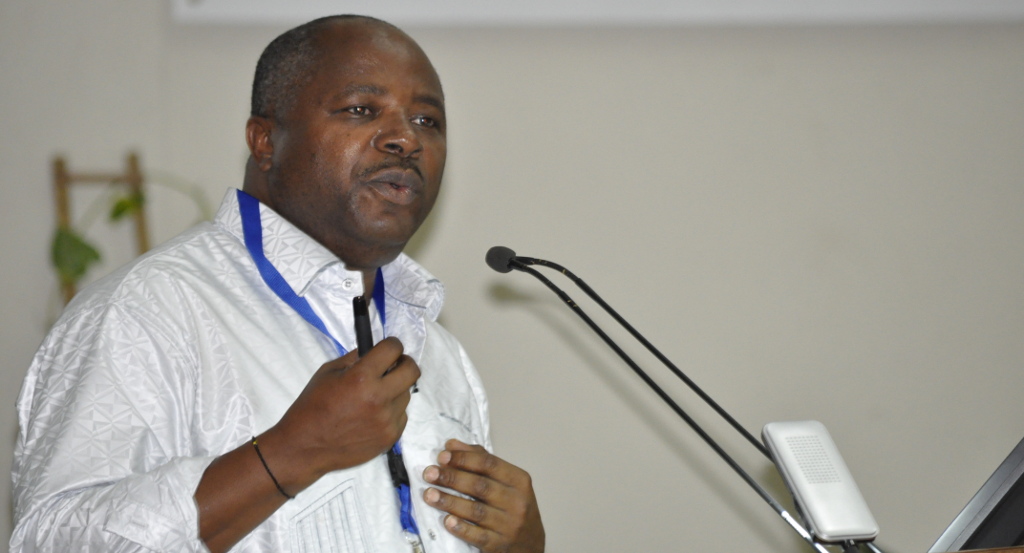 Addressing members of the Board of Trustees of IITA and researchers during the 2016 Partnerships for Delivery (P4D) Week in Ibadan that ended on 25 November, DG Sanginga said the neglect of agriculture would cost $110 billion in terms of food imports by 2025 to feed Africans; up from the current $35 billion.
Furthermore, a failure to invest in agriculture would deprive the continent of necessary jobs and further fuel the spiraling rate of unemployment among the youth on the continent.
He acknowledged that although most African governments have come to the realization that agriculture was one of the ways to save the continent from the mess, most countries were not investing enough in the sector.
“Take for instance, the commitment to invest at least 10 percent of national budgets to agriculture. Not many countries are meeting this goal,” DG Sanginga said.
He commended the African Development Bank for the new initiative—Technologies for African Agricultural Transformation (TAAT)—to transform agriculture on the continent.
TAAT is a new program of the AfDB in collaboration with the CGIAR under the Feed Africa Initiative that aims to drive agricultural development on the continent.
Through the TAAT program, the Bank will invest more than $800 million in the agricultural sector. The funds would be channeled into upscaling of proven innovations that will improve the lot of farmers and address the twin problems of food insecurity and unemployment.
DG Sanginga also reiterated IITA’s commitment to supporting African small-scale farmers in agribusiness such that agriculture transcends “food for the fork” to “money in the pocket”.
According to him, IITA will continue to respond to the needs of Africa by developing innovations that will provide answers to Africa’s food insecurity. To this end, IITA will be demonstrating its scientific leadership not only in terms of qualitative research in the lab, but also impact in farmers’ fields.
DG Sanginga, who began his second tenure recently, said that IITA’s priority for the future would focus on research, capacity development, partnerships, impact at scale, and most importantly, delivery.
The Director General said IITA’s internal reorganization had put the Institute in a better position to address the challenges confronting Africa more than ever before.
He called on researchers to redouble their efforts and commitment to the ideas, mission, and vision of the Institute which includes lifting 11 million Africans out of poverty and the reclamation of 7.5 million hectares of degraded land and putting them into sustainable use.
The Chair of IITA’s Board of Trustees, Bruce Coulman, commended DG Sanginga for the efforts in repositioning IITA for the challenges ahead, stressing that the Board was convinced that “IITA is in safe hands.”
He emphasized that IITA would continue to support Africa in achieving the goal of eradicating hunger and poverty in Africa.
The P4D Week is a biannual event (alternating with Research for Development – R4D Week) that brings together more than 200 international researchers working for IITA across the world to review, share experiences, and plan the way forward.
Addressing members of the Board of Trustees of IITA and researchers during the 2016 Partnerships for Delivery (P4D) Week in Ibadan that ended on 25 November, DG Sanginga said the neglect of agriculture would cost $110 billion in terms of food imports by 2025 to feed Africans; up from the current $35 billion.
Furthermore, a failure to invest in agriculture would deprive the continent of necessary jobs and further fuel the spiraling rate of unemployment among the youth on the continent.
He acknowledged that although most African governments have come to the realization that agriculture was one of the ways to save the continent from the mess, most countries were not investing enough in the sector.
“Take for instance, the commitment to invest at least 10 percent of national budgets to agriculture. Not many countries are meeting this goal,” DG Sanginga said.
He commended the African Development Bank for the new initiative—Technologies for African Agricultural Transformation (TAAT)—to transform agriculture on the continent.
TAAT is a new program of the AfDB in collaboration with the CGIAR under the Feed Africa Initiative that aims to drive agricultural development on the continent.
Through the TAAT program, the Bank will invest more than $800 million in the agricultural sector. The funds would be channeled into upscaling of proven innovations that will improve the lot of farmers and address the twin problems of food insecurity and unemployment.
DG Sanginga also reiterated IITA’s commitment to supporting African small-scale farmers in agribusiness such that agriculture transcends “food for the fork” to “money in the pocket”.
According to him, IITA will continue to respond to the needs of Africa by developing innovations that will provide answers to Africa’s food insecurity. To this end, IITA will be demonstrating its scientific leadership not only in terms of qualitative research in the lab, but also impact in farmers’ fields.
DG Sanginga, who began his second tenure recently, said that IITA’s priority for the future would focus on research, capacity development, partnerships, impact at scale, and most importantly, delivery.
The Director General said IITA’s internal reorganization had put the Institute in a better position to address the challenges confronting Africa more than ever before.
He called on researchers to redouble their efforts and commitment to the ideas, mission, and vision of the Institute which includes lifting 11 million Africans out of poverty and the reclamation of 7.5 million hectares of degraded land and putting them into sustainable use.
The Chair of IITA’s Board of Trustees, Bruce Coulman, commended DG Sanginga for the efforts in repositioning IITA for the challenges ahead, stressing that the Board was convinced that “IITA is in safe hands.”
He emphasized that IITA would continue to support Africa in achieving the goal of eradicating hunger and poverty in Africa.
The P4D Week is a biannual event (alternating with Research for Development – R4D Week) that brings together more than 200 international researchers working for IITA across the world to review, share experiences, and plan the way forward.
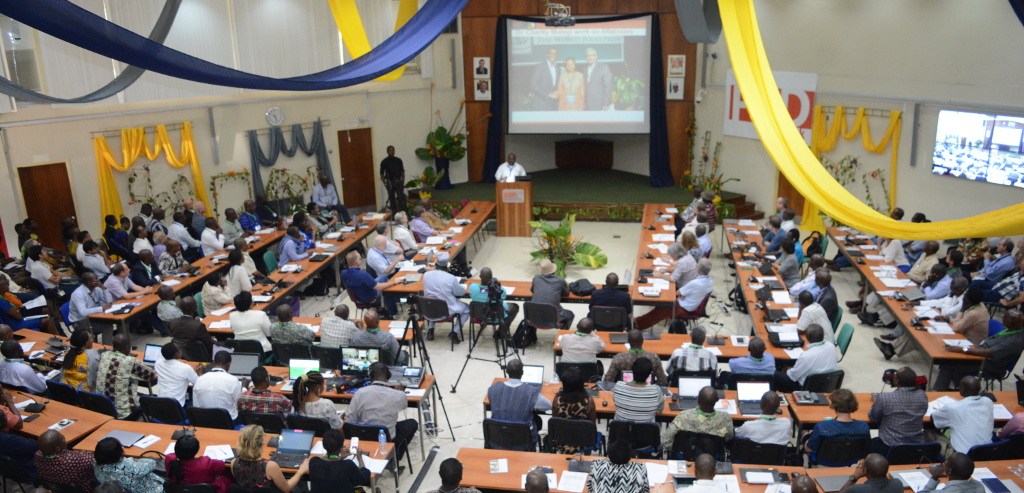 Deputy Director General, Partnerships for Delivery, Kenton Dashiell said the P4D Week’s emphasis for the year was not just on research but also on delivery at scale.
DG Sanginga
IITA’s DG addresses the P4D Week audience in the IITA headquarters in Ibadan
Contributed by
Recent stories
No items found