
NEWS

Obasanjo and governors highlight gains of Zero Hunger initiative
November 8, 2017

Nigeria’s former President, Chief Olusegun Obasanjo, said he was impressed with the impact the Nigeria Zero Hunger Forum (NZHF) was making especially in promoting healthy competition among states with a view to achieving food security.
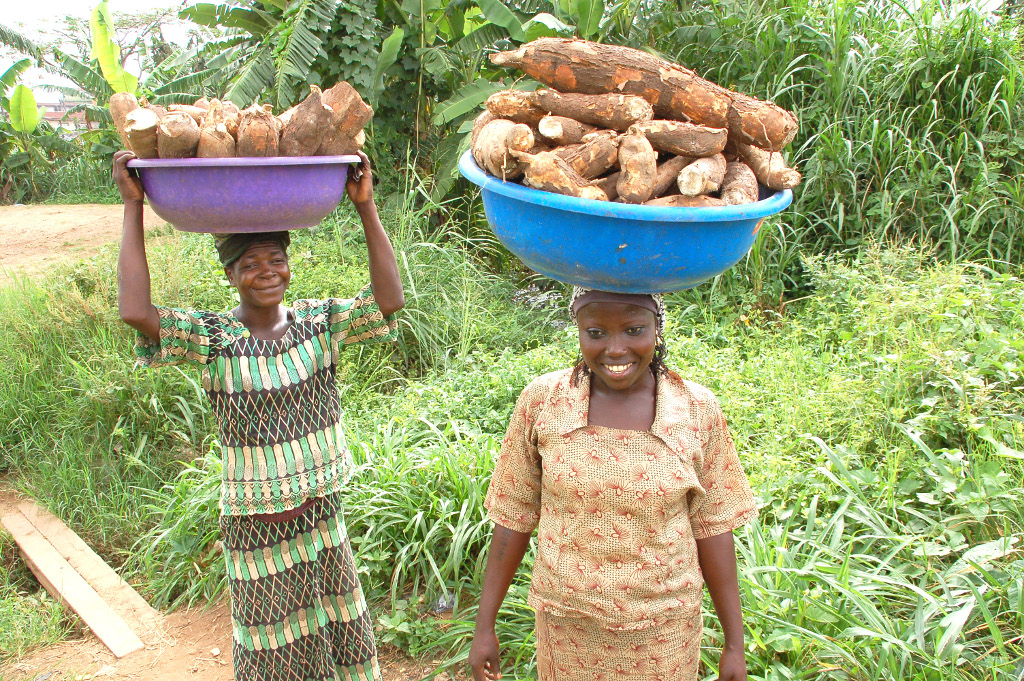
Picture of women with cassava
Women carrying cassava.

The former President made this conclusion on 7 November at the NZHF meeting in Ebonyi state. The Ebonyi meeting was the second NZHF assembly after Benue hosted a similar one in June.

“I see a healthy competition between states which is good,” the former President said as participating governors recounted progress made towards food security in their respective domains.

The governors said that in less than a year the Zero Hunger initiative was already having a positive impact on the food security of their states.

According to them, the initiative through its peer advisory/review mechanism has brought a new vigor and zeal to the agricultural sector with more commitments by participating states. They also commended President Muhammadu Buhari for his strong support to the states’ agricultural programs.

For Governor Samuel Ortom of Benue State, there is now a realization of untapped agricultural opportunities that the state can explore to benefit its people, thanks to the NZHF.

Describing the Zero Hunger Forum as a great initiative, Governor Ortom said the state keyed into the initiative with the conviction that it would help the state to maintain its pride as the food basket of the country.

“We have keyed into this program and believe that through NZHF Nigeria will be helped,” he added.

The governor explained that the recently passed anti-grazing bill was aimed at promoting peace between herdsmen and crop farmers with a view to achieving zero hunger by 2030. He further announced that the state would also facilitate peace between the people of Agila in Benue and Ngbo in Ebonyi to end the border crises and bring peace in that area, so farmers can go back to farming.

Governor David Umahi of Ebonyi state said the benefits of the Nigeria Zero Hunger initiative were priceless as participating states were learning from each other.

“When we went to Benue, we learnt from them and today, Benue and other states are here to also learn from us,” he said.
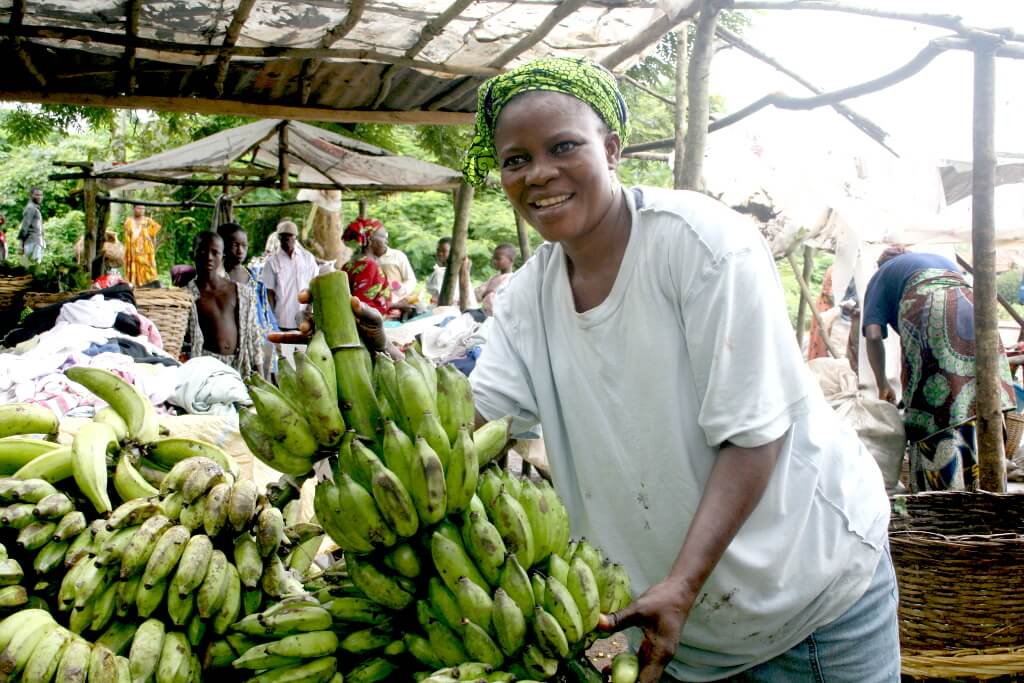
Picture of woman holding banana
Woman holding banana.

The Governor of Borno State, Alhaji Kashim Shettima, who was represented by his deputy, Alhaji Usman Mamman Durkwa, expressed gratitude to the NZHF for the support given to the state early this year to cushion the effects of insurgency. Particularly mentioned were the “seeds of renaissance” from the International Institute of Tropical Agriculture (IITA), AfricaRice, and ICRISAT, and the rice from Ebonyi to feed the internally displaced persons (IDPs) in Borno State.

The Zero Hunger meeting in Ebonyi was attended by more than 500 persons including policymakers and development partners.

The meeting discussed the progress made by Ebonyi state towards the attainment of zero hunger.

The President of the African Development Bank, Dr Akin Adesina who was represented by the Director (Agriculture), Dr Chiji Ojukwu, commended the implementation of the initiative and reiterated the Bank’s support to feeding Africa. He reminded stakeholders that Africa must take agriculture seriously and implement policies and programs that would engender inclusive growth.

The Director General of IITA, Dr Nteranya Sanginga, pledged the Institute’s commitment to supporting and working with states to achieve their food security goals.

Participants at the meeting included the host, Governor Umahi of Ebonyi State, Governor Ortom of Benue State, Governor Aminu Tambuwal of Sokoto, Governor Abubakar Bagudu of Kebbi State, Deputy Governor Alhaji Usman of Borno State, and a representative of the Chair of the Senate Committee on Agriculture, Senator Abdullahi Adamu.

Participants from the donor and international community included Dr. Sanginga, Director General of IITA; Dr Ojukwu, Director (Agriculture) of AfDB; Dr Abiodun Oladipo, World Food Program; Dr. Abraham Shaibu, AfricaRice; Dr Taw anda Muzhingi, International Potato Center (CIP); members of Ebonyi State Executive Council, representatives from the Federal Ministry of Agriculture and Rural Development, academia, the private sector, farmer groups, traditional rulers, and members of the press.

About Nigeria Zero Hunger Forum (NZHF)
The Nigeria Zero Hunger Forum based at IITA is an initiative of the Nigerian Government and partners that include the World Food Program and African Development Bank, and is led by IITA Goodwill Ambassador and former President Olusegun Obasanjo. The aim of the forum is to draw a roadmap and implement initiatives to end hunger in Nigeria by 2030 in support of Sustainable Development Goal 2 (SDG2)—one of the global goals that seeks to “end hunger, achieve food security and improved nutrition, and promote sustainable agriculture”. The program started immediate implementation in 2017 in five Nigerian states—Benue, Ebonyi, Ogun, Sokoto, and Borno, to be followed in 2019 by eight more states and all 36 States in the federation including the Federal Capital Territory by 2021.

About IITA, iita.org
The International Institute of Tropical Agriculture (IITA) is a not-for-profit institution that generates agricultural innovations to meet Africa’s most pressing challenges of hunger, malnutrition, poverty, and natural resource degradation. Working with various partners across sub-Saharan Africa, we improve livelihoods, enhance food and nutrition security, increase employment, and preserve natural resource integrity. IITA is a member of CGIAR, a global agriculture research partnership for a food secure future.

For more information, please contact: Dr Kenton Dashiell, k.dashiell@cgiar.org; Godwin Atser, g.atser@cgiar.org; Kathy Lopez, k.lopez@cgiar.org; or Emmanuel Uzor, Chief Press Secretary to the Governor of Ebonyi State, uzemuzor@gmail.com


Contributed by

Recent stories

No items found

Leave a Reply

Your email address will not be published. Required fields are marked *

Scroll to Top
Olaosebikan, Olamide

Olamide Deborah Nwanze is a Senior Research Associate specializing in gender mainstreaming research to inform participatory and inclusive breeding, variety development, and seed systems policies regarding root, tuber, and banana (RTB) crops in the International Institute of Tropical Agriculture Headquarters, Ibadan, Nigeria. She is a PhD candidate at the University of Ibadan and holds an MSc and B. Agric in Agricultural Extension and Rural Development. Olamide is a fellow of the African Women in Agricultural Research and Development – Gender Responsive Agricultural Systems Policy (AWARD-GRASP) and the Gender Responsive Researchers Equipped for Agricultural Transformation (GREAT). She seeks to apply her gender-mainstreaming learnings, gender-responsive research, and policy development, and review expertise to facilitate women, youth, children, and vulnerable social group’s access to and adoption of agricultural Innovations that guarantee food, nutrition, income, and livelihood security in Africa. Her current roles include mentoring research fellows, development of guides and training manuals, implementation and adaptation of gender frameworks and tools, value chain actors’ engagement as citizen science partners, policy review and redesign, data management, and analysis. Her current research explores mixed methods and participatory and interdisciplinary approaches to capture and highlight gender dynamics, needs, preferences, and challenges stakeholders face within the agricultural livelihood value chain to prioritize gender-inclusive strategies in breeding programs, policy design, and implementation.

At IITA, she contributes to the implementation of the CGIAR Accelerated Breeding Initiative and Genetic Innovation Programs; participatory and gender research within the NextGen CassavaHarvestPlusRTBFoods, and Tricot-ClimMob 1000Farms Projects; and gender knowledge communication via the G-LENS webinar series, video documentary, policy briefspublications, and blogs.


Recent publications

de Sousa, K., van Etten, J., Manners, R. Bello, A., Teeken, B., Olaosebikan, O., et al. 2024. The tricot approach: an agile framework for decentralized on-farm testing supported by citizen science. A retrospective. Agron. Sustain. Dev. 44, 8. https://doi.org/10.1007/s13593-023-00937-1

Madu, T., Onwuka, S., Nwafor, S., Onyemauwa, N., Ejechi, M., Ofoeze, M., Ukeje, B., Eluagu, C., Olaosebikan, O., Okoye, B., 2024. Gender-Inclusive Consumer Studies Improve Cassava Breeding in Nigeria in: Frontiers in Sociology, volume 9, number: 1224504, doi: 10.3389/fsoc.2024.1224504

Olaosebikan, O.; Bello, A.; Utoblo, O.; Okoye, B.; Olutegbe, N.; Garner, E.; Teeken, B.; Bryan, E.; Forsythe, L.; Cole, S.; Madu, T. 2023.  Stressors and Resilience within the Cassava Value Chain in Nigeria: Preferred Cassava Variety Traits and Response Strategies of Men and Women to Inform Breeding. Sustainability 15, 7837. https://doi.org/10.3390/su15107837

Okoye, B., Ofoeze, M., Ejechi, M., Onwuka, S., Nwafor, S., Onyemauwa, N., Ukeje, B., Eluagu, C., Obidiegwu, J.*, Olaosebikan, O., Madu, T.* 2023. Prioritizing preferred traits in the yam value chain in Nigeria: a gender situation analysis in: Frontiers in Sociology, volume 8, number: 1232626, pages 1 – 9, ISSN 2297-7775, 2023. https://www.frontiersin.org/articles/10.3389/fsoc.2023.1232626/full

Olaosebikan, O., Bello, A. A., de Sousa, K., Ndjouenkeu, R., Adesokan, M., Alamu, E. O., Agbona, A., van Etten, J., Kegah, F. N.*, Dufour, D., Bouniol, A., Teeken, B. 2023. Consumer acceptability of cassava gari-eba food products across cultural and environmental settings using the triadic comparison of technologies approach (tricot) in: Journal of the Science of Food and Agriculture,

Teeken, B., Olaosebikan, O., Bello, A. A., Madu, T.*, Cole, S. M. 2023. Qualitative assessment on the positionality and preferences of dyads in relation to cassava-related activities: working with tricot trial citizen scientists https://hdl.handle.net/10568/138326 Type: Manual

Bouniol, A., Ceballos, H., Bello, A. A., Teeken, B., Olaosebikan, O., Owoade, D., Agbona, A., Fotso Kuate, A., Madu, T.*, Okoye, B.*, Ofoeze, M.*, Nwafor, S.*, Onyemauwa, N.*, Adinsi, L.*, Forsythe, L., Dufour, D. 2023. Varietal impact on women’s labour, workload and related drudgery in processing root, tuber and banana crops: focus on cassava in sub-Saharan Africa in: Journal of the Science of Food and Agriculture, pages 1 – 25, ISSN 0022-5142,

Bello, A. A., Agbona, A., Olaosebikan, O., Edughaen, G., Dufour, D., Bouniol, A., Iluebbey, P., Ndjouenkeu, R.*, Rabbi, I. Y., Teeken, B. 2023. Genetic and environmental effects on processing productivity and food product yield: drudgery of women’s work in: Journal of the Science of Food and Agriculture, pages 1 – 32, ISSN 0022-5142, 5

Cavicchioli, M., Zimbiti, T., Teeken, B., Nwanze, D.O., Liani, M., Parkes, E. & Bello, A. 2023. IITA-Gender Responsive Breeding Training Report. Genetic Resources Center, IITA-HQ, Ibadan, 21-23 September, 2022. Ibadan, Nigeria: IITA, (34 p.).https://hdl.handle.net/10568/131368

Agbona, A. Peteti P., Teeken B., Olaosebikan O. Bello, A. A., Parkes, E., Rabbi, I. Y., Mueller, L., Egesi, C., Kulakow, P. 2022. Data Management in Multi-disciplinary African RTB Crop Breeding Programs. In: Williamson, H.F., Leonelli, S. (eds) Towards Responsible Plant Data Linkage: Data Challenges for Agricultural Research and Development. Springer, Cham. https://doi.org/10.1007/978-3-031-13276-6_5

Lora Forsythe, Pricilla Marimo, Sarah Mayanja, Olamide D. Olaosebikan, Esme Stuart, Bela Teeken, Benjamin Okoye, Tessy Madu, (2021). Cross-product Gender Analysis of RTBfoods Step 2 Gendered Food Mapping on RTB Products. Understanding the Drivers of Trait Preferences and the Development of Multi-user RTB Product Profiles, WP1. London, UK: RTBfoods Field Scientific Report, 30 p.

Teeken, B., Garner, E., Agbona, A., Balogun, I., Olaosebikan, O., Bello, A., Madu, T., Okoye, B., Egesi, C., Kulakow, P. and Tufan, H.A. 2021. Beyond “Women’s Traits”: Exploring How Gender, Social Difference, and Household Characteristics Influence Trait Preferences. Frontiers Sustainable Food Systems 5:740926. https://doi.org/10.3389/fsufs.2021.740926

Teeken, B., Agbona, A., Bello, A., Olaosebikan, O., Alamu, E., Adesokan, M., Awoyale, W., Madu, T., Okoye, B., Chijioke, U., Owoade, D., Okoro, M., Bouniol, A., Dufour, D., Hershey, C., Rabbi, I., Maziya‐Dixon, B., Egesi, C., Tufan, H. and Kulakow, P. (020. Understanding cassava varietal preferences through pairwise ranking of gari‐eba and fufu prepared by local farmer–processors. Int J Food Sci Technol. https://doi.org/10.1111/ijfs.14862

Bela Teeken, Olamide Olaosebikan, Ireti Balogun, Benjamin Okoye, Tessy Madu, Steven Cole, Abolore Bello, Elizabeth Parkes. (2020). Piloting the G+ customer and product profile tools for gender-responsive cassava breeding in Nigeria. Nigeria: International Institute of Tropical Agriculture (IITA). https://hdl.handle.net/20.500.11766/13000