NextGen Cassava gets more support for cassava development
February 15, 2018
Cassava is vital to the food security of millions of Africans who eat some form of the root crop daily. Although cassava breeders are making progress, they still face significant challenges in developing disease-resistant varieties that also increase overall yield and respond to the needs of smallholder farmers and processors. Cornell University will exp and international efforts to deliver improved varieties of cassava to smallholder farmers in sub-Saharan Africa with $35 million in new funding from the Bill & Melinda Gates Foundation and UK aid from the United Kingdom.
“This grant funds a second five-year phase that will allow us to build on previous work and focus on getting improved varieties into farmers’ fields,” said Ronnie Coffman, international plant breeder and director of Cornell’s International Programs in the College of Agriculture and Life Sciences, who leads the project.
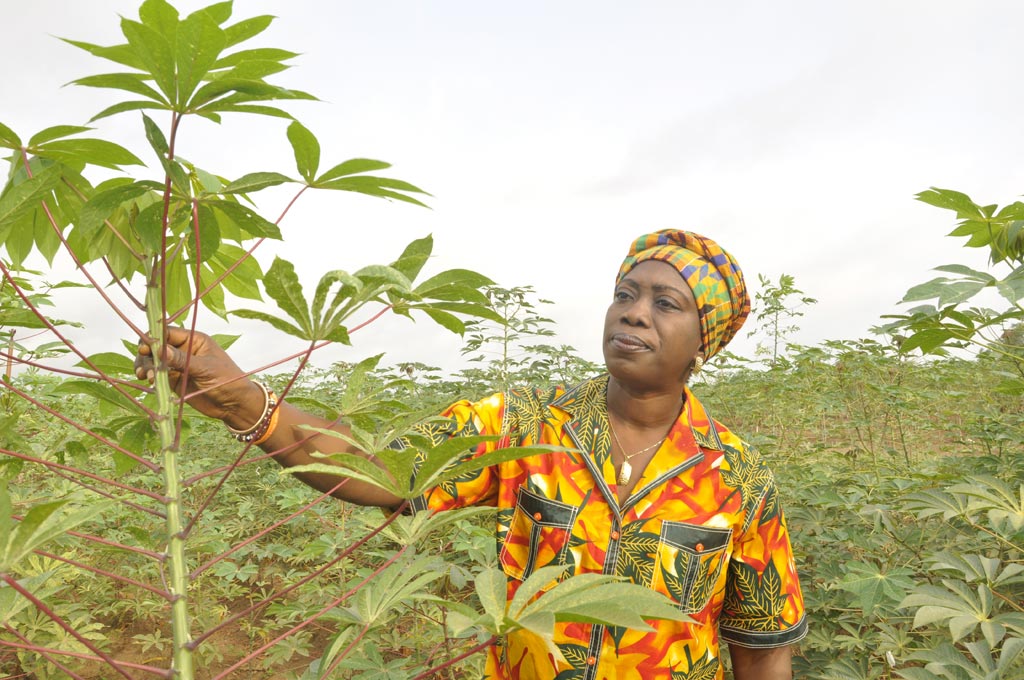
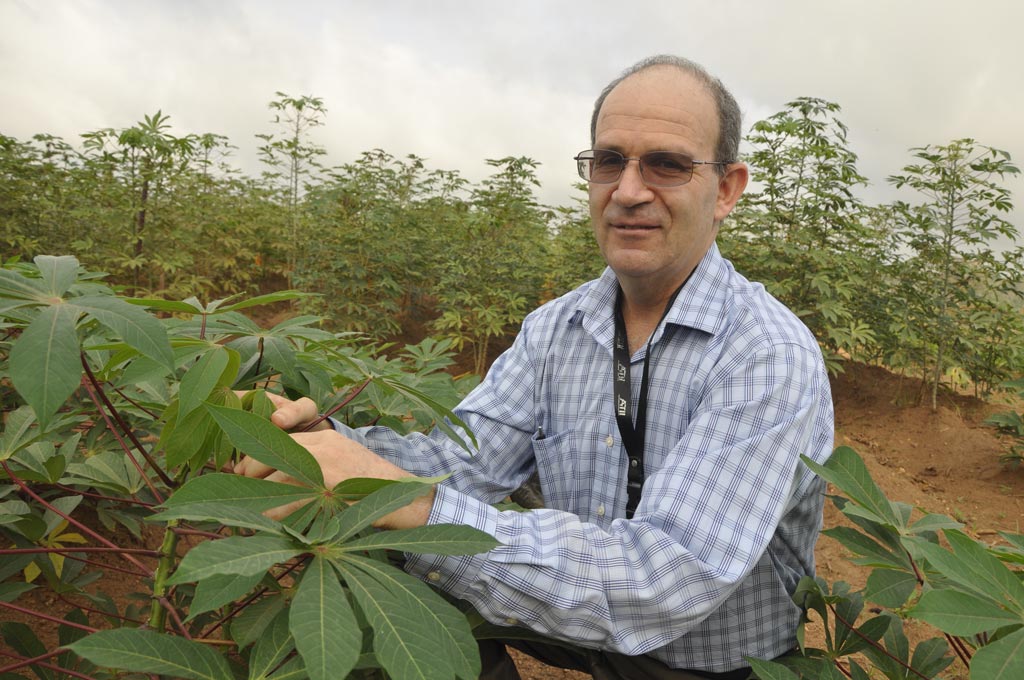
Elizabeth Parkes, HarvestPlus Cassava Breeder
During Phase 1 of the Next Generation Cassava Breeding project — also funded by the Gates Foundation and UK aid from 2012 to 2017 — researchers shortened the breeding cycle for new cassava varieties by improving flowering and using genomic selection. Through analyzing plant genotypes and identifying cassava lines with desirable traits, such as resistance to cassava brown streak disease or high dry matter content, breeders also improved their ability to make selections based on genetics and probability without having to wait for seedlings to reach adulthood. These methods save breeding time for a crop where flowering and sexual propagation are issues.
Another goal of Phase 1 was to make cassava genomic information publicly accessible on an open database. Cassava researchers all over the world are now comparing results and improving breeding programs without duplicating efforts by using Cassavabase. To reduce cost per progeny and improve the quality of data uploaded to Cassavabase in Phase 2, NextGen researchers will use additional methods of whole genome sequencing.
“Our focus for the next five years will be to translate this research into breeding practices to increase impact,” said Chiedozie Egesi, NextGen project director and adjunct professor of plant breeding and genetics at Cornell, who is based at the International Institute of Tropical Agriculture (IITA) in Nigeria. “A key goal in Phase 2 will be to identify traits preferred by farmers and end-users and incorporate them into new cassava lines to ensure that varieties are responsive to people’s needs.”
Egesi said, “We believe we will accelerate genetic gain as well as adopted genetic gain, increase the yields and resilience of cassava production by smallholder farmers, and move African cassava breeding toward greater capacity.”
“Among the 30 new clones developed at IITA using our methods, 10 had higher dry matter yield than any clone currently available for smallholder farmers in Nigeria,” said Jean-Luc Jannink, a research plant geneticist with the United States Department of Agriculture, Agricultural Research Service (USDA-ARS) and Cornell adjunct associate professor in the Department of Plant Breeding and Genetics at Cornell. “Dry matter yield is a close proxy to food yield. Conservatively, we believe that we will increase the rate of genetic gain in cassava by 30 to 50 percent.”
Said Peter Kulakow, IITA cassava breeder and geneticist: “Genetic gain is a measure of the improvement of plant performance between generations and a goal of most modern breeding programs. Swifter improvements mean more new varieties can be tested and released.”
Peter Kulakow, IITA Cassava Breeder / Geneticist
At the sixth annual Next Gen Cassava meeting, Feb. 19-24 in Dar es Salaam, Tanzania, teams of NextGen breeders, geneticists, data analysts, computer programmers, food technologists, social scientists and crop protectionists will be focusing on goals for Phase 2 and discussing how to better coordinate and leverage the exchange of germplasm and genotypic and phenotypic data from each other.
Developing capacity for sustainable breeding programs
Compared with other major staples like maize, rice and wheat, cassava has undergone few advances in productivity and yield over the last 50 years, making it an ideal c andidate for breeding improvement. Because cassava is clonally propagated and has a low multiplication rate, it can take almost six to eight years before a new cassava variety makes it from breeders’ nurseries through field trials to farmers’ fields. Most breeding efforts focus on product development — goals set by scientists and researchers without accounting for the preferences of farmers. In practice, this can result in poor adoption of new varieties and unrealized potential.
“Breeders must be able to more quickly develop cassava varieties that resist diseases, are climate resilient and meet the needs of end-users and consumers,” said Egesi.
Strengthening the capacity of national breeding programs will be critical in achieving self-sustaining breeding systems in sub-Saharan Africa. Over the next five years, NextGen researchers will continue to train the next generation of sub-Sahara African cassava breeders in modern plant breeding techniques like genomic selection and improved breeding methods.
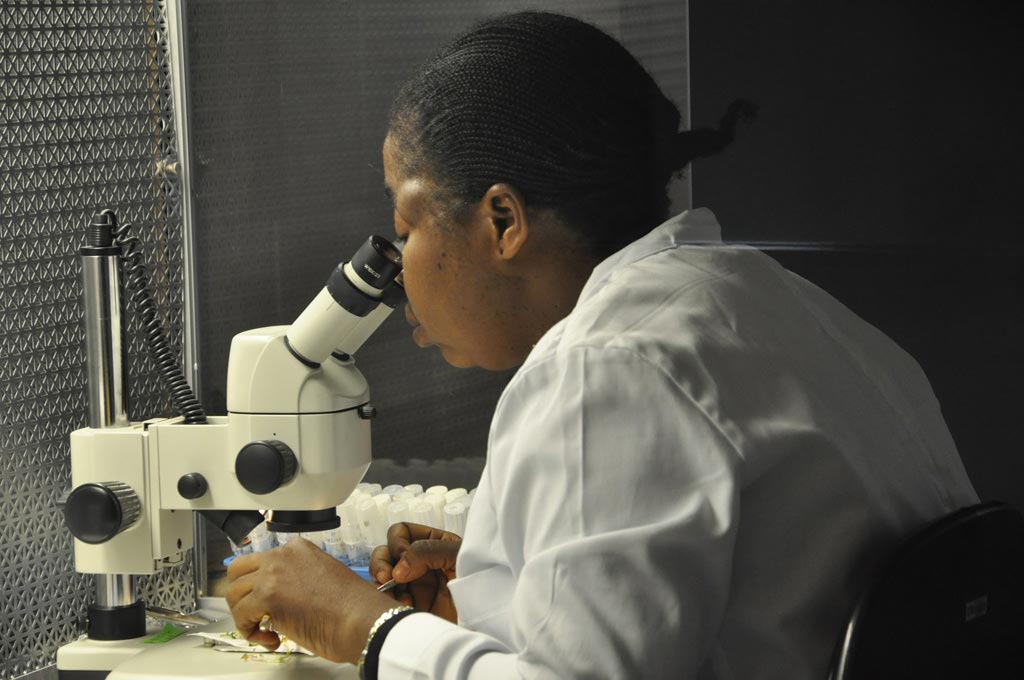
Technician examining specimen under electron microscope in Genetic Resources Center, GRC in IITA Ibadan
International and regional partnerships are another important element of sustainability. NextGen researchers are reaching out to their counterparts in Ghana, Rw anda, Mozambique, Sierra Leone and the Democratic Republic of Congo to create a broader network of researchers who can work together to improve livelihoods and food security.
In Africa, NextGen collaborators include IITA and the National Root Crops Research Institute in Nigeria; the West Africa Centre for Crop Improvement in Ghana; the National Crops Resources Research Institute and Makerere University in Ug anda; and the Tanzania Agricultural Research Institute in Tanzania. In South America, collaborators include Embrapa in Brazil and the International Center for Tropical Agriculture (CIAT) in Colombia. In the US, collaborators are Cornell University (who leads the project), the Boyce Thompson Institute at Cornell, the University of Hawaii, and the USDA-ARS in Ithaca.
For more information see www.nextgencassava.orgMedia contacts:
Linda McC andless, +1-607-227-5920
llm3@cornell.edu
Catherine Njuguna, +255-767361255
c.njuguna@cgiar.org
Olamide Deborah Nwanze is a Senior Research Associate specializing in gender mainstreaming research to inform participatory and inclusive breeding, variety development, and seed systems policies regarding root, tuber, and banana (RTB) crops in the International Institute of Tropical Agriculture Headquarters, Ibadan, Nigeria. She is a PhD candidate at the University of Ibadan and holds an MSc and B. Agric in Agricultural Extension and Rural Development. Olamide is a fellow of the African Women in Agricultural Research and Development – Gender Responsive Agricultural Systems Policy (AWARD-GRASP) and the Gender Responsive Researchers Equipped for Agricultural Transformation (GREAT). She seeks to apply her gender-mainstreaming learnings, gender-responsive research, and policy development, and review expertise to facilitate women, youth, children, and vulnerable social group’s access to and adoption of agricultural Innovations that guarantee food, nutrition, income, and livelihood security in Africa. Her current roles include mentoring research fellows, development of guides and training manuals, implementation and adaptation of gender frameworks and tools, value chain actors’ engagement as citizen science partners, policy review and redesign, data management, and analysis. Her current research explores mixed methods and participatory and interdisciplinary approaches to capture and highlight gender dynamics, needs, preferences, and challenges stakeholders face within the agricultural livelihood value chain to prioritize gender-inclusive strategies in breeding programs, policy design, and implementation.
de Sousa, K., van Etten, J., Manners, R. Bello, A., Teeken, B., Olaosebikan, O., et al. 2024. The tricot approach: an agile framework for decentralized on-farm testing supported by citizen science. A retrospective. Agron. Sustain. Dev. 44, 8. https://doi.org/10.1007/s13593-023-00937-1
Madu, T., Onwuka, S., Nwafor, S., Onyemauwa, N., Ejechi, M., Ofoeze, M., Ukeje, B., Eluagu, C., Olaosebikan, O., Okoye, B., 2024. Gender-Inclusive Consumer Studies Improve Cassava Breeding in Nigeria in: Frontiers in Sociology, volume 9, number: 1224504, doi: 10.3389/fsoc.2024.1224504
Olaosebikan, O.; Bello, A.; Utoblo, O.; Okoye, B.; Olutegbe, N.; Garner, E.; Teeken, B.; Bryan, E.; Forsythe, L.; Cole, S.; Madu, T. 2023. Stressors and Resilience within the Cassava Value Chain in Nigeria: Preferred Cassava Variety Traits and Response Strategies of Men and Women to Inform Breeding. Sustainability 15, 7837. https://doi.org/10.3390/su15107837
Okoye, B., Ofoeze, M., Ejechi, M., Onwuka, S., Nwafor, S., Onyemauwa, N., Ukeje, B., Eluagu, C., Obidiegwu, J.*, Olaosebikan, O., Madu, T.* 2023. Prioritizing preferred traits in the yam value chain in Nigeria: a gender situation analysis in: Frontiers in Sociology, volume 8, number: 1232626, pages 1 – 9, ISSN 2297-7775, 2023. https://www.frontiersin.org/articles/10.3389/fsoc.2023.1232626/full
Olaosebikan, O., Bello, A. A., de Sousa, K., Ndjouenkeu, R., Adesokan, M., Alamu, E. O., Agbona, A., van Etten, J., Kegah, F. N.*, Dufour, D., Bouniol, A., Teeken, B. 2023. Consumer acceptability of cassava gari-eba food products across cultural and environmental settings using the triadic comparison of technologies approach (tricot) in: Journal of the Science of Food and Agriculture,
Teeken, B., Olaosebikan, O., Bello, A. A., Madu, T.*, Cole, S. M. 2023. Qualitative assessment on the positionality and preferences of dyads in relation to cassava-related activities: working with tricot trial citizen scientists https://hdl.handle.net/10568/138326 Type: Manual
Bouniol, A., Ceballos, H., Bello, A. A., Teeken, B., Olaosebikan, O., Owoade, D., Agbona, A., Fotso Kuate, A., Madu, T.*, Okoye, B.*, Ofoeze, M.*, Nwafor, S.*, Onyemauwa, N.*, Adinsi, L.*, Forsythe, L., Dufour, D. 2023. Varietal impact on women’s labour, workload and related drudgery in processing root, tuber and banana crops: focus on cassava in sub-Saharan Africa in: Journal of the Science of Food and Agriculture, pages 1 – 25, ISSN 0022-5142,
Bello, A. A., Agbona, A., Olaosebikan, O., Edughaen, G., Dufour, D., Bouniol, A., Iluebbey, P., Ndjouenkeu, R.*, Rabbi, I. Y., Teeken, B. 2023. Genetic and environmental effects on processing productivity and food product yield: drudgery of women’s work in: Journal of the Science of Food and Agriculture, pages 1 – 32, ISSN 0022-5142, 5
Cavicchioli, M., Zimbiti, T., Teeken, B., Nwanze, D.O., Liani, M., Parkes, E. & Bello, A. 2023. IITA-Gender Responsive Breeding Training Report. Genetic Resources Center, IITA-HQ, Ibadan, 21-23 September, 2022. Ibadan, Nigeria: IITA, (34 p.).https://hdl.handle.net/10568/131368
Agbona, A. Peteti P., Teeken B., Olaosebikan O. Bello, A. A., Parkes, E., Rabbi, I. Y., Mueller, L., Egesi, C., Kulakow, P. 2022. Data Management in Multi-disciplinary African RTB Crop Breeding Programs. In: Williamson, H.F., Leonelli, S. (eds) Towards Responsible Plant Data Linkage: Data Challenges for Agricultural Research and Development. Springer, Cham. https://doi.org/10.1007/978-3-031-13276-6_5
Lora Forsythe, Pricilla Marimo, Sarah Mayanja, Olamide D. Olaosebikan, Esme Stuart, Bela Teeken, Benjamin Okoye, Tessy Madu, (2021). Cross-product Gender Analysis of RTBfoods Step 2 Gendered Food Mapping on RTB Products. Understanding the Drivers of Trait Preferences and the Development of Multi-user RTB Product Profiles, WP1. London, UK: RTBfoods Field Scientific Report, 30 p.
Teeken, B., Garner, E., Agbona, A., Balogun, I., Olaosebikan, O., Bello, A., Madu, T., Okoye, B., Egesi, C., Kulakow, P. and Tufan, H.A. 2021. Beyond “Women’s Traits”: Exploring How Gender, Social Difference, and Household Characteristics Influence Trait Preferences. Frontiers Sustainable Food Systems 5:740926. https://doi.org/10.3389/fsufs.2021.740926
Teeken, B., Agbona, A., Bello, A., Olaosebikan, O., Alamu, E., Adesokan, M., Awoyale, W., Madu, T., Okoye, B., Chijioke, U., Owoade, D., Okoro, M., Bouniol, A., Dufour, D., Hershey, C., Rabbi, I., Maziya‐Dixon, B., Egesi, C., Tufan, H. and Kulakow, P. (020. Understanding cassava varietal preferences through pairwise ranking of gari‐eba and fufu prepared by local farmer–processors. Int J Food Sci Technol.https://doi.org/10.1111/ijfs.14862
Bela Teeken, Olamide Olaosebikan, Ireti Balogun, Benjamin Okoye, Tessy Madu, Steven Cole, Abolore Bello, Elizabeth Parkes. (2020). Piloting the G+ customer and product profile tools for gender-responsive cassava breeding in Nigeria. Nigeria: International Institute of Tropical Agriculture (IITA). https://hdl.handle.net/20.500.11766/13000